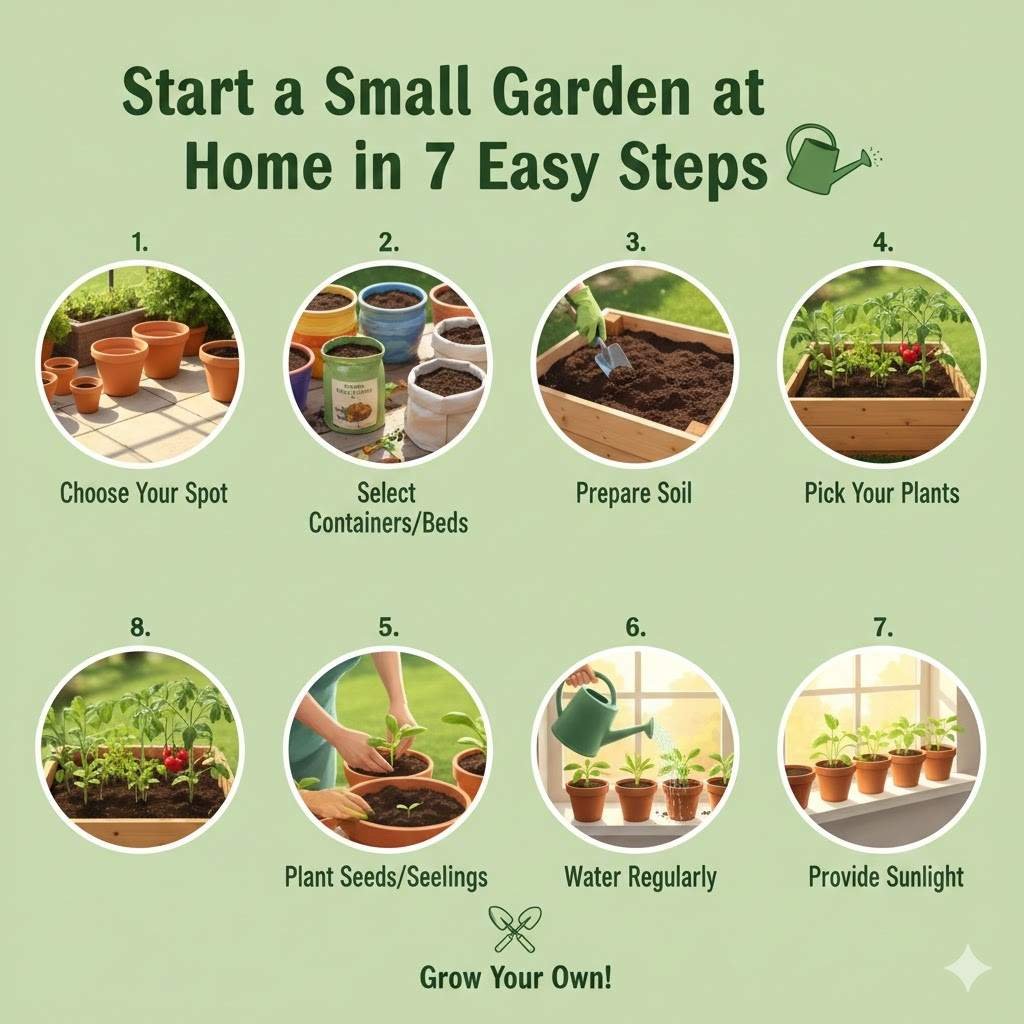
Starting a small garden at home is more than a hobby—it is a lifestyle upgrade. In today’s fast and digital world, growing your own plants reconnects you with nature, improves mental health, and even puts fresh vegetables on your plate. The best part? You don’t need a big backyard or expert knowledge. A tiny balcony, terrace, or even a sunny window is enough to begin.
This guide will walk you step by step through everything you need to know about starting a small garden at home—from choosing the right space to harvesting your first tomato.
Why You Should Start a Home Garden
Home gardening has become popular for many good reasons.
1. Fresh and Chemical-Free Food
Store-bought vegetables often contain pesticides. Growing your own ensures pure and organic produce.
2. Saves Money
A one-time investment in soil and seeds can provide months of herbs and vegetables.
3. Mental Health Benefits
Gardening reduces stress, anxiety, and screen addiction. Touching soil is scientifically proven to boost mood.
4. Beautifies Your Home
Green plants make any space lively and peaceful.
5. Teaches Responsibility
Caring for a living plant builds patience and discipline.
Step 1 – Choose the Right Space
You can start a garden almost anywhere:
- Balcony
- Terrace
- Backyard
- Window sill
- Kitchen corner
Check Sunlight
Most edible plants need 4–6 hours of sunlight. Observe your home for a few days and select the brightest spot.
Ventilation
Good airflow prevents fungus and pests.
Water Access
Keep your garden near a water source to make care easier.
Step 2 – Decide What to Grow
As a beginner, start with easy plants.
Best Vegetables for Beginners
- Tomato
- Chili
- Spinach
- Radish
- Okra
- Beans
Easy Herbs
- Mint
- Tulsi/Basil
- Coriander
- Curry leaves
- Lemongrass
Beginner-Friendly Flowers
- Marigold
- Hibiscus
- Rose
- Portulaca
Start with 3–5 plants only so you don’t feel overwhelmed.
Step 3 – Basic Gardening Materials
You don’t need fancy equipment.
- Pots with drainage holes
- Good soil
- Compost
- Seeds or saplings
- Watering can
- Small shovel
Budget Alternatives
- Use old buckets
- Plastic bottles
- Broken mugs
- Coconut shells
Gardening can be almost free if you recycle smartly.
Step 4 – Prepare the Soil
Soil is the heart of gardening.
Ideal Soil Mix
- 60% garden soil
- 30% compost
- 10% sand or cocopeat
This mix ensures nutrition, drainage, and root growth.
Natural Fertilizers
- Kitchen compost
- Cow dung manure
- Vermicompost
- Banana peel water
- Eggshell powder
Avoid chemical fertilizers in the beginning.
Step 5 – Planting Process
- Fill the pot with soil mix
- Make a small hole
- Place seed or sapling
- Cover lightly
- Water gently
Seed vs Sapling
Seeds are cheaper but slower. Saplings give quicker results for beginners.
Step 6 – Watering the Right Way
Overwatering kills more plants than lack of water.
- Water in morning or evening
- Check soil with finger
- Don’t water leaves directly
- Ensure drainage holes are open
Signs of Overwatering
- Yellow leaves
- Bad smell
- Fungus on soil
Signs of Underwatering
- Dry soil
- Drooping leaves
- Slow growth
Step 7 – Sunlight & Temperature
- Leafy greens: moderate sun
- Fruiting plants: full sun
- Indoor plants: bright indirect light
In extreme summers, use shade cloth.
Step 8 – Composting at Home
Make free fertilizer from kitchen waste.
Simple Compost Method
- Collect vegetable peels
- Add dry leaves
- Sprinkle soil
- Keep moist
- Ready in 30–40 days
This makes gardening sustainable.
Step 9 – Pest Control Naturally
Avoid chemicals.
Home Remedies
- Neem oil spray
- Soap water
- Garlic-chili spray
- Turmeric solution
Remove infected leaves immediately.
Step 10 – Daily Care Routine
- 5 minutes watering
- Remove dry leaves
- Check for insects
- Loosen soil weekly
- Add compost every 15 days
Consistency matters more than perfection.
Common Beginner Mistakes
- Too many plants at once
- No drainage holes
- Cheap poor soil
- Overwatering
- No sunlight
- Expecting fast results
Gardening teaches patience.
Best Plants for Different Spaces
Balcony
- Chili
- Mint
- Tomato
- Aloe vera
Terrace
- Brinjal
- Okra
- Roses
- Papaya (dwarf)
Indoor
- Snake plant
- Money plant
- Peace lily
Seasonal Gardening Guide (small garden at home)
Summer
- Water twice
- Use mulch
- Grow okra, chili
Monsoon
- Protect from excess rain
- Use fungicide
- Grow turmeric, ginger
Winter
- Best season
- Grow spinach, carrot, peas
Gardening with Kids
Gardening is one of the best activities you can share with children. It is fun, educational, and keeps them close to nature in a world full of screens and gadgets. When kids grow plants with their own hands, they learn life skills that no classroom can teach.
1. Teaches Responsibility
Giving a child one small pot to care for creates a sense of ownership. They learn that a plant needs water, sunlight, and attention—just like any living being. This builds responsibility in a natural way.
2. Encourages Healthy Eating
Children who grow vegetables are more likely to eat them. A kid who harvests their own tomato or strawberry feels proud and excited to taste it. Gardening slowly reduces junk-food habits.
3. Improves Focus and Patience
Plants don’t grow overnight. Waiting for seeds to sprout teaches patience, observation, and concentration—skills that help in studies too.
4. Reduces Screen Time
Instead of mobile games, kids spend time digging soil, watering plants, and watching butterflies. Gardening becomes a healthy outdoor alternative to digital addiction.
5. Fun Learning Experience
Through gardening, children learn about:
- how plants grow
- insects and butterflies
- seasons and weather
- importance of water and soil
- recycling and composting
It’s science in real life!
Easy Gardening Activities for Kids
- Let them decorate pots with colors
- Grow fast seeds like methi, beans, or mustard
- Create name tags for each plant
- Give them a small watering can
- Make a “my first garden” corner
Best Plants for Children
- Mint – grows quickly
- Cherry tomato – fun to harvest
- Sunflower – tall and exciting
- Beans – visible daily growth
- Marigold – bright and hardy
Safety Tips
- Use child-friendly tools
- Avoid chemical fertilizers
- Teach gentle handling of insects
- Supervise while using scissors or shovels
A Memory for Life
Gardening with kids is not just about plants—it’s about creating memories. The joy on a child’s face when the first seed sprouts is priceless. These moments build love for nature that stays with them forever.
Harvesting Tips for small garden at home
- Don’t pull plants
- Use scissors
- Harvest morning
- Leave some for regrowth
Fresh taste will motivate you to continue.
Cost to Start a Small Garden at Home
1. Basic Setup Costs (Upfront)
These are the essential items most beginners need when starting out:
| Item | Typical U.S. Cost (Approx) |
|---|---|
| Seeds / Starter Plants | $2–$20 per packet or plant |
| Potting Soil / Garden Soil | $5–$30 per bag |
| Soil Amendments (Compost/Fertilizer) | $15–$50+ |
| Containers / Pots | $2–$20 each (small pots) |
| Basic Tools (shovel, trowel, gloves) | $50–$150 total |
| Watering Can or Hose | $15–$50 |
👉 Budget starter setup (small container garden): ~$100–$200
This gets you a handful of plants, soil, a couple of containers, and basic tools.
2. Costs by Garden Type
These estimates show how cost can vary based on garden size and style:
Small Container / Patio Garden
- Simple pots and herbs or veggies
- Estimated setup cost: $100–$300
Raised Bed or Backyard Garden
- Wooden raised beds, lots of soil, more plants
- Estimated setup cost: $300–$800+
Larger or More Complex Garden
- Multiple beds, irrigation, more plants
- Estimated setup costs can exceed $1,000 for larger layouts.
3. Optional Extras
These aren’t required, but many gardeners choose them:
- Drip irrigation kit: $50–$150
- Raised bed kits (prebuilt): $50–$200+
- Greenhouse or protective structure: $40–$200+ (budget options exist)
4. Ongoing Costs
Gardens don’t cost only at setup—they have some recurring needs:
- Water: may increase your utility bill slightly (often $10–$30/month)
- Fertilizer & mulch: $10–$50 per season
- Pest control / soil amendments: $10–$30 per season
- Seeds each year: depends on what you plant, often $2–$10 per packet
How Gardening Changes Your Life
Gardening is not just about growing plants—it quietly transforms the person who cares for them. The simple daily act of watering, touching soil, and watching new leaves appear brings changes that go far beyond your balcony or backyard.
1. Improves Mental Health
Spending time with plants reduces stress and anxiety. The calm rhythm of gardening slows your thoughts and works like natural therapy. Many people feel lighter and happier after just a few minutes of caring for their garden.
2. Makes You Healthier
Home-grown vegetables and herbs encourage better eating habits. When you grow tomatoes, spinach, or mint yourself, you automatically choose fresher and cleaner food. Gardening is also gentle physical exercise that improves flexibility and strength.
3. Teaches Patience and Gratitude
Plants grow in their own time. Gardening trains you to wait, observe, and respect nature’s pace. You begin to appreciate small things—a new bud, a butterfly, the first harvest.
4. Reduces Screen Time
Instead of scrolling on your phone, you spend mornings with sunlight and fresh air. This break from digital life improves sleep and focus.
5. Builds Responsibility
A plant depends on you. Watering on time, checking soil, and protecting from pests develop a sense of care and discipline, especially in children.
6. Connects You with Nature
Even in busy cities, a small garden brings birds, butterflies, and fresh energy into your home. You feel more connected to seasons and weather.
7. Boosts Creativity
Designing pots, arranging plants, and trying new seeds awaken your creative side. Your garden becomes your personal art space.
8. Creates a Positive Home Environment
Green spaces make homes peaceful. Guests feel relaxed, and the air becomes fresher and cooler.
9. Encourages Sustainable Living
Gardening makes you reuse, recycle, and compost. You naturally move toward an eco-friendly lifestyle.
10. Gives Real Happiness
The joy of seeing a seed turn into food cannot be compared with anything bought from a store. It builds confidence: “I grew this myself.”
Inspiring Small Garden at Home Ideas
- Vertical bottle garden
- Hanging pots
- Shoe organizer garden
- Old tyre planters
- Ladder garden
Creativity matters more than space.
Troubleshooting Guide
Leaves Turning Yellow
Cause: overwatering
Fix: reduce water
No Flowers
Cause: less sun
Fix: change location
Insects
Cause: weak plant
Fix: neem spray
Final Motivation(Small Garden at Home)
You don’t need to be perfect to start. Every expert gardener was once a beginner who killed a few plants. Start small, learn daily, and enjoy the process. One pot today can become a beautiful jungle tomorrow.
Your small garden will grow food—and also grow you.
FAQs Small Garden at Home
1. Can I start gardening with no experience?
Yes. Choose mint or spinach—they almost grow themselves.
2. Which plant is best for first time?
Mint, chili, tulsi, and tomato.
3. How much time needed daily?
Just 10 minutes.
4. Is sunlight compulsory?
For vegetables yes, for indoor plants no.
5. Can I grow in rented house?
Absolutely—use portable pots.
6. How long to get harvest?
20–40 days for leafy greens.
7. What is cheapest fertilizer?
Kitchen compost.
8. How to avoid mosquitoes?
Don’t let water stagnate.
9. Can I use tap water?
Yes, but let it rest 2 hours.
10. Is gardening expensive?
No, it can start under ₹500.
11. What is best for a small garden at home?
The best choices for a small garden focus on space-saving, low-maintenance, and high-yield plants and setups.
12. What plants are best for a small garden at home ?
- Herbs – basil, mint, coriander, parsley
- Leafy greens – spinach, lettuce, kale
- Compact vegetables – cherry tomatoes, chilies, radishes
- Climbers – beans, peas, cucumbers (grow vertically)
- Dwarf varieties – small fruit plants like dwarf lemon or compact brinjal
13. What gardening methods work best for small garden at home?
- Container gardening – Use pots, buckets, or grow bags
- Vertical gardening – Wall planters or hanging pots save space
- Raised beds – Keep plants organized and productive
- Hydroponics (optional) – Grow without soil in very tight spaces
Also Read :