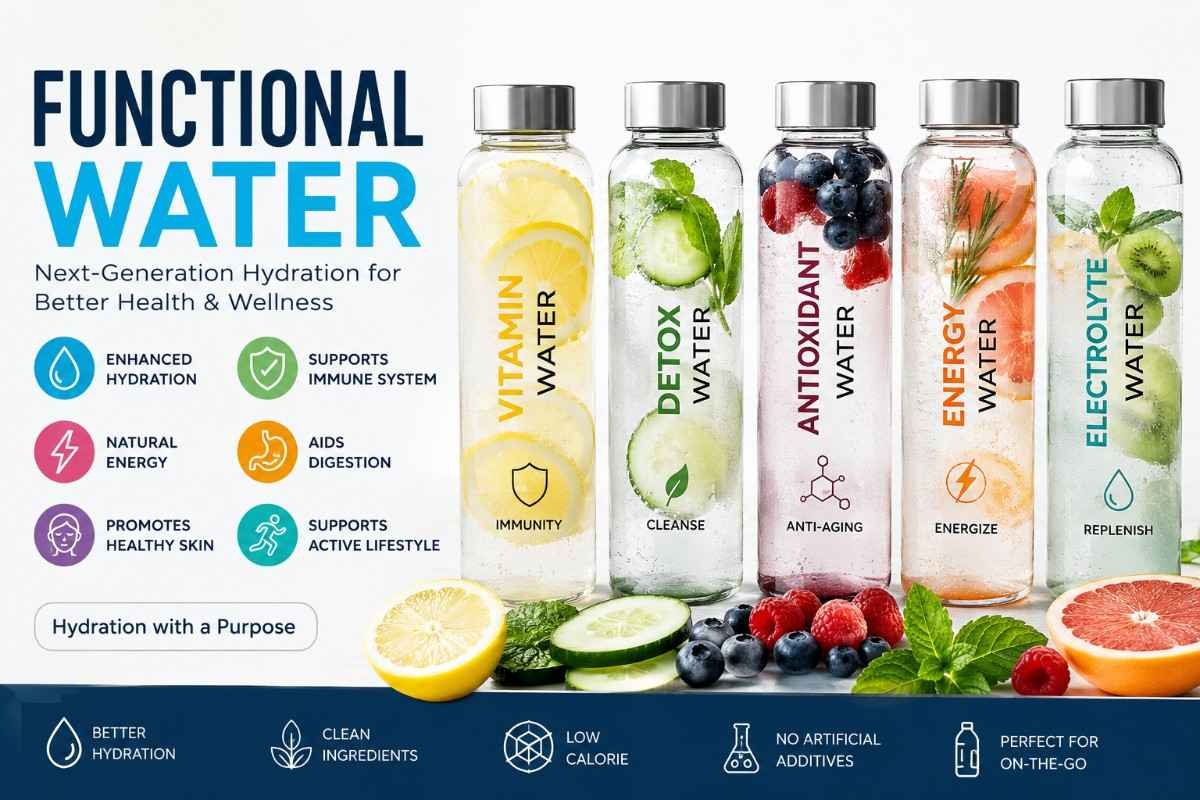
Functional Water has become one of the fastest-growing trends in the health and wellness industry. As consumers become more health-conscious, many are looking beyond regular drinking water and seeking beverages that offer additional nutritional value. Functional Water is designed to provide hydration while delivering added ingredients such as vitamins, minerals, electrolytes, antioxidants, amino acids, probiotics, collagen, or plant extracts.
Unlike sugary soft drinks and artificially flavored beverages, Functional Water aims to support various aspects of health while maintaining hydration. It is marketed for benefits such as improved energy, better recovery after exercise, enhanced immunity, digestive support, cognitive function, skin health, and overall wellness.
The popularity of Functional Water has increased significantly in recent years due to growing interest in preventive healthcare, fitness, and healthy lifestyle habits. Today, this Water is available in supermarkets, gyms, health stores, and online marketplaces around the world.
In this comprehensive guide, you will learn everything about this Water, including its types, nutritional value, health benefits, uses, potential drawbacks, and frequently asked questions.
What Is Functional Water?
Functional Water refers to water that has been enhanced with additional ingredients intended to provide health benefits beyond basic hydration. These added ingredients may include vitamins, minerals, electrolytes, antioxidants, herbal extracts, protein, collagen, probiotics, caffeine, or other functional compounds.
The primary purpose of this Water is to combine hydration with targeted wellness benefits. Different products are designed to meet different needs, such as athletic performance, immune support, energy enhancement, digestive health, or beauty benefits.
While regular water remains essential for life, this Water offers consumers additional options that align with their health goals.
History of Functional Water
The concept of enhancing water is not entirely new. Ancient civilizations often infused water with herbs, fruits, and medicinal plants for therapeutic purposes.
Modern this Water emerged in the late twentieth century when beverage manufacturers began adding vitamins and minerals to bottled water. The trend gained momentum with the rise of fitness culture and increased consumer demand for healthier alternatives to soda and sugary drinks.
Today, the this Water market includes a wide range of products designed for specific health purposes, making it one of the fastest-growing segments of the beverage industry.
Types of Functional Water
Vitamin Water
Vitamin Water contains added vitamins such as Vitamin C, Vitamin B complex, Vitamin D, and Vitamin E. These products are often marketed to support immunity, energy production, and overall wellness.
Electrolyte Water
Electrolyte Water contains minerals such as sodium, potassium, magnesium, and calcium. It is commonly used by athletes and active individuals to replace minerals lost through sweating.
Alkaline Water
Alkaline Water has a higher pH level than regular drinking water. Supporters claim it may help neutralize acidity, although scientific evidence remains limited.
Protein Water
Protein Water contains added protein, usually derived from whey or plant-based sources. It is often consumed after exercise to support muscle recovery.
Collagen Water
Collagen Water contains hydrolyzed collagen peptides that are marketed for skin, hair, nail, and joint health.
Probiotic Water
Probiotic Water includes beneficial bacteria that may help support digestive and gut health.
Antioxidant Water
Antioxidant Water contains compounds designed to reduce oxidative stress and protect cells from free radical damage.
Energy Water
Energy Water contains caffeine, amino acids, or other ingredients intended to increase alertness and mental focus.
Herbal Functional Water
This type contains botanical extracts such as ginger, turmeric, green tea, mint, ginseng, or chamomile.
Nutritional Value of Functional Water
The nutritional content varies depending on the product and ingredients used. Common nutrients found in this Water include:
- Vitamin C
- Vitamin B6
- Vitamin B12
- Vitamin D
- Potassium
- Calcium
- Magnesium
- Zinc
- Sodium
- Collagen peptides
- Amino acids
- Probiotics
- Plant antioxidants
Many this Water products are low in calories, although some may contain added sugars or sweeteners.
20 Potential Benefits of Functional Water
1. Supports Hydration
The primary benefit of this Water is maintaining proper hydration.
2. Replenishes Electrolytes
Electrolyte-enriched water helps replace minerals lost during exercise and sweating.
3. May Improve Exercise Performance
Proper hydration and electrolyte balance can support physical performance.
4. Supports Muscle Recovery
Protein and amino acid-enhanced waters may aid recovery after workouts.
5. Promotes Immune Health
Vitamin-enriched this Water often contains nutrients that support immune function.
6. Enhances Energy Levels
Some products contain B vitamins and caffeine for increased energy.
7. Supports Cognitive Function
Hydration plays an important role in concentration and mental performance.
8. May Improve Skin Health
Collagen and antioxidant ingredients may contribute to healthier skin.
9. Supports Digestive Health
Probiotic this Water may help maintain a healthy gut microbiome.
10. Helps Maintain Mineral Balance
Electrolytes assist with fluid balance throughout the body.
11. Encourages Healthy Beverage Choices
Functional Water can serve as an alternative to sugary drinks.
12. Supports Post-Workout Recovery
Hydration combined with nutrients can help recovery after exercise.
13. Provides Convenient Nutrition
It offers vitamins and minerals in a portable format.
14. May Reduce Fatigue
Proper hydration can help reduce feelings of tiredness.
15. Supports Heart Health
Adequate hydration contributes to cardiovascular function.
16. May Support Bone Health
Some this Waters contain calcium and vitamin D.
17. Helps Maintain Healthy Metabolism
B vitamins play roles in energy metabolism.
18. Supports Healthy Aging
Antioxidants may help protect cells from oxidative stress.
19. Promotes Wellness Goals
Many consumers use this Water as part of a broader wellness routine.
20. Encourages Daily Water Intake
Flavored this Water may motivate people to drink more water.
How Functional Water Works
This Water works by delivering hydration together with added nutrients and bioactive compounds. Water acts as a carrier that helps transport these ingredients throughout the body.
The effectiveness depends on several factors:
- Type of ingredient added
- Amount of ingredient
- Individual health status
- Overall diet
- Lifestyle habits
this Water should complement a balanced diet rather than replace nutrient-rich foods.
Functional Water vs Regular Water
| Feature | Functional Water | Regular Water |
|---|---|---|
| Hydration | Yes | Yes |
| Added Nutrients | Yes | No |
| Electrolytes | Often | Usually No |
| Vitamins | Often | No |
| Calories | Sometimes | Zero |
| Cost | Higher | Lower |
| Added Benefits | Potentially | Hydration Only |
Regular water remains the most economical and essential hydration source, while this Water offers additional features.
Who Can Benefit from Functional Water?
Functional Water may be useful for:
- Athletes
- Fitness enthusiasts
- Busy professionals
- Students
- Travelers
- Older adults
- Individuals seeking better hydration
- People reducing sugary beverage consumption
Best Times to Drink Functional Water
Morning
Vitamin-enhanced water may help start the day hydrated.
Before Exercise
Electrolyte water can support hydration before workouts.
During Exercise
Athletes often use electrolyte water during prolonged activity.
After Exercise
Recovery-focused waters may support replenishment.
Throughout the Day
Functional Water can be consumed as part of regular hydration habits.
Potential Side Effects
Although Functional Water is generally safe, excessive consumption may cause issues depending on ingredients.
Potential concerns include:
- Excess vitamin intake
- Added sugar consumption
- Artificial sweeteners
- Digestive discomfort
- Excess caffeine intake
- High sodium intake
Reading product labels is important before consumption.
How to Choose the Best Functional Water
When selecting this Water:
- Check ingredient lists
- Look for low sugar content
- Avoid excessive artificial additives
- Choose products based on your goals
- Review nutritional information
- Consider electrolyte levels
- Evaluate vitamin and mineral amounts
Homemade Functional Water Ideas
You can create simple this Water at home by adding:
- Lemon slices
- Cucumber
- Mint leaves
- Ginger
- Orange slices
- Berries
- Basil seeds
- Chia seeds
- Turmeric
- Herbal infusions
Homemade versions can provide flavor and hydration without added sugars.
Future of Functional Water
The Functional Water market continues to expand as consumers seek personalized nutrition and healthier beverages. Future innovations may include customized nutrient blends, advanced hydration technologies, plant-based ingredients, and science-backed formulations tailored to individual health goals.
As wellness trends evolve, this Water is likely to remain a major category within the global beverage industry.
FAQs
What is Functional Water?
Functional Water is water that contains added ingredients such as vitamins, minerals, electrolytes, antioxidants, probiotics, collagen, or herbal extracts to provide benefits beyond basic hydration.
Is Functional Water better than regular water?
Functional Water can provide additional nutrients, but regular water remains the most important source of hydration. Whether this Water is better depends on individual health goals and dietary needs.
Can Functional Water help with hydration?
Yes. Functional Water hydrates the body just like regular water and may provide additional electrolytes or nutrients that support hydration.
Does Functional Water contain calories?
Some this Water products are calorie-free, while others may contain calories from sugars, proteins, or other added ingredients. Always check the nutrition label.
Can athletes benefit from Functional Water?
Athletes may benefit from electrolyte-enhanced this Water because it helps replace minerals lost through sweat during exercise.
Is Functional Water safe to drink daily?
Most this Water products are safe when consumed as part of a balanced diet. However, excessive intake of certain vitamins, minerals, or stimulants should be avoided.
Can Functional Water improve skin health?
Some Functional Water products contain collagen, antioxidants, or vitamins that may support skin health when combined with a healthy lifestyle.
Does Functional Water help with weight loss?
Functional Water itself is not a weight-loss solution, but replacing sugary beverages with low-calorie this Water may support weight-management goals.
What is the difference between electrolyte water and Functional Water?
Electrolyte Water is one type of this Water. this Water is a broader category that may also include vitamins, probiotics, collagen, antioxidants, and other ingredients.
Can children drink Functional Water?
Many this Water products are suitable for children, but parents should review ingredient lists, especially if the product contains caffeine, high levels of vitamins, or added sweeteners.
Conclusion
Functional Water represents an innovative approach to hydration by combining water with beneficial ingredients such as vitamins, minerals, electrolytes, probiotics, collagen, and antioxidants. While it should not replace a balanced diet or regular water intake, it can be a convenient option for individuals seeking additional nutritional support and wellness benefits. As consumer interest in health and hydration continues to grow, this Water is expected to remain an important part of the modern beverage market.
Also read:
Fennel Water: 21 Benefits, Uses, Side Effects & Complete Guide