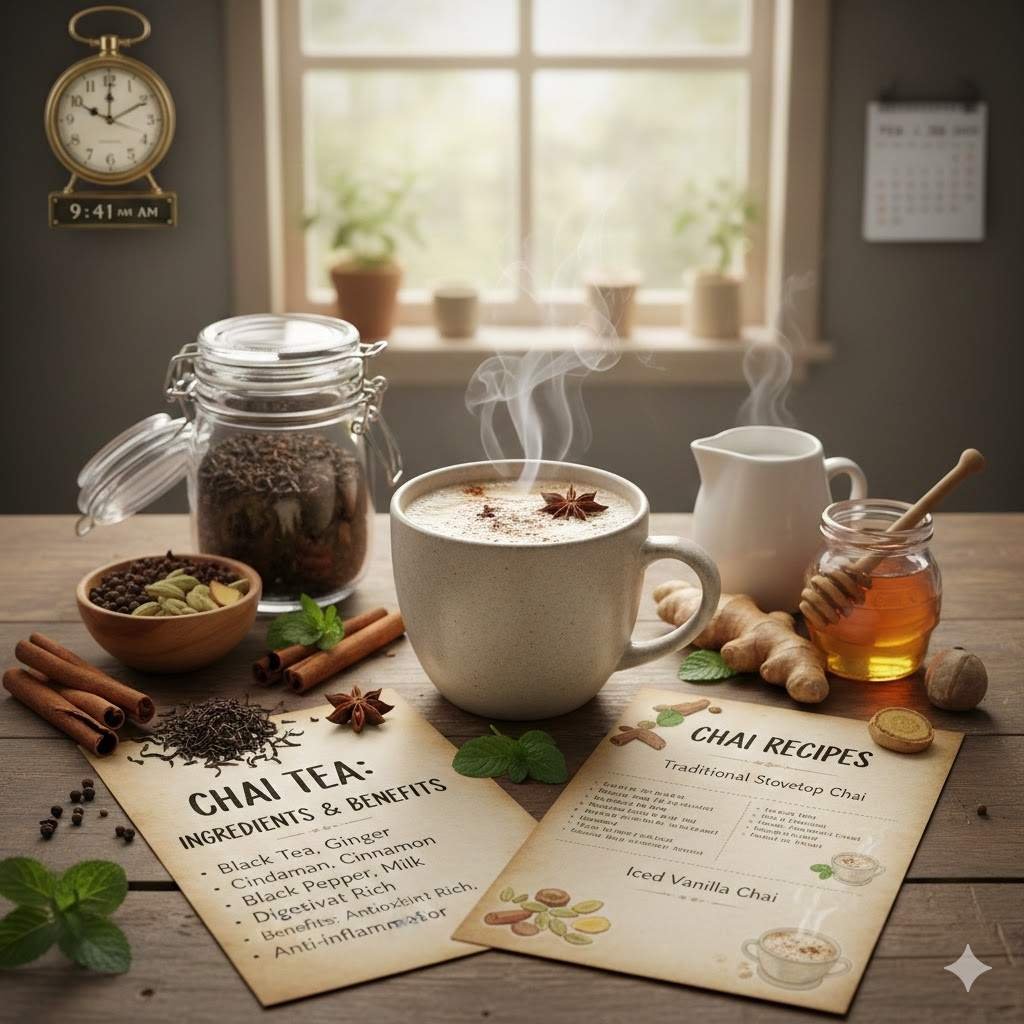
Chai Tea : Few beverages in the world offer the warmth, aroma, and cultural richness of chai tea. More than just a drink, chai represents comfort, hospitality, and centuries of tradition. Whether enjoyed on a rainy afternoon, served to guests, or sipped during a busy morning, chai has earned its place as one of the most beloved beverages globally.
In this comprehensive guide, you’ll discover everything about chai tea — from its fascinating origins and core ingredients to its health benefits and delicious recipes you can make at home.
What Is Chai Tea?
The word “chai” simply means “tea” in Hindi and several other languages. Traditionally, chai refers to masala chai, a spiced tea made by brewing black tea with aromatic spices, milk, and sweetener.
Contrary to popular belief in Western countries, saying “chai tea” is technically redundant — it translates to “tea tea.” However, the phrase has become widely accepted to describe the spiced version.
At its heart, chai is about balance:
- Bold tea
- Creamy milk
- Warming spices
- Gentle sweetness
The result is a drink that stimulates the senses while soothing the body.
The Rich History of Chai
Chai dates back over 5,000 years to ancient India. Originally, it wasn’t even made with tea leaves.
Early versions were herbal concoctions in Ayurvedic medicine, designed to promote healing and vitality. Spices such as ginger, cardamom, and cinnamon were valued for their therapeutic properties.
Black tea became part of chai much later during British colonial rule, when tea plantations expanded across India. To make the strong tea more palatable and affordable, locals added milk, sugar, and spices — creating the masala chai we know today.
Today, chai is:
- Sold by street vendors (chaiwalas)
- Brewed in homes daily
- Served in cafes worldwide
- Reinvented in modern forms like chai lattes
Yet despite its global popularity, the essence of chai remains rooted in tradition.
Key Ingredients in Chai Tea
The beauty of chai lies in its flexibility. While recipes vary by region and household, most versions include five core elements.
1. Black Tea
Strong black teas such as Assam are preferred because they hold up well against milk and spices.
Flavor: Bold, malty, slightly astringent
Benefit: Provides caffeine for gentle energy
2. Milk
Milk transforms chai into a creamy, comforting drink.
Common choices include:
- Whole milk for richness
- Skim milk for fewer calories
- Almond or oat milk for plant-based versions
Milk also softens the spice intensity.
3. Sweetener
Traditional chai is slightly sweet.
Popular options:
- White sugar
- Brown sugar
- Jaggery (traditional unrefined sugar)
- Honey
- Maple syrup
Sweetness balances the spices beautifully.
4. Spices (Masala)
This is where chai truly shines. The spice blend varies, but common additions include:
Cardamom – Sweet, floral aroma
Cinnamon – Warm and comforting
Ginger – Adds a spicy kick
Cloves – Deep, intense flavor
Black pepper – Subtle heat
Fennel seeds – Gentle sweetness
Nutmeg – Earthy warmth
Many families guard their spice ratios as treasured secrets.
5. Water
Often overlooked, water extracts the flavors from tea and spices before milk is added.
Filtered water is best for clean taste.
Types of Chai You Should Know
Masala Chai
The classic Indian version made with mixed spices.
Ginger Chai
Stronger and spicier — excellent during cold weather.
Cardamom Chai
More aromatic and slightly sweet.
Kashmiri Chai
A unique pink tea made with green tea, baking soda, and milk.
Tulsi Chai
Infused with holy basil for herbal wellness.
Chai Latte
A Western adaptation with extra milk and often foam.
Health Benefits of Chai Tea
Chai is more than a flavorful beverage — its ingredients offer impressive wellness perks.
1. Supports Digestion
Spices like ginger, fennel, and cardamom stimulate digestive enzymes.
Many people drink chai after meals to reduce:
- Bloating
- Gas
- Indigestion
2. Boosts Immunity
Chai spices are packed with antioxidants and antimicrobial compounds.
Ginger and cloves, in particular, help the body fight infections.
3. Provides Gentle Energy
Thanks to black tea, chai delivers caffeine — but less than coffee.
Result:
Steady alertness without severe jitters.
4. Reduces Inflammation
Cinnamon and ginger contain anti-inflammatory properties that may help ease:
- Joint discomfort
- Muscle soreness
- Chronic inflammation
5. Supports Heart Health
Black tea has been associated with improved cholesterol levels when consumed moderately.
Cinnamon may also help regulate blood sugar.
6. Enhances Mood
Warm beverages naturally promote relaxation, and chai’s aroma can be uplifting.
It’s comfort in a cup.
Does Chai Tea Help With Weight Loss?
Chai isn’t a miracle fat-burning drink, but it can support healthy habits when consumed wisely.
Potential benefits:
- May reduce sugary beverage intake
- Spices can slightly boost metabolism
- Milk adds satiety
Watch out for:
Excess sugar and high-calorie chai lattes.
For a lighter version:
✔ Use less sweetener
✔ Choose low-fat milk
✔ Increase spices for flavor
Caffeine in Chai vs Coffee
| Beverage | Average Caffeine |
|---|---|
| Chai | 40–60 mg |
| Coffee | 90–120 mg |
Chai is ideal if you want energy without overstimulation.
How to Make Traditional Masala Chai at Home
Ingredients:
- 1 cup water
- 1 cup milk
- 2 teaspoons loose black tea (or 2 tea bags)
- 2–4 teaspoons sugar
- 2 crushed cardamom pods
- 1 small cinnamon stick
- 2 cloves
- ½ inch fresh ginger (crushed)
Instructions:
- Bring water and spices to a boil.
- Add tea leaves and simmer for 2–3 minutes.
- Pour in milk and return to a gentle boil.
- Add sugar and stir.
- Strain into cups and serve hot.
Pro tip: Let it simmer longer for stronger flavor.
Easy Chai Latte Recipe
Perfect for café-style lovers.
Ingredients:
- 1 cup milk
- ½ cup water
- 1 tea bag
- 1 tablespoon honey
- Pinch of cinnamon
Steps:
- Heat water and steep the tea.
- Warm and froth the milk.
- Combine and sweeten.
- Sprinkle cinnamon on top.
Iced Chai for Summer
Ingredients:
- Strong brewed chai
- Ice cubes
- Milk
- Sweetener
Mix and enjoy a refreshing twist!
Vegan Chai Recipe
Swap dairy for plant milk.
Best options:
- Oat milk (creamy)
- Almond milk (light)
- Coconut milk (rich)
Avoid boiling plant milk aggressively — it may separate.
Common Mistakes When Making Chai
❌ Using weak tea
❌ Skipping fresh spices
❌ Adding too much sugar
❌ Not simmering long enough
❌ Using too much water
Great chai requires patience.
Best Time to Drink Chai
Morning: Energizing start
Afternoon: Prevents energy crash
Evening: Choose low-caffeine versions
Avoid late-night chai if caffeine affects your sleep.
Are There Any Side Effects?
Chai is generally safe, but moderation matters.
Possible concerns include:
- Too much caffeine
- Added sugar
- Digestive discomfort in sensitive individuals
Pregnant individuals should consult a healthcare provider regarding spice intake.
How to Store Chai Spices
To preserve flavor:
✔ Keep in airtight containers
✔ Store away from heat
✔ Grind fresh when possible
Whole spices last longer than powders.
Why Chai Is More Than Just a Drink
In many households, offering chai is a gesture of warmth and connection.
It accompanies:
- Conversations
- Celebrations
- Rainy days
- Family visits
Chai slows life down — reminding us to savor the moment.
The Global Rise of Chai
Chai has transformed from a regional staple into an international favorite.
Today you’ll find:
- Chai lattes in coffee chains
- Chai-flavored desserts
- Ready-to-drink bottles
- Chai concentrates
Yet the homemade version still reigns supreme for authenticity.
Expert Tips to Make the Perfect Chai
✅ Crush spices instead of using powders
✅ Use high-quality tea
✅ Adjust spice levels to taste
✅ Simmer — don’t rush
✅ Experiment with blends
Your ideal chai is the one tailored to your palate.
Final Thoughts
Chai tea is a beautiful fusion of flavor, health, and heritage. Whether you enjoy it for its comforting taste, potential wellness benefits, or cultural depth, one thing is certain — chai is far more than just a beverage.
From traditional masala chai to modern iced versions, there’s a style for everyone.
So the next time you brew a cup, take a moment to inhale the spices, feel the warmth, and appreciate a drink that has brought people together for centuries.
FAQs About Chai Tea
1. What is chai tea made of?
Chai tea is typically made with black tea, milk, water, sweetener, and a blend of spices such as cardamom, cinnamon, ginger, cloves, and black pepper.
2. Is chai tea healthier than coffee?
Chai usually contains less caffeine than coffee and includes antioxidant-rich spices. It can be a healthier option when prepared with minimal sugar.
3. Can chai tea help with digestion?
Yes. Ingredients like ginger, fennel, and cardamom are known to support digestion and may reduce bloating.
4. Does chai tea contain caffeine?
Traditional chai made with black tea contains moderate caffeine. However, herbal chai versions can be completely caffeine-free.
5. Can I drink chai tea at night?
If you are sensitive to caffeine, it’s better to choose decaffeinated or herbal chai in the evening to avoid sleep disruption.
6. Is chai tea good for weight loss?
Chai alone doesn’t cause weight loss, but low-sugar versions can fit into a healthy diet and help replace high-calorie beverages.
7. What milk is best for chai tea?
Whole milk creates the creamiest texture, but oat milk and almond milk are excellent plant-based alternatives.
8. How is masala chai different from regular tea?
Masala chai includes spices and milk, giving it a richer flavor compared to plain brewed tea.
9. Can diabetics drink chai tea?
Yes, but it’s best to avoid added sugar or use natural low-calorie sweeteners. Always consult a healthcare professional for personalized advice.
10. How many cups of chai tea can you drink per day?
Most people can safely enjoy 1–3 cups daily, depending on caffeine tolerance.
11. Is chai tea anti-inflammatory?
Many chai spices, especially ginger and cinnamon, contain compounds that may help reduce inflammation.
12. Why does chai tea taste spicy?
The spice blend — particularly ginger, pepper, and cloves — gives chai its signature warming kick.
13. Can chai tea boost immunity?
Chai spices have antibacterial and antioxidant properties that can support overall immune health.
14. Is chai tea good for cold weather?
Absolutely. Its warming spices help improve circulation and create a comforting effect during colder months.
15. What is the difference between chai tea and a chai latte?
Traditional chai is simmered with spices and milk, while a chai latte is often made with a concentrated syrup mixed with steamed milk.
Also Read: