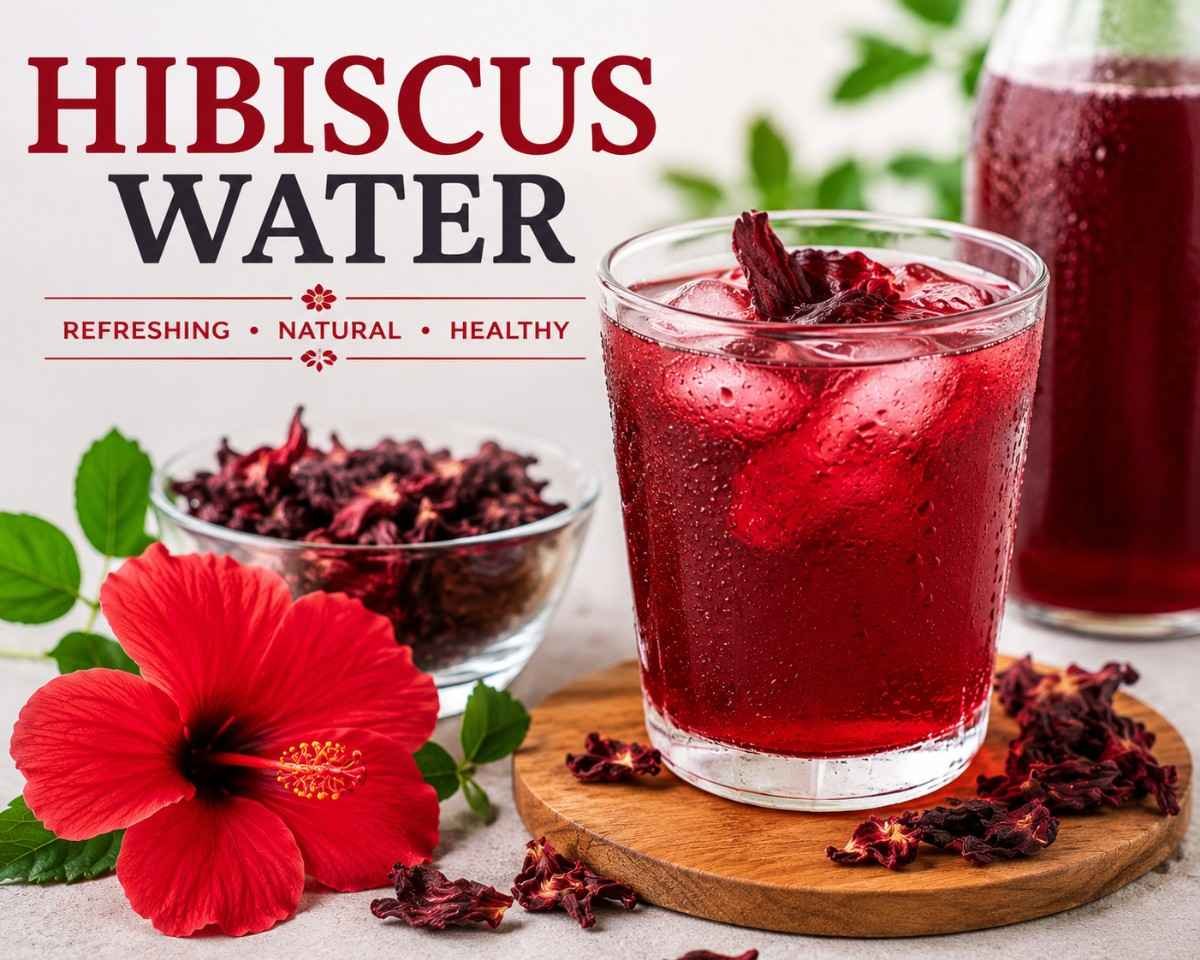
Hibiscus Water is a vibrant, refreshing herbal beverage made by infusing dried hibiscus flowers in water. Known for its beautiful ruby-red color, tart flavor, and impressive nutritional profile, Hibiscus Water has become one of the most popular wellness drinks worldwide.
The hibiscus plant has been used for centuries in traditional beverages and herbal practices across Africa, Asia, the Caribbean, Central America, and the Middle East. Today, Hibiscus Water is enjoyed by people seeking a naturally caffeine-free drink that provides hydration along with beneficial plant compounds.
With increasing interest in herbal wellness beverages, Hibiscus Water has gained popularity as an alternative to sugary drinks, soft drinks, and artificially flavored beverages. Its refreshing taste and potential health benefits make it a favorite among health-conscious individuals.
In this complete guide, you’ll learn everything about Hibiscus Water, including its nutritional profile, health benefits, preparation methods, uses, side effects, storage recommendations, and frequently asked questions.
What Is Hibiscus Water?
Hibiscus Water is a beverage prepared by steeping dried hibiscus flowers in water. During the infusion process, the flowers release their natural color, flavor, antioxidants, and beneficial plant compounds into the water.
The drink has a slightly tart, cranberry-like taste and can be enjoyed hot or cold. Many people enhance the flavor by adding lemon, honey, mint, ginger, cinnamon, or fresh fruits.
Because of its refreshing taste and attractive appearance, Hibiscus Water is often served as a wellness beverage, summer refresher, or herbal hydration drink.
History of Hibiscus
Hibiscus has a rich cultural history spanning thousands of years.
In Egypt and Sudan, hibiscus beverages have long been consumed during celebrations and daily life. In Mexico, a hibiscus drink known as “Agua de Jamaica” is widely enjoyed. Across Africa and the Caribbean, hibiscus-based drinks remain popular traditional beverages.
The plant eventually gained global popularity due to its vibrant color, unique flavor, and growing recognition as a functional herbal ingredient.
Today, Hibiscus Water is consumed worldwide and is often featured in wellness-focused diets.
Nutritional Profile of Hibiscus
Hibiscus flowers contain a variety of beneficial compounds, including:
- Antioxidants
- Polyphenols
- Anthocyanins
- Flavonoids
- Vitamin C
- Organic acids
- Plant compounds
While Hibiscus Water contains lower concentrations of nutrients than concentrated extracts, it still provides valuable antioxidants and naturally occurring plant compounds.
20 Potential Benefits of Hibiscus Water
1. Supports Hydration
Hibiscus Water contributes to daily fluid intake and supports proper hydration.
2. Rich in Antioxidants
Hibiscus contains antioxidants that help protect cells from oxidative stress.
3. Naturally Caffeine-Free
It provides a refreshing beverage option without caffeine.
4. May Support Heart Health
Research suggests hibiscus may support cardiovascular wellness as part of a healthy lifestyle.
5. Supports Healthy Blood Pressure Levels
Some studies have explored hibiscus’s role in supporting healthy blood pressure already within normal ranges.
6. Promotes Healthy Skin
Vitamin C and antioxidants contribute to overall skin wellness.
7. Supports Immune Function
Vitamin C plays an important role in normal immune system function.
8. Encourages Healthy Hydration Habits
The tart flavor makes water consumption more enjoyable.
9. May Support Healthy Cholesterol Levels
Some research suggests hibiscus may support healthy cholesterol management when combined with a balanced diet.
10. Supports Digestive Wellness
Many people include herbal beverages in digestive health routines.
11. May Support Weight Management
Hibiscus Water is low in calories and can replace sugary beverages.
12. Supports Healthy Aging
Antioxidants help combat oxidative stress associated with aging.
13. Refreshing During Hot Weather
Served cold, Hibiscus Water is especially refreshing in warm climates.
14. Supports Liver Health
Some studies have examined hibiscus and its potential role in supporting liver wellness.
15. Provides Natural Flavor
It naturally flavors water without artificial ingredients.
16. Supports Active Lifestyles
Hydration is important for physical activity and recovery.
17. May Help Reduce Sugary Drink Consumption
Its strong flavor can satisfy cravings for flavored beverages.
18. Supports Overall Wellness
Proper hydration and antioxidant intake contribute to general health.
19. Easy to Prepare
Hibiscus Water requires only a few simple ingredients.
20. Suitable for Many Diets
It fits well into vegetarian, vegan, and plant-based lifestyles.
Hibiscus Water and Antioxidants
One of the most notable characteristics of hibiscus is its high antioxidant content.
Key antioxidants include:
- Anthocyanins
- Polyphenols
- Flavonoids
These compounds help protect cells from damage caused by free radicals and contribute to the bright red color of hibiscus beverages.
Hibiscus Water and Heart Health
Hibiscus is often studied for its potential cardiovascular benefits.
Research has explored its role in:
- Supporting healthy blood pressure
- Promoting healthy circulation
- Supporting cholesterol management
- Providing antioxidant protection
Although more research continues, Hibiscus Flower Water remains a popular choice among individuals interested in heart-friendly lifestyle habits.
How to Make Hibiscus Water
Basic Hibiscus Water Recipe
Ingredients
- 2 tablespoons dried hibiscus flowers
- 4 cups water
Instructions
- Bring water to a boil.
- Add dried hibiscus flowers.
- Remove from heat.
- Allow to steep for 10–15 minutes.
- Strain the flowers.
- Cool and refrigerate.
- Serve chilled or warm.
Hibiscus Lemon Water
Ingredients
- Prepared Hibiscus Flower Water
- Fresh lemon juice
Method
Add lemon juice to enhance flavor and vitamin C content.
Hibiscus Ginger Water
Ingredients
- Hibiscus flowers
- Fresh ginger slices
- Water
Method
Steep ginger and hibiscus together for a spicy herbal beverage.
Hibiscus Mint Water
Ingredients
- Hibiscus Flower Water
- Fresh mint leaves
Method
Add mint leaves and refrigerate before serving.
Hibiscus Berry Water
Ingredients
- Hibiscus Flower Water
- Fresh strawberries or blueberries
Method
Allow berries to infuse with the drink for added flavor.
Best Time to Drink Hibiscus Water
Hibiscus Flower Water can be enjoyed throughout the day.
Popular times include:
- Morning
- Before meals
- Between meals
- During hot weather
- After exercise
- At social gatherings
Because it is caffeine-free, it can also be consumed in the evening.
Hibiscus Water and Weight Management
Many people choose Hibiscus Flower Water because it:
- Contains few calories
- Helps support hydration
- Provides flavor without added sugar
- Can replace sugary beverages
While it is not a weight-loss solution, it may support healthy eating habits when included in a balanced lifestyle.
Hibiscus Water for Skin Health
Healthy skin benefits from proper hydration and nutrient intake.
The antioxidants and vitamin C found in hibiscus may complement a healthy skincare routine when combined with balanced nutrition and lifestyle habits.
Potential Side Effects of Hibiscus Water
Hibiscus Flower Water is generally considered safe for most healthy adults.
Possible side effects may include:
- Digestive discomfort
- Mild stomach upset
- Allergic reactions
- Interaction with certain medications
Individuals with low blood pressure, medical conditions, or those taking prescription medications should consult a healthcare professional before consuming hibiscus beverages regularly.
Storage Tips
For maximum freshness:
- Store in a sealed container.
- Refrigerate immediately.
- Consume within 48 hours.
- Use clean utensils when serving.
Freshly prepared Hibiscus Flower Water generally provides the best flavor and quality.
FAQs
What is Hibiscus Water?
Hibiscus Flower Water is a beverage made by steeping dried hibiscus flowers in water. It is known for its bright red color, tart flavor, and antioxidant content.
What are the benefits of Hibiscus Water?
Hibiscus Water may support hydration, provide antioxidants, promote heart health, support healthy blood pressure levels, and serve as a healthy alternative to sugary drinks.
Is Hibiscus Water caffeine-free?
Yes. Hibiscus Flower Water naturally contains no caffeine.
Can Hibiscus Water help with weight loss?
Hibiscus Flower Water is not a weight-loss solution on its own. However, replacing sugary beverages with low-calorie drinks may support weight-management goals.
Can I drink Hibiscus Water every day?
Most healthy adults can enjoy Hibiscus Flower Water in moderation as part of a balanced diet.
What does Hibiscus Water taste like?
Hibiscus Flower Water has a tart, slightly fruity flavor often compared to cranberries.
Can I drink Hibiscus Water cold?
Yes. It is commonly served chilled and is especially refreshing during warm weather.
Can children drink Hibiscus Water?
Children can generally enjoy Hibiscus Flower Water in moderation, but parents should consult a healthcare professional if they have concerns.
Does Hibiscus Water contain antioxidants?
Yes. Hibiscus flowers contain antioxidants such as anthocyanins and polyphenols.
How should Hibiscus Water be stored?
Store Hibiscus Flower Water in the refrigerator and consume it within 48 hours for optimal freshness.
Conclusion
Hibiscus Water is a refreshing herbal beverage that combines hydration with the natural goodness of hibiscus flowers. Rich in antioxidants, naturally caffeine-free, and beautifully vibrant in color, it has become a favorite among wellness enthusiasts worldwide.
Whether enjoyed plain, infused with lemon and mint, or served over ice on a hot day, Hibiscus Flower Water offers a flavorful alternative to sugary beverages. While it is not a cure for any health condition, it can be a valuable addition to a balanced lifestyle focused on hydration, nutrition, and overall wellness.
Its simple preparation, refreshing taste, and growing popularity make Hibiscus Flower Water one of the most appealing herbal drinks available today.
Also read:
Lavender Water: 20 Benefits, Nutrition, Recipe, Uses & Side Effects