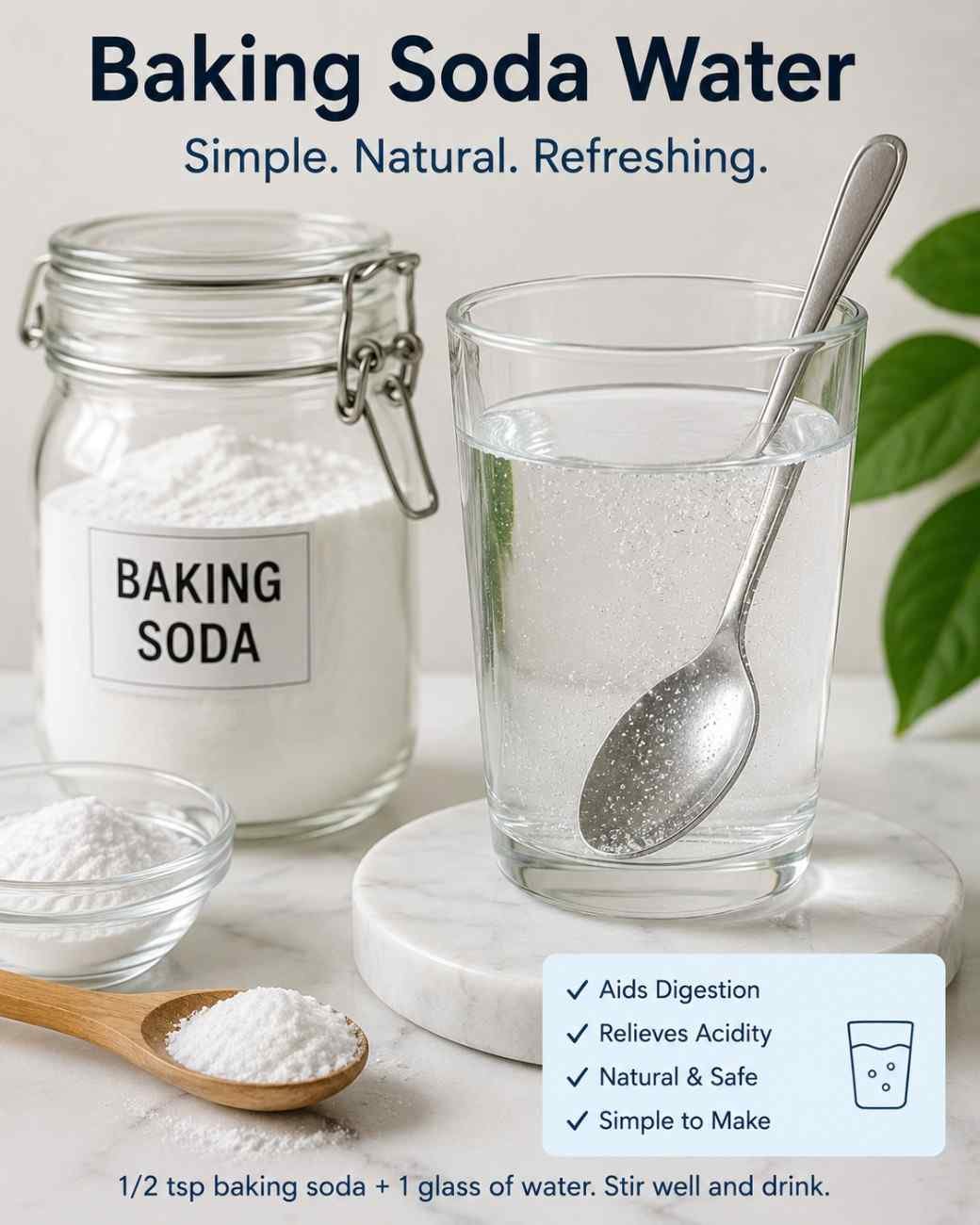
Baking Soda Water is a simple beverage made by dissolving a small amount of baking soda (sodium bicarbonate) in water. Although commonly known as a kitchen ingredient used in baking and cooking, baking soda has also been used for decades in various household, wellness, and fitness applications.
In recent years, Baking Soda Water has gained attention among health enthusiasts, athletes, and individuals seeking alternative wellness practices. Some people consume it as part of hydration routines, while others use it for its alkalizing properties or digestive support.
Baking soda is a naturally occurring compound that has been widely studied for its chemical properties. It is commonly used in food preparation, cleaning products, oral care products, and certain medical applications under professional supervision.
This comprehensive guide explores Baking Soda Water, including its nutritional profile, potential benefits, preparation methods, side effects, safety considerations, and frequently asked questions. According to MedlinePlus, sodium bicarbonate is approved for this purpose when used as directed.
What Is Baking Soda Water?
Baking Soda Water is a beverage made by mixing a small amount of baking soda (sodium bicarbonate) into water.
Sodium bicarbonate is an alkaline compound that dissolves easily in water. When consumed appropriately, it creates a slightly salty, alkaline beverage.
Many people drink Baking Soda Water for purposes such as:
- Digestive comfort
- Temporary acid neutralization
- Hydration support
- Fitness routines
- General wellness practices
However, because baking soda contains significant amounts of sodium, moderation is important.
History of Baking Soda
Baking soda has a long history of use.
Ancient civilizations utilized naturally occurring alkaline minerals for cooking, cleaning, and medicinal purposes.
Modern baking soda became widely available during the 19th century and quickly became a household staple.
Today, sodium bicarbonate is used in:
- Baking
- Food preparation
- Cleaning products
- Oral care
- Pharmaceuticals
- Sports performance research
Its versatility has made it one of the most widely used compounds worldwide.
Nutritional Profile of Baking Soda
Baking soda contains:
- Sodium
- Bicarbonate ions
Unlike fruits, vegetables, or herbal drinks, Baking Soda Water does not provide vitamins, minerals, antioxidants, fiber, or protein.
The primary nutritional consideration is its sodium content.
Approximate nutritional values per ½ teaspoon:
- Calories: 0
- Fat: 0 g
- Protein: 0 g
- Carbohydrates: 0 g
- Sodium: Approximately 600–700 mg
Values vary by brand.
25 Potential Benefits of Baking Soda Water
1. Supports Hydration
When mixed with water, it contributes to overall fluid intake.
2. May Help Neutralize Stomach Acid
Baking soda is alkaline and may temporarily neutralize excess stomach acid.
3. Supports Temporary Heartburn Relief
Some individuals use baking soda for occasional heartburn relief under appropriate guidance.
4. May Support Exercise Performance
Research has explored sodium bicarbonate’s role in high-intensity athletic performance.
5. Provides an Alkaline Beverage Option
Baking Soda Water creates an alkaline solution.
6. Supports Acid-Base Balance Research
Scientists continue studying bicarbonate’s role in acid-base regulation.
7. Low-Calorie Beverage
It contains virtually no calories.
8. Sugar-Free
No added sugars are present.
9. Fat-Free
Baking Soda Water contains no fat.
10. Caffeine-Free
Suitable for individuals avoiding caffeine.
11. Easy to Prepare
Only two ingredients are required.
12. Inexpensive
Baking soda is widely available and affordable.
13. Popular Among Athletes
Some athletes use sodium bicarbonate as part of sports nutrition strategies.
14. Supports Hydration During Activity
Water remains essential for physical performance.
15. May Reduce Acidic Taste in Certain Drinks
Some people add small amounts to beverages.
16. Long Shelf Life
Baking soda stores well when kept dry.
17. Versatile Wellness Beverage
It can be incorporated into various hydration routines.
18. Convenient
Preparation takes only a few seconds.
19. Widely Available
Baking soda can be found in most grocery stores.
20. Supports Healthy Hydration Habits
When consumed responsibly, it can be part of a hydration-focused lifestyle.
21. May Support Acid Buffering During Intense Exercise
Sodium bicarbonate may help buffer acid buildup in muscles during high-intensity workouts.
22. Can Be Part of Pre-Workout Hydration
Some athletes include it in hydration strategies before training sessions.
23. May Help Reduce Exercise Fatigue
Research suggests bicarbonate may help delay fatigue during certain types of intense exercise.
24. Supports Fluid Balance
The sodium content may help maintain fluid balance under specific circumstances.
25. Convenient Home Remedy Ingredient
Baking soda is widely available and easy to prepare when used appropriately.
Baking Soda Water and Digestion
One of the most common reasons people consume Baking Soda Water is digestive comfort.
Because sodium bicarbonate is alkaline, it may temporarily neutralize stomach acid.
Many people use it occasionally for:
- Acid discomfort
- Occasional indigestion
- Temporary heartburn
However, frequent digestive symptoms should always be evaluated by a healthcare professional.
Baking Soda Water and Athletic Performance
Sports scientists have studied sodium bicarbonate for decades.
Research has explored its potential role in:
- High-intensity exercise
- Sprint performance
- Athletic endurance
- Exercise recovery
The theory is that bicarbonate may help buffer acid accumulation during intense physical activity.
However, sports supplementation should always be approached carefully because excessive intake can cause digestive side effects.
Baking Soda Water and Alkalinity
Baking soda is naturally alkaline.
When dissolved in water, it increases the pH level of the solution.
This has led to interest in Baking Soda Water among individuals following alkaline lifestyle practices.
However, the body naturally regulates blood pH through highly sophisticated physiological mechanisms.
How to Make Baking Soda Water
Basic Baking Soda Water Recipe
Ingredients
- 1 glass water (8 ounces)
- ¼ teaspoon baking soda
Instructions
- Pour water into a glass.
- Add baking soda.
- Stir until completely dissolved.
- Drink immediately.
Use only food-grade baking soda intended for consumption.
Lemon Baking Soda Water
Ingredients
- Water
- Baking soda
- Fresh lemon juice
Method
Mix ingredients thoroughly before drinking.
Morning Baking Soda Water
Ingredients
- Warm water
- Baking soda
Method
Some individuals consume it as part of morning hydration routines.
Best Time to Drink Baking Soda Water
Common times include:
- Morning
- Before workouts
- During athletic training
- After meals (occasionally)
Consumption frequency should remain moderate due to sodium content.
Baking Soda Water and Hydration
Hydration supports:
- Temperature regulation
- Nutrient transportation
- Digestion
- Energy production
- Physical performance
Although Baking Soda Water contributes to hydration, plain water remains the primary hydration recommendation for most people.
Potential Side Effects of Baking Soda Water
This Water Water is not suitable for everyone.
Possible side effects include:
1. Excess Sodium Intake
Baking soda contains significant sodium.
2. Bloating
Some individuals experience stomach bloating.
3. Gas
Carbon dioxide production may cause temporary gas.
4. Nausea
Excessive intake may cause nausea.
5. Digestive Discomfort
Large amounts can upset the stomach.
6. Electrolyte Imbalances
Excessive use may affect electrolyte balance.
7. Increased Blood Pressure Risk
Individuals sensitive to sodium should exercise caution.
Who Should Avoid Baking Soda Water?
Individuals should consult healthcare professionals before using This Water if they have:
- High blood pressure
- Kidney disease
- Heart disease
- Liver disease
- Sodium-restricted diets
- Pregnancy-related concerns
Professional guidance is especially important for regular use.
Storage Tips
This Water is best consumed immediately after preparation.
For baking soda storage:
- Keep in a dry container.
- Store in a cool place.
- Seal tightly after use.
- Avoid moisture exposure.
FAQs
What is Baking Soda Water?
Baking Soda Water is a beverage made by dissolving sodium bicarbonate (baking soda) in water.
What are the benefits of Baking Soda Water?
Potential benefits may include hydration support, temporary acid neutralization, digestive comfort, and use in athletic performance strategies.
Can Baking Soda Water help with heartburn?
Some individuals use baking soda to temporarily neutralize stomach acid. Persistent symptoms should be evaluated by a healthcare professional.
Is Baking Soda Water safe to drink daily?
Regular daily consumption may not be appropriate for everyone due to its sodium content. Consult a healthcare professional for personalized advice.
Does Baking Soda Water contain calories?
No. this Water contains virtually no calories.
Can athletes use Baking Soda Water?
Some athletes use sodium bicarbonate as part of sports nutrition strategies, though professional guidance is recommended.
What does Baking Soda Water taste like?
It has a mildly salty and alkaline taste.
Does Baking Soda Water contain caffeine?
No. It is naturally caffeine-free.
Can Baking Soda Water raise sodium intake?
Yes. Baking soda contains significant amounts of sodium.
How should Baking Soda Water be stored?
It is best consumed immediately after preparation.
Conclusion
Baking Soda Water is a simple beverage made from sodium bicarbonate and water. It has gained popularity for its potential digestive applications, alkalinity, and role in sports nutrition research. While it may provide temporary benefits in specific situations, it is important to recognize its high sodium content and consume it responsibly.
For most healthy individuals, occasional use may be appropriate, but frequent consumption should be discussed with a healthcare professional. As with any wellness practice, this Water works best when combined with balanced nutrition, regular exercise, adequate hydration, and healthy lifestyle habits.
Understanding both the potential benefits and limitations of this Water can help individuals make informed decisions about incorporating it into their wellness routines.
Also read:
Probiotic Water Benefits, Nutrition, Recipe, Uses & Side Effects