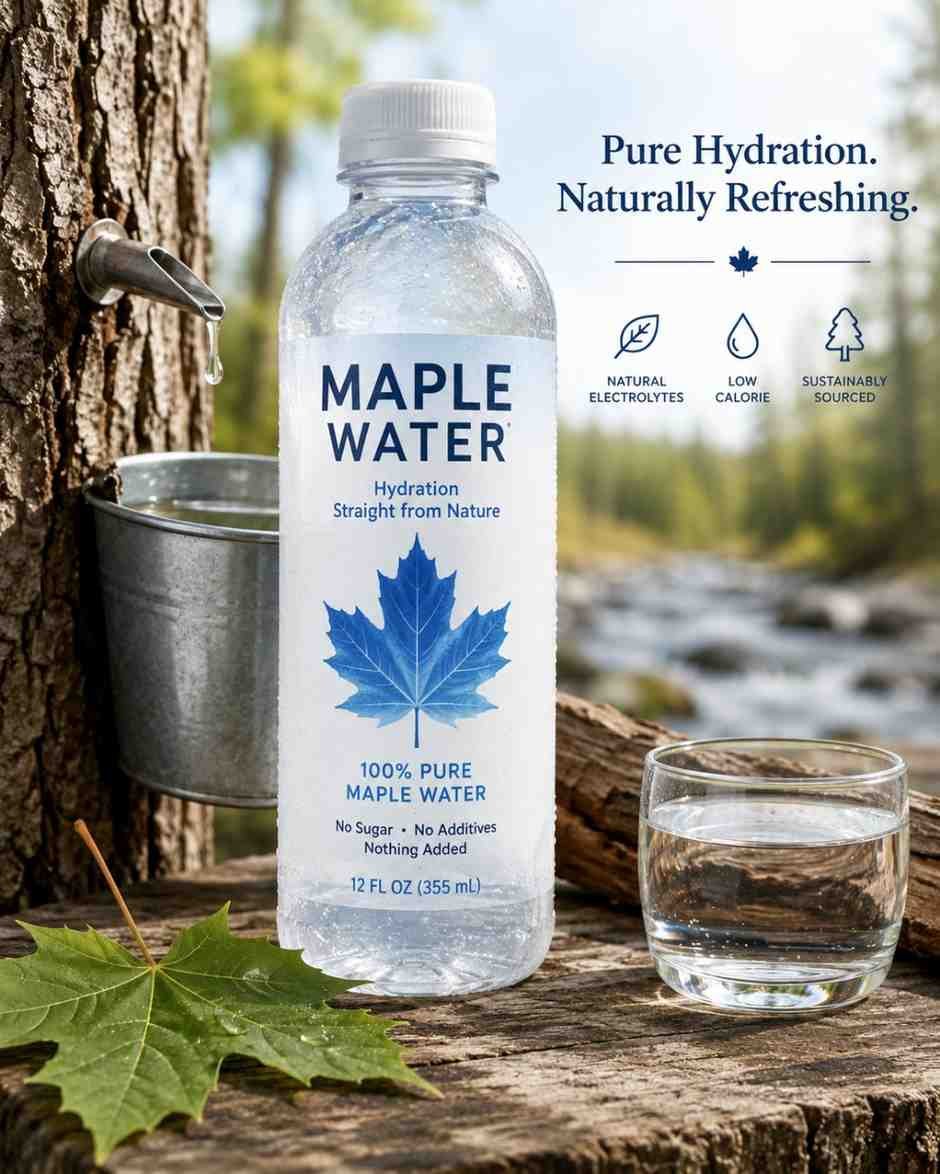
Maple Water has become one of the fastest-growing plant-based beverages in the wellness industry. Harvested directly from maple trees during the spring season, this refreshing drink is valued for its natural hydration, subtle sweetness, and unique nutrient profile.
As consumers increasingly search for alternatives to sugary soft drinks and artificial sports beverages, Maple Water has emerged as a popular option. It is naturally low in calories and contains trace minerals, antioxidants, and plant compounds that contribute to its growing appeal.
For centuries, indigenous communities and rural populations in North America have collected maple sap from trees for various uses. Today, modern beverage companies bottle this naturally occurring sap and market it as a functional hydration drink.
In this complete guide, you’ll learn everything about Maple Water, including its history, nutrition facts, benefits, uses, side effects, preparation methods, and frequently asked questions.
What Is Maple Water?
Maple Water is the clear sap collected from maple trees before it is processed into maple syrup.
During early spring, maple trees naturally transport water and nutrients from their roots to support new seasonal growth. This sap consists mostly of water but also contains small amounts of naturally occurring sugars, minerals, amino acids, antioxidants, and plant compounds.
Unlike maple syrup, Maple Plant Water is much lighter, less sweet, and significantly lower in calories.
Other Names for Maple Water
Maple Water may also be known as:
- Maple Sap Water
- Maple Tree Water
- Maple Sap Drink
- Maple Tree Sap
- Tree Water
- Maple Beverage
- Maple Wellness Water
- Maple Hydration Drink
- Natural Maple Plant Water
- Forest Water
- Maple Tree Beverage
- Spring Maple Sap
- Pure Maple Sap
- Tree Sap Water
- Maple Refreshment Drink
History of Maple Water
The history of Maple Plant Water dates back centuries.
Indigenous peoples of North America were among the first to collect maple sap from trees. They used the sap as a refreshing drink and later developed methods for producing maple syrup.
European settlers adopted these practices and expanded maple harvesting throughout regions that are now Canada and the northeastern United States.
Today, Maple Plant Water has evolved from a traditional seasonal beverage into a commercially available wellness drink enjoyed worldwide.
Nutritional Profile of Maple Water
Maple Plant Water is composed primarily of water but may also contain:
- Potassium
- Calcium
- Magnesium
- Manganese
- Zinc
- Antioxidants
- Polyphenols
- Amino acids
- Natural electrolytes
- Trace minerals
The exact nutrient composition varies based on tree species, season, and processing methods.
Top 20 Benefits of Maple Water
1. Supports Hydration
Maple Plant Water consists mainly of water, making it an effective hydration beverage.
2. Contains Natural Electrolytes
Naturally occurring minerals help support fluid balance.
3. Rich in Antioxidants
Maple sap contains antioxidant compounds that help protect cells from oxidative stress.
4. Naturally Low in Calories
Compared with many sweetened beverages, Maple Plant Water is relatively low in calories.
5. Light and Refreshing Taste
Its subtle sweetness appeals to many consumers.
6. Alternative to Sugary Drinks
Many people choose Maple Plant Water instead of soda and energy drinks.
7. Plant-Based Beverage
Suitable for vegan and plant-based diets.
8. May Support Active Lifestyles
Hydration is important for physical activity and recovery.
9. Contains Trace Minerals
Maple sap naturally contains small amounts of minerals.
10. Naturally Fat-Free
Maple Plant Water contains virtually no fat.
11. May Support Skin Hydration
Adequate hydration contributes to healthy-looking skin.
12. Convenient Wellness Drink
Ready-to-drink products are widely available.
13. Naturally Caffeine-Free
Provides hydration without stimulants.
14. Can Be Used in Smoothies
Works well as a liquid base in blended drinks.
15. May Help Maintain Fluid Balance
Electrolytes contribute to hydration regulation.
16. Suitable for Various Diet Plans
Fits many healthy eating approaches.
17. Supports Daily Water Intake
Can contribute to overall hydration goals.
18. Naturally Gluten-Free
Pure Maple Plant Water is gluten-free.
19. Refreshing During Warm Weather
A popular beverage choice during hot seasons.
20. Traditional Natural Beverage
Its long history adds to its appeal among wellness enthusiasts.
Maple Water vs Coconut Water
| Feature | Maple Water | Coconut Water |
|---|---|---|
| Source | Maple Tree Sap | Young Coconut |
| Taste | Mild & Slightly Sweet | Sweet & Tropical |
| Calories | Generally Lower | Slightly Higher |
| Electrolytes | Present | Higher Levels |
| Harvest Season | Spring | Year-Round |
Both beverages offer hydration and naturally occurring nutrients.
How Maple Water Is Harvested
Maple Plant Water is collected through a sustainable tapping process.
Harvesting Process
- Small taps are inserted into mature maple trees.
- Sap naturally flows from the tree.
- Collection containers gather the sap.
- The sap is filtered and bottled.
- Trees continue growing normally after proper harvesting.
Responsible harvesting practices help preserve tree health.
How to Drink Maple Water
Maple Plant Water can be enjoyed:
- Chilled
- At room temperature
- In smoothies
- Mixed with fruit juices
- Before workouts
- After exercise
- As a daily hydration beverage
Maple Water Recipes
Lemon Maple Water
Ingredients
- 1 cup Maple Water
- Juice of half a lemon
- Ice cubes
Mix and serve chilled.
Berry Maple Water
Ingredients
- Maple Water
- Fresh strawberries
- Blueberries
- Ice cubes
Allow the fruit to infuse before drinking.
Mint Maple Water
Ingredients
- Maple Water
- Fresh mint leaves
- Lemon slices
A refreshing summer beverage.
Best Time to Drink Maple Water
Many people enjoy Maple Plant Water:
- In the morning
- Before workouts
- After exercise
- During hot weather
- During travel
- As an afternoon refreshment
The best time depends on personal preference and lifestyle.
Maple Water for Athletes
Athletes often choose Maple Plant Water because:
- It supports hydration.
- It contains natural electrolytes.
- It is low in calories.
- It offers a refreshing taste.
- It fits active lifestyles.
Hydration remains a key component of athletic performance and recovery.
Maple Water for Weight Management
Many individuals incorporate Maple Plant Water into weight-management plans because:
- It contains relatively few calories.
- It may replace sugary beverages.
- It supports hydration.
- It can satisfy beverage cravings naturally.
However, long-term weight management depends on overall diet and lifestyle habits.
Maple Water and Skin Health
Hydration is important for maintaining healthy skin.
Because Maple Plant Water contributes to fluid intake and contains antioxidants, it may support:
- Skin hydration
- Healthy appearance
- Antioxidant intake
- Overall wellness
Potential Side Effects of Maple Water
Maple Plant Water is generally considered safe for most healthy adults.
Possible side effects may include:
- Allergic reactions in sensitive individuals
- Digestive discomfort if consumed excessively
- Sensitivity to tree-derived products
Individuals with medical conditions should consult a healthcare professional before adding new beverages to their diet.
Storage Tips
For best quality:
- Refrigerate after opening.
- Keep containers sealed.
- Avoid direct sunlight.
- Follow manufacturer instructions.
- Consume within the recommended period.
Fresh Maple Plant Water is highly perishable and should be consumed promptly.
Who Should Drink Maple Water?
Maple Plant Water may be suitable for:
- Athletes
- Students
- Busy professionals
- Travelers
- Wellness enthusiasts
- Outdoor workers
- Vegans
- Individuals seeking healthier beverage alternatives
FAQs
What is Maple Plant Water?
Maple Plant Water is the natural sap collected from maple trees during spring.
Is Maple Plant Water healthy?
It contains hydration-supporting water, trace minerals, antioxidants, and plant compounds.
What does Maple Water taste like?
Maple Plant Water has a light, slightly sweet, and refreshing flavor.
Is Maple Plant Water the same as maple syrup?
No. Maple Plant Water is raw sap, while maple syrup is concentrated sap that has been boiled down.
Can I drink Maple Plant Water every day?
Many people include it in their hydration routines when consumed in moderation.
Does Maple Water contain electrolytes?
Yes, it contains naturally occurring minerals that function as electrolytes.
Is Maple Water vegan?
Yes, Maple Plant Water is plant-based and suitable for vegan diets.
Can Maple Water help with hydration?
Yes. Its primary benefit is contributing to daily fluid intake.
Does Maple Water contain caffeine?
No, Maple Plant Water is naturally caffeine-free.
How is Maple Water different from Coconut Water?
Maple Plant Water comes from maple tree sap, while Coconut Water comes from young coconuts. They differ in taste and nutrient composition.
Conclusion
Maple Water is a refreshing, plant-based beverage that combines hydration with naturally occurring minerals, antioxidants, and centuries of traditional use. Its light taste, low-calorie profile, and natural origin have helped it become one of the fastest-growing wellness drinks in the world.
Whether you’re looking for an alternative to sugary beverages, a natural hydration option after exercise, or a unique wellness drink, Maple Plant Water offers a refreshing choice. When combined with a balanced diet and healthy lifestyle habits, it can be a valuable addition to your daily hydration routine.
Also read:
Shilajit Water: Benefits, Nutrition, Uses, Side Effects & Guide