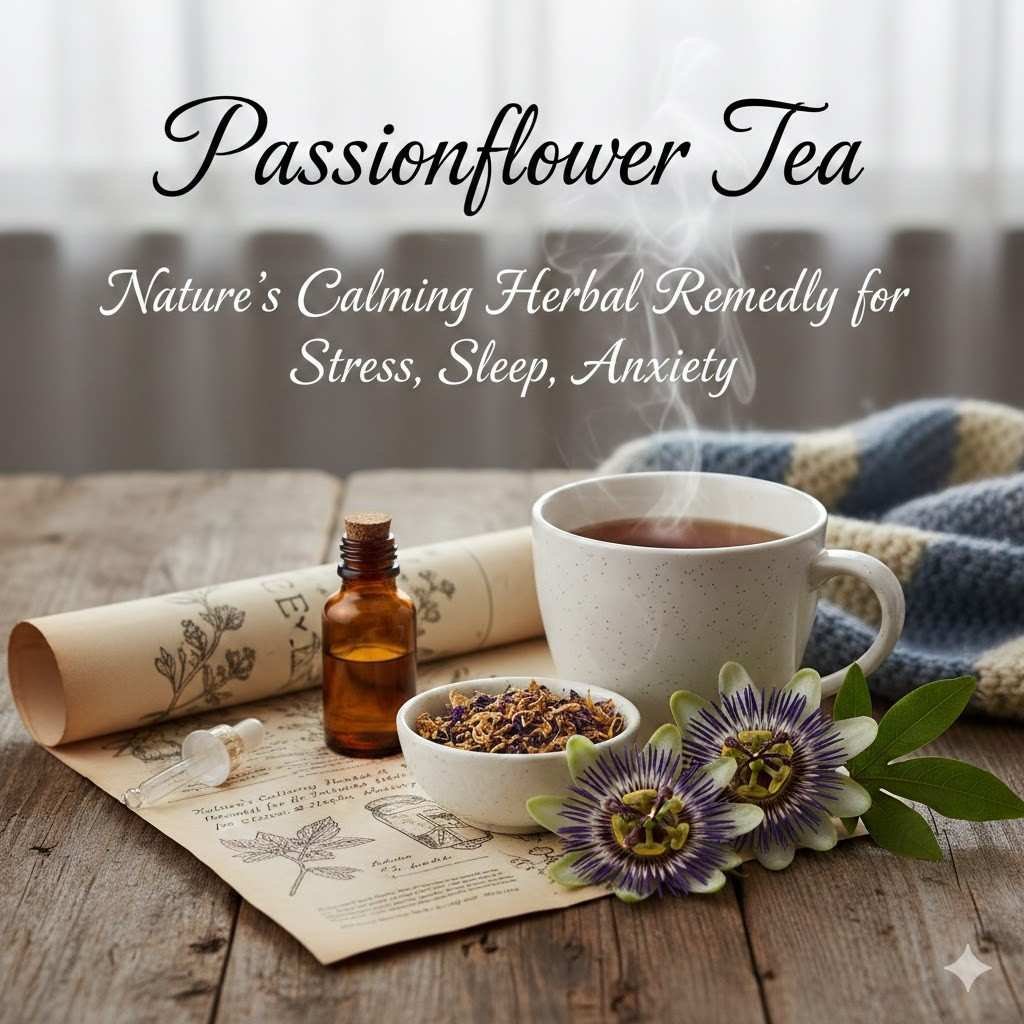
In today’s fast-paced world, stress and sleep problems have become almost universal. Many people are turning to herbal remedies for gentle, natural relief—and one of the most respected calming herbs is passionflower. Delicate, exotic, and surprisingly powerful, passionflower tea has been used for centuries to soothe the mind and body.
Made from the leaves, stems, and flowers of the Passiflora incarnata, passionflower tea is best known for its calming and sleep-supporting properties. Unlike strong sedatives, it works gently, making it popular among people seeking natural anxiety relief and better sleep quality.
In this complete 3000-word guide, you’ll discover the history, health benefits, science, preparation methods, safety tips, and everything you need to know about passionflower tea.
If you enjoy herbal teas for relaxation and wellness, you may also like our guides on Tulsi Tea, Peach Tea, and Tea Before Bed: Good or Bad? Each offers unique flavors and health benefits to support a balanced lifestyle.
What Is Passionflower Tea?
Passionflower tea is a caffeine-free herbal infusion made from dried parts of Passiflora incarnata, commonly called maypop or wild passionflower. It should not be confused with passion fruit tea, which is made from the fruit of tropical passion vines.
The tea has a mild, slightly grassy flavor with subtle earthy undertones. It is often blended with chamomile, lemon balm, or lavender to enhance its calming effects.
Passionflower is especially valued for its potential to:
- Reduce anxiety
- Improve sleep quality
- Calm nervous tension
- Support mood balance
The History of Passionflower in Herbal Medicine
Passionflower is native to the southeastern United States and Central America. Indigenous peoples traditionally used it as a calming herb for nervousness and insomnia.
In the 16th century, Spanish explorers encountered the plant and associated its intricate flower structure with Christian symbolism—hence the name “passionflower,” referencing the Passion of Christ.
By the 19th century, passionflower became part of American and European herbal medicine systems as a natural sedative and nerve tonic. Today, it remains widely used in both traditional herbalism and modern phytotherapy.
Active Compounds in Passionflower
The calming effects of passionflower tea are linked to its unique chemical profile, including:
- Flavonoids (such as apigenin)
- Harmala alkaloids
- Glycosides
- Maltol
Research suggests these compounds may interact with GABA (gamma-aminobutyric acid), a neurotransmitter responsible for calming nervous system activity.
When GABA levels increase, the brain experiences reduced excitability—leading to relaxation and improved sleep.
Top Health Benefits of Passionflower Tea
1. Natural Anxiety Relief
Passionflower tea is most famous for its anti-anxiety effects. Several studies suggest it may help reduce symptoms of generalized anxiety disorder (GAD) and situational anxiety.
It works by supporting GABA activity in the brain, promoting a sense of calm without causing heavy sedation.
People often use passionflower tea before:
- Public speaking
- Exams
- Stressful meetings
- Bedtime
Unlike pharmaceutical anti-anxiety medications, passionflower is generally mild and non-addictive.
2. Better Sleep Quality
If racing thoughts keep you awake at night, passionflower tea may help.
By calming nervous system activity, it can:
- Reduce nighttime restlessness
- Shorten time needed to fall asleep
- Improve sleep depth
Some small clinical trials have found that participants drinking passionflower tea reported improved sleep quality compared to placebo groups.
Drinking one cup 30–60 minutes before bedtime is common practice.
3. Stress Reduction
Chronic stress can affect digestion, immunity, mood, and heart health. Passionflower tea may help regulate stress responses by reducing cortisol spikes and calming the nervous system.
It’s often described as a “nerve tonic,” meaning it strengthens and soothes the nervous system over time.
4. May Help with Mild Depression
Although not a replacement for therapy or medication, passionflower’s calming and mood-supportive effects may help individuals experiencing mild depressive symptoms linked to anxiety and stress.
Herbalists frequently combine it with lemon balm or St. John’s wort for mood balance.
5. Menopausal Support
Some research suggests passionflower may help ease menopausal symptoms such as:
- Irritability
- Mood swings
- Insomnia
- Hot flashes
Its gentle calming action can provide emotional balance during hormonal transitions.
6. Digestive Support
Stress often disrupts digestion. Because passionflower reduces nervous tension, it may indirectly improve:
- Stress-related bloating
- Nervous stomach
- Mild digestive spasms
Relaxing the nervous system often supports smoother digestive function.
7. Heart Health and Blood Pressure
Preliminary research suggests passionflower may help reduce mild elevations in blood pressure linked to stress. However, it should not replace prescribed hypertension treatment.
Passionflower Tea for Different Types of Anxiety
Not all anxiety feels the same. Passionflower tea may help in specific situations:
1. Racing Thoughts at Night
If your mind feels busy at bedtime, passionflower may quiet mental chatter.
2. Situational Anxiety
Before exams, interviews, or public speaking, a warm cup may help steady nerves.
3. Stress-Related Digestive Discomfort
Because the gut and brain are closely connected, calming the nervous system may also ease nervous stomach issues.
Passionflower Tea vs Chamomile Tea
Many people compare passionflower to chamomile.
Chamomile:
- Mild relaxation
- Good for digestive calming
- Gentle sleep support
Passionflower:
- Stronger anxiety relief
- More direct GABA interaction
- Helpful for racing thoughts
Both can be blended for enhanced calming effects.
Passionflower Tea vs Valerian Root
Passionflower is often compared to valerian root:
| Feature | Passionflower | Valerian |
|---|---|---|
| Strength | Mild–moderate | Stronger sedative |
| Daytime use | Yes (light doses) | Not usually |
| Taste | Mild grassy | Strong, earthy |
| Grogginess risk | Low | Moderate |
Passionflower is ideal for those who want relaxation without heavy sedation.
How to Make Passionflower Tea (Step-by-Step Guide)
Passionflower tea is simple to prepare and requires only one main ingredient: dried Passiflora incarnata. The key is proper steeping to extract its calming compounds without making the tea too bitter.
Basic Passionflower Tea Recipe
Ingredients:
- 1 teaspoon dried passionflower (leaves, stems, and flowers)
- 1 cup (240 ml) hot water
- Optional: honey or lemon
Instructions:
- Heat the Water
Bring water to a gentle boil, then let it cool slightly for about 1 minute (ideal temperature: 90–95°C). - Add the Herb
Place the dried passionflower into a tea infuser, teapot, or cup. - Pour and Steep
Pour hot water over the herb. Cover the cup to prevent beneficial oils from escaping. - Steep for 10–15 Minutes
Longer steeping (up to 15 minutes) creates a stronger calming effect. - Strain and Serve
Remove the herbs, add honey or lemon if desired, and enjoy warm.
For Sleep Support (Stronger Version)
If using passionflower specifically for sleep:
- Use 1½ teaspoons dried herb
- Steep for 15 minutes
- Drink 30–60 minutes before bedtime
You can combine it with chamomile or lemon balm for enhanced relaxation.
Relaxing Herbal Blend
For a calming nighttime blend:
- 1 teaspoon passionflower
- 1 teaspoon chamomile
- ½ teaspoon lemon balm
Steep together for 10–15 minutes.
Can You Make Iced Passionflower Tea?
Yes.
- Prepare the tea as usual (slightly stronger).
- Let it cool.
- Refrigerate for 1–2 hours.
- Serve over ice with lemon slices.
This works well for daytime stress relief.
How Often Can You Drink It?
- 1–2 cups daily is typical.
- Best consumed in the evening or during stressful moments.
Important Tips
- Always use properly dried, high-quality passionflower.
- Avoid boiling the herb directly for long periods (steeping is better).
- Do not combine with alcohol or strong sedatives.
- Consult a doctor if pregnant, breastfeeding, or taking medication.
Relaxation Blend
- Passionflower
- Chamomile
- Lemon balm
- Lavender
Steep together for a powerful nighttime blend. Mayo Clinic recommends combining healthy sleep habits with relaxing bedtime routines to support better sleep quality.
Best Time to Drink Passionflower Tea
- Evening for sleep
- Before stressful events
- During periods of high anxiety
- After work to unwind
Because it is calming, it’s usually best consumed later in the day.
Who Should Avoid Passionflower Tea?
Although generally safe, caution is advised for:
- Pregnant or breastfeeding women
- People taking sedatives
- Those on anti-anxiety medications
- Individuals with low blood pressure
Always consult a healthcare provider if unsure.
Potential Side Effects
Passionflower tea is typically well tolerated. Rare side effects may include:
- Drowsiness
- Dizziness
- Mild confusion (at high doses)
- Nausea
Avoid combining with alcohol or strong sedatives.
Is Passionflower Tea Addictive?
No. Passionflower is considered non-habit forming. It does not create dependency like some pharmaceutical sleep aids.
Passionflower Tea for Children
It may be used in small, diluted amounts for older children under professional guidance. Pediatric consultation is recommended.
Scientific Research Overview
Clinical studies have shown promising results for passionflower in:
- Reducing generalized anxiety
- Improving sleep quality
- Supporting pre-surgical anxiety relief
However, more large-scale trials are needed for definitive conclusions.
How Long Does It Take to Work?
Many people feel calming effects within 30–60 minutes. For long-term anxiety management, consistent daily use for several weeks may provide better results.
Growing Passionflower at Home
Passiflora incarnata is a climbing vine that thrives in warm climates. It produces stunning purple and white flowers.
The aerial parts are harvested during flowering season and dried for tea use.
Flavor Profile
Passionflower tea has a:
- Mild grassy taste
- Slight earthiness
- Subtle floral note
It pairs well with honey and lemon.
Passionflower Tea in Modern Wellness Culture
As interest in natural stress remedies grows, passionflower has gained popularity in:
- Herbal tea blends
- Sleep formulas
- Anxiety supplements
- Tinctures
Its gentle yet noticeable calming effect makes it a favorite among herbal enthusiasts.
According to MedlinePlus, herbal supplements can interact with medications. Consult a healthcare professional before using passionflower tea if you are pregnant, breastfeeding, or taking sedatives, antidepressants, or other prescription medicines.
FAQs
1. Does passionflower tea really help with anxiety?
It may help reduce mild to moderate anxiety by supporting GABA activity.
2. Is passionflower tea safe for daily use?
Short-term daily use is generally safe for most adults.
3. Does it make you sleepy?
It promotes relaxation and may cause mild drowsiness.
4. Can I drink it during the day?
Yes, but it may make you feel relaxed.
5. Is passionflower tea caffeine-free?
Yes.
6. How many cups can I drink per day?
1–3 cups daily is typical.
7. Can I combine it with chamomile?
Yes, they complement each other well.
8. Is it safe with antidepressants?
Consult a healthcare provider first.
Conclusion
Passionflower tea is a naturally caffeine-free herbal infusion that may help promote relaxation and support healthy sleep as part of an overall wellness routine. While research is ongoing, many people enjoy it as a calming evening beverage. To explore more healthy drinks and natural wellness ideas, visit our guides on Hibiscus Tea, Green Tea, Ginger Tea , 10 Tea Trends on Trendyopedia.