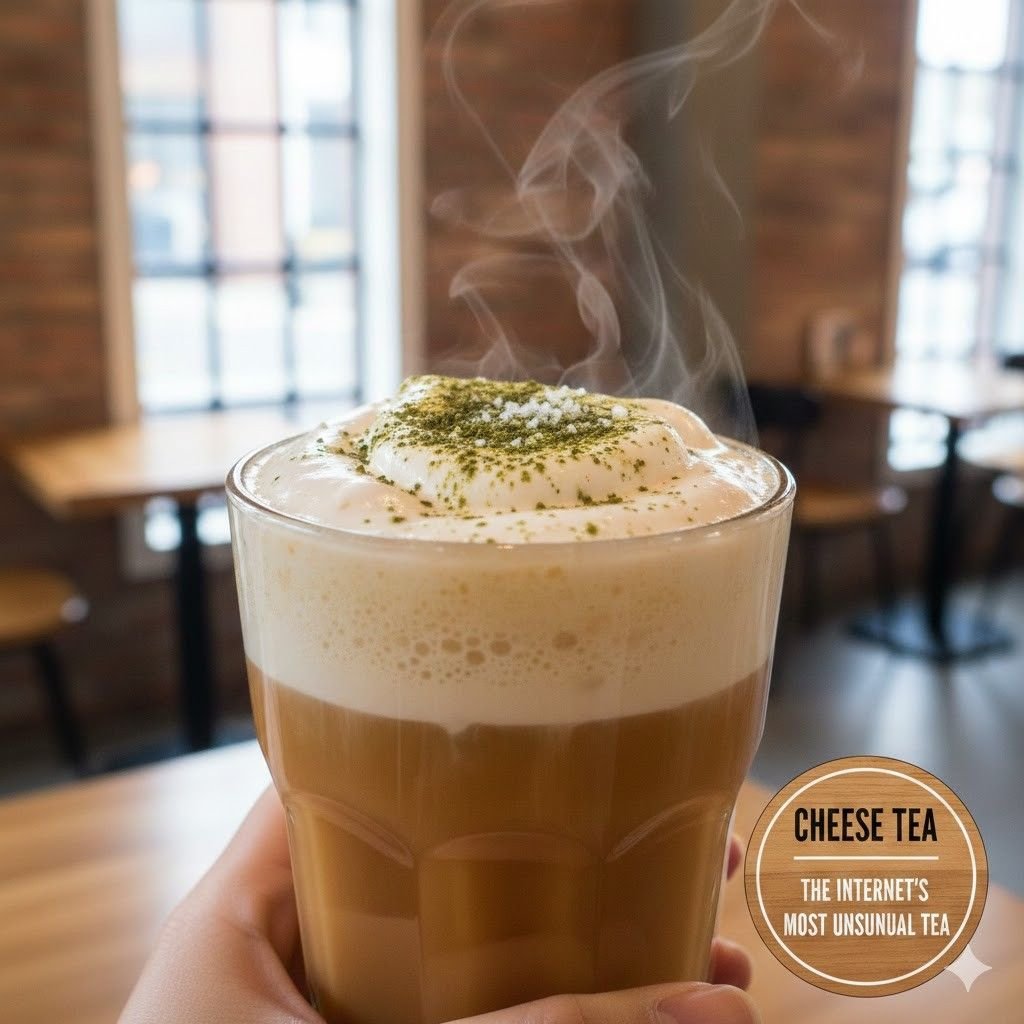
In the ever-evolving world of beverages, few drinks have sparked as much curiosity — and skepticism — as cheese tea. A creamy layer of lightly salted cheese foam floating atop freshly brewed tea might sound unusual at first, yet this bold creation has taken cafés, social media feeds, and global drink menus by storm.
Born in Asia and propelled by internet culture, this tea has become a symbol of modern experimentation — where tradition meets innovation, and unexpected flavor combinations capture the imagination of adventurous drinkers.
But is this tea just another viral fad, or does it offer a genuinely enjoyable drinking experience?
This comprehensive guide explores the origins, flavor science, preparation methods, variations, health considerations, and future of this tea — revealing why this once-niche beverage has become a worldwide sensation.
If you enjoy exploring unique beverages, you may also like our guide on Peach Tea: Summer Favorite with Surprising Benefits, which covers another popular tea trend with a completely different flavor profile.
What Is Cheese Tea?
Cheese tea is a specialty drink made by topping cold or iced tea with a thick foam crafted from cream cheese, milk, whipping cream, and a pinch of salt.
The result is a layered beverage with two contrasting components:
- Bottom layer: refreshing tea (green, black, oolong, or fruit tea)
- Top layer: smooth, savory cheese foam
The magic happens when you sip both layers together — creating a balance of sweet, salty, creamy, and bitter flavors.
Think of it as the beverage equivalent of salted caramel: surprising at first, addictive after a few sips.
Where Did Cheese Tea Originate?
Cheese tea is widely believed to have emerged in Kaohsiung, a vibrant coastal hub in Taiwan known for its inventive street food and beverage culture.
Local tea vendors began experimenting with textures to differentiate themselves in a competitive market dominated by bubble tea.
One of the brands frequently credited with popularizing the concept is HEYTEA, which helped transform cheese tea from regional curiosity into a pan-Asian phenomenon.
From there, the trend spread rapidly into China, followed by Southeast Asia, North America, and Europe.
Why Did Cheese Tea Go Viral?
Several factors aligned perfectly to propel this tea into internet fame.
1. Visual Appeal
The distinct separation between tea and foam creates a photogenic contrast that performs exceptionally well on social media.
2. Curiosity Factor
The phrase “cheese tea” alone triggers intrigue. People want to try it simply to understand how it works.
3. Texture Innovation
Modern consumers increasingly value texture — from chewy tapioca pearls to whipped coffee. Cheese foam adds a luxurious mouthfeel that elevates the drinking experience.
4. Café Culture Boom
Specialty beverage shops thrive on novelty. Offering something unexpected helps attract younger audiences seeking new experiences.
What Does Cheese Tea Taste Like?
The flavor profile is surprisingly sophisticated.
First impression: creamy and slightly salty
Mid-palate: aromatic tea brightness
Finish: smooth, lightly sweet
Rather than tasting like melted cheese pizza (a common fear), the foam resembles a lightly salted cheesecake topping.
The salt enhances sweetness while tempering bitterness — a classic culinary technique.
The Science Behind the Flavor Balance
Great dishes often rely on contrast:
- Sweet + salty
- Creamy + refreshing
- Rich + light
Cheese tea succeeds because it hits all these sensory checkpoints simultaneously.
Salt suppresses bitterness in tea, while fat carries aroma molecules more effectively, making each sip taste fuller.
This is not accidental — it is flavor engineering.
Typical Ingredients in Cheese Foam
Most cafés use variations of the following:
- Cream cheese
- Heavy cream or whipping cream
- Milk
- Sugar
- Pinch of salt
Some shops add condensed milk for extra body.
The foam is whipped until thick but pourable — dense enough to float without immediately mixing.
Best Teas for Cheese Tea
Not every tea pairs well with cheese foam. Stronger, aromatic varieties perform best.
Green Tea
Fresh and grassy — ideal for lighter drinks.
Oolong Tea
Floral and complex, often considered the premium pairing.
Black Tea
Bold enough to cut through richness.
Fruit Tea
Bright acidity balances the creaminess beautifully.
How to Drink Cheese Tea Properly
Surprisingly, there is a technique.
Most shops advise not using a straw.
Instead:
- Tilt the cup about 40–45 degrees.
- Sip so the foam and tea enter your mouth together.
- Allow the layers to blend naturally.
Drinking it incorrectly can upset the balance.
Is Cheese Tea Served Hot or Cold?
While some cafés offer warm versions, this tea is predominantly served iced.
Cold temperatures help maintain foam stability and enhance refreshment — especially in warmer climates.
Cheese Tea vs Bubble Tea
Though often grouped together, they deliver different experiences.
Bubble Tea: focuses on chewy toppings.
Cheese Tea: emphasizes creamy foam contrast.
Both reflect the modern shift toward interactive beverages rather than passive drinks.
Why Younger Consumers Love Cheese Tea
Millennials and Gen Z tend to prioritize experiences over routine consumption.
Cheese tea offers:
- Novelty
- Shareability
- Aesthetic appeal
- Customization
It turns a simple drink into a conversation piece.
Health Considerations
Let’s be honest —this tea is closer to a treat than a wellness tonic.
Potential Positives
- Contains antioxidants from tea
- Provides quick energy
- Highly satisfying (which may reduce additional snacking)
Points to Watch
- Can be calorie-dense
- Often contains added sugars
- Includes saturated fats
Moderation is wise.
Many cafés now offer lighter foam options to address health-conscious consumers.
While cheese tea can be enjoyed occasionally, those looking for beverages with more functional health benefits may prefer Mushroom Tea, known for medicinal mushroom blends, or CBD Tea, which is commonly consumed as part of relaxation routines.
Can You Make Cheese Tea at Home?
Absolutely — and it is easier than most people expect.
Simple Homemade Cheese Tea Recipe
For the Tea:
- 1 cup strong brewed tea (oolong recommended)
- Ice
- Sweetener to taste
For the Foam:
- 2 tablespoons cream cheese
- 3 tablespoonsheavy cream
- 1 tablespoon milk
- 1–2 teaspoons sugar
- Tiny pinch of salt
Instructions:
- Whip foam ingredients until smooth and slightly thick.
- Pour chilled tea over ice.
- Gently spoon foam on top.
- Sip and enjoy.
A handheld frother works wonderfully.
Common Mistakes When Making Cheese Tea
- Over-whipping (creates stiff peaks)
- Under-salting (foam tastes flat)
- Using weak tea
- Serving without enough ice
- Making foam too thin
Precision matters.
Cheese Tea Around the World
What began in Asia now appears in specialty cafés globally.
Cities with strong tea cultures often adapt it with local flavors — from matcha foam to chocolate-infused toppings.
Globalization continues to reshape how we drink tea.
The Role of Social Media
Platforms like Instagram and TikTok helped transform this tea into a digital darling.
Visually striking drinks thrive online, and viral exposure can elevate niche products overnight.
Cheese tea is a textbook example of internet-driven food culture.
Is Cheese Tea Just a Passing Trend?
Food history suggests otherwise.
Many once-strange pairings — salted chocolate, chili mango, butter coffee — eventually entered the mainstream.
this tea’s balanced flavor gives it staying power beyond novelty.
The Psychology of Unexpected Foods
Humans are wired to seek new sensory experiences.
Trying unusual combinations activates reward pathways in the brain, making discovery pleasurable.
Cheese tea taps directly into that curiosity loop.
Customization Trends
Modern cafés increasingly allow customers to tailor their drinks:
- Foam thickness
- Sugar level
- Tea strength
- Dairy-free alternatives
Personalization helps transform first-time tasters into repeat customers.
Sustainability Questions
As specialty beverages grow, consumers are asking more about sourcing and environmental impact.
Forward-thinking tea shops are exploring:
- Ethically sourced tea leaves
- Reduced plastic packaging
- Reusable cups
- Lower-waste preparation
Sustainability may shape the next phase of cheese tea’s evolution.
Who Should Try Cheese Tea?
You will likely enjoy it if you:
- Appreciate creamy drinks
- Like sweet-and-salty desserts
- Enjoy café culture
- Are open to experimentation
It may not suit strict low-fat diets — but as an occasional indulgence, it shines.
Pairing Cheese Tea with Food
this tea works surprisingly well with:
- Light pastries
- Butter cookies
- Sponge cakes
- Fruit desserts
Avoid overly heavy meals that compete with the foam’s richness.
The Future of Cheese Tea
Expect continued innovation, including:
- Plant-based cheese foams
- Protein-enhanced versions
- Reduced-sugar recipes
- Botanical infusions
- Seasonal flavors
Yet the classic formula remains hard to beat.
Final Thoughts
Cheese tea represents a fascinating chapter in modern beverage culture — proof that even centuries-old drinks like tea can evolve in unexpected directions.
It challenges assumptions, invites curiosity, and rewards adventurous palates.
Whether you fall in love at first sip or approach it cautiously, one thing is certain: this tea is more than a gimmick. It is a reflection of creativity in a rapidly changing food landscape.
So next time you spot that cloud-like foam hovering above a chilled glass of tea, consider giving it a try.
Sometimes the strangest ideas turn out to be the most delightful.
For readers focusing on healthier drink choices, our article on Lemon Cucumber Water explains how infused water can be a refreshing low-calorie alternative.
FAQs
1. What is cheese tea?
This tea is a modern beverage made by topping freshly brewed tea with a creamy, lightly salted cheese foam. The drink combines sweet, savory, and refreshing flavors in one layered experience.
2. Where did cheese tea originate?
Cheese tea is believed to have first gained popularity in Kaohsiung, a creative food hub in Taiwan known for innovative street beverages.
3. Does cheese tea taste like melted cheese?
No. The foam usually tastes closer to a mildly salted cheesecake topping rather than traditional savory cheese.
4. What types of tea are used in cheese tea?
Common options include green tea, black tea, oolong tea, and fruit-infused teas. Stronger teas typically balance the richness of the foam better.
5. How should cheese tea be drunk?
Most cafés recommend sipping directly from the cup instead of using a straw so the foam and tea blend naturally with each sip.
6. Is cheese tea served hot or cold?
It is most often served iced because cold temperatures help maintain the foam’s texture and make the drink more refreshing.
7. Is cheese tea healthy?
It contains antioxidants from tea but can also be high in sugar and fat. Enjoying it occasionally is generally the best approach.
8. Why did cheese tea become so popular?
Social media platforms such as Instagram helped the drink go viral thanks to its visually appealing layered look.
9. Can cheese tea be made dairy-free?
Yes. Many modern cafés offer plant-based foam made from ingredients like oat or almond milk to accommodate dietary preferences.
10. Is cheese tea similar to bubble tea?
Not exactly. Bubble tea focuses on chewy toppings like tapioca pearls, while this tea highlights creamy foam and flavor contrast.
11. Does cheese tea contain caffeine?
Yes, unless it is made with herbal tea. The caffeine level depends on the tea base used.
12. Can I reduce the sugar in cheese tea?
Absolutely. Many shops allow customers to adjust sweetness levels for a lighter drink.
13. How long does cheese foam last?
For the best texture and taste, this tea should be consumed soon after preparation before the foam fully blends into the tea.
14. Who might enjoy cheese tea the most?
People who like creamy beverages, dessert-style drinks, and unique flavor combinations are often quick fans.
15. Is cheese tea just a passing trend?
While it started as a novelty, its balanced flavor and customizable nature suggest it may remain a staple in modern tea culture for years to come.
Author
Hitasha
Hitasha is a health and wellness content writer at Trendyopedia, specializing in nutrition, healthy beverages, skincare, and lifestyle trends. She creates well-researched, easy-to-understand, and SEO-friendly articles backed by credible sources to help readers make informed decisions about their health and daily habits. Her goal is to simplify complex topics into practical, trustworthy advice for everyday living.
Disclaimer
This article is for informational and educational purposes only and should not be considered medical, nutritional, or professional advice. Cheese tea may contain caffeine, dairy, sugar, and other ingredients that may not be suitable for everyone, especially individuals with allergies or specific health conditions. Always consult a qualified healthcare professional or registered dietitian before making significant changes to your diet or if you have concerns about how certain foods or beverages may affect your health.