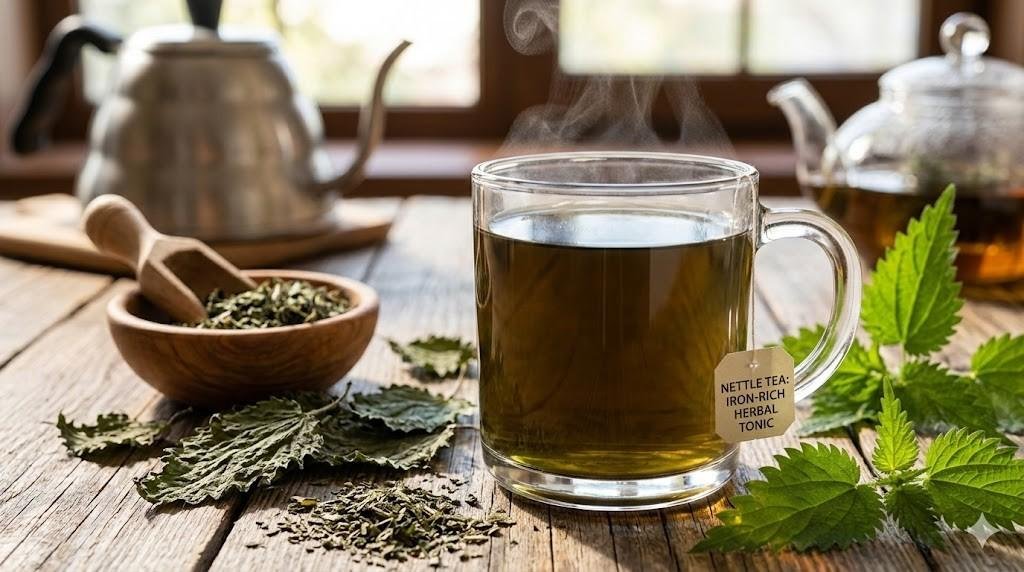
In the world of herbal wellness, few plants are as underestimated yet nutritionally powerful as nettle. Often dismissed as a stinging weed found along roadsides and forest edges, nettle has actually been treasured for centuries as a healing herb across Europe, Asia, and traditional folk medicine systems. Today, nettle tea is gaining renewed popularity as a natural tonic packed with minerals, antioxidants, and especially iron.
For people seeking natural ways to boost energy, support blood health, and improve overall vitality, nettle tea stands out as a gentle but effective daily beverage. Unlike stimulant drinks that provide temporary energy spikes, nettle works by nourishing the body at a foundational level.
This comprehensive guide explores everything you need to know about nettle tea — from its iron content and health benefits to preparation methods, safety considerations, and daily usage tips.
What Is Nettle Tea?
Nettle tea is an herbal infusion made from the leaves of the plant Urtica dioica, commonly known as stinging nettle. Despite its prickly reputation when fresh, drying or steeping nettle neutralizes the stinging compounds, leaving behind a mild, earthy, spinach-like flavor.
Historically, nettle has been used as:
- A blood-building tonic
- A spring detox herb
- A remedy for fatigue
- A nutritional supplement during recovery or illness
In herbal traditions, nettle is considered a nutritive herb, meaning it nourishes rather than stimulates.
Nutritional Profile of Nettle Tea
Nettle tea is often called a “liquid multivitamin” because of its dense nutrient content.
Key Nutrients Found in Nettle Leaves
Minerals
- Iron
- Calcium
- Magnesium
- Potassium
- Zinc
- Silica
Vitamins
- Vitamin A
- Vitamin C
- Vitamin K
- B-complex vitamins
Plant Compounds
- Chlorophyll
- Flavonoids
- Polyphenols
- Antioxidants
Because these nutrients are water-soluble, many transfer into tea during steeping.
Why Nettle Tea Is Considered Iron-Rich
Iron plays a crucial role in producing hemoglobin — the protein responsible for carrying oxygen in the blood. Low iron levels can lead to fatigue, weakness, and reduced immunity.
Iron Content Benefits
Nettle tea supports iron levels in several ways:
- Contains plant-based iron
- Rich in vitamin C, which improves iron absorption
- Supports red blood cell production
- Provides cofactors like magnesium and folate
Unlike synthetic supplements, nettle offers iron alongside supportive nutrients, making it gentler on digestion.
Health Benefits of Nettle Tea
1. Supports Energy and Reduces Fatigue
Iron deficiency is one of the most common causes of tiredness worldwide. Regular consumption of nettle tea may help improve energy gradually by nourishing blood health rather than stimulating the nervous system.
People often report:
- Reduced exhaustion
- Improved stamina
- Better recovery after illness
2. Promotes Healthy Blood Circulation
Nettle is traditionally known as a blood tonic. Its mineral profile helps support:
- Healthy hemoglobin levels
- Oxygen transport
- Circulation efficiency
This makes it popular among individuals experiencing low vitality or recovery periods.
3. Helps Manage Mild Anemia Naturally
While not a medical treatment for severe anemia, nettle tea may support mild iron deficiency when combined with an iron-rich diet.
Herbalists frequently recommend nettle alongside:
- Dates
- Lentils
- Leafy greens
- Vitamin C foods
Consistency matters more than dosage.
4. Supports Women’s Health
Nettle tea is widely used in herbal traditions for women’s wellness.
Potential benefits include:
- Supporting iron levels during menstruation
- Reducing fatigue linked to monthly cycles
- Providing mineral replenishment
- Supporting postpartum recovery
Its gentle nature makes it suitable for regular use (with medical guidance during pregnancy).
5. Anti-Inflammatory Properties
Nettle contains compounds that may help regulate inflammatory responses.
Research suggests it may help:
- Joint stiffness
- Seasonal discomfort
- Mild muscle inflammation
This explains its long history in traditional remedies for joint health.
6. Natural Allergy Support
Interestingly, nettle has been studied for seasonal allergy relief.
It may help:
- Reduce histamine response
- Ease sneezing
- Support respiratory comfort
Many herbal users drink nettle tea daily during allergy seasons.
7. Supports Kidney and Urinary Health
Nettle acts as a gentle natural diuretic, meaning it helps promote urine flow without excessive mineral loss.
Benefits may include:
- Reduced water retention
- Urinary tract support
- Mild detoxification
8. Promotes Healthy Skin and Hair
The minerals and silica in nettle contribute to:
- Stronger hair growth
- Reduced hair shedding
- Clearer skin
- Improved nail strength
Many people drink nettle tea as part of a beauty-from-within routine.
9. Bone Health Support
Nettle contains calcium, magnesium, and vitamin K — nutrients essential for bone strength.
Regular intake may contribute to:
- Bone density support
- Joint flexibility
- Mineral replenishment
10. Gentle Detoxification
Unlike aggressive detox methods, nettle works by nourishing elimination systems.
It supports:
- Liver function
- Kidney filtration
- Natural cleansing processes
This makes it ideal for long-term wellness rather than short detox programs.
How to Make Nettle Tea
Basic Nettle Tea Recipe
Ingredients
- 1–2 teaspoons dried nettle leaves
- 1 cup hot water
Instructions
- Boil water and allow it to cool slightly (about 90–95°C).
- Add nettle leaves to a cup or teapot.
- Pour hot water over the herbs.
- Cover and steep for 10–15 minutes.
- Strain and drink.
Strong Mineral Infusion (Traditional Method)
For maximum iron and mineral extraction:
Ingredients
- 2 tablespoons dried nettle
- 1 liter hot water
Steps
- Pour boiling water over nettle in a jar.
- Cover tightly.
- Steep 4–8 hours or overnight.
- Strain and refrigerate.
Drink throughout the next day.
Taste Profile and How to Improve Flavor
Nettle tea has a mild grassy taste similar to spinach or green vegetables.
You can enhance flavor with:
- Lemon (boosts iron absorption)
- Honey
- Mint leaves
- Ginger
- Tulsi (holy basil)
Best Time to Drink Nettle Tea
| Goal | Best Time |
|---|---|
| Energy support | Morning |
| Iron absorption | Between meals |
| Detox support | Afternoon |
| Hydration | Throughout day |
Avoid drinking immediately with coffee or black tea, as tannins may reduce iron absorption.
Who Should Drink Nettle Tea?
Nettle tea may be beneficial for:
- Individuals with low energy
- People with plant-based diets
- Women with heavy menstrual cycles
- Athletes needing mineral replenishment
- People recovering from illness
- Those seeking natural wellness tonics
Possible Side Effects and Precautions
Nettle tea is generally safe but consider the following:
Possible Mild Effects
- Increased urination
- Digestive adjustment initially
- Mild stomach upset (rare)
Avoid or Consult a Doctor If You:
- Take blood thinners
- Use diuretic medications
- Have kidney disorders
- Are pregnant (consult healthcare provider)
Always start with small amounts.
Nettle Tea vs Iron Supplements
| Feature | Nettle Tea | Iron Supplements |
|---|---|---|
| Absorption | Gentle, gradual | Fast but harsh |
| Digestive effects | Usually mild | May cause constipation |
| Nutrients | Multiple minerals | Single nutrient |
| Long-term use | Suitable | Requires monitoring |
Nettle tea works best as a supportive nutritional strategy, not a replacement for prescribed treatment.
How Much Nettle Tea Should You Drink?
General guidelines:
- Beginner: 1 cup daily
- Wellness support: 2 cups daily
- Mineral infusion: 1–2 cups concentrated infusion
Consistency over weeks provides the best results.
Storing Nettle Tea Properly
- Store dried nettle in an airtight container
- Keep away from sunlight and moisture
- Use within 6–12 months for potency
Prepared tea can be refrigerated for 24–48 hours.
Traditional and Cultural Uses
Nettle has deep roots in traditional medicine:
- European herbalism used nettle as a spring tonic.
- Ayurveda recognizes similar mineral-rich greens for rejuvenation.
- Folk medicine considered nettle a “blood purifier.”
These traditions align with modern nutritional understanding.
Scientific Research on Nettle
Studies suggest nettle may support:
- Anti-inflammatory pathways
- Blood sugar balance
- Prostate health
- Immune modulation
While more research is ongoing, existing findings support many traditional uses.
Tips for Adding Nettle Tea Into Daily Life
- Replace one caffeinated drink daily.
- Drink with citrus for iron absorption.
- Use as a base for herbal blends.
- Chill for a refreshing mineral iced tea.
- Combine with oat straw or raspberry leaf for nourishment.
FAQs: Nettle Tea — Iron-Rich Herbal Tonic
1. What is nettle tea made from?
Nettle tea is prepared from the dried leaves of the stinging nettle plant (Urtica dioica). Drying or steeping removes the plant’s sting, making it safe to drink.
2. Is nettle tea really high in iron?
Yes, nettle leaves contain plant-based iron along with vitamin C and minerals that help improve iron absorption, making it a supportive drink for maintaining healthy iron levels.
3. Can nettle tea help with anemia?
Nettle tea may support mild iron deficiency as part of a balanced diet, but it is not a replacement for medical treatment or prescribed iron supplements for anemia.
4. How often should I drink nettle tea?
Most people can safely drink 1–2 cups daily. Herbal mineral infusions may be consumed several times a week for nutritional support.
5. What does nettle tea taste like?
It has a mild, earthy, green flavor similar to spinach or grassy herbal teas. Adding lemon, mint, or honey can enhance the taste.
6. When is the best time to drink nettle tea?
The best time is between meals or in the morning for energy support. Avoid drinking it alongside coffee or black tea because tannins may reduce iron absorption.
7. Does nettle tea contain caffeine?
No. Nettle tea is naturally caffeine-free, making it suitable for evening consumption or people sensitive to caffeine.
8. Can nettle tea improve energy levels?
Yes, many people experience gradual improvements in energy because nettle supports blood health and mineral replenishment rather than providing stimulant effects.
9. Is nettle tea good for women’s health?
Nettle tea is often used to support iron levels during menstruation, reduce fatigue, and provide mineral nourishment throughout hormonal cycles.
10. Can nettle tea help hair growth?
Its minerals — especially silica and iron — may support healthier hair growth and reduce hair shedding when consumed consistently.
11. Is nettle tea safe during pregnancy?
Pregnant individuals should consult a healthcare professional before drinking nettle tea regularly, as herbal recommendations vary.
12. Are there any side effects of nettle tea?
It is generally safe, but some people may experience increased urination or mild digestive changes when starting.
13. Can nettle tea help allergies?
Some studies suggest nettle may help regulate histamine responses, which could support seasonal allergy relief.
14. How long should nettle tea steep?
For regular tea, steep 10–15 minutes. For a mineral-rich infusion, steep 4–8 hours or overnight.
15. Can I drink nettle tea every day?
Yes, moderate daily consumption is considered safe for most healthy adults.
16. Does nettle tea help detox the body?
Nettle supports natural detox pathways by aiding kidney function and promoting gentle elimination rather than acting as a harsh detox.
17. Can children drink nettle tea?
Small, diluted amounts may be safe, but it’s best to consult a pediatric professional first.
18. Does nettle tea lower blood pressure?
Nettle may have mild diuretic effects that can support healthy circulation, but individuals with blood pressure conditions should consult a doctor.
19. How should dried nettle leaves be stored?
Store them in an airtight container away from heat, light, and moisture. Use within 6–12 months for best potency.
20. Can nettle tea replace iron supplements?
No. Nettle tea works as a nutritional support beverage, not a substitute for prescribed iron therapy when medically required.
Also read: