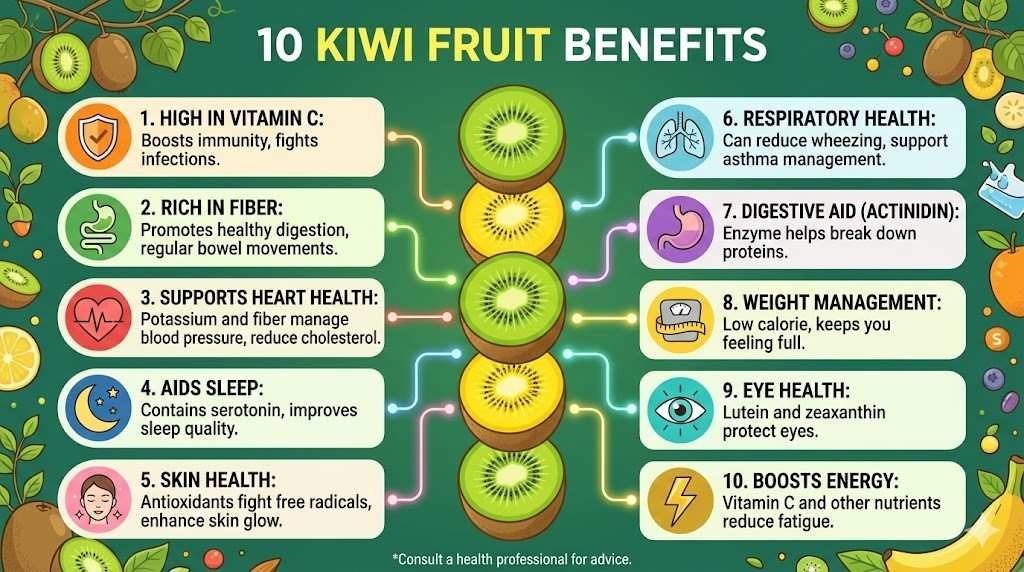
Kiwifruit, commonly called kiwi, is one of the most nutrient-dense fruits in the world. Small in size but packed with vitamins, antioxidants, fiber, and minerals, kiwi has become a favorite among health-conscious people globally. Its bright green flesh, tiny edible black seeds, and refreshing sweet-tart taste make it both delicious and highly beneficial for overall wellness.
Originally native to China and later popularized in New Zealand, kiwi is now cultivated in many countries and consumed year-round. In recent years, kiwi has gained major attention in health blogs, diet plans, and wellness trends because of its role in digestion, immunity, skin health, heart support, and weight management.
This detailed guide explains everything about kiwi fruit—its nutrition, benefits, varieties, uses, side effects, and best ways to eat it.
What Is Kiwi Fruit?
Kiwi is a small oval fruit with thin brown fuzzy skin and bright green or golden flesh inside. The fruit contains tiny black edible seeds arranged in a circular pattern around a lighter center.
Although many people call it “kiwi,” its full name is kiwifruit.
Popular Types of Kiwi Fruit
1. Green Kiwi
The most common variety, with tangy flavor and high vitamin C content.
2. Golden Kiwi
Sweeter, less acidic, and softer than green kiwi.
3. Baby Kiwi
Tiny smooth-skinned kiwi that can be eaten whole.
Nutritional Value of Kiwi Fruit
One medium kiwi contains approximately:
- Calories: 42
- Vitamin C: Very high
- Fiber: 2 grams
- Potassium: Good amount
- Vitamin K
- Vitamin E
- Folate
- Antioxidants
Kiwi contains more vitamin C than many citrus fruits, making it excellent for immunity.
Health Benefits of Kiwi Fruit 🥝
1. Boosts Immunity
Kiwi is rich in vitamin C, which helps strengthen the immune system and protects against infections.
Regular kiwi intake may help:
- Reduce common cold duration
- Support white blood cells
- Improve natural defense mechanisms
2. Improves Digestion
Kiwi contains natural digestive enzymes that help break down proteins.
Benefits include:
- Better digestion
- Reduced bloating
- Improved nutrient absorption
- Relief from constipation
The enzyme actinidin makes kiwi especially helpful after heavy meals.
3. Supports Weight Loss
Kiwi is low in calories and high in fiber, making it ideal for weight management.
Why kiwi helps weight loss:
- Keeps you full longer
- Reduces overeating
- Supports metabolism
- Low calorie snack option
4. Good for Heart Health
Kiwi supports cardiovascular wellness by helping regulate blood pressure.
Heart benefits include:
- Potassium supports blood pressure balance
- Fiber reduces cholesterol
- Antioxidants protect blood vessels
Regular kiwi intake may support healthier circulation.
5. Helps Skin Glow Naturally
Kiwi is excellent for skin because of antioxidants and vitamin C.
Skin benefits:
- Supports collagen production
- Fights skin aging
- Improves skin brightness
- Protects from oxidative stress
6. Supports Eye Health
Kiwi contains lutein and zeaxanthin, which help protect vision.
These nutrients may:
- Reduce age-related eye strain
- Support retina protection
- Improve eye nutrition
7. May Improve Sleep
Research suggests kiwi may help sleep quality when eaten before bedtime.
Possible reasons:
- Serotonin content
- Antioxidants reduce stress
- Supports sleep cycle regulation
8. Supports Gut Health
Kiwi fiber helps beneficial gut bacteria grow.
Healthy gut benefits include:
- Better digestion
- Improved bowel movement
- Reduced inflammation
9. Good for Diabetic Diet in Moderation
Kiwi has a moderate glycemic impact.
It may help:
- Slow sugar absorption
- Reduce sugar spikes
- Provide fiber without excessive calories
People with diabetes should still eat controlled portions.
10. Supports Pregnancy Nutrition
Kiwi contains folate, important during pregnancy.
Benefits for pregnant women:
- Supports fetal development
- Helps blood formation
- Improves digestion during pregnancy
Kiwi Fruit Benefits for Men
Kiwi may support male health through antioxidants and circulation support.
Benefits include:
- Better heart circulation
- Improved stamina
- Immune support
- Skin recovery after exercise
Kiwi Fruit Benefits for Women
Women benefit from kiwi because of folate, antioxidants, and skin nutrients.
Benefits include:
- Supports iron absorption
- Helps skin health
- Good during pregnancy
- Supports hormonal wellness
Kiwi Fruit for Children
Kiwi is nutritious for children because it contains vitamins and fiber.
Benefits:
- Supports immunity
- Helps digestion
- Provides natural energy
Always serve soft pieces for small children.
Kiwi Fruit for Elderly Adults
Older adults may benefit from kiwi because it is easy to digest and nutrient-rich.
Helps with:
- Digestion
- Immunity
- Bone support
Best Time to Eat Kiwi
Morning
Good for digestion and hydration.
Before Meals
May improve digestion.
Before Bed
May support sleep quality.
Can You Eat Kiwi Skin?
Yes, kiwi skin is edible if washed properly.
Skin contains:
- Extra fiber
- Antioxidants
- Nutrients
Some people prefer peeling because of texture.
Kiwi in Daily Diet
Ways to eat kiwi:
- Fresh slices
- Smoothies
- Fruit bowls
- Yogurt topping
- Salad ingredient
- Juice
Kiwi and Weight Management Recipes
Kiwi Detox Water
Slice kiwi into water for refreshing hydration.
Kiwi Smoothie
Blend kiwi with banana and yogurt.
Kiwi Salad
Mix with cucumber and citrus fruits.
Kiwi Fruit for Skin Masks
DIY kiwi face mask:
- Mash kiwi
- Add honey
- Apply 10 minutes
May help brighten skin naturally.
Kiwi Fruit Side Effects
Although healthy, kiwi may cause problems in some people.
1. Allergy
Some people may experience itching or swelling.
2. Stomach Irritation
Too much kiwi may cause acidity.
3. Mouth Sensitivity
Its acids may irritate sensitive mouths.
4. Interaction with Blood Thinners
Because of vitamin K, people on medication should ask a doctor.
Who Should Limit Kiwi?
- People with fruit allergy
- Those with severe acidity
- Kidney patients needing potassium control
Kiwi Fruit vs Other Fruits
Kiwi Fruit vs Other Fruits (Comparison Table)
| Fruit | Main Nutrient Advantage | Calories (Approx. per 100g) | Fiber | Special Benefit |
|---|---|---|---|---|
| Kiwifruit | Very high vitamin C | 61 | High | Supports digestion and immunity |
| Apple | Good fiber | 52 | Moderate | Helps fullness and easy snacking |
| Banana | High potassium | 89 | Moderate | Quick natural energy |
| Orange | Vitamin C and hydration | 47 | Moderate | Excellent hydration |
| Strawberry | Antioxidants | 32 | Moderate | Skin-friendly antioxidants |
| Papaya | Digestive enzymes | 43 | Moderate | Helps digestion naturally |
Kiwi vs Apple
- Kiwi contains more vitamin C than apple.
- Apple has slightly more total carbohydrates.
- Kiwi offers more antioxidants per serving.
- Apple is milder and easier for sensitive stomachs.
Kiwi vs Banana
- Kiwi is lower in calories than banana.
- Banana contains more potassium.
- Kiwi has more vitamin C and fiber density.
- Banana provides quicker energy, while kiwi supports digestion better.
Kiwi vs Orange
- Kiwi often provides more vitamin C than orange per 100 grams.
- Orange has more juice and hydration volume.
- Kiwi contains actinidin, a natural digestive enzyme not found in oranges.
Kiwi vs Strawberry
- Both are rich in antioxidants.
- Strawberries are lower in calories.
- Kiwi usually has more fiber and potassium.
Kiwi vs Papaya
- Both fruits help digestion.
- Papaya contains papain enzyme; kiwi contains actinidin.
- Kiwi usually has higher vitamin C concentration.
Why Kiwi Stands Out
Kiwi is unique because it combines:
- High vitamin C
- Digestive enzymes
- Fiber
- Low calories
- Strong antioxidant value
This makes kiwi especially useful for immunity, gut health, and skin support
Kiwi Farming and Global Popularity
Major kiwi-producing countries include:
- New Zealand
- Italy
- China
- India
Kiwi demand continues rising worldwide because of health awareness.
How to Choose Good Kiwi Fruit
Choose kiwi that:
- Feels slightly soft
- Has no bruises
- Smells fresh
Hard kiwi ripens in a few days.
How to Store Kiwi Fruit
Unripe Kiwi
Keep at room temperature.
Ripe Kiwi
Store in refrigerator.
Kiwi in Modern Health Trends
Kiwi is popular in:
- Fitness diets
- Immunity plans
- Weight-loss programs
- Skin-focused diets
Its high nutrient density makes it a trending fruit globally.
Frequently Asked Questions (FAQs)
1.Is kiwi good every day?
Yes, one to two kiwis daily is generally safe.
2.Can kiwi reduce belly fat?
It supports weight management but does not directly burn fat.
3.Is kiwi good for constipation?
Yes, kiwi fiber supports bowel movement.
4.Can diabetics eat kiwi?
Yes, in moderate portions.
5.Is kiwi acidic?
Yes, slightly acidic.
6.Which kiwi is sweeter?
Golden kiwi is sweeter.
7.Can kiwi improve skin?
Yes, vitamin C supports collagen.
8.Can kiwi be eaten at night?
Yes, it may support sleep.
9.Is kiwi better than orange?
Both are healthy, but kiwi often contains more vitamin C.
10.Can children eat kiwi daily?
Yes, in moderate portions.
11. Is kiwi fruit good to eat every day?
Yes, eating 1–2 kiwis daily is generally safe and can support immunity, digestion, and overall health.
12. What is the best time to eat kiwi?
Kiwi can be eaten in the morning, between meals, or before bedtime for digestion and sleep support.
13. Is kiwi good for weight loss?
Yes, kiwi is low in calories and high in fiber, which helps control hunger and supports weight management.
14. Can people with diabetes eat kiwi?
Yes, kiwi can be eaten in moderation because it has fiber and a relatively moderate glycemic effect.
15. Does kiwi help digestion?
Yes, kiwi contains a natural enzyme called actinidin that helps break down proteins and improve digestion.
6. Is kiwi better than Orange for vitamin C?
Kiwi often contains more vitamin C per serving than orange.
7. Can kiwi improve skin health?
Yes, kiwi’s vitamin C and antioxidants support collagen production and skin brightness.
18. Is kiwi safe during pregnancy?
Yes, kiwi provides folate, fiber, and vitamin C, which are useful during pregnancy.
19. Can kiwi be eaten at night?
Yes, some people eat kiwi before sleep because it may help improve sleep quality.
20. Should kiwi be eaten with skin or without skin?
Both are fine. The skin is edible if washed properly and adds extra fiber.
Conclusion about Kiwi Fruit
Kiwi is a powerful fruit that delivers exceptional nutrition in a small serving. From immunity and digestion to skin health and heart support, kiwi offers benefits for nearly every age group. Adding kiwi regularly to your diet can improve overall wellness naturally.
Because it is low in calories, rich in fiber, and packed with antioxidants, kiwi deserves its place among the world’s healthiest fruits
Also read :