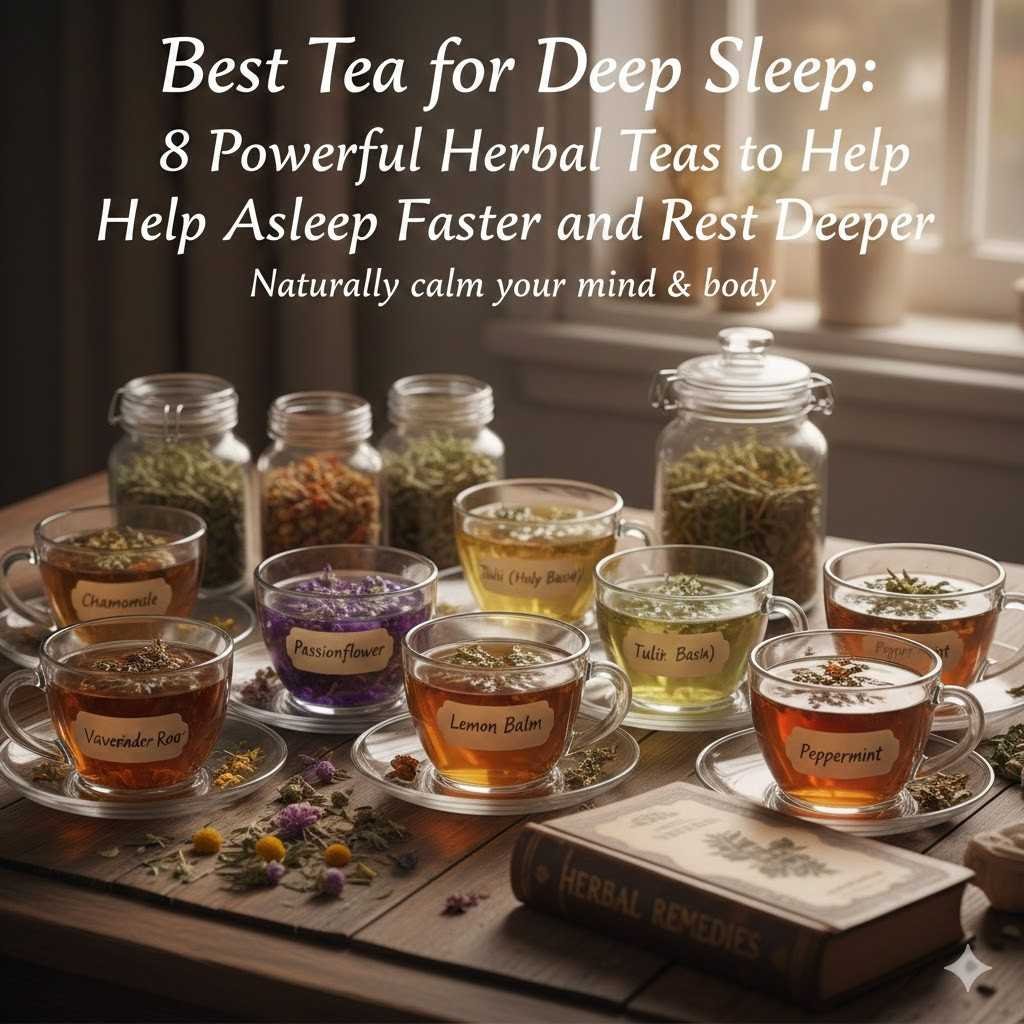
In today’s fast-paced world, deep, uninterrupted sleep feels like a luxury. Stress, screen time, caffeine, and anxiety often interfere with our ability to rest properly. While sleeping pills may offer short-term relief, many people are turning to natural remedies — especially herbal teas — to support deeper, more restorative sleep.
But what is the best tea for deep sleep? The answer depends on your sleep challenges. Some teas calm anxiety. Others relax muscles. Some support melatonin production. And a few work directly on your nervous system.
In this complete guide, we’ll explore the best teas for deep sleep, how they work, how to brew them properly, and how to choose the right one for your needs.
Why Herbal Tea Helps With Deep Sleep
Sleep is controlled by your nervous system and hormones like melatonin. When your body is stressed, overstimulated, or anxious, it stays in “fight or flight” mode. Herbal teas work by:
- Calming the nervous system
- Reducing cortisol (stress hormone)
- Relaxing muscles
- Supporting GABA activity
- Preparing your mind for rest
Unlike medications, most herbal teas work gently and naturally with fewer side effects.
1. Chamomile Tea – The Classic Sleep Remedy
When people think of bedtime tea, Matricaria chamomilla often comes to mind.
Why It Works
Chamomile contains apigenin, an antioxidant that binds to receptors in your brain that promote sleepiness and reduce anxiety.
Benefits for Deep Sleep
- Reduces mild insomnia
- Calms racing thoughts
- Relaxes the nervous system
- Supports uninterrupted sleep
Best For:
- Light sleepers
- Stress-related sleep issues
- Bedtime anxiety
Chamomile is gentle and safe for most people, making it a great starting point.
2. Valerian Root Tea – Nature’s Sedative
One of the strongest natural sleep herbs comes from Valeriana officinalis.
Why It Works
Valerian increases GABA levels in the brain — a neurotransmitter that reduces nerve activity and promotes relaxation.
Benefits for Deep Sleep
- Helps you fall asleep faster
- May increase deep sleep stages
- Reduces nighttime awakenings
Best For:
- Chronic insomnia
- Difficulty falling asleep
- Restless mind at night
Valerian has a strong earthy smell, but its effects can be powerful for deep rest.
3. Passionflower Tea – Calms an Overactive Mind
Derived from Passiflora incarnata, passionflower tea is excellent for anxiety-driven sleep issues.
Why It Works
It supports GABA production and reduces mental overactivity.
Benefits
- Calms nervous tension
- Reduces nighttime anxiety
- Improves sleep quality
Best For:
- Overthinking at bedtime
- Stress-related insomnia
- Emotional restlessness
Passionflower is gentler than valerian but highly effective for anxiety-based sleep problems.
4. Lavender Tea – Aromatic Relaxation
Made from Lavandula angustifolia, lavender tea works both through taste and aroma.
Why It Works
Lavender reduces cortisol and activates relaxation pathways in the brain.
Benefits
- Promotes calmness
- Improves sleep quality
- Reduces nighttime stress
Best For:
- Stress
- Mild insomnia
- Relaxing bedtime rituals
Even inhaling lavender’s aroma can improve sleep depth.
5. Lemon Balm Tea – Gentle Nervous System Support
Lemon balm comes from Melissa officinalis.
Why It Works
It enhances GABA activity and reduces anxiety.
Benefits
- Mild sedative effect
- Reduces restlessness
- Helps digestive discomfort that interrupts sleep
Best For:
- Stress-related sleep disruption
- Mild insomnia
- Sensitive individuals
It’s a soft, lemony-tasting herb perfect for nightly use.
6. Ashwagandha Tea – Stress Hormone Regulator
Adaptogenic herbs like Withania somnifera help regulate cortisol.
Why It Works
By lowering stress hormones, it helps your body transition into rest mode.
Benefits
- Reduces stress
- Supports deep restorative sleep
- Balances adrenal function
Best For:
- Stress burnout
- Cortisol imbalance
- Long-term sleep improvement
7. Magnolia Bark Tea – Deep Relaxation Herb
Traditional Chinese medicine uses magnolia bark for calming the mind.
Benefits
- Reduces anxiety
- May improve deep sleep phases
- Supports relaxation
It’s often combined with other sleep herbs.
8. Tulsi Tea – Calms Without Sedation
Also known as holy basil, Tulsi reduces stress while maintaining balance.
Best For:
- Stress-related sleep disturbance
- Mental fatigue
Tulsi is calming but not strongly sedating.
Which Tea Is Best for Deep Sleep?
If your problem is:
- Trouble falling asleep: Valerian or Passionflower
- Anxiety at night: Chamomile or Lavender
- Stress overload: Ashwagandha or Lemon Balm
- Light sleep: Valerian blends
For many people, combining herbs works best.
Best Sleep Tea Blends
A powerful deep sleep blend may include:
- Chamomile
- Valerian root
- Passionflower
- Lemon balm
- Lavender
Blends target multiple sleep pathways simultaneously.
How to Brew Sleep Tea Properly
General Instructions:
- Use 1–2 teaspoons dried herb
- Pour hot water (not boiling for delicate herbs)
- Cover and steep 10–15 minutes
- Drink 30–60 minutes before bed
Covering while steeping preserves essential oils.
When to Drink Sleep Tea
- 30–60 minutes before bedtime
- After turning off screens
- As part of a calming ritual
Consistency improves results.
Does Sleep Tea Improve Deep Sleep Cycles?
Deep sleep (slow-wave sleep) is critical for:
- Memory
- Hormone repair
- Immune support
- Physical recovery
Some herbs like valerian may help increase time spent in deeper sleep stages.
Sleep Tea vs Melatonin
Melatonin supplements force the sleep signal. Herbal teas gently prepare your body for sleep without hormonal disruption.
Many people prefer tea for long-term use.
Are There Side Effects?
Most sleep teas are safe, but possible side effects include:
- Morning grogginess (valerian)
- Mild digestive upset
- Allergic reactions (rare)
Pregnant individuals should consult a doctor.
Creating a Bedtime Tea Ritual
Deep sleep isn’t just about herbs — it’s about routine.
Try:
- Dim lights
- No screens 1 hour before bed
- Warm shower
- Gentle stretching
- Cup of herbal tea
Your brain learns to associate tea with sleep.
How Long Before You See Results?
Some herbs work immediately. Others (like adaptogens) improve sleep over weeks.
Consistency is key.
Can You Drink Sleep Tea Every Night?
Yes, most herbal sleep teas are safe for nightly use when consumed in moderate amounts.
Rotating herbs may prevent tolerance.
Final Thoughts: Finding Your Best Tea for Deep Sleep
The best tea for deep sleep depends on your body and your sleep challenges.
If you want gentle relaxation, start with chamomile.
If insomnia is severe, try valerian.
If stress is the problem, use adaptogens like ashwagandha.
Herbal sleep teas offer a natural, comforting, and effective way to improve rest without harsh chemicals.
A warm cup before bed may be one of the simplest — and most powerful — tools for deeper, restorative sleep.
Frequently Asked Questions (FAQs) About the Best Tea for Deep Sleep
1. What is the best tea for deep sleep?
The best tea for deep sleep depends on your sleep issue. Chamomile is ideal for mild insomnia, valerian root is stronger for falling asleep faster, and passionflower works well for anxiety-related sleep problems.
2. Does chamomile tea really help you sleep?
Yes. Tea made from Matricaria chamomilla contains apigenin, a compound that promotes relaxation and sleepiness.
3. Is valerian root tea stronger than chamomile?
Generally, yes. Tea from Valeriana officinalis has a more sedative effect and may help with chronic insomnia or difficulty falling asleep.
4. How long before bed should I drink sleep tea?
Drink herbal sleep tea 30–60 minutes before bedtime for best results.
5. Can I drink sleep tea every night?
Most herbal sleep teas are safe for nightly use in moderate amounts. Rotating herbs may help prevent reduced effectiveness over time.
6. Does sleep tea contain caffeine?
Most sleep teas are caffeine-free because they are made from herbs, not traditional tea leaves.
7. Will sleep tea make me groggy in the morning?
Gentle herbs like chamomile usually do not cause grogginess. Stronger herbs like valerian may cause mild morning drowsiness in some people.
8. Can sleep tea improve deep sleep cycles?
Certain herbs, especially valerian and passionflower, may help improve sleep quality and increase time spent in restorative sleep stages.
9. Is sleep tea better than melatonin supplements?
Sleep tea works more gently by relaxing the nervous system, while melatonin directly affects hormone levels. Many people prefer tea for long-term use.
10. Can I mix different sleep herbs together?
Yes. Popular combinations include chamomile, valerian, lemon balm, and lavender for enhanced calming effects.
11. Are there any side effects of herbal sleep teas?
Possible side effects may include mild digestive upset, dizziness, or allergic reactions (rare). Pregnant or breastfeeding individuals should consult a healthcare professional.
12. How many cups of sleep tea should I drink?
One cup in the evening is usually enough. Some people may use two cups, but starting with one is recommended.
Also read: