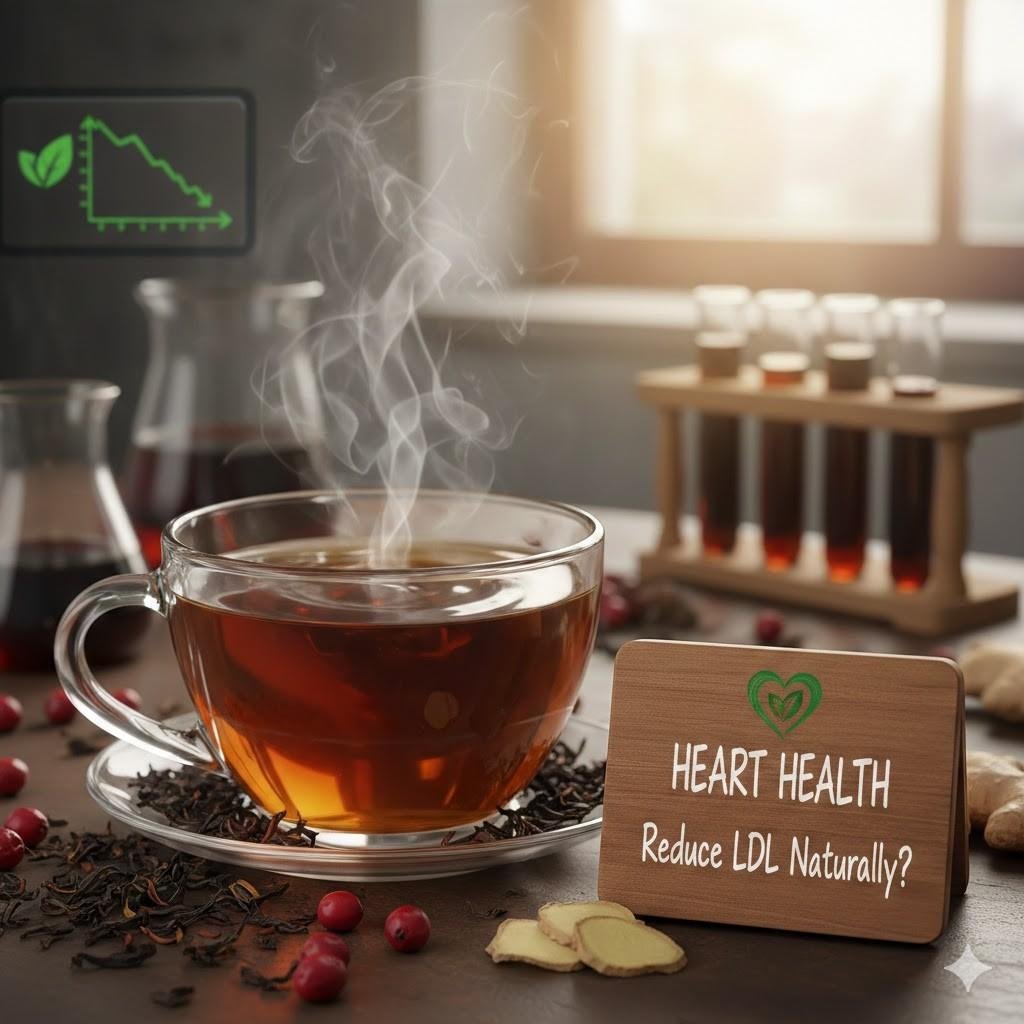
Black Tea for Heart Health :Black tea is one of the most consumed beverages in the world—second only to water. From strong morning brews to afternoon chai, millions of people drink it daily. But beyond its bold flavor and energizing caffeine, many people wonder:
Can black tea actually lower cholesterol?
With heart disease remaining one of the leading causes of death globally, interest in natural, diet-based strategies for managing cholesterol continues to grow. Black tea, rich in antioxidants and plant compounds, has been studied for its potential cardiovascular benefits—including its effects on LDL (“bad”) cholesterol.
In this comprehensive, evidence-based guide, we’ll explore:
- What cholesterol is and why it matters
- What makes black tea unique
- The science behind black tea and cholesterol
- How much you need to drink
- Potential side effects and limitations
- Practical ways to include black tea in a heart-healthy lifestyle
Let’s separate fact from hype.
Understanding Cholesterol: The Basics
Before evaluating black tea’s effects, it’s important to understand cholesterol itself.
Cholesterol is a waxy, fat-like substance found in your blood. Your body needs it to build cells and hormones, but too much of certain types can increase your risk of heart disease.
There are two main types:
- LDL (Low-Density Lipoprotein) – Often called “bad cholesterol.” High levels can lead to plaque buildup in arteries.
- HDL (High-Density Lipoprotein) – Known as “good cholesterol.” It helps remove excess cholesterol from the bloodstream.
Triglycerides, another type of blood fat, also play a role in heart health.
When LDL levels are too high, plaque accumulates in artery walls (atherosclerosis), increasing the risk of heart attack and stroke.
Lifestyle changes—including diet—are often the first step in managing cholesterol. That’s where black tea enters the conversation.
What Makes Black Tea Different?
Black tea comes from the leaves of Camellia sinensis, the same plant used to make green, white, and oolong tea. What makes black tea unique is its full oxidation process.
During oxidation:
- Catechins (found abundantly in green tea) transform into
- Theaflavins and thearubigins, powerful antioxidant compounds unique to black tea
These polyphenols are believed to be responsible for many of black tea’s cardiovascular benefits.
Black tea also contains:
- Flavonoids
- L-theanine
- Moderate caffeine
- Trace minerals
The combination of these compounds may influence cholesterol metabolism.
How Could Black Tea Lower Cholesterol?
Researchers propose several mechanisms:
1. Reduced LDL Oxidation
Oxidized LDL is more harmful than regular LDL because it contributes directly to plaque formation. Black tea polyphenols may:
- Inhibit LDL oxidation
- Protect artery walls from damage
2. Reduced Cholesterol Absorption
Theaflavins may reduce the absorption of dietary cholesterol in the intestine.
3. Improved Endothelial Function
Healthy blood vessels expand and contract efficiently. Black tea flavonoids may improve endothelial function, indirectly supporting cardiovascular health.
4. Modulation of Gut Microbiota
Emerging research suggests black tea polyphenols may positively influence gut bacteria, which in turn can impact cholesterol metabolism.
What Does Research Actually Say?
Let’s look at human studies rather than marketing claims.
Clinical Trials on Black Tea and Cholesterol
Several randomized controlled trials (RCTs) have examined black tea’s effects.
Findings commonly include:
- Modest reductions in total cholesterol
- Small but measurable decreases in LDL cholesterol
- Little to no significant change in HDL
In people with mildly elevated cholesterol, drinking 3–5 cups of black tea daily has shown:
- LDL reductions of approximately 5–10% in some studies
- Improved antioxidant markers
However, not all studies show dramatic effects. Results vary based on:
- Dose
- Duration
- Participant health status
- Diet
Meta-Analyses
Meta-analyses combining multiple trials suggest black tea may produce small but statistically significant reductions in LDL cholesterol, particularly when consumed consistently over several weeks.
However, effects are typically modest compared to cholesterol-lowering medications like statins.
Population Studies
Large observational studies link higher tea consumption to:
- Lower cardiovascular disease risk
- Reduced stroke incidence
- Lower all-cause mortality
But these studies cannot prove black tea directly lowers cholesterol. Tea drinkers may also have healthier lifestyles overall.
How Much Black Tea Might Help?
Research typically uses:
- 3–5 cups per day
- Standard brewed black tea (not heavily sweetened)
- Duration of 4–12 weeks
It’s important to note that adding large amounts of sugar, cream, or condensed milk may offset potential benefits.
Does Milk Reduce the Benefits?
This question frequently comes up.
Some research suggests milk proteins may bind to tea polyphenols, potentially reducing antioxidant activity. However, human studies are mixed, and real-world impact appears minimal.
If your goal is cholesterol support:
- Try drinking black tea plain
- Or with a small splash of milk
Avoid high-sugar preparations.
Black Tea vs. Green Tea for Cholesterol
Green tea often receives more attention for heart health because it retains more catechins.
However, black tea’s unique theaflavins may also contribute to lipid regulation.
Green tea may have slightly stronger cholesterol-lowering evidence overall, but black tea still shows measurable benefits.
If you enjoy black tea more, consistency matters more than switching reluctantly to green tea.
Other Heart-Healthy Benefits of Black Tea
Even if cholesterol reduction is modest, black tea offers additional cardiovascular support:
1. Blood Pressure Support
Some studies suggest regular black tea consumption may slightly lower systolic and diastolic blood pressure.
2. Improved Artery Function
Flavonoids may enhance endothelial function.
3. Anti-Inflammatory Effects
Chronic inflammation contributes to heart disease. Black tea polyphenols may reduce inflammatory markers.
Limitations of the Research
It’s important to be realistic.
1. Effects Are Modest
Black tea is not a replacement for statins or medical therapy in high-risk individuals.
2. Short Study Durations
Many trials last only weeks—not years.
3. Individual Variation
Genetics, gut microbiome composition, and overall diet influence response.
Practical Ways to Use Black Tea for Cholesterol Support
If you’d like to incorporate black tea into your routine:
Morning Routine
- 1–2 cups with breakfast
- Pair with fiber-rich foods like oats
Afternoon Boost
- Replace sugary beverages with black tea
- Avoid late-night caffeine
Weekly Consistency
Aim for 3–5 cups daily for potential cholesterol benefits.
Best Types of Black Tea
Popular varieties include:
- English Breakfast
- Assam
- Darjeeling
- Ceylon
All come from Camellia sinensis, so polyphenol content is broadly similar, though taste differs.
Loose-leaf tea often retains more antioxidants than heavily processed tea bags.
How to Brew Black Tea Properly
To maximize polyphenol extraction:
- Use fresh boiling water (90–100°C)
- Steep 3–5 minutes
- Avoid over-steeping (can increase bitterness)
- Drink without excessive sugar
Potential Side Effects
Black tea is generally safe, but:
- High caffeine intake may cause anxiety, insomnia, or palpitations
- Excessive consumption may reduce iron absorption
- Very high intake could cause digestive discomfort
People sensitive to caffeine should limit intake to 2–3 cups per day.
Who Should Be Cautious?
- Individuals with iron deficiency anemia
- Those sensitive to caffeine
- Pregnant individuals (moderate intake only)
Consult your healthcare provider if you have heart disease or are on medication.
Black Tea vs. Supplements
Some supplements contain isolated theaflavins.
However:
- Whole tea provides a complex matrix of compounds
- Tea drinking includes hydration and ritual benefits
- Supplements are less studied long-term
Food-first approaches are generally preferred.
The Bigger Picture: Tea Is Not a Magic Fix
While black tea may support cholesterol levels, it works best when combined with:
- A fiber-rich diet
- Regular exercise
- Reduced saturated fat intake
- Adequate sleep
- Stress management
Drinking tea while maintaining a high-sugar, high-processed-food diet will not produce meaningful change.
Sample 30-Day Black Tea Plan
Week 1: Replace sugary beverages with black tea
Week 2: Increase to 3 cups daily
Week 3: Combine with oatmeal breakfast
Week 4: Maintain routine and reassess energy, digestion, and consistency
Check cholesterol levels with your doctor after 8–12 weeks if monitoring.
Final Verdict: Can Black Tea Lower Cholesterol?
Yes — but modestly.
Evidence suggests black tea may:
- Reduce LDL cholesterol slightly
- Improve antioxidant status
- Support heart health overall
However:
- Effects are mild
- It’s not a replacement for medication
- Lifestyle changes matter more
If you enjoy black tea, drinking 3–5 cups daily as part of a heart-healthy routine is reasonable and potentially beneficial.
Key Takeaways
- Black tea contains theaflavins and polyphenols
- Studies show small reductions in LDL cholesterol
- Benefits increase with consistency
- Avoid adding excessive sugar
- Combine with overall healthy lifestyle habits
FAQs – Can Black Tea Lower Cholesterol?
1. Can black tea really lower cholesterol?
Yes, research suggests black tea may modestly lower LDL (bad) cholesterol, especially when consumed regularly (about 3–5 cups daily). However, the effect is usually small and should not replace prescribed cholesterol medications.
2. How much black tea should I drink to lower cholesterol?
Most studies showing benefits used 3 to 5 cups per day over several weeks. Consistency matters more than occasional drinking. Avoid adding excess sugar or cream, as that may counteract heart benefits.
3. How long does it take for black tea to affect cholesterol?
Some studies observed changes within 4 to 12 weeks of daily consumption. However, individual results vary based on diet, genetics, and overall lifestyle.
4. Does black tea lower LDL or raise HDL?
Black tea may help slightly lower LDL cholesterol. Its effect on HDL (good cholesterol) is generally minimal. It may also improve antioxidant markers that support overall heart health.
5. Is black tea better than green tea for cholesterol?
Green tea often shows slightly stronger cholesterol-lowering effects due to higher catechin content. However, black tea still provides beneficial polyphenols (theaflavins) that support heart health. Choose the tea you can drink consistently.
6. Can I add milk to black tea if I want cholesterol benefits?
Adding a small amount of milk is unlikely to cancel benefits completely. However, some studies suggest milk proteins may bind to antioxidants. For maximum potential benefit, drink it plain or with minimal milk and no added sugar.
7. Does black tea reduce triglycerides?
Some studies show mild reductions in triglycerides, but results are inconsistent. Black tea’s strongest evidence relates to modest LDL reduction rather than dramatic triglyceride changes.
8. Is black tea safe for people with high cholesterol?
Yes, black tea is generally safe for most people. However, if you have heart disease or are taking cholesterol-lowering medication, consult your healthcare provider before making major dietary changes.
9. Can black tea replace cholesterol medication?
No. Black tea may support cholesterol management, but it cannot replace statins or other prescribed treatments, especially in moderate to high-risk individuals.
10. Are there side effects of drinking black tea daily?
Moderate black tea consumption is safe for most people. Possible side effects include:
- Caffeine-related anxiety or insomnia
- Reduced iron absorption
- Stomach irritation in sensitive individuals
Limiting intake to 3–5 cups per day is generally considered safe.
11. What is the best time to drink black tea for heart health?
Morning and early afternoon are ideal due to caffeine content. Avoid drinking it late at night if you are sensitive to caffeine.
12. Does black tea help prevent heart disease?
While black tea may slightly improve cholesterol and antioxidant levels, heart disease prevention depends on multiple factors including diet, exercise, blood pressure control, and overall lifestyle.
Also read