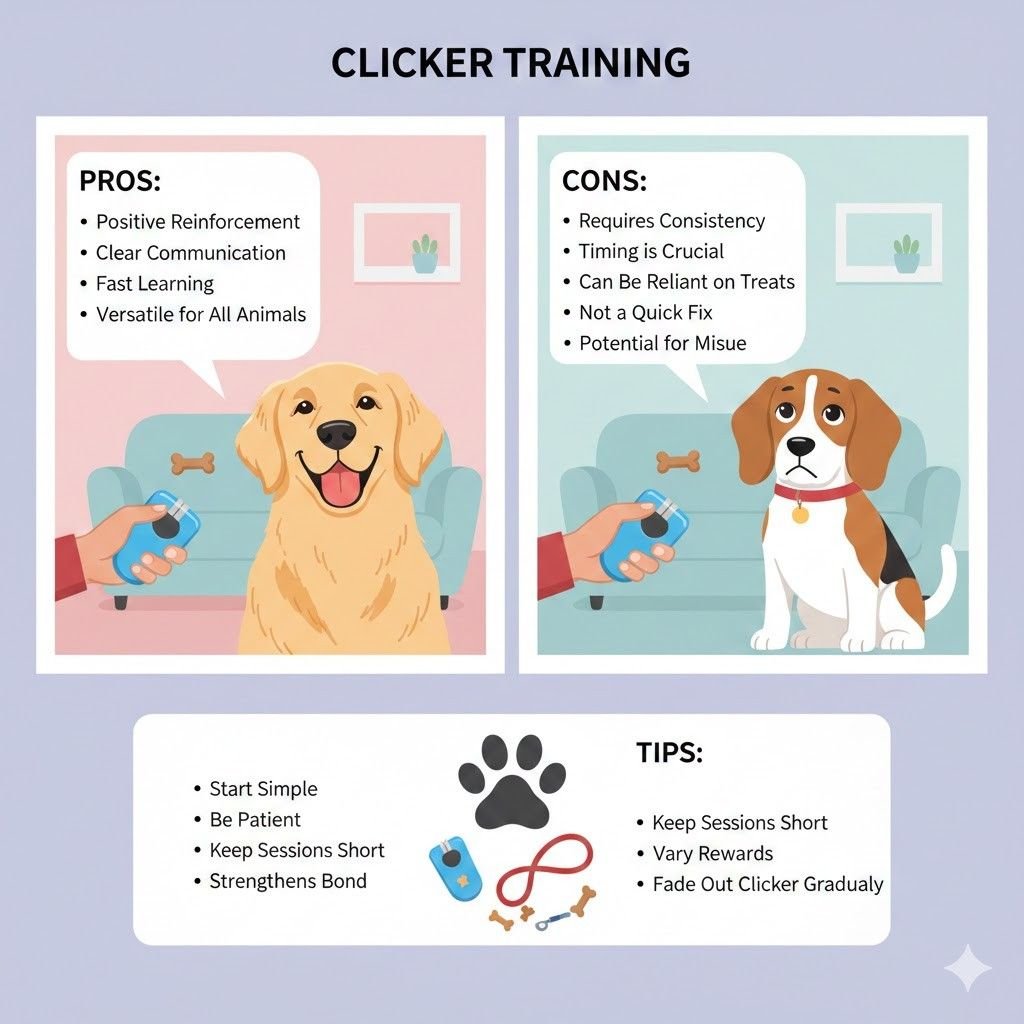
Clicker training has become one of the most popular dog training methods in the modern pet world. From professional trainers to first-time dog parents, many people swear by this small plastic device that makes a simple “click” sound. But what exactly is clicker training? Is it really effective for all dogs? And are there any downsides you should know before starting?
In this detailed guide, we’ll explore what clicker training is, how it works, its pros and cons, step-by-step tips, common mistakes, and whether it’s the right method for your dog. Whether you’re training a puppy, an adult dog, or even a rescue, this article will help you decide if clicker training fits your goals.
What Is Clicker Training?
Clicker training is a positive reinforcement training method that uses a small handheld device called a clicker to mark desired behaviors. The click sound tells the dog, “Yes! That’s exactly what I wanted you to do.”
The click is always followed by a reward, usually a treat. Over time, the dog learns to associate the click with something positive and understands which behaviors earn rewards.
Unlike traditional training methods that rely on corrections or punishment, clicker training focuses on clear communication, timing, and encouragement.
How Does Clicker Training Work?
Clicker training is based on operant conditioning, a learning principle where behaviors are shaped through consequences.
Here’s how it works in simple terms:
- Dog performs a behavior (e.g., sits)
- You click immediately
- You give a reward
- Dog learns that behavior = reward
The click acts as a marker, freezing the exact moment your dog does the right thing—even if the reward comes a second later.
Why Timing Matters in Clicker Training
Timing is everything in clicker training. Dogs live in the moment, so the click must happen exactly when the desired behavior occurs.
For example:
- If you click after your dog stands up from a sit, they may think standing is what earned the reward.
- A well-timed click helps your dog learn faster and with less confusion.
This precision is one of the biggest reasons clicker training is so effective.
What Can You Teach with Clicker Training?
Clicker training is extremely versatile. You can use it to teach:
- Basic commands (sit, stay, down, come)
- Loose-leash walking
- Trick training (spin, shake, roll over)
- Behavior modification (reducing jumping, barking)
- Advanced obedience
- Agility and sports training
- Confidence-building for shy dogs
It’s not limited to dogs either—clicker training works for cats, birds, and even horses.
Pros of Clicker Training
1. Clear Communication
The click provides a consistent, unmistakable signal that your dog did something right. Unlike verbal praise, which can vary in tone, the click always sounds the same.
This clarity speeds up learning and reduces frustration.
2. Faster Learning
Because the click marks the exact behavior, dogs often learn new commands faster than with verbal cues alone. This is especially helpful for complex behaviors or trick training.
3. Builds Confidence
Clicker training encourages dogs to think and offer behaviors. This problem-solving aspect builds confidence, especially in shy or fearful dogs.
Dogs learn that trying new things can lead to rewards.
4. No Force or Fear
Clicker training is based entirely on positive reinforcement. There’s no punishment, yelling, or physical correction, making it a humane and ethical training method.
This is particularly beneficial for rescue dogs or dogs with a history of trauma.
5. Great for Puppies
Puppies have short attention spans, and clicker training works perfectly in short, fun sessions. It helps establish good habits early without intimidation.
6. Strengthens the Dog–Owner Bond
Because training sessions are positive and rewarding, your dog begins to associate you with good things. This strengthens trust and cooperation.
Cons of Clicker Training
While clicker training has many advantages, it’s not perfect for every situation or every person.
1. Requires Good Timing
Poor timing can confuse your dog. Clicking too late—or accidentally clicking at the wrong moment—can reinforce unwanted behaviors.
This can be challenging for beginners.
2. Dependency on the Clicker
Some dogs (and owners) become overly reliant on the clicker. If not phased out properly, the dog may respond only when the clicker is present.
3. Not Always Practical Outdoors
In noisy or high-distraction environments, your dog may not hear the click. Managing a clicker, leash, and treats at the same time can also feel awkward at first.
4. Takes Practice for Owners
Clicker training requires consistency, patience, and practice from the human side. Owners who prefer quick, command-based results may find it frustrating initially.
5. Not Ideal for Emergency Situations
Clicker training is excellent for teaching behaviors, but in urgent situations (like stopping a dog from running into traffic), a strong verbal command is still essential.
Is Clicker Training Right for Your Dog?
Clicker training works well for most dogs, but it’s especially effective for:
- Puppies
- Food-motivated dogs
- Shy or sensitive dogs
- Dogs learning complex behaviors
- Owners who enjoy structured training
It may be less ideal if:
- You struggle with coordination and timing
- Your dog is not food-motivated (though alternatives exist)
- You prefer minimal tools
The good news? Clicker training can be combined with other positive methods.
How to Start Clicker Training (Step-by-Step)
Step 1: Get the Right Clicker
Choose a clicker that:
- Has a consistent sound
- Is comfortable to hold
- Isn’t too loud (for sensitive dogs)
Some people even use a clicking pen or a phone app.
Step 2: Charge the Clicker
Before training, your dog must learn what the click means.
- Click
- Give a treat
- Repeat 10–15 times
Do not ask for any behavior yet. Soon, your dog will perk up at the sound of the click.
Step 3: Start with Simple Behaviors
Begin with easy commands like:
- Sit
- Look at me
- Touch your hand
Click the instant your dog performs the behavior, then reward.
Step 4: Keep Sessions Short
5–10 minutes per session is ideal. End on a success to keep your dog motivated.
Step 5: Add a Verbal Cue
Once your dog consistently offers the behavior, add a verbal command before the action. Over time, the dog will respond to the cue.
Clicker Training Tips for Best Results
Use High-Value Rewards
Soft, smelly treats work best, especially in the beginning.
One Click = One Treat
Never click without rewarding. This keeps the click meaningful.
Be Consistent
Everyone in the household should follow the same rules.
Train in Low-Distraction Areas First
Gradually increase difficulty as your dog improves.
Fade the Clicker Over Time
Once behaviors are reliable, replace clicks with verbal praise or life rewards.
Common Clicker Training Mistakes to Avoid
- Clicking too late
- Clicking accidentally
- Repeating commands multiple times
- Training for too long
- Skipping rewards
- Getting frustrated
Remember: clicker training should be fun for both you and your dog.
Clicker Training vs Traditional Training
| Clicker Training | Traditional Training |
|---|---|
| Positive reinforcement | Often correction-based |
| Clear marker signal | Relies on voice and leash |
| Encourages thinking | Focuses on compliance |
| Builds confidence | May cause stress |
Modern trainers increasingly recommend clicker-based or reward-based methods.
Can Clicker Training Fix Behavior Problems?
Clicker training can help with:
- Jumping
- Excessive barking
- Fear-based behaviors
- Leash pulling
However, severe aggression or anxiety may require a professional trainer or behaviorist.
Clicker Training for Adult & Rescue Dogs
Adult and rescue dogs can absolutely learn with a clicker. In fact, the clear communication often helps dogs with unknown training histories feel safer and more confident.
Patience is key—progress may be slower, but results are long-lasting.
How Long Does Clicker Training Take?
- Basic behaviors: 1–3 weeks
- Reliable commands: 1–3 months
- Advanced skills: several months
Consistency matters more than speed.
Final Thoughts: Is Clicker Training Worth It?
Yes—for most dogs and owners, clicker training is one of the most effective, humane, and enjoyable training methods available.
It requires patience, timing, and practice, but the rewards are worth it: a confident dog, clear communication, and a stronger bond built on trust rather than fear.
If you’re willing to learn alongside your dog, clicker training can completely transform your training experience.
Frequently Asked Questions (FAQ) – Clicker Training
1. What is clicker training for dogs?
Clicker training is a positive reinforcement method that uses a small clicking sound to mark desired behavior. The click tells the dog exactly what action earned a reward, making learning faster and clearer.
2. Is clicker training good for all dogs?
Yes, clicker training works for most dogs, including puppies, adult dogs, and rescue dogs. It is especially effective for sensitive or shy dogs because it does not rely on punishment.
3. How long does it take for clicker training to work?
Basic behaviors can be learned in 1–3 weeks with consistent practice. Reliable obedience may take 1–3 months, while advanced training can take longer depending on the dog and training frequency.
4. Can puppies start clicker training?
Yes, puppies can start clicker training as early as 8 weeks old. Short, fun sessions help puppies learn good habits without stress or fear.
5. Do dogs become dependent on the clicker?
No, dogs do not become dependent if the clicker is phased out properly. Over time, the clicker can be replaced with verbal praise, toys, or real-life rewards.
6. What are the disadvantages of clicker training?
Clicker training requires good timing, consistency, and patience from the owner. Some people find it inconvenient to manage a clicker and treats, especially outdoors.
7. Can clicker training stop bad behavior?
Yes, clicker training can help reduce behaviors like jumping, barking, leash pulling, and fear-based reactions by reinforcing calm and desired actions.
8. Is clicker training better than traditional training?
Clicker training is often more effective and humane than punishment-based methods. It focuses on rewarding correct behavior instead of correcting mistakes, which builds confidence and trust.
9. Can I use a word instead of a clicker?
Yes, you can use a marker word like “yes,” but a clicker is more consistent in sound and timing, which helps dogs learn faster.
10. What treats work best for clicker training?
Small, soft, high-value treats such as chicken, cheese, or commercial training treats work best, especially during early training stages.
11. Is clicker training suitable for aggressive dogs?
Clicker training can help modify behavior, but dogs with serious aggression should be trained under the guidance of a professional dog trainer or behaviorist.
12. How often should I do clicker training sessions?
Short sessions of 5–10 minutes, 1–2 times a day, are ideal. Frequent short sessions are more effective than long training periods.
Also Read :
Off-Leash Training: When & How to Start (A Complete Guide for Dog Owners)