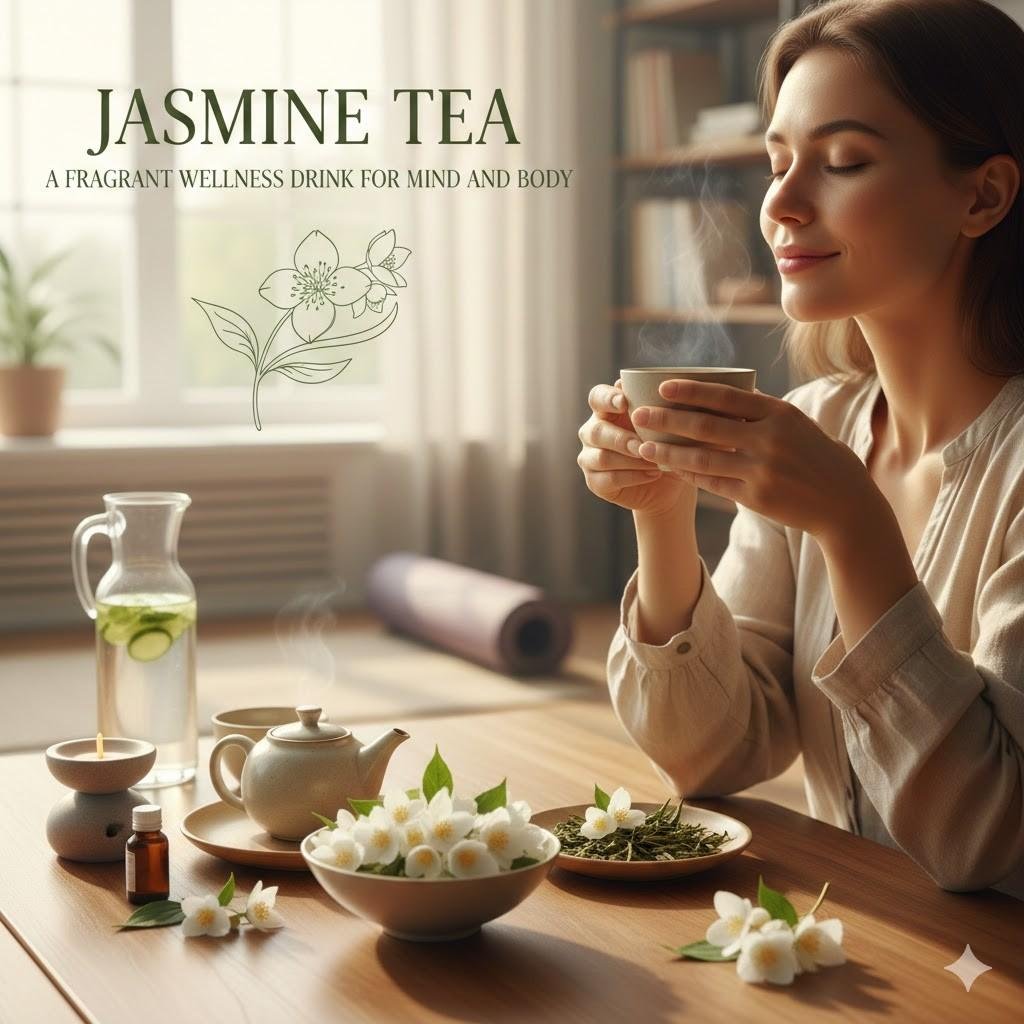
Jasmine Tea : Few beverages capture elegance and tranquility quite like jasmine tea. Known for its delicate floral aroma and smooth taste, jasmine tea has been cherished for centuries—not only as a refreshing drink but also as a symbol of relaxation, balance, and wellness.
Whether you are a tea enthusiast or someone looking to explore healthier beverage choices, jasmine tea offers a unique blend of sensory pleasure and potential health benefits. In this comprehensive guide, we’ll explore everything you need to know about jasmine tea—from its origins and production process to its wellness advantages, brewing methods, and delicious recipes.
What Is Jasmine Tea?
Jasmine tea is a scented tea, meaning it is infused with the fragrance of jasmine blossoms rather than being made solely from the flower itself.
Typically, jasmine tea uses:
- Green tea as the base (most common)
- White tea for a lighter flavor
- Black tea for a stronger profile
- Oolong tea for complexity
The result is a tea that balances vegetal freshness with a naturally sweet floral aroma.
Unlike artificial flavoring, authentic jasmine tea absorbs its fragrance through a meticulous layering process with real jasmine flowers.
The Origins of Jasmine Tea
Jasmine tea traces its roots back to China’s Song Dynasty (960–1279), but it became especially popular during the Ming Dynasty when tea scenting techniques were refined.
The Fujian province remains one of the world’s most respected producers.
Historically, jasmine tea was considered a luxury reserved for royalty and elite society due to the labor-intensive production process.
Today, it is enjoyed worldwide—but high-quality jasmine tea still reflects centuries of craftsmanship.
How Jasmine Tea Is Made
The magic of jasmine tea lies in its scenting process.
Step 1: Harvesting the Tea Leaves
Tea leaves are typically picked in early spring when they are fresh and tender.
Step 2: Picking Jasmine Blossoms
Jasmine flowers are harvested during summer afternoons while still closed.
At night, the blossoms open and release their strongest fragrance.
Step 3: The Scenting Ritual
Tea leaves are layered with jasmine flowers for several hours so they can absorb the aroma.
Premium teas may undergo this process multiple times—sometimes up to seven scentings.
Step 4: Removing the Flowers
Most flowers are removed before packaging, leaving behind naturally fragrant tea.
This careful process separates authentic jasmine tea from artificially flavored versions.
What Does Jasmine Tea Taste Like?
Jasmine tea is beloved for its calming sensory profile.
Flavor notes include:
- Light sweetness
- Smooth finish
- Gentle floral tones
- Minimal bitterness (when brewed correctly)
It’s aromatic without being overpowering—making it ideal for both beginners and seasoned tea drinkers.
Types of Jasmine Tea
1. Jasmine Green Tea
The most popular variety.
✔ Fresh
✔ Slightly grassy
✔ Rich in antioxidants
Perfect for daily drinking.
2. Jasmine Pearl Tea
Also called Dragon Pearls, these hand-rolled tea leaves unfurl beautifully during brewing.
✔ Higher quality
✔ More aromatic
✔ Visually stunning
Often considered a luxury tea.
3. Jasmine White Tea
Delicate and naturally sweet.
✔ Lower caffeine
✔ Silky texture
✔ Subtle flavor
Great for evening relaxation.
4. Jasmine Oolong Tea
A balance between green and black tea.
✔ Complex taste
✔ Floral yet creamy
✔ Smooth body
Ideal for tea connoisseurs.
5. Jasmine Black Tea
Stronger and more robust.
✔ Higher caffeine
✔ Bold flavor
✔ Excellent with milk
Perfect for mornings.
Health Benefits of Jasmine Tea
Jasmine tea isn’t just fragrant—it may support overall wellness thanks to its tea base and natural compounds.
1. Rich in Antioxidants
Jasmine tea contains polyphenols, which help combat oxidative stress.
This may support:
- Cellular health
- Slower aging
- Reduced inflammation
2. Promotes Relaxation
The aroma of jasmine is widely associated with calmness.
Some studies suggest floral scents may help:
- Reduce stress
- Improve mood
- Encourage relaxation
A warm cup can feel like a mini meditation.
3. Supports Heart Health
Green tea-based jasmine varieties may help:
- Improve cholesterol levels
- Support blood vessel function
When paired with a balanced lifestyle, it can be heart-friendly.
4. May Aid Weight Management
Jasmine green tea may slightly enhance metabolism.
While not a miracle drink, it can complement healthy habits when replacing sugary beverages.
5. Supports Brain Function
The combination of moderate caffeine + L-theanine may promote:
- Better focus
- Steady energy
- Reduced mental fatigue
Unlike coffee, the energy tends to feel smoother.
6. May Strengthen the Immune System
Antioxidants and plant compounds support the body’s natural defenses.
Regular tea drinkers often benefit from improved overall wellness routines.
7. Good for Skin Health
Antioxidants help fight free radicals that contribute to premature aging.
Hydration also plays a role in maintaining healthy-looking skin.
Does Jasmine Tea Contain Caffeine?
Yes—but typically less than coffee.
| Beverage | Average Caffeine |
|---|---|
| Jasmine Green Tea | 20–30 mg |
| Jasmine White Tea | 15–25 mg |
| Coffee | 90–120 mg |
This makes jasmine tea ideal for people seeking gentle energy without jitters.
How to Brew the Perfect Cup
Brewing jasmine tea correctly is essential to avoid bitterness.
Ingredients:
- 1 teaspoon loose-leaf jasmine tea (or 1 tea bag)
- 1 cup hot water
Temperature Guide:
- Green/white base: 75–85°C (167–185°F)
- Black base: 85–95°C
Avoid boiling water for green jasmine tea—it can ruin the flavor.
Steps:
- Heat water to the correct temperature.
- Steep for 2–3 minutes.
- Strain and enjoy.
Pro Tip: High-quality leaves can often be re-steeped 2–3 times.
Best Time to Drink Jasmine Tea
Morning: Gentle wake-up without caffeine overload.
Afternoon: Refreshing and focus-enhancing.
Evening: Choose white jasmine for lower caffeine.
Avoid drinking it on an empty stomach if you are sensitive to tea.
Delicious Jasmine Tea Recipes
🌸 Honey Jasmine Iced Tea
Ingredients:
- 2 cups brewed jasmine tea
- 1 tablespoon honey
- Ice cubes
- Lemon slices
Instructions:
Chill the tea, add honey, pour over ice, and garnish with lemon.
Perfect for hot days.
🌸 Jasmine Green Tea Latte
Ingredients:
- 1 cup strong jasmine tea
- ½ cup warm milk (or oat milk)
- 1 teaspoon vanilla
- Sweetener to taste
Mix and froth for a café-style experience.
🌸 Citrus Jasmine Refresher
Ingredients:
- Brewed jasmine tea
- Orange slices
- Mint leaves
Light, vibrant, and packed with flavor.
Possible Side Effects
Jasmine tea is generally safe, but moderation is key.
Potential concerns:
- Caffeine sensitivity
- Iron absorption interference if consumed with meals
- Mild stomach discomfort in some individuals
Pregnant individuals should consult a healthcare professional regarding caffeine intake.
How to Choose High-Quality Jasmine Tea
Look for:
✔ Whole leaves instead of dust
✔ Natural fragrance (not overly perfumed)
✔ Reputable sourcing
✔ Minimal broken pieces
Premium jasmine tea smells fresh—not artificial.
Storage Tips
To preserve aroma:
- Store in airtight containers
- Keep away from sunlight
- Avoid moisture
- Don’t refrigerate (condensation can damage leaves)
Fresh tea equals better flavor.
Jasmine Tea vs Green Tea: What’s the Difference?
Jasmine tea is often green tea—but scented.
Green Tea: vegetal, grassy
Jasmine Tea: floral, aromatic, smoother
If plain green tea feels too bitter, jasmine is an excellent alternative.
Why Jasmine Tea Is Perfect for Modern Lifestyles
In today’s fast-paced world, small rituals matter.
Brewing jasmine tea encourages you to:
- Slow down
- Breathe deeply
- Stay present
It’s not just hydration—it’s a wellness moment.
The Growing Global Popularity
Jasmine tea is now featured in:
- Wellness cafés
- Luxury tea collections
- Spa menus
- Mindfulness routines
As people shift toward healthier beverages, floral teas are experiencing a renaissance.
Expert Tips for Maximum Flavor
✅ Use filtered water
✅ Don’t over-steep
✅ Invest in loose-leaf tea
✅ Pre-warm your cup
✅ Experiment with steep times
Small changes dramatically improve your tea experience.
Final Thoughts
Jasmine tea is more than a drink—it’s an invitation to pause, relax, and nourish your body.
With its enchanting aroma, gentle energy, and potential health benefits, it fits beautifully into both traditional rituals and modern wellness lifestyles.
Whether served hot on a quiet morning or iced on a sunny afternoon, jasmine tea proves that sometimes the simplest pleasures are the most powerful.
So brew a cup, inhale the floral notes, and let every sip remind you that wellness can be wonderfully fragrant.
FAQs About Jasmine Tea
1. What is jasmine tea made from?
Jasmine tea is usually made by scenting green, white, black, or oolong tea leaves with fresh jasmine flowers, giving it a naturally floral aroma.
2. Does jasmine tea help you sleep?
Most jasmine teas contain caffeine, so they may not be ideal before bedtime. However, jasmine white tea has lower caffeine and may be suitable for evenings.
3. Is jasmine tea better hot or cold?
Both are excellent. Hot jasmine tea highlights the floral aroma, while iced jasmine tea is refreshing and perfect for warm weather.
4. How many cups of jasmine tea can I drink per day?
For most people, 2–3 cups daily is considered safe, depending on caffeine sensitivity.
5. Does jasmine tea detox the body?
While no tea can “detox” your body, the antioxidants in jasmine tea support natural cleansing processes carried out by the liver.
6. Is jasmine tea good for digestion?
Yes, it may help promote smoother digestion and reduce feelings of heaviness after meals.
7. Can jasmine tea stain teeth?
Like most teas, it can cause mild staining over time. Drinking water afterward can help minimize this effect.
8. Is jasmine tea suitable for fasting?
Yes, many people drink it during fasting because it is low in calories. Just avoid adding sugar if your fast requires zero calories.
9. What does jasmine tea smell like?
It has a sweet, romantic floral fragrance that many people find calming and uplifting.
10. Can I add milk to jasmine tea?
It is typically enjoyed without milk to preserve its delicate flavor, but you can experiment if you prefer a creamier texture.
11. Is loose-leaf jasmine tea better than tea bags?
Loose-leaf tea often offers better flavor, higher-quality leaves, and multiple steepings.
12. Does jasmine tea expire?
Tea doesn’t spoil quickly, but it can lose aroma and flavor. For the best experience, consume within 6–12 months.
13. Is jasmine tea anti-inflammatory?
Its antioxidants may help reduce inflammation as part of a balanced diet.
14. Can jasmine tea reduce anxiety?
The soothing scent combined with L-theanine in tea may promote relaxation and mental calmness.
15. Who should avoid jasmine tea?
People highly sensitive to caffeine, those with iron absorption issues, or pregnant individuals should consult a healthcare professional before consuming large amounts.
Also Read: