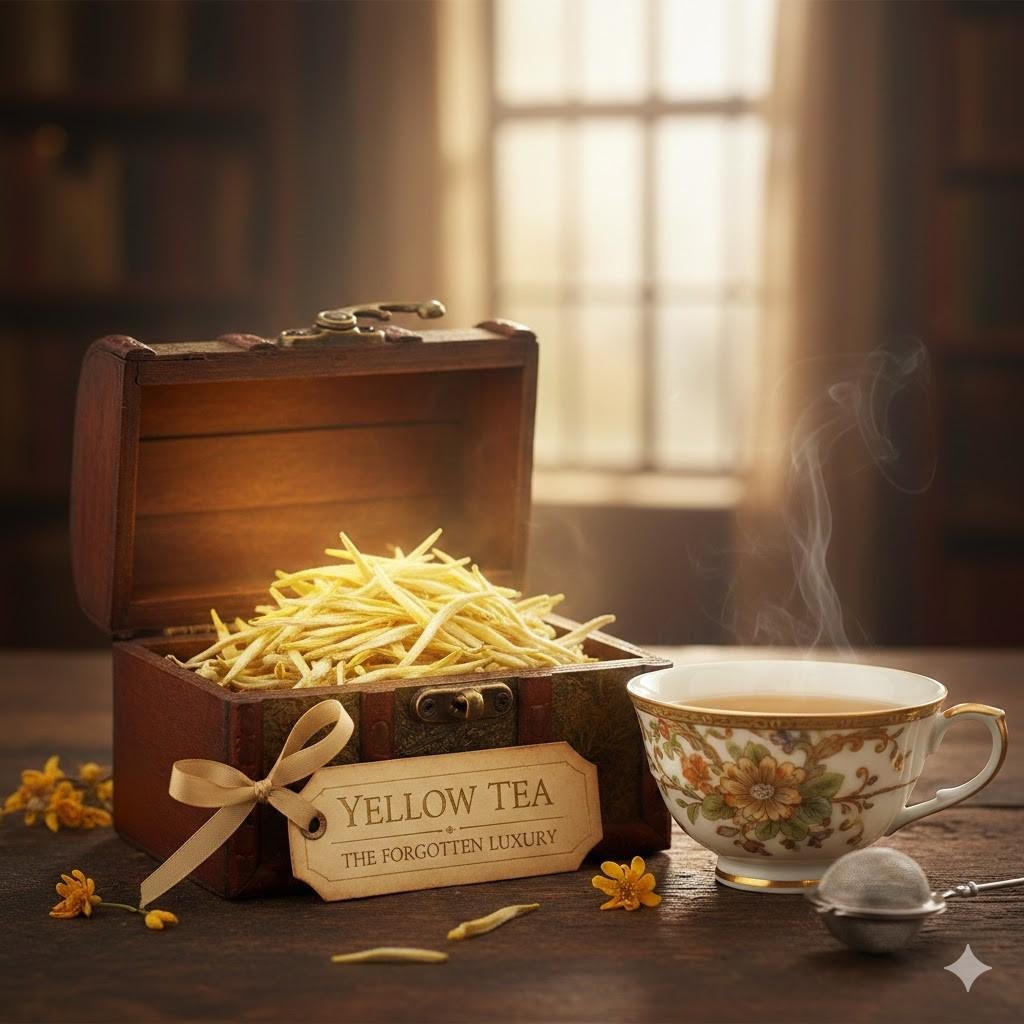
In the vast and nuanced world of tea, green, black, and oolong often take center stage. Yet hidden in the shadows of these popular varieties lies one of the rarest and most refined teas ever crafted — yellow tea. Delicate, smooth, and historically reserved for royalty, yellow tea is sometimes called the “forgotten luxury tea.”
Produced in extremely limited quantities and requiring meticulous craftsmanship, yellow tea occupies a unique space between green and white teas. Its subtle sweetness, gentle aroma, and lack of grassy bitterness make it a connoisseur’s treasure.
In this comprehensive guide, we’ll explore the origins, processing methods, flavor profile, health benefits, brewing techniques, and why yellow tea deserves a revival in modern tea culture.
What Is Yellow Tea?
Yellow tea is a lightly oxidized tea made from the leaves of the tea plant, Camellia sinensis. It is most closely related to green tea but undergoes an additional unique step called “sealed yellowing” (men huan).
This extra stage distinguishes yellow tea from green tea and is responsible for its:
- Mellow taste
- Reduced grassy notes
- Golden-yellow liquor
- Silky mouthfeel
Yellow tea is one of the six traditional categories of Chinese tea, alongside white, green, oolong, black (red), and dark (pu-erh) tea.
The History of Yellow Tea
Yellow tea originated during the Ming and Qing dynasties in China. It was once reserved for emperors and high-ranking officials. Some varieties were even classified as tribute teas sent directly to the imperial court.
One of the most famous historical yellow teas is:
- Junshan Island – the birthplace of
- Dongting Lake
- Producing the legendary Junshan Yinzhen
According to tradition, this tea was offered as tribute during imperial ceremonies. Its delicate processing and low yield made it exclusive.
Another important yellow tea comes from:
- Mengding Mountain
- Producing Meng Ding Huang Ya
Mengding Mountain is also historically significant because it’s considered one of the earliest cultivated tea regions in China.
Why Is Yellow Tea So Rare?
What truly separates yellow tea from green tea is the “Men Huang” (Sealed Yellowing) process.
The Basic Steps:
- Withering – Fresh leaves lose moisture.
- Fixation (Sha Qing) – Heat stops oxidation.
- Sealed Yellowing (Men Huang) – The key step.
- Drying – Locks in flavor.
What Happens During Sealed Yellowing?
The leaves are lightly steamed or pan-fired, then wrapped in cloth or paper and allowed to rest in a warm, slightly humid environment.
This controlled resting causes:
- Mild enzymatic changes
- Chlorophyll breakdown
- Soft oxidation
- Reduction in grassy compounds
This stage:
- Removes the sharp “green” bite
- Adds smooth sweetness
- Creates a golden infusion
Because this step is difficult to control and labor-intensive, very few producers still practice traditional yellow tea craftsmanship.
That’s one reason yellow tea almost disappeared during the 20th century.
The Unique Processing Method
The defining feature of yellow tea is the “men huan” (sealed yellowing) process.
Step 1: Plucking
Tender buds and young leaves are hand-harvested in early spring.
Step 2: Fixation (Kill-Green)
Leaves are gently heated to stop oxidation.
Step 3: Sealed Yellowing
This is the magic step:
- Warm leaves are wrapped in paper or cloth.
- They rest in a controlled environment.
- Light oxidation and moisture interaction occur.
- The leaves slowly turn yellow.
Step 4: Drying
Leaves are carefully dried to stabilize flavor.
This process removes the sharp, grassy bitterness often found in green tea.
Types of Yellow Tea
Though rare, several famous varieties exist.
1. Junshan Yinzhen
Junshan Yinzhen is perhaps the most famous yellow tea.
- Origin: Hunan Province
- Made from single buds
- Light golden liquor
- Extremely refined flavor
It was once served as tribute tea to emperors.
2. Huoshan Huangya
Huoshan Huangya
- Origin: Anhui Province
- Bud-and-leaf style
- Smooth, slightly nutty taste
3. Mengding Huangya
Mengding Huangya
- Origin: Sichuan Province
- Ancient cultivation region
- Mild sweetness
Each type varies slightly in aroma, sweetness, and mouthfeel.
What Does Yellow Tea Taste Like?
Yellow tea is known for its:
- Smooth texture
- Mild sweetness
- Subtle floral notes
- Light nutty undertones
- No harsh bitterness
It lacks the grassy sharpness of green tea and the strong body of black tea. The experience is refined and elegant.
Flavor Science: Why Yellow Tea Tastes So Smooth
Green tea can sometimes taste grassy, vegetal, or bitter if over-brewed.
Yellow tea, however, has:
- Lower perceived bitterness
- Rounder mouthfeel
- Mild floral sweetness
- Light honey notes
- Soft toasted grain character
Why?
During sealed yellowing:
- Catechins partially transform
- Chlorophyll breaks down
- Amino acids (like L-theanine) remain intact
This gives yellow tea:
- Balanced caffeine
- Gentle stimulation
- Relaxed alertness
- A smoother profile compared to green tea
It’s ideal for people who find green tea too sharp but don’t want the heaviness of black tea.
Yellow Tea vs. Green Tea
| Feature | Yellow Tea | Green Tea |
|---|---|---|
| Processing | Includes sealed yellowing | No yellowing step |
| Flavor | Smooth & mellow | Fresh & grassy |
| Bitterness | Very low | Can be moderate |
| Rarity | Very rare | Widely available |
| Price | High | Moderate |
Yellow tea is often considered a more polished version of green tea.
Caffeine Content
Yellow tea contains moderate caffeine — similar to green tea but often perceived as gentler due to its smooth profile.
It provides:
- Mild alertness
- Steady energy
- No intense jitters (when brewed properly)
Health Benefits of Yellow Tea
Because yellow tea comes from Camellia sinensis, it shares many health benefits with green tea.
1. Rich in Antioxidants
Yellow tea contains polyphenols and catechins that help:
- Combat oxidative stress
- Support cellular health
- Promote healthy aging
2. Supports Heart Health
Regular tea consumption is associated with:
- Improved circulation
- Healthy cholesterol levels
- Reduced inflammation
3. Digestive Support
Its smooth character makes it gentle on the stomach.
It may:
- Aid digestion
- Reduce bloating
- Support gut comfort
4. Weight Management Support
Yellow tea may assist metabolism due to:
- Catechin content
- Mild caffeine
- Thermogenic properties
However, it works best alongside healthy lifestyle habits.
5. Mental Clarity
The combination of caffeine and L-theanine in tea may support:
- Focus
- Calm alertness
- Reduced stress perception
How to Brew Yellow Tea
Proper brewing is essential to preserve its delicate flavor.
Basic Brewing Method
Ingredients:
- 2–3 grams yellow tea
- 1 cup water (75–85°C)
Instructions:
- Heat water below boiling.
- Rinse leaves briefly (optional).
- Steep for 2–3 minutes.
- Strain and enjoy.
Avoid boiling water, which can ruin its smooth taste.
Gongfu Brewing Method
For a more refined experience:
- Use small teapot or gaiwan
- Short steeps (20–30 seconds)
- Multiple infusions (up to 5–6 times)
Flavor evolves with each infusion.
Why Yellow Tea Disappeared
Several factors contributed:
- Labor-intensive process
- Low production volume
- Competition from green tea
- Higher price point
As global demand shifted toward mass production, yellow tea nearly vanished.
The Revival of Yellow Tea
In recent years, specialty tea enthusiasts have revived interest in rare teas.
Artisan tea farmers now:
- Preserve traditional methods
- Produce limited batches
- Educate consumers about heritage teas
Yellow tea is slowly regaining recognition among tea connoisseurs.
Storage Tips
- Store in airtight container
- Keep away from moisture
- Avoid light exposure
- Consume within 6–12 months
Freshness is crucial.
Who Should Try Yellow Tea?
Yellow tea is ideal for:
- Green tea lovers seeking smoother flavor
- Tea collectors
- Connoisseurs exploring rare varieties
- Those sensitive to bitterness
Is Yellow Tea Worth the Price?
For casual drinkers, green tea may suffice. But for tea enthusiasts:
- The craftsmanship
- The history
- The subtle flavor
- The rarity
Make yellow tea a luxury experience worth savoring.
Final Thoughts
Yellow tea is a hidden treasure in the tea world — a rare luxury crafted with patience and artistry. Its gentle flavor, golden infusion, and royal history make it one of the most refined teas available.
In an era dominated by mass-produced beverages, yellow tea reminds us of the beauty of slow craftsmanship. It is not just a drink, but a sensory experience rooted in tradition.
For those willing to explore beyond the ordinary, yellow tea offers a sip of forgotten elegance — subtle, smooth, and undeniably special.
FAQs About Yellow Tea
1. What is yellow tea made from?
Yellow tea is made from the leaves of Camellia sinensis, the same plant used for green, white, oolong, and black tea. Its unique character comes from a special processing step called sealed yellowing.
2. How is yellow tea different from green tea?
Yellow tea undergoes an additional “men huan” (sealed yellowing) process, which reduces grassy flavors and bitterness, resulting in a smoother, mellower taste compared to green tea.
3. Does yellow tea contain caffeine?
Yes, yellow tea contains moderate caffeine levels, similar to green tea, but it often feels gentler due to its smooth flavor profile and L-theanine content.
4. Why is yellow tea so rare?
The production process is labor-intensive and time-consuming. Few tea farms still practice the traditional yellowing technique, making it one of the rarest tea types in the world.
5. What does yellow tea taste like?
Yellow tea is smooth, mellow, slightly sweet, and sometimes lightly nutty or floral. It has very little bitterness when brewed correctly.
6. What are the health benefits of yellow tea?
Like other teas from Camellia sinensis, yellow tea contains antioxidants that may support heart health, digestion, metabolism, and mental clarity.
7. How should I brew yellow tea?
Use water between 75–85°C (not boiling) and steep for 2–3 minutes. Lower temperatures preserve its delicate flavor.
8. Is yellow tea good for beginners?
Yes, especially for those who find green tea too sharp or bitter. Its smooth taste makes it approachable for new tea drinkers.
9. How many cups can I drink per day?
1–3 cups daily is generally safe for most healthy adults, depending on caffeine sensitivity.
10. Where does yellow tea come from?
Yellow tea is traditionally produced in China, with famous varieties like Junshan Yinzhen and Huoshan Huangya.
Also read:
Chrysanthemum Tea: The Floral Herbal Infusion for Cooling, Calm, and Clarity