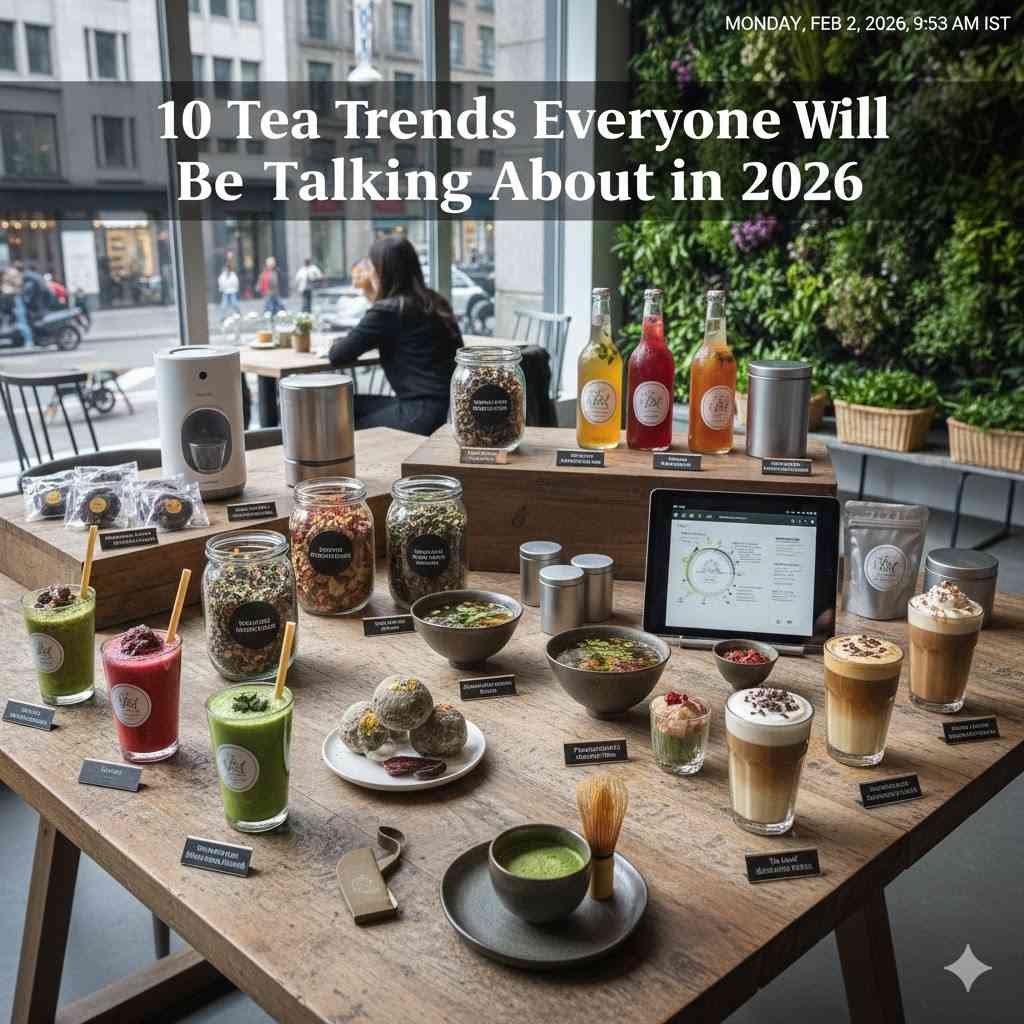
Tea Trends : Tea is no longer just a comforting beverage—it has evolved into a global wellness ritual, a lifestyle statement, and even a technological innovation space. From functional herbal blends to sustainable farming and ready-to-drink convenience, the tea industry is undergoing a transformation fueled by health awareness, environmental responsibility, and changing consumer habits.
Market data shows strong momentum: the herbal tea market alone is projected to grow from $3.4 billion in 2025 to $5.17 billion by 2035, driven largely by health-conscious consumers. Meanwhile, matcha continues to surge globally, supported by demand for antioxidant-rich beverages and modern wellness lifestyles.
If you’re a tea lover, blogger, entrepreneur, or simply someone who enjoys staying ahead of trends, these are the 10 tea movements set to define 2026 and beyond.
1. Functional Teas Will Dominate Wellness Culture
The biggest shift in tea is its transition from a simple refreshment into a functional health drink—one of the most important tea trends shaping 2026. Consumers increasingly want beverages that actively support sleep, digestion, immunity, focus, and stress relief, making functional blends a core part of modern wellness routines. This evolution clearly reflects how current tea trends are moving toward purpose-driven consumption rather than just taste.
Industry analysts predict that herbal “powerhouse” ingredients blended with traditional teas will dominate the market as people seek natural remedies. As highlighted in global tea trends, functional beverages enriched with vitamins, adaptogens, probiotics, and plant extracts are gaining strong traction worldwide. These innovations are transforming tea into a natural alternative to supplements, reinforcing its role in everyday health.
Why this tea trend is exploding
- Preventive healthcare is becoming mainstream
One of the leading drivers behind today’s tea trends is the shift toward prevention rather than treatment. - People prefer natural alternatives to synthetic supplements
Among rising tea trends, consumers are choosing plant-based, clean-label beverages over pills. - Tea fits seamlessly into daily routines
A key reason these tea trends are growing is convenience—tea easily fits into morning, workday, or evening rituals.
Future prediction: Tea aisles will soon resemble supplement shelves.
2. Matcha Mania Is Far From Over
Few beverages have captured global attention like matcha. Google search patterns show it consistently holds the highest interest among tea types, reflecting sustained fascination.
The global matcha market is valued at $1.23 billion in 2026 and could reach $3.07 billion by 2035, with health-focused choices influencing over 62% of consumer
News reports highlight skyrocketing demand fueled by social media and wellness culture—so strong that producers are struggling to keep up, raising fears of shortages. Matcha’s popularity is tied to benefits like calm energy and heart health while also serving as a coffee alternative.
Future prediction: Matcha will expand beyond tea into snacks, desserts, and functional drinks.
3. Ready-to-Drink (RTD) Tea Will Reshape Convenience
Busy lifestyles are driving demand for beverages that require zero preparation. Cold brew and RTD teas are expanding rapidly because they combine quality with portability.
The RTD segment is projected to grow quickly, with matcha-based ready drinks alone showing strong demand expansion.
Key innovations include:
- Sugar-free formulations
- Clean-label ingredients
- Lightweight recyclable packaging
Future prediction: RTD tea could rival bottled coffee within a decade.
4. Sustainability Will Move From Trend to Requirement
Modern consumers want transparency—where their tea comes from, how it’s grown, and whether farmers are paid fairly.
Experts say sustainability is no longer optional; buyers are prioritizing eco-friendly sourcing and fair-trade certifications.
Additionally, regenerative agriculture—focused on soil health, biodiversity, and carbon reduction—is gaining adoption among tea estates.
Packaging is evolving too, with recycled and plant-based materials influencing purchasing decisions.
Future prediction: Unsustainable brands will struggle to survive.
5. Herbal Tea Growth Will Continue Steadily
Herbal tea demand is rising as health awareness spreads globally. About 35% of demand is driven by health-conscious consumers, according to market research.
Search interest in herbal tea has also surged toward late 2025, signaling growing consumer curiosity.
Popular benefits include:
- Stress reduction
- Better sleep
- Immune support
- Antioxidant intake
Future prediction: Herbal tea will transition from “alternative” to everyday beverage.
6. Floral and Botanical Infusions Will Become Mainstream
Flowers are no longer just decorative—they’re becoming central ingredients.
Lavender, hibiscus, elderflower, rose, and lemongrass are increasingly used for aroma, color, and emotional connection with nature.
These blends appeal especially to younger consumers seeking sensory experiences rather than plain drinks.
Future prediction: Expect vibrant purple, pink, and golden teas dominating Instagram feeds.
7. Exotic Flavor Fusions Will Attract New Generations
Tea brands are blending global flavors—green tea with tropical fruits like guava and passion fruit—to create visually appealing, modern beverages.
These combinations offer “sensory diversity” that resonates with younger audiences searching for novelty.
Future prediction: Tea menus will look more like craft cocktail lists.
8. Premium and Specialty Teas Will Gain Prestige
Consumers are increasingly willing to pay for single-origin, high-quality, and specialty teas, signaling a shift toward premiumization.
This mirrors trends seen in coffee and wine—where origin, processing methods, and authenticity influence buying decisions.
Future prediction: Tea tastings and pairing experiences will grow in popularity.
9. Multisensory Tea Experiences Will Replace Simple Drinking
Tea is evolving into an experience centered around rituals, aromas, textures, and storytelling.
Industry insights suggest emotional value and the narrative behind each blend will become key differentiators for brands.
Think:
- Color-changing infusions
- Ceremony-style brewing
- Mindfulness tea rituals
Future prediction: Tea drinking will increasingly overlap with self-care culture.
10. Organic and Natural Teas Will See Rapid Expansion
The organic tea sector is expanding with stricter standards and stronger brand authenticity.
Green tea already leads with nearly 39.6% market share, while herbal and fruit infusions are forecast to grow at over 13% CAGR through 2031.
Distribution is also evolving—offline retail dominates today, but online channels are expected to grow faster.
Future prediction: Organic certification will soon become a baseline expectation.
What Tea Communities Are Saying
Online discussions reflect how fast these trends are spreading.
On Reddit, users note that matcha is shifting from niche to mainstream in India, with market growth fueled by health awareness and social media influence.
Another discussion shows mixed opinions—some believe the boom is exponential, while others wonder whether it’s a passing fad, highlighting the excitement and debate surrounding the trend.
👉 Translation: When communities argue about a beverage, it usually means it’s culturally significant.
The Bigger Picture: Why Tea Is Entering a Golden Era
Several macro forces are shaping the tea industry:
- Preventive health culture
- Rising disposable income in emerging markets
- Demand for clean-label drinks
- Growth of e-commerce channels
Tea sits at the intersection of wellness, sustainability, and lifestyle—three of the strongest consumer movements today.
Tea Trends What Will Tea Look Like by 2030?
Based on current projections, expect:
✅ Smart brewing devices
✅ Personalized blends
✅ AI-driven flavor recommendations
✅ Functional tea replacing sugary beverages
✅ Tea cafés rivaling coffee chains
Tea is no longer competing with coffee—it’s redefining the beverage industry.
Final Thoughts Tea Trends
The tea world of 2026 is dynamic, innovative, and deeply connected to modern values. Whether it’s the unstoppable rise of matcha, the shift toward sustainability, or the boom in functional wellness drinks, one thing is clear:
👉 Tea is transforming from a traditional beverage into a global lifestyle movement.
For bloggers and businesses, this means enormous opportunity. For consumers, it means more choices, better health options, and richer sensory experiences.
So the next time you brew a cup, remember—you’re not just drinking tea.
Frequently Asked Questions (Tea Trends)
1. What are the biggest tea trends in 2026?
The biggest tea trends in 2026 include functional wellness teas, matcha-based drinks, ready-to-drink (RTD) teas, sustainable and organic teas, floral and botanical infusions, and premium single-origin teas. Health, convenience, and sustainability are driving most of these trends.
2. Why are functional teas becoming so popular?
Functional teas are popular because consumers want natural ways to improve sleep, digestion, immunity, focus, and stress management. These teas often include herbs, adaptogens, probiotics, and antioxidants, making them a daily wellness solution.
3. Is matcha still trending in 2026?
Yes, matcha remains one of the fastest-growing tea trends in 2026. Its antioxidant content, calm energy boost, and versatility in drinks and foods keep it popular among health-conscious consumers and Gen Z.
4. What is ready-to-drink (RTD) tea?
Ready-to-drink tea is pre-brewed tea sold in bottles or cans. RTD teas are trending in 2026 because they are convenient, often low in sugar, and available in functional and flavored varieties.
5. Are herbal teas healthier than regular tea?
Herbal teas can offer specific health benefits such as relaxation, better digestion, or improved immunity. While traditional teas like green and black tea contain caffeine and antioxidants, herbal teas are caffeine-free and ideal for targeted wellness needs.
6. Why is sustainable tea important in 2026?
Sustainable tea is important because consumers care about environmental impact, ethical sourcing, and fair trade. In 2026, brands using eco-friendly packaging and responsible farming practices are more trusted and preferred by buyers.
7. What flavors of tea are trending right now?
Trending tea flavors in 2026 include floral blends like lavender and hibiscus, botanical infusions, tropical fruit fusions, and unique combinations such as citrus-herb or spice-fruit teas.
8. What is premium or specialty tea?
Premium or specialty tea refers to high-quality, single-origin teas with unique flavors and traditional processing methods. In 2026, consumers are willing to pay more for authenticity, quality, and traceability.
9. Is organic tea better than non-organic tea?
Organic tea is grown without synthetic pesticides or chemicals, making it a popular choice for health-conscious consumers. In 2026, organic certification is becoming a standard expectation rather than a luxury.
10. Will tea replace coffee in the future?
Tea is not replacing coffee entirely, but it is becoming a strong alternative. With functional benefits, lower caffeine options, and wellness appeal, tea is gaining popularity among people looking for balanced energy and healthier habits.
11. What is the new tea trends?
The “tea” trend has two meanings today—one in drinks and one in slang:
1. Drink trend (real tea):
- Beverages like matcha tea have become very popular among Gen Z.
- It’s not just about taste—it’s seen as a lifestyle trend linked to wellness, aesthetics, and social media culture.
2. Internet slang trend:
- “Tea” is widely used online to mean gossip, drama, or interesting news.
- Phrases like “spill the tea” or “what’s the tea?” are trending on platforms like TikTok and Instagram.
👉 So, the “tea trend” can refer to both a trendy drink (like matcha) and a viral slang term.
12. What is “tea” in Gen Z?
In Gen Z slang, “tea” means gossip, secrets, or the real story about something.
- “Tea” = juicy information or truth
- “Spill the tea” = tell the gossip
- “That’s the tea” = that’s the truth
This slang comes from Black drag culture, where “T” originally meant truth, and later evolved into “tea.”
Also Read :