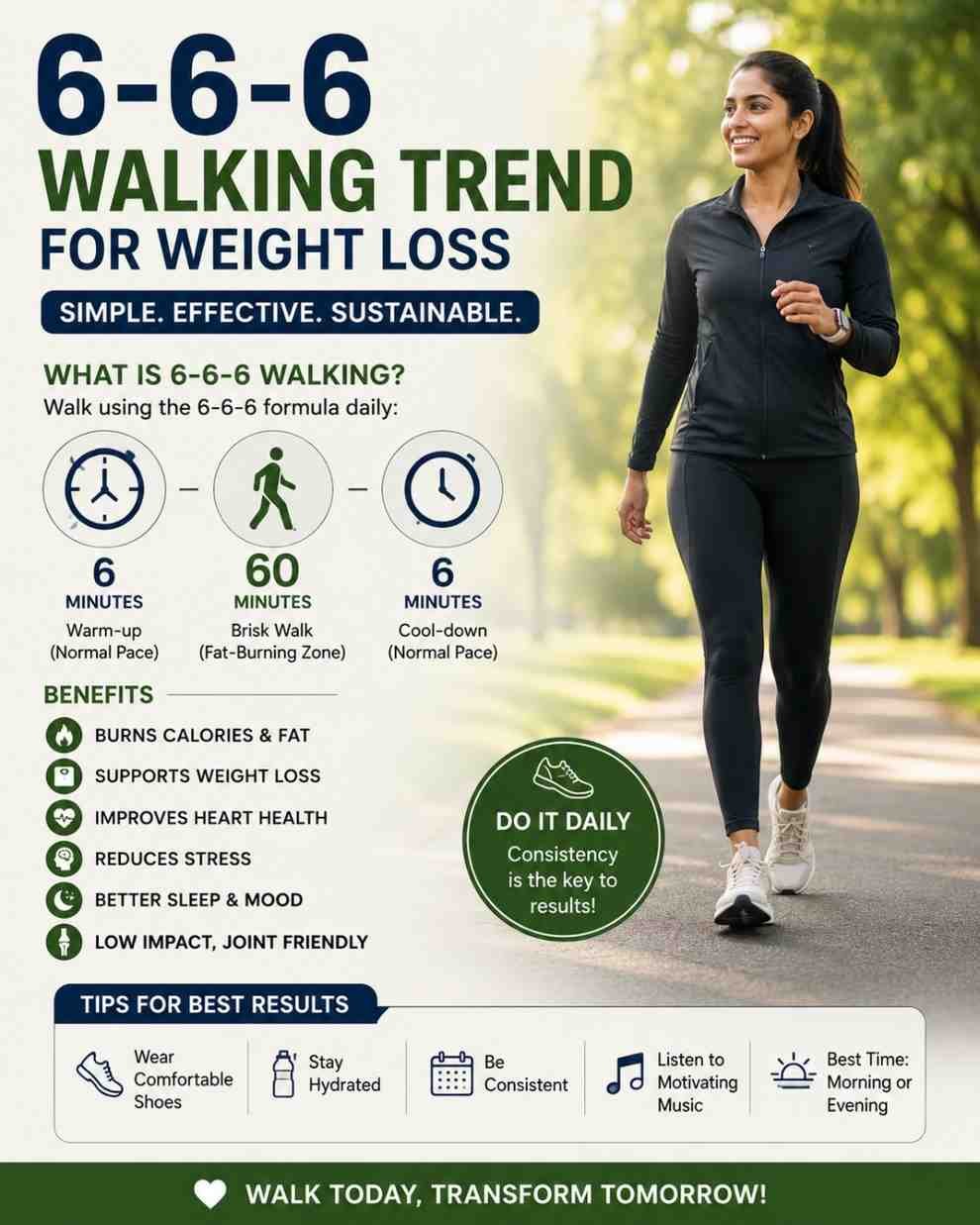
The 6-6-6 Walking Trend for Weight Loss has become one of the most popular fitness challenges among people looking for a simple, sustainable, and effective way to lose weight. Unlike complicated workout routines that require gym memberships, expensive equipment, or advanced fitness knowledge, the 6-6-6 Walking Method focuses on one of the most natural forms of exercise—walking.
Social media platforms have helped this walking trend gain widespread attention because it is easy to follow, suitable for beginners, and adaptable to different fitness levels. Many people appreciate the structure of the plan because it encourages consistency while avoiding the intensity of strenuous workout programs.
Walking has long been recognized as one of the safest and most accessible forms of physical activity. The 6-6-6 Walking Trend builds on this foundation by creating a routine that promotes calorie burning, cardiovascular health, improved mood, and long-term weight management.
In this comprehensive guide, you will learn everything about the 6-6-6 Walking Trend for Weight Loss, including how it works, its benefits, weight-loss potential, scientific basis, tips for success, safety considerations, and frequently asked questions.
What Is the 6-6-6 Walking Trend?
The 6-6-6 Walking Trend for Weight Loss is a structured walking routine that generally involves:
- Walking at 6 AM or 6 PM
- Walking for 60 minutes
- Including a 6-minute warm-up before walking
- Including a 6-minute cool-down after walking
The exact interpretation may vary slightly depending on the source, but the most common version consists of:
- A 6-minute warm-up walk
- A 60-minute brisk walk
- A 6-minute cool-down walk
The routine can be performed either in the morning at 6 AM or in the evening at 6 PM, depending on personal preference and schedule.
The simplicity of the program makes it appealing to people who want a clear and easy fitness routine.
Why Has the 6-6-6 Walking Trend for Weight Loss Become Popular?
Several factors have contributed to the popularity of the 6-6-6 Walking Challenge:
Easy to Follow
Many fitness programs contain complex instructions. The 6-6-6 method is straightforward and easy to remember.
Suitable for Beginners
Walking is a low-impact activity that most healthy adults can perform.
No Gym Required
The program can be done in neighborhoods, parks, walking tracks, or treadmills.
Affordable Exercise
Walking requires little more than comfortable shoes.
Supports Weight Loss
Regular walking helps increase calorie expenditure and supports fat loss.
Encourages Consistency
The routine creates a daily habit that is easier to maintain than many intense workout programs.
How Does the 6-6-6 Walking Trend for Weight Loss Work?
The effectiveness of the 6-6-6 Walking Trend for Weight Loss comes from combining movement, consistency, and calorie burning.
Weight loss occurs when you burn more calories than you consume. Walking increases energy expenditure, helping create a calorie deficit.
The routine includes:
Step 1: Warm-Up (6 Minutes)
A gentle warm-up prepares muscles and joints for activity.
Benefits include:
- Increased blood circulation
- Reduced injury risk
- Improved mobility
- Better workout performance
Start with a slow pace and gradually increase speed.
Step 2: Brisk Walking (60 Minutes)
The main component is a 60-minute brisk walk.
A brisk pace means:
- Faster than normal walking
- Able to talk but not sing comfortably
- Elevated heart rate
- Noticeable increase in breathing
This intensity helps maximize calorie burning.
Step 3: Cool-Down (6 Minutes)
The cool-down gradually lowers heart rate.
Benefits include:
- Improved recovery
- Reduced dizziness
- Better circulation
- Lower muscle stiffness
Slow your pace progressively during the final minutes.
Can the 6-6-6 Walking Trend Help You Lose Weight?
Yes, the 6-6-6 Walking Trend for Weight Loss can support weight loss when combined with a balanced diet.
Walking burns calories based on:
- Body weight
- Walking speed
- Distance covered
- Terrain
- Duration
A person weighing around 70 kg (154 lbs) may burn approximately 250–350 calories during a brisk 60-minute walk.
Heavier individuals may burn even more calories.
Over weeks and months, these calories can contribute significantly to weight loss.
Estimated Calories Burned During Walking
The following estimates vary depending on speed and body weight.
60-Minute Walk
- 55 kg person: 200–280 calories
- 70 kg person: 250–350 calories
- 85 kg person: 300–420 calories
- 100 kg person: 350–500 calories
Walking consistently can create a meaningful calorie deficit over time.
Health Benefits of the 6-6-6 Walking Trend for Weight Loss
1. Supports Weight Loss
Regular walking helps burn calories and improve energy balance.
2. Boosts Fat Burning
Long-duration walking encourages the body to use stored fat for energy.
3. Improves Heart Health
Walking strengthens the cardiovascular system.
Benefits include:
- Better circulation
- Improved heart function
- Reduced blood pressure
- Enhanced endurance
4. Enhances Mental Health
Walking can positively influence mood and emotional well-being.
Many people experience:
- Reduced stress
- Improved focus
- Better relaxation
- Enhanced mood
5. Increases Daily Activity
The challenge encourages movement, especially for individuals with sedentary lifestyles.
6. Supports Blood Sugar Management
Walking after meals may help regulate blood sugar levels.
7. Strengthens Muscles
Walking engages:
- Calves
- Hamstrings
- Quadriceps
- Glutes
- Core muscles
8. Improves Sleep Quality
Regular physical activity often contributes to better sleep patterns.
9. Enhances Joint Mobility
Walking helps maintain healthy movement patterns.
10. Supports Long-Term Fitness
The low-impact nature makes walking sustainable for many years.
Morning vs Evening Walking
Morning Walking (6 AM)
Advantages:
- Energizes the day
- Builds discipline
- Cooler temperatures
- Fewer distractions
- Consistent routine
Some people find morning walks easier to maintain.
Evening Walking (6 PM)
Advantages:
- Helps relieve stress
- Muscles are naturally warmer
- Convenient after work
- Can improve relaxation
Choose the option that fits your schedule.
Consistency matters more than timing.
How Fast Should You Walk?
A brisk pace is generally recommended.
Signs of brisk walking:
- Elevated heart rate
- Faster breathing
- Slight sweating
- Ability to talk but not sing
Typical speed:
- 4.8–6.4 km/h (3–4 mph)
Beginners can start slower and gradually increase pace.
Is the 6-6-6 Walking Trend for Weight Loss Suitable for Beginners?
Yes.
One of the greatest strengths of this trend is its beginner-friendly nature.
Beginners can modify the routine by:
- Walking 20–30 minutes initially
- Taking breaks when needed
- Gradually increasing duration
- Choosing flat walking routes
Over time, endurance naturally improves.
How Long Does It Take to See Results?
Results vary based on:
- Diet
- Age
- Weight
- Walking speed
- Activity level
- Sleep habits
Many individuals notice:
Within 1–2 Weeks
- Increased energy
- Better mood
- Improved stamina
Within 4–8 Weeks
- Reduced body weight
- Improved fitness
- Better cardiovascular endurance
Within 2–3 Months
- Noticeable body composition changes
- Increased muscle tone
- Greater weight-loss progress
Consistency is essential.
Tips for Success
Wear Proper Walking Shoes
Comfortable footwear reduces discomfort and injury risk.
Maintain Good Posture
Keep:
- Head upright
- Shoulders relaxed
- Core engaged
Stay Hydrated
Drink water before and after walks.
Track Progress
Use:
- Fitness apps
- Smartwatches
- Step counters
Walk with a Friend
Social support improves motivation.
Listen to Music or Podcasts
Entertainment can make longer walks enjoyable.
Set Realistic Goals
Focus on consistency rather than perfection.
Common Mistakes to Avoid
Walking Too Slowly
A brisk pace increases effectiveness.
Skipping Warm-Ups
Warm-ups help prepare the body.
Wearing Poor Footwear
Improper shoes can cause discomfort.
Inconsistent Participation
Results depend on regular practice.
Overeating After Walking
Excess calories may reduce weight-loss progress.
Ignoring Recovery
Adequate sleep supports overall fitness.
Combining the 6-6-6 Walking Trend for Weight Loss with Healthy Eating
Walking works best alongside balanced nutrition.
Consider:
Eat More Vegetables
Vegetables provide fiber and nutrients.
Include Protein
Protein helps maintain muscle mass.
Sources include:
- Eggs
- Fish
- Chicken
- Beans
- Lentils
- Yogurt
Limit Sugary Drinks
Reducing liquid calories may support weight loss.
Stay Hydrated
Water supports exercise performance.
Control Portion Sizes
Mindful eating can help maintain a calorie deficit.
Who Should Be Careful?
Although walking is generally safe, some individuals should consult healthcare professionals before beginning a new exercise routine.
This includes people with:
- Heart conditions
- Severe joint issues
- Mobility limitations
- Recent surgeries
- Chronic medical conditions
Safety should always come first.
Sample Weekly 6-6-6 Walking Plan
Monday
60-minute brisk walk
Tuesday
60-minute brisk walk
Wednesday
60-minute brisk walk
Thursday
60-minute brisk walk
Friday
60-minute brisk walk
Saturday
Nature walk or park walk
Sunday
Light recovery walk
Consistency throughout the week can produce meaningful results.
Is the 6-6-6 Walking Trend for Weight Loss Better Than Running?
Both activities offer benefits.
Walking advantages:
- Lower injury risk
- Beginner friendly
- Easier recovery
- Sustainable long term
Running advantages:
- Higher calorie burn
- Greater cardiovascular intensity
For many people, walking is easier to maintain consistently, which can make it highly effective for long-term weight management.
Final Thoughts 6-6-6 Walking Trend for Weight Loss
The 6-6-6 Walking Trend for Weight Loss is a simple, structured, and practical fitness routine that can support weight loss and overall health. By combining a 6-minute warm-up, a 60-minute brisk walk, and a 6-minute cool-down, the program encourages consistency while remaining accessible to people of different fitness levels.
Its popularity stems from its simplicity, affordability, and sustainability. Whether performed at 6 AM or 6 PM, the key factor is regular participation. Combined with healthy eating habits, adequate hydration, and consistent effort, the 6-6-6 Walking Method can become a valuable tool for improving fitness, burning calories, and supporting long-term wellness goals.
FAQs
What is the 6-6-6 Walking Trend for Weight Loss?
The 6-6-6 Walking Trend for Weight Loss is a walking routine that includes a 6-minute warm-up, a 60-minute brisk walk, and a 6-minute cool-down, usually performed at 6 AM or 6 PM.
Can the6-6-6 Walking Trend for Weight Loss help with weight loss?
Yes. Regular walking burns calories and may support weight loss when combined with a healthy diet and calorie-controlled eating plan.
How many calories can I burn during a 60-minute walk?
Depending on body weight and walking speed, most people burn approximately 200–500 calories during a brisk 60-minute walk.
Is the 6-6-6 Walking Trend for Weight Loss suitable for beginners?
Yes. Beginners can start at a slower pace and gradually increase duration and intensity.
Should I walk at 6 AM or 6 PM?
Either option works. The best time is the one that fits your schedule and allows consistent participation.
Do I need special equipment?
No. Comfortable walking shoes and weather-appropriate clothing are usually sufficient.
How quickly will I see results?
Many people notice increased energy and endurance within a few weeks. Weight-loss results vary depending on consistency and dietary habits.
Can I do the 6-6-6 Walking Trend for Weight Loss every day?
Yes. Most healthy individuals can perform the routine daily, provided they listen to their bodies and allow adequate recovery when needed.
Also read:
Baking Soda Water: 25 Benefits, Nutrition, Uses, Side Effects, Recipe
2 thoughts on “6-6-6 Walking Trend for Weight Loss: Benefits, Results & Complete Guide”