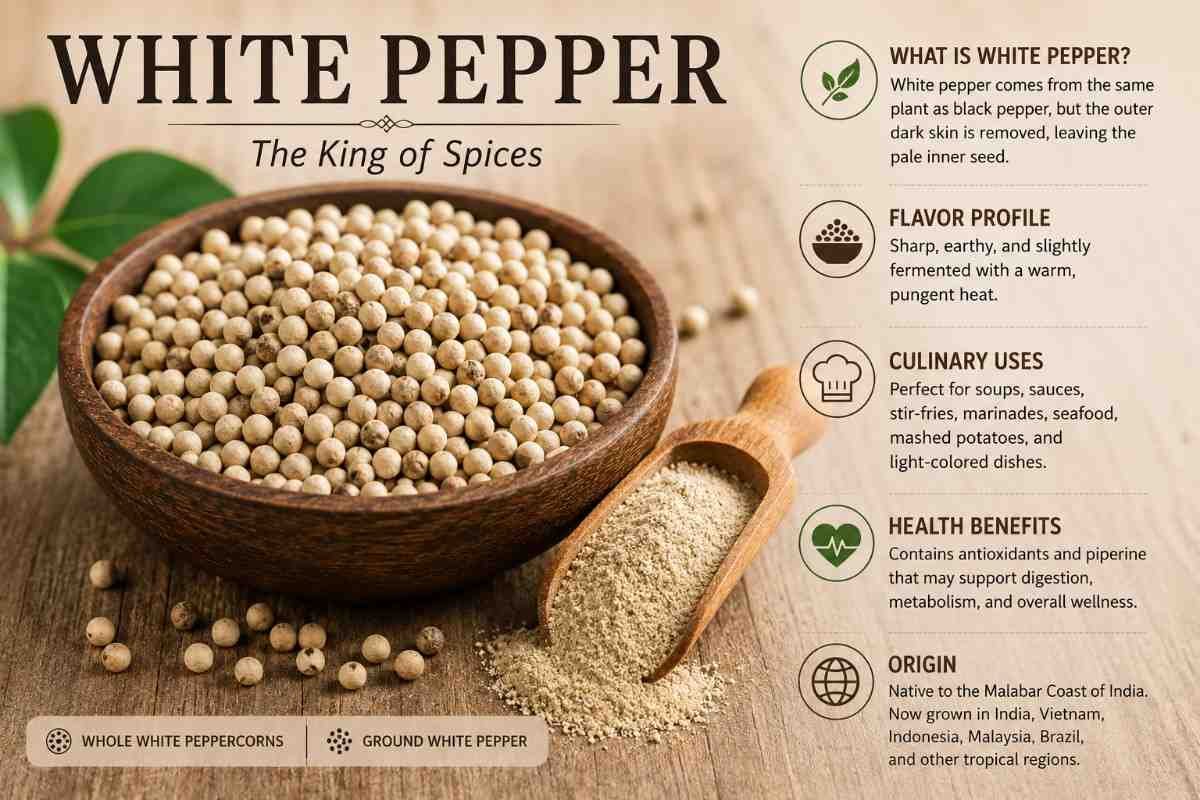
White pepper is one of the world’s most important and widely used spices. Known for its sharp flavor, earthy aroma, and smooth heat, white pepper is a staple ingredient in many global cuisines, especially Asian, European, and traditional recipes. Unlike black pepper, white pepper has a cleaner appearance and slightly different flavor profile, making it popular in light-colored dishes, soups, sauces, seafood, and gourmet cuisine.
This spice comes from the same plant as black pepper, scientifically known as Piper nigrum. However, this spice is processed differently. The outer dark layer of the pepper berry is removed, leaving behind the pale inner seed that becomes white pepper. This unique processing method gives the spice its distinctive flavor and appearance.
For centuries, white pepper has been valued not only for culinary purposes but also for its traditional medicinal uses. Ancient cultures used it in herbal preparations, digestive remedies, warming tonics, and wellness practices. Today, modern interest in this spice continues to grow because of its antioxidant compounds, essential oils, and functional culinary uses.
this spice is commonly available as whole peppercorns, ground powder, seasoning blends, and infused spice products. It is widely used in soups, sauces, mashed potatoes, stir-fries, noodles, seafood dishes, and classic international recipes.
In this complete guide, you will learn everything about this spice, including its origin, nutritional value, health benefits, culinary uses, production process, varieties, side effects, storage methods, global demand, and why this classic spice remains essential in kitchens around the world.
What Is White Pepper?
White pepper is a spice made from the mature berries of the Piper nigrum plant. Unlike black pepper, where the outer skin remains intact, this spice is produced by soaking ripe berries and removing the dark outer layer before drying the seed.
The result is a pale cream or grayish- this spice corn with a smoother appearance and distinctive flavor. White pepper has a sharper, earthier, and slightly fermented taste compared to black pepper.
this spice is widely used in:
- Asian cuisine
- Chinese cooking
- Thai dishes
- European sauces
- Cream soups
- Seafood recipes
- Light-colored sauces
- Seasoning blends
Because it blends visually into pale dishes, white pepper is preferred in recipes where black specks are undesirable.
History and Origin of White Pepper
Pepper has one of the oldest and most influential histories among spices. Native to the Malabar Coast of South India, pepper was traded internationally for thousands of years and was once considered as valuable as gold.
Ancient civilizations including the Romans, Greeks, Egyptians, and Chinese highly prized pepper for culinary and medicinal purposes. this spice became especially popular in European royal kitchens and Asian cuisines because of its refined appearance and strong flavor.
Historically, pepper played a major role in:
- Global spice trade routes
- Maritime exploration
- Economic development
- Culinary traditions
- Traditional medicine systems
Today, this spice is produced in many tropical regions around the world.
Major producing countries include:
- India
- Vietnam
- Indonesia
- Malaysia
- Sri Lanka
- Brazil
- Thailand
Nutritional Value of White Pepper
this spice contains several nutrients and beneficial plant compounds despite being used in relatively small amounts.
Nutrients Found in White Pepper
White pepper may contain:
- Dietary fiber
- Iron
- Calcium
- Potassium
- Magnesium
- Manganese
- Vitamin K
- Antioxidants
- Essential oils
- Piperine
Piperine is the primary active compound responsible for this spice’s pungent flavor and many of its functional properties.
Health Benefits of White Pepper
1. Rich in Antioxidants
this spice contains antioxidant compounds that may help protect the body from oxidative stress caused by free radicals. Antioxidants are important for supporting overall wellness and healthy body functions.
The spice also contains plant compounds and essential oils that contribute to its antioxidant activity.
2. May Support Digestion
Traditionally, this spice has been used to stimulate digestion and improve appetite. The spice may encourage digestive secretions and help support healthy digestion when consumed in moderation.
It is commonly included in soups and warming dishes because of its digestive-supporting reputation.
3. Contains Piperine
Piperine is the major active compound in this spice. This natural compound contributes to:
- Pepper’s pungent flavor
- Digestive stimulation
- Aroma enhancement
- Nutrient absorption support
Piperine is one reason pepper remains highly valued in both cooking and traditional wellness systems.
4. May Support Metabolism
Some research suggests that spicy compounds such as piperine may help support metabolic activity and thermogenesis.
Although this spice should not be viewed as a medical solution, it can be part of a balanced diet and active lifestyle.
5. May Help Improve Appetite
The warming aroma and spicy taste of this spice may stimulate appetite and improve meal enjoyment.
Many traditional cuisines use pepper-based soups and broths before meals.
6. Supports Flavor Without Excess Calories
White pepper enhances flavor naturally without adding significant calories, sugar, or fat.
This makes it a popular seasoning for:
- Healthy meals
- Soups
- Low-calorie dishes
- Vegetable recipes
- Lean protein meals
7. May Have Warming Properties
Traditional systems of wellness often considered white pepper a warming spice. It has historically been used in hot soups, herbal drinks, and seasonal preparations.
Culinary Uses of White Pepper
White pepper is one of the most versatile spices in global cuisine.
1. Soups
White pepper is commonly used in:
- Cream soups
- Chicken soup
- Corn soup
- Hot and sour soup
- Seafood soup
Its smooth appearance makes it ideal for pale-colored soups.
2. Sauces
White pepper is frequently added to:
- White sauces
- Alfredo sauce
- Cream sauces
- Gravy
- Cheese sauce
The spice provides flavor without visible black specks.
3. Asian Cuisine
White pepper is especially important in Asian cooking.
Popular dishes include:
- Fried rice
- Stir-fries
- Noodle dishes
- Dumplings
- Thai soups
- Chinese marinades
4. Seafood Dishes
White pepper pairs beautifully with:
- Fish
- Shrimp
- Crab
- Lobster
- Scallops
Its clean flavor complements delicate seafood without overpowering it.
5. Mashed Potatoes and Vegetables
White pepper is often used in mashed potatoes and creamy vegetable dishes because it blends visually into the food.
6. Meat and Poultry
White pepper works well in:
- Chicken dishes
- Turkey recipes
- Meat marinades
- Sausages
- Meatballs
7. Salad Dressings
Ground this spice adds subtle heat to:
- Vinaigrettes
- Creamy dressings
- Yogurt sauces
- Herb sauces
White Pepper vs Black Pepper
Although both come from the same plant, they differ in processing and flavor.
| Feature | White Pepper | Black Pepper |
|---|---|---|
| Processing | Outer layer removed | Outer layer retained |
| Flavor | Earthy and sharp | Bold and pungent |
| Appearance | Pale cream | Black |
| Heat | Smooth and lingering | Strong and robust |
| Common Use | Light-colored dishes | Everyday seasoning |
| Aroma | Fermented and earthy | Fresh and woody |
this spice is generally considered more refined and subtle compared to black pepper.
How White Pepper Is Made
Step 1: Harvesting Ripe Berries
Fully ripe red pepper berries are harvested from the pepper vine.
Step 2: Soaking
The berries are soaked in water for several days. This softens the outer layer.
Step 3: Removing Outer Skin
The softened outer skin is removed through rubbing or washing.
Step 4: Drying
The inner seed is dried under sunlight or controlled conditions until it becomes pale and hard.
Step 5: Sorting and Packaging
The peppercorns are sorted by size and quality before packaging.
Types of White Pepper
1. Whole White Peppercorn
Whole peppercorns retain aroma longer and can be freshly ground.
2. Ground White Pepper
This powdered form is convenient for cooking and seasoning.
3. Organic White Pepper
Produced without synthetic chemicals or pesticides.
4. Premium Gourmet White Pepper
High-quality specialty pepper used in gourmet restaurants and premium spice blends.
Flavor Profile of White Pepper
this spice has a distinctive flavor profile described as:
- Earthy
- Sharp
- Warm
- Slightly fermented
- Pungent
- Woody
- Musky
Its flavor is often stronger and more lingering than black pepper in certain dishes.
White Pepper in Global Cuisine
Chinese Cuisine
Chinese cooking frequently uses this spice in:
- Soups
- Stir-fries
- Dumpling fillings
- Marinades
Thai Cuisine
Thai soups and curries often include this spice for warmth and aroma.
French Cuisine
French chefs commonly use this spice in:
- Cream sauces
- Velouté
- Mashed potatoes
- Seafood dishes
Scandinavian Cuisine
this spice is popular in:
- Fish dishes
- Cream-based recipes
- Pickled foods
How to Use White Pepper in Cooking
Add During Cooking
this spice is often added while cooking soups and sauces.
Use as Finishing Seasoning
It can also be sprinkled over dishes before serving.
Pair with Mild Ingredients
this spice works especially well with:
- Cream
- Potatoes
- Seafood
- Chicken
- Eggs
- Tofu
Grind Fresh for Stronger Aroma
Freshly ground pepper provides more intense aroma and flavor.
Storage Tips for White Pepper
Proper storage helps preserve freshness and aroma.
Best Storage Practices
- Store in airtight containers
- Keep away from heat and sunlight
- Avoid moisture exposure
- Store whole peppercorns longer for better freshness
Ground pepper loses aroma faster than whole peppercorns.
Side Effects and Precautions
this spice is generally safe in culinary amounts, but excessive consumption may cause discomfort.
1. Digestive Irritation
Large amounts may irritate the stomach in sensitive individuals.
2. Sneezing or Respiratory Irritation
Fine pepper powder may irritate the nose and throat during handling.
3. Allergic Reactions
Although rare, some individuals may experience spice sensitivities.
4. Excessive Consumption
Very high intake of spicy foods may contribute to digestive discomfort.
White Pepper in Traditional Practices
Traditional wellness systems historically used this spice in:
- Herbal preparations
- Digestive tonics
- Warming soups
- Seasonal remedies
- Spice blends
Its warming nature made it valuable in many cultures.
Global Demand for White Pepper
this spice remains highly important in the international spice market.
Reasons for Growing Demand
- Popularity of Asian cuisine
- Expansion of gourmet cooking
- Processed food industry
- Restaurant demand
- Premium seasoning blends
- Convenience foods
this spice is widely traded globally because of its versatility and consistent demand.
Environmental Importance of Pepper Cultivation
Pepper farming supports agricultural economies in tropical regions.
Benefits include:
- Farmer livelihoods
- Export opportunities
- Biodiversity in spice farming
- Sustainable agricultural systems
Responsible cultivation practices help improve long-term sustainability.
White Pepper in Modern Food Trends
this spice fits well into modern culinary trends because of:
- Clean visual presentation
- Gourmet appeal
- Functional seasoning
- International cuisine popularity
- Natural flavor enhancement
Chefs increasingly use this spice in fusion cuisine and premium recipes.
Interesting Facts About White Pepper
- this spice and black pepper come from the same plant.
- this spice is made from ripe berries.
- It is especially popular in Asian cuisine.
- this spice is commonly used in light-colored sauces.
- Pepper was once considered as valuable as gold.
- Vietnam is one of the world’s largest pepper producers.
- this spice has a stronger earthy flavor than black pepper.
- It is widely used in gourmet cooking.
Frequently Asked Questions
What is white pepper made from?
this spice is made from ripe berries of the Piper nigrum plant after removing the outer skin.
Is white pepper stronger than black pepper?
this spice has a sharper and earthier flavor, while black pepper has a bolder and fresher taste.
Why do chefs use white pepper?
Chefs use this spice because it blends visually into light-colored dishes and provides smooth heat.
Is white pepper healthy?
this spice contains antioxidants, essential oils, and piperine that may support overall wellness when consumed in moderation.
What dishes use white pepper?
this spice is commonly used in soups, sauces, seafood dishes, mashed potatoes, stir-fries, noodles, and marinades.
Can white pepper replace black pepper?
Yes, but the flavor will differ slightly because this spice has a more earthy taste.
How should white pepper be stored?
Store this spice in airtight containers away from moisture, heat, and sunlight.
Is white pepper spicy?
Yes, but its heat is smoother and more subtle compared to black pepper.
Which countries produce white pepper?
Major producers include India, Vietnam, Indonesia, Malaysia, Sri Lanka, and Brazil.
Does white pepper contain piperine?
Yes. Piperine is the main active compound responsible for pepper’s pungent flavor and functional properties.
Conclusion
White pepper is one of the world’s most valuable and versatile spices. Its earthy flavor, smooth heat, refined appearance, and culinary flexibility make it an essential ingredient in kitchens across the globe.
From soups and sauces to seafood, stir-fries, and gourmet cuisine, this spice enhances countless dishes without overpowering them. Its ability to blend seamlessly into light-colored foods makes it especially popular among professional chefs and home cooks alike.
Beyond its culinary importance, this spice also contains antioxidants, essential oils, and piperine, contributing to its long-standing reputation in traditional wellness practices.
As global demand for flavorful, natural, and internationally inspired foods continues to rise, this spice remains a timeless spice valued for both taste and tradition.
Whether used whole, freshly ground, or powdered, this spice continues to play an important role in modern cooking, premium seasoning blends, and culinary creativity around the world.
Also read:
Pink Peppercorn: 7 Benefits, Uses, Nutrition, Side Effects
Black Pepper 101: Benefits, Nutrition, Uses, Recipes, and Complete Guide