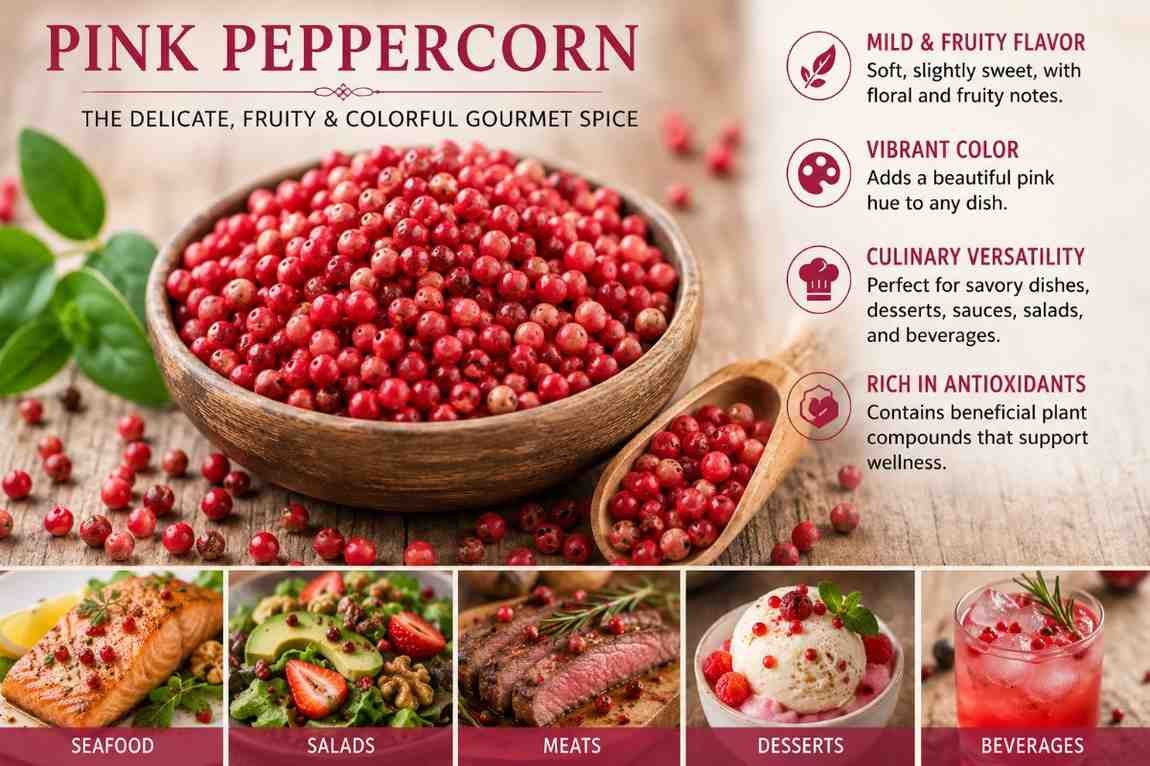
Pink peppercorn is one of the most visually attractive and flavorful spices used in modern cuisine. Known for its vibrant pink-red color, delicate sweetness, mild peppery taste, and aromatic fragrance, this vibrant spice has become increasingly popular in gourmet kitchens, restaurants, spice blends, and wellness products around the world. Although commonly grouped with black, white, and green peppercorns, this vibrant spice is botanically different and comes from an entirely separate plant species.
This beautiful spice is appreciated not only for its unique appearance but also for its culinary versatility. It can be sprinkled over salads, seafood, desserts, chocolates, cocktails, and roasted vegetables to add both flavor and elegance. Its mild heat makes it more approachable than traditional black pepper, allowing chefs and home cooks to experiment creatively.
In recent years, this spice has gained global attention because of the growing demand for premium spices, gourmet seasonings, natural ingredients, and colorful culinary presentations. Many food enthusiasts now use pink peppercorn in artisanal spice mixes, infused oils, luxury sauces, and decorative garnishes.
Beyond cooking, this colorful gourmet spice also contains antioxidants, essential oils, and natural plant compounds that may contribute to overall wellness. Traditional practices in some regions have used the spice for digestive support, circulation, and aromatic purposes.
In this complete guide, you will learn everything about this vibrant spice, including its origin, nutritional value, health benefits, culinary uses, varieties, cultivation process, side effects, storage methods, global demand, and why it continues to attract chefs and food lovers worldwide.
What Is Pink Peppercorn?
Pink peppercorn refers to the dried berries of certain trees belonging primarily to the Schinus genus, especially Schinus terebinthifolia and Schinus molle. These trees are native to South America and are commonly known as the Brazilian pepper tree and Peruvian pepper tree.
Although called “peppercorn,” pink peppercorn is not a true pepper like black pepper, white pepper, or green pepper, which all come from the Piper nigrum plant. Instead, pink peppercorn belongs to the cashew family known as Anacardiaceae.
The berries are harvested when ripe and then dried carefully to preserve their attractive pink or reddish color. The final product has a delicate texture, slightly sweet taste, fruity aroma, and mild spicy flavor.
Pink peppercorn is widely used as:
- A gourmet seasoning
- A decorative garnish
- An ingredient in spice blends
- A flavoring agent in sauces and desserts
- A component in beverages and cocktails
- A culinary finishing spice
Its soft texture makes it easy to crush, while its vibrant color enhances food presentation.
History and Origin of Pink Peppercorn
Pink peppercorn has a long history in South American regions where indigenous communities traditionally used the berries for culinary and medicinal purposes. The trees naturally grew in warm climates across Brazil, Peru, Argentina, and neighboring areas.
European explorers later encountered the spice and introduced it to international markets. Over time, pink peppercorn became associated with luxury cuisine because of its exotic appearance and delicate flavor.
The spice gained significant popularity during the rise of gourmet cooking and modern culinary experimentation. Fine dining restaurants began using it in seafood dishes, salads, sauces, and desserts.
Today, pink peppercorn is cultivated in several countries with suitable climates, including:
- Brazil
- Peru
- Madagascar
- South Africa
- France
- United States (limited areas)
Its growing demand is linked to the popularity of artisanal foods, colorful spices, and premium culinary ingredients.
Nutritional Value of Pink Peppercorn
Pink peppercorn contains several nutrients and natural plant compounds that contribute to its flavor and potential wellness properties.
Nutrients Found in Pink Peppercorn
Pink peppercorn may contain:
- Dietary fiber
- Natural antioxidants
- Essential oils
- Small amounts of protein
- Healthy plant compounds
- Iron
- Calcium
- Potassium
- Vitamin C
- Flavonoids
- Polyphenols
Although pink peppercorn is usually consumed in small quantities, its natural compounds contribute to its aromatic and functional qualities.
Health Benefits of Pink Peppercorn
1. Rich in Antioxidants
Pink peppercorn contains antioxidant compounds that may help protect cells from oxidative stress caused by free radicals. Antioxidants are important for supporting overall wellness and maintaining healthy body functions.
The berries contain flavonoids and aromatic plant compounds that contribute to their antioxidant activity.
2. May Support Digestion
Traditionally, pink peppercorn has been used in some cultures to support healthy digestion. The spice may stimulate digestive secretions and help enhance flavor perception during meals.
Its mild aromatic oils may contribute to digestive comfort when used moderately in food.
3. May Help Improve Appetite
The pleasant aroma and mild spicy flavor of pink peppercorn may help increase appetite and enhance meal enjoyment. Aromatic spices are often used in culinary traditions to stimulate the senses before eating.
4. Contains Essential Oils
Pink peppercorn berries contain essential oils responsible for their floral and fruity fragrance. These oils contribute to the spice’s distinctive aroma and culinary appeal.
Essential oils from pink peppercorn are sometimes used in:
- Aromatic blends
- Gourmet sauces
- Infused oils
- Fragrance products
- Specialty seasonings
5. May Support Circulation
Traditional herbal practices in certain regions associated pink peppercorn with improved circulation and warming effects in the body. Although more research is needed, the spice has historically been valued for its stimulating properties.
6. Low-Calorie Flavor Enhancer
Pink peppercorn provides flavor and aroma without adding significant calories. This makes it a useful ingredient for enhancing meals naturally.
7. Supports Culinary Creativity
One unique benefit of this spice is its ability to elevate food presentation and flavor simultaneously. Its bright color and mild taste allow chefs to use it creatively in modern cuisine.
Culinary Uses of Pink Peppercorn
Pink peppercorn is one of the most versatile gourmet spices available today.
1. Seafood Dishes
Pink peppercorn pairs exceptionally well with seafood because of its mild and slightly fruity flavor.
Popular uses include:
- Grilled salmon
- Shrimp dishes
- Tuna steaks
- Lobster preparations
- Seafood pasta
- Cream sauces
2. Salads
Crushed this spice adds color, aroma, and mild spice to salads.
It works especially well with:
- Citrus salads
- Goat cheese salads
- Green salads
- Avocado dishes
- Fruit salads
3. Meat and Poultry
Pink peppercorn is often used as a finishing spice for:
- Steak
- Chicken
- Duck
- Lamb
- Roasted meats
Its mild heat complements delicate flavors without overpowering them.
4. Desserts
Modern chefs frequently use this spice in desserts because of its subtle sweetness and floral notes.
Popular dessert applications include:
- Chocolate truffles
- Ice cream
- Fruit tarts
- Cheesecake
- Strawberry desserts
- Caramel sauces
5. Cocktails and Beverages
Pink peppercorn has become trendy in mixology and specialty beverages.
It is commonly added to:
- Gin cocktails
- Herbal drinks
- Infused syrups
- Sparkling beverages
- Craft cocktails
The spice adds aroma, color, and complexity.
6. Cheese and Dairy Preparations
Pink peppercorn pairs beautifully with creamy dairy products.
Examples include:
- Soft cheeses
- Cream sauces
- Butter spreads
- Yogurt dips
- Cheese platters
7. Spice Blends
Pink peppercorn is often mixed with:
- Black pepper
- White pepper
- Green peppercorn
- Sea salt
- Herbs
- Citrus zest
These blends are commonly used in gourmet seasoning mixes.
Flavor Profile of Pink Peppercorn
this spice has a unique flavor that differs significantly from traditional black pepper.
Taste Characteristics
Its flavor is often described as:
- Mildly peppery
- Slightly sweet
- Fruity
- Floral
- Delicate
- Aromatic
- Lightly resinous
Unlike black pepper, this spice does not deliver intense heat. Instead, it provides a softer and more elegant spice experience.
Types of Pink Peppercorn
1. Brazilian Pink Peppercorn
This type comes from the Brazilian pepper tree and is among the most common varieties used commercially.
Characteristics include:
- Bright color
- Sweet aroma
- Mild spice
- Soft texture
2. Peruvian Pink Peppercorn
Derived from the Peruvian pepper tree, this variety may have a slightly different aroma and flavor profile.
It is commonly used in gourmet cuisine and decorative applications.
3. Freeze-Dried Pink Peppercorn
Some premium producers use freeze-drying methods to preserve color and aroma more effectively.
These products are often sold in specialty spice markets.
How Pink Peppercorn Is Harvested
The harvesting process involves several careful steps.
Step 1: Berry Collection
The ripe berries are collected when they reach a vibrant pink or reddish color.
Step 2: Cleaning
The berries are cleaned to remove impurities, stems, and unwanted materials.
Step 3: Drying
The berries are dried naturally or using controlled drying techniques.
Proper drying helps preserve:
- Color
- Aroma
- Flavor
- Shelf life
Step 4: Sorting and Packaging
After drying, the berries are sorted according to size and quality before packaging.
Premium-grade this spice is carefully packed to maintain freshness.
Pink Peppercorn vs Black Pepper
Although both are called peppercorns, they are quite different.
| Feature | Pink Peppercorn | Black Pepper |
|---|---|---|
| Plant Family | Anacardiaceae | Piperaceae |
| Flavor | Mild, sweet, fruity | Strong, spicy |
| Heat Level | Low | Medium to high |
| Texture | Soft | Hard |
| Color | Pink/red | Black |
| Culinary Style | Gourmet finishing | Everyday seasoning |
| Aroma | Floral | Earthy and pungent |
Pink peppercorn is mainly valued for elegance and delicate flavor, while black pepper is used for stronger spice intensity.
How to Use Pink Peppercorn in Cooking
Pink peppercorn is a versatile gourmet spice known for its mild heat, fruity flavor, floral aroma, and vibrant color. Unlike black pepper, it provides a softer and more delicate taste that works beautifully in both savory and sweet dishes. this spice is commonly used as a finishing spice because its appearance and aroma can instantly elevate food presentation.
1. Use as a Finishing Spice
One of the most popular ways to use this spice is as a finishing garnish. Sprinkle whole or lightly crushed this spice over dishes just before serving to add color, aroma, and subtle flavor.
Best dishes for finishing:
- Grilled salmon
- Steak
- Roasted chicken
- Avocado toast
- Pasta
- Soups
- Risotto
2. Crush for Enhanced Flavor
Crushing this spice releases its aromatic oils and enhances its fruity, floral notes. You can gently crush the berries using a mortar and pestle or spice grinder.
Crushed this spice works well in:
- Salad dressings
- Marinades
- Cream sauces
- Seafood sauces
- Herb butter
- Yogurt dips
Because this spice is softer than black pepper, it crushes easily.
3. Add to Seafood Dishes
Pink peppercorn pairs exceptionally well with seafood because its delicate flavor does not overpower lighter proteins.
Popular seafood pairings:
- Salmon
- Shrimp
- Tuna
- Scallops
- Lobster
- Crab dishes
It can be mixed into butter sauces, sprinkled over grilled seafood, or used in citrus-based marinades.
4. Use in Salads
Pink peppercorn adds color and gentle spice to fresh salads. Whole or crushed berries can enhance both appearance and flavor.
Great salad combinations include:
- Citrus salads
- Goat cheese salads
- Fruit salads
- Green salads
- Avocado salads
It pairs especially well with lemon, orange, berries, and fresh herbs.
5. Incorporate into Desserts
Many gourmet chefs use this spice in desserts because of its subtle sweetness and floral aroma.
Popular dessert uses:
- Chocolate truffles
- Cheesecake
- Ice cream
- Fruit tarts
- Strawberry desserts
- Caramel sauces
Pink peppercorn complements chocolate particularly well.
6. Flavor Cocktails and Beverages
Pink peppercorn has become trendy in modern mixology and botanical beverages.
It can be used in:
- Gin cocktails
- Infused syrups
- Sparkling drinks
- Herbal teas
- Craft cocktails
The spice adds aromatic complexity and visual appeal.
7. Mix into Spice Blends
Pink peppercorn is often combined with other spices to create gourmet seasoning blends.
Common pairings include:
- Black pepper
- White pepper
- Sea salt
- Rosemary
- Thyme
- Citrus zest
These blends are commonly used for meats, vegetables, and roasted dishes.
8. Infuse into Oils and Sauces
Pink peppercorn can be infused into olive oil, cream sauces, or butter for delicate flavor enhancement.
Infused this spice oil works well for:
- Bread dipping
- Pasta
- Seafood
- Roasted vegetables
- Gourmet drizzles
9. Pair with Cheese
this spice complements creamy cheeses beautifully.
Excellent cheese pairings:
- Goat cheese
- Brie
- Camembert
- Cream cheese
- Burrata
It is commonly used on cheese boards and appetizers.
10. Use with Roasted Vegetables
this spice adds gentle spice and aroma to roasted vegetables without overpowering natural flavors.
Best vegetables include:
- Carrots
- Potatoes
- Asparagus
- Beetroot
- Sweet potatoes
- Zucchini
Tips for Cooking with Pink Peppercorn
- Use lightly crushed berries for stronger aroma.
- Add near the end of cooking to preserve flavor and color.
- Avoid excessive heat because it may reduce aroma.
- Store in airtight containers for freshness.
- Pair with citrus, herbs, seafood, chocolate, and creamy sauces for best results.
this spice is ideal for chefs and home cooks who want to add elegance, color, and delicate flavor to their dishes.
FAQs
Is pink peppercorn a real pepper?
No. this spice is not a true pepper like black pepper or white pepper. It comes from the Schinus tree and belongs to the cashew family.
What does pink peppercorn taste like?
this spice has a mild, fruity, floral, and slightly sweet flavor with gentle peppery notes.
Is pink peppercorn spicy?
this spice is only mildly spicy and much less intense than black pepper or chili peppers.
Can pink peppercorn replace black pepper?
It can be used as a mild alternative in some dishes, but it does not provide the same strong heat as black pepper.
What foods pair well with pink peppercorn?
this spice pairs well with seafood, salads, desserts, roasted vegetables, sauces, cocktails, cheese, poultry, and chocolates.
Is pink peppercorn healthy?
this spice contains antioxidants and aromatic plant compounds that may support overall wellness when consumed in moderation.
Can people with nut allergies eat pink peppercorn?
Because this spice belongs to the cashew family, individuals with nut allergies should consult a healthcare professional before consuming it.
How should pink peppercorn be stored?
Store it in an airtight container in a cool, dry place away from sunlight and moisture.
Why is pink peppercorn popular in gourmet cooking?
Its bright color, delicate flavor, and elegant appearance make it a favorite ingredient in fine dining and premium food presentation.
Can pink peppercorn be used in desserts?
Yes. this spice is often used in chocolates, pastries, fruit desserts, caramel sauces, and ice cream.
Conclusion
Pink peppercorn is one of the most elegant and visually striking spices used in modern cuisine. Its vibrant pink color, mild fruity flavor, and delicate aroma make it a unique ingredient that enhances both flavor and presentation.
Unlike traditional black pepper, this spice offers a softer and more refined taste that works beautifully in seafood dishes, salads, desserts, cocktails, sauces, and gourmet spice blends. Its versatility has made it increasingly popular in restaurants, artisanal products, and home kitchens worldwide.
In addition to its culinary appeal, this spice contains antioxidants and aromatic compounds that contribute to its growing reputation in wellness-focused foods and natural cooking.
As global demand for premium spices continues to rise, this spice remains an important ingredient in gourmet cuisine and creative food styling. Whether used as a garnish, seasoning, or finishing spice, it adds sophistication, color, and flavor to a wide variety of dishes.
Also read: