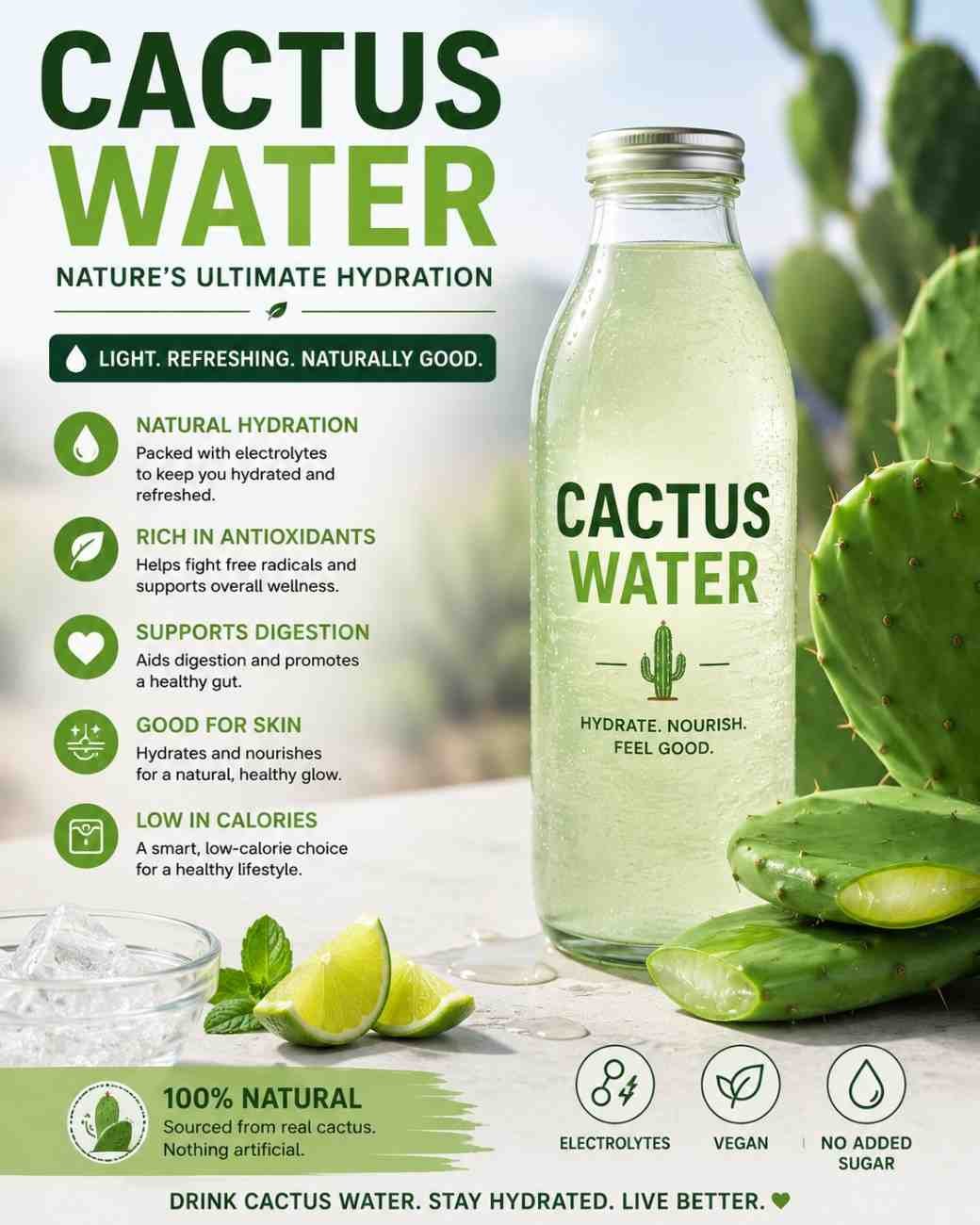
Cactus Water has become one of the fastest-growing wellness beverages in recent years. Known for its refreshing taste, natural electrolytes, and plant-based nutrients, this unique drink is attracting health-conscious consumers worldwide.
Originally inspired by the moisture-rich cactus plants that survive harsh desert environments, Cactus Water is often sourced from prickly pear cactus fruit or cactus pads. It offers a naturally hydrating alternative to sugary soft drinks and artificial sports beverages.
As more people search for healthier hydration options, Cactus Water has emerged as a popular choice among athletes, fitness enthusiasts, travelers, and wellness advocates.
In this complete guide, you’ll discover everything about Cactus Water, including its history, nutrition, health benefits, uses, recipes, side effects, and frequently asked questions.
What Is Cactus Water?
Cactus Water is a beverage derived from cactus plants, most commonly the prickly pear cactus. It contains water naturally stored within the plant, along with various vitamins, minerals, antioxidants, and plant compounds.
The drink is valued for its refreshing flavor and hydrating properties. Many commercial versions contain cactus fruit extract blended with purified water to create a lightly sweet and nutritious beverage.
Because cactus plants thrive in dry desert climates, they naturally store significant amounts of water, making them an interesting source of hydration.
Other Names for Cactus Water
Cactus Fruit Water may also be known as:
- Prickly Pear Water
- Nopal Water
- Desert Water
- Cactus Fruit Water
- Cactus Hydration Drink
- Prickly Pear Beverage
- Nopal Drink
- Cactus Wellness Water
- Plant-Based Hydration Water
- Desert Fruit Water
History of Cactus Water
Cactus plants have been important in traditional cultures for thousands of years.
Ancient civilizations throughout Mexico and the southwestern regions of North America consumed prickly pear fruits and cactus pads for food and hydration. Indigenous communities recognized the cactus as a valuable resource because of its ability to survive extreme environmental conditions.
Over time, cactus became a staple ingredient in traditional beverages, culinary dishes, and folk wellness practices.
Today, modern beverage companies have transformed this ancient desert plant into a trendy hydration drink enjoyed around the world.
Nutritional Profile of Cactus Water
The exact nutrition varies by brand and preparation method, but Cactus Fruit Water may contain:
- Water
- Electrolytes
- Potassium
- Magnesium
- Calcium
- Vitamin C
- Antioxidants
- Polyphenols
- Betalains
- Natural plant compounds
Many commercial products are relatively low in calories compared to traditional soft drinks.
Top 20 Benefits of Cactus Water
1. Supports Hydration
Cactus Fruit Water naturally contributes to daily fluid intake and helps maintain hydration.
2. Contains Natural Electrolytes
Electrolytes such as potassium and magnesium help support normal body functions and fluid balance.
3. Rich in Antioxidants
Cactus contains antioxidant compounds that help protect cells from oxidative stress.
4. Low-Calorie Beverage Option
Many varieties contain fewer calories than sugary beverages.
5. May Support Exercise Recovery
Hydration and electrolytes make it a popular post-workout drink.
6. Refreshing Natural Taste
Its mildly sweet flavor appeals to people seeking alternatives to soda.
7. May Support Skin Hydration
Proper hydration contributes to healthy-looking skin.
8. Plant-Based Hydration Source
Cactus Fruit Water is suitable for vegan and plant-based lifestyles.
9. May Support Overall Wellness
The nutrients found in cactus contribute to a balanced diet.
10. Can Replace Sugary Drinks
Many people use it as a healthier beverage alternative.
11. Naturally Refreshing During Hot Weather
It is especially popular in warm climates.
12. Contains Beneficial Plant Compounds
Cactus plants contain naturally occurring phytonutrients.
13. May Support Active Lifestyles
Hydration is essential for daily physical activities.
14. Convenient Wellness Beverage
Ready-to-drink products are widely available.
15. May Help Maintain Fluid Balance
Electrolytes assist in regulating hydration levels.
16. Suitable for Various Diets
Most cactus Fruit water products fit vegetarian and vegan diets.
17. May Support Healthy Aging
Antioxidants help combat free radicals.
18. Naturally Gluten-Free
Cactus Fruit Water is generally gluten-free.
19. Unique Alternative to Coconut Water
Many consumers enjoy it as another plant-based hydration option.
20. Supports Daily Hydration Goals
Regular fluid intake is important for overall health.
Cactus Water vs Coconut Water
| Feature | Cactus Water | Coconut Water |
|---|---|---|
| Source | Prickly Pear Cactus | Young Coconut |
| Taste | Mildly Sweet | Sweet & Nutty |
| Calories | Generally Low | Moderate |
| Electrolytes | Present | Higher Levels |
| Antioxidants | Rich in Plant Compounds | Moderate |
Both beverages can support hydration, but they offer different flavors and nutrient profiles.
How to Make Cactus Water at Home
Basic Cactus Water Recipe
Ingredients
- 1 cup cactus fruit juice
- 2 cups cold water
- Ice cubes
- Lemon slices
Directions
- Pour cactus fruit juice into a pitcher.
- Add cold water.
- Stir thoroughly.
- Add ice cubes.
- Garnish with lemon slices.
- Serve chilled.
Lemon Cactus Water Recipe
Ingredients
- Cactus Fruit Water
- Fresh lemon juice
- Mint leaves
- Ice cubes
Mix everything together for a refreshing summer beverage.
Tropical Cactus Water Recipe
Ingredients
- Cactus Fruit Water
- Pineapple juice
- Coconut water
- Ice cubes
Blend or mix for a tropical hydration drink.
Best Time to Drink Cactus Water
Many people enjoy Cactus Fruit Water:
- In the morning
- Before workouts
- After exercise
- During hot weather
- While traveling
- As an afternoon refreshment
The best time depends on personal preference and lifestyle.
Cactus Water for Athletes
Athletes often focus on hydration because fluid balance affects performance.
Cactus Fruit Water may be useful because it:
- Supports hydration
- Provides electrolytes
- Is refreshing after workouts
- Contains plant-based nutrients
- Can fit active lifestyles
Cactus Water for Weight Management
Many individuals choose Cactus Fruit Water during weight-management programs because:
- It is generally low in calories.
- It may replace sugary beverages.
- It supports hydration.
- It can satisfy beverage cravings without excessive sugar.
However, sustainable weight management requires a balanced diet and regular exercise.
Cactus Water and Skin Health
Hydration plays an important role in skin appearance.
Because Cactus Fruit Water contributes to fluid intake and contains antioxidants, it may support:
- Skin hydration
- Healthy appearance
- Protection from oxidative stress
- Overall wellness
Potential Side Effects of Cactus Water
Cactus Fruit Water is generally considered safe for most healthy adults.
Possible side effects may include:
- Digestive discomfort
- Mild stomach upset
- Allergic reactions in sensitive individuals
- Gastrointestinal irritation if consumed excessively
Those with medical conditions should consult a healthcare professional before making significant dietary changes.
Storage Tips
To maintain freshness:
- Refrigerate after opening.
- Keep containers sealed.
- Protect from direct sunlight.
- Follow product label instructions.
- Consume within the recommended timeframe.
Homemade Cactus Fruit Water should typically be consumed within a few days when refrigerated.
Who Should Drink Cactus Water?
Cactus Fruit Water may be suitable for:
- Athletes
- Fitness enthusiasts
- Busy professionals
- Students
- Travelers
- Outdoor workers
- Health-conscious individuals
- People seeking alternatives to sugary beverages
FAQs
What is Cactus Water?
Cactus Fruit Water is a beverage made from cactus plants, most commonly prickly pear cactus.
Is Cactus Water healthy?
It contains water, antioxidants, electrolytes, and plant compounds that can support hydration and overall wellness.
Does Cactus Water contain electrolytes?
Yes, many varieties contain naturally occurring electrolytes such as potassium and magnesium.
Can Cactus Water replace sports drinks?
Some people use it as a natural hydration beverage, although nutrient levels vary by product.
What does Cactus Water taste like?
It generally has a mild, slightly sweet, and refreshing flavor.
Is Cactus Water vegan?
Yes, it is plant-based and suitable for vegan diets.
Can I drink Cactus Water every day?
Many people include it in their regular hydration routine when consumed in moderation.
Does Cactus Water contain caffeine?
No, Cactus Fruit Water is naturally caffeine-free.
Can children drink Cactus Water?
Most varieties are suitable, but parents should consult a healthcare professional regarding dietary choices.
How is Cactus Water different from Coconut Water?
Cactus Fruit Water comes from cactus plants, while Coconut Water comes from young coconuts. Their taste and nutrient profiles differ.
Conclusion
Cactus Water has earned its place among today’s most popular wellness beverages. With its refreshing taste, natural electrolytes, antioxidant content, and low-calorie profile, it offers an appealing alternative to sugary drinks and artificial hydration products.
Whether you’re looking for a unique plant-based beverage, a refreshing workout drink, or simply a new way to stay hydrated, Cactus Fruit Water can be a valuable addition to a balanced lifestyle. Combined with proper nutrition, regular exercise, and healthy hydration habits, this desert-inspired drink continues to gain popularity among health-conscious consumers around the world.
Also read:
Blue Spirulina Water: The Bright Blue Drink Everyone Is Talking About