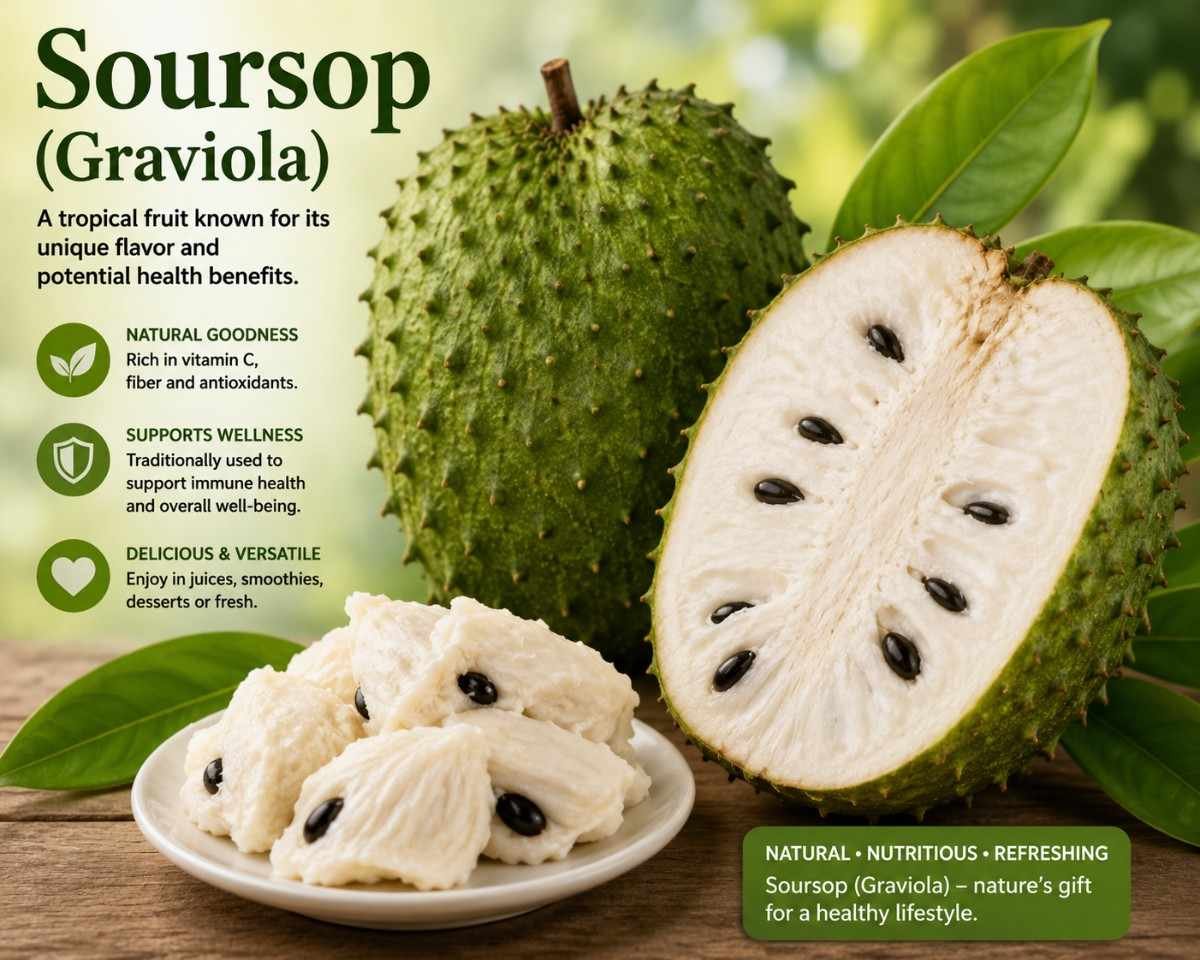
Soursop, also known as Graviola, Guanabana, or Annona muricata, is a tropical fruit that has gained popularity worldwide for its unique flavor and potential health benefits. Native to Central America, South America, and parts of the Caribbean, this green, spiky fruit contains soft white flesh with a sweet and tangy taste often described as a combination of pineapple, strawberry, and citrus.
In recent years, Soursop (Graviola) has become a trending superfood due to its rich nutritional profile and antioxidant content. The fruit, leaves, seeds, and bark have been used in traditional medicine for centuries. While many health claims surround Soursop, understanding its nutritional value, benefits, uses, and possible side effects is essential before adding it to your diet. Looking for gut-friendly beverages? Check out Probiotic Water.
If you’re interested in other nutrient-rich drinks, read our Amla Water Benefits guide.
What Is Soursop (Graviola)?
Soursop is the fruit of the Annona muricata tree, an evergreen tropical plant that thrives in warm climates. The fruit is heart-shaped or oval and can grow up to 12 inches long. Its green skin is covered with soft spines, while the inside contains creamy white flesh and black seeds.
The fruit is commonly consumed fresh or used in juices, smoothies, desserts, ice creams, and herbal teas. Traditional medicine systems have long used Soursop leaves and extracts for various health purposes.
Nutritional Value of Soursop
A 100-gram serving of raw Soursop provides approximately:
- Calories: 66
- Carbohydrates: 16.8 grams
- Fiber: 3.3 grams
- Protein: 1 gram
- Fat: 0.3 grams
- Vitamin C: 20.6 mg
- Potassium: 278 mg
- Magnesium: 21 mg
- Iron: 0.6 mg
- Calcium: 14 mg
Soursop is especially rich in vitamin C, dietary fiber, and beneficial plant compounds.
Health Benefits of Soursop (Graviola)
1. Soursop (Graviola) Rich in Antioxidants
Soursop (Graviola) contains antioxidants such as flavonoids, alkaloids, and acetogenins. These compounds help combat oxidative stress caused by free radicals, which may contribute to aging and chronic diseases.
Regular consumption of antioxidant-rich foods can support overall health and cellular protection.
2. Supports Immune Health
Vitamin C is one of the most important nutrients for immune function. A serving of Soursop provides a significant amount of vitamin C, helping the body produce white blood cells and strengthen natural defenses.
Including vitamin C-rich fruits in your diet may help support immunity throughout the year.
3. May Help Reduce Inflammation
Chronic inflammation is linked to various health conditions. Traditional herbal practices have used Soursop leaves and fruit to support the body’s natural inflammatory response.
Research suggests that some compounds found in Soursop possess anti-inflammatory properties, although more human studies are needed.
4. Supports Digestive Health
The dietary fiber in Soursop helps maintain healthy digestion by promoting regular bowel movements.
Benefits for digestion include:
- Improved gut function
- Reduced constipation
- Better nutrient absorption
- Increased feelings of fullness
A fiber-rich diet is important for maintaining a healthy digestive system. For more digestive wellness tips, explore Best Morning Drinks for Gut Health.
5. May Support Heart Health
Soursop contains potassium and magnesium, minerals known for supporting cardiovascular health.
Potential benefits include:
- Maintaining healthy blood pressure
- Supporting normal heart rhythm
- Improving circulation
- Balancing sodium levels
A balanced diet that includes fruits like Soursop can contribute to overall heart wellness.
6. May Help Manage Blood Sugar Levels
Some preliminary studies suggest that compounds found in Soursop may help support healthy blood sugar regulation.
Its fiber content may also slow the absorption of sugar into the bloodstream, helping reduce blood sugar spikes after meals.
Individuals with diabetes should consult a healthcare provider before using Soursop supplements.
7. Promotes Healthy Skin
Vitamin C plays a crucial role in collagen production, which helps maintain skin elasticity and structure.
Potential skin benefits include:
- Healthier-looking skin
- Reduced signs of aging
- Improved wound healing
- Enhanced skin hydration
Antioxidants in Soursop may also help protect skin cells from environmental stress.
8. Supports Hydration
Soursop contains a high water content, making it a refreshing fruit that contributes to daily hydration needs Discover the benefits of Flat Belly Water as a refreshing hydration option..
Hydration is essential for:
- Energy production
- Temperature regulation
- Healthy skin
- Organ function
9. May Support Better Sleep
Traditional medicine often uses Soursop leaf tea as a calming beverage.
Some people believe that naturally occurring compounds in the leaves may promote relaxation and support restful sleep, though scientific evidence remains limited.
10. May Have Antimicrobial Properties
Laboratory studies suggest that certain compounds in Soursop may help inhibit the growth of some bacteria and fungi.
Further human research is needed to confirm these effects.
Soursop and Cancer Research
One of the most talked-about topics surrounding Soursop is its potential role in cancer research.
Laboratory studies have shown that certain compounds known as annonaceous acetogenins may affect cancer cells in test tubes. However, these findings do not prove that eating Soursop can prevent, treat, or cure cancer in humans.
Important facts:
- Human evidence is currently insufficient.
- Soursop should never replace medical treatment.
- More clinical research is needed.
Anyone undergoing cancer treatment should consult their healthcare provider before using Soursop products.
How to Eat Soursop
There are many delicious ways to enjoy Soursop.
Fresh Fruit
Cut the fruit open and scoop out the white flesh. Remove the seeds before eating.
Smoothies
Blend Soursop flesh with:
- Banana
- Mango
- Coconut water
- Yogurt
Juice
Fresh Soursop juice is popular in tropical regions and provides a refreshing drink.
Ice Cream and Desserts
The creamy texture makes Soursop perfect for frozen desserts and puddings.
Fruit Bowls
Add chunks of Soursop to mixed fruit salads for a tropical twist.
Soursop Tea
Soursop leaf tea is commonly consumed in many countries.
How to Make Soursop Tea
Ingredients:
- 5–10 dried Soursop leaves
- 2 cups water
Instructions:
- Bring water to a boil.
- Add the leaves.
- Simmer for 10–15 minutes.
- Strain and serve warm.
Many people enjoy it plain or with a little honey. you may also try this Sage Tea
Potential Side Effects of Soursop
Although Soursop is generally safe when eaten as a fruit, excessive consumption may cause side effects.
Possible concerns include:
Digestive Issues
Large amounts may cause:
- Nausea
- Stomach discomfort
- Diarrhea
Low Blood Pressure
Some compounds in Soursop (Graviola) may lower blood pressure. Individuals taking blood pressure medications should exercise caution.
Possible Nerve Effects
Very high long-term consumption of certain Soursop (Graviola) products has been associated with neurological concerns in some studies.
Medication Interactions
Soursop supplements may interact with:
- Blood pressure medications
- Diabetes medications
- Certain neurological treatments
Consult a healthcare professional before taking concentrated extracts or supplements.
Who Should Avoid Soursop?
You should seek medical advice before using Soursop (Graviola) if you:
- Are pregnant or breastfeeding
- Have low blood pressure
- Take diabetes medications
- Have neurological disorders
- Are undergoing cancer treatment
Fresh fruit consumption in moderation is generally considered safer than concentrated supplements.
Soursop vs Other Tropical Fruits
| Fruit | Vitamin C | Fiber | Antioxidants |
|---|---|---|---|
| Soursop | High | High | High |
| Mango | Moderate | Moderate | Moderate |
| Pineapple | High | Low | Moderate |
| Papaya | High | Moderate | High |
| Guava | Very High | High | High |
Soursop (Graviola) stands out for its unique combination of fiber, vitamin C, and antioxidant compounds.
How to Store Soursop
Unripe Fruit
Store at room temperature until soft.
Ripe Fruit
Refrigerate and consume within 2–3 days.
Frozen Pulp
Store in airtight containers for several months.
Proper storage helps preserve flavor and nutrients.
Conclusion
Soursop (Graviola) is a nutrient-rich tropical fruit known for its refreshing taste, vitamin C content, fiber, and antioxidants. It may support immune function, digestion, hydration, heart health, and overall wellness when included as part of a balanced diet.
While laboratory studies have generated interest in Soursop’s medicinal properties, many claims require further human research. The safest approach is to enjoy fresh Soursop (Graviola) as a nutritious fruit rather than relying on supplements for medical treatment.
Whether blended into smoothies, enjoyed fresh, or brewed as tea, Soursop (Graviola) can be a delicious addition to a healthy lifestyle.
If you enjoyed learning about Soursop (Graviola), you may also be interested in our guides on Fig Water, Volume Eating, and the Japanese Walking Method for more natural health and wellness insights.
FAQs
Is Soursop the same as Graviola?
Yes. Soursop and Graviola are different names for the same fruit, Annona muricata.
Can I eat Soursop every day?
Moderate consumption of fresh Soursop (Graviola) is generally considered safe for most healthy adults.
What does Soursop taste like?
It tastes like a blend of pineapple, strawberry, citrus, and banana with a creamy texture.
Does Soursop help with weight loss?
Soursop (Graviola) may support weight management because it contains fiber and relatively few calories, but it is not a magic weight-loss food.
Can I drink Soursop tea daily?
Moderate consumption may be acceptable for many people, but excessive intake of leaf preparations should be avoided without medical guidance.
Are Soursop seeds edible?
No. Soursop (Graviola) seeds should not be eaten and should always be removed before consumption.
About the Author
Hitasha is a health and wellness content writer passionate about sharing evidence-based nutrition, fitness, and healthy lifestyle information.
Disclaimer
This article is for informational purposes only and does not constitute medical advice. Consult a qualified healthcare professional before making changes to your diet, lifestyle, or health routine.
Sources & References
- USDA FoodData Central – Soursop (Annona muricata) Nutrition Information
- National Institutes of Health (NIH) – Vitamin C Fact Sheet for Consumers
- World Health Organization (WHO) – Healthy Diet and Fruit Consumption Guidelines
- Harvard T.H. Chan School of Public Health – The
- Nutrition Source: Fruits and Vegetables National Center for Complementary and Integrative Health (NCCIH) – Herbal Supplements and Safety Information