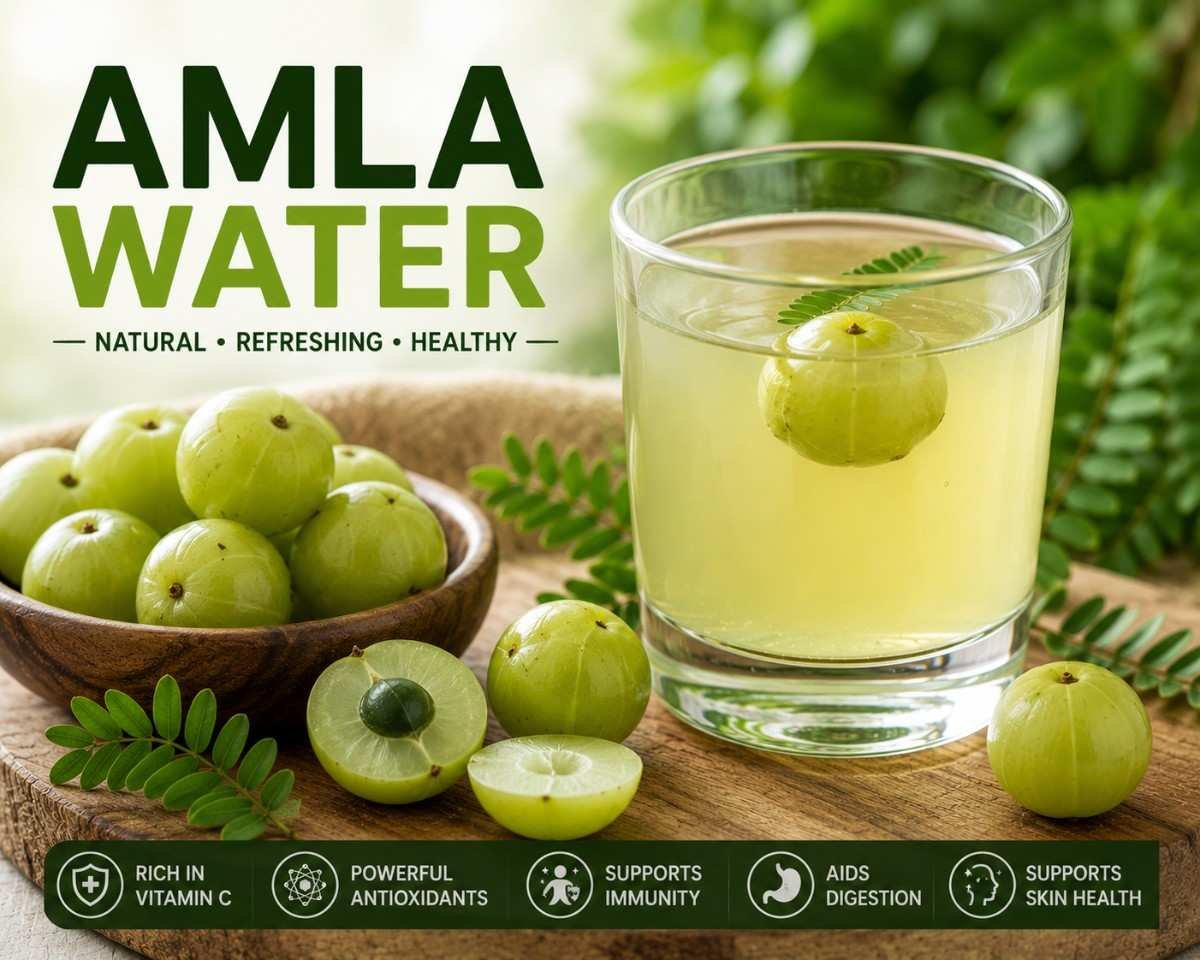
Amla Water is a refreshing wellness drink made by mixing fresh amla (Indian gooseberry) juice or soaked amla in water. Known for its remarkable nutritional profile, especially its exceptionally high vitamin C content, Amla Water has been a popular health beverage in India for centuries.
Scientifically known as Phyllanthus emblica, amla is one of the most valued fruits in traditional Ayurvedic practices. It is often referred to as a “superfruit” because of its rich concentration of antioxidants, vitamins, minerals, and beneficial plant compounds.
As modern consumers increasingly seek natural alternatives to sugary beverages and artificial energy drinks, Amla Water has emerged as a popular choice for hydration and wellness support. Its tangy flavor, refreshing nature, and nutritional value make it a favorite among health-conscious individuals.
In this comprehensive guide, you’ll learn everything about Indian Gooseberry Water, including its nutritional profile, health benefits, preparation methods, uses, side effects, storage tips, and frequently asked questions.
What Is Amla Water?
Amla Water is a beverage prepared by infusing fresh amla fruit, amla juice, or dried amla in water. The fruit releases its nutrients, antioxidants, and distinctive tart flavor into the water, creating a refreshing and nutrient-rich drink.
The beverage can be consumed plain or enhanced with ingredients such as honey, lemon, ginger, mint, turmeric, or black salt.
Many people include Indian Gooseberry Water in their daily wellness routines due to its association with immunity, digestion, skin health, and overall well-being.
History of Amla
Amla has a long and respected history in traditional Indian wellness practices.
For thousands of years, Ayurvedic practitioners have considered amla one of the most valuable fruits for supporting health and longevity. Ancient texts frequently mention amla as a rejuvenating food rich in beneficial properties.
The fruit has traditionally been used in herbal formulations, tonics, juices, powders, and wellness beverages. Today, amla remains a staple ingredient in many health-focused products worldwide.
Nutritional Profile of Amla
Amla is exceptionally nutrient-dense and contains:
- Vitamin C
- Vitamin A
- Vitamin E
- Calcium
- Iron
- Potassium
- Magnesium
- Fiber
- Polyphenols
- Flavonoids
- Tannins
- Antioxidants
Amla is especially famous for its vitamin C content, which is significantly higher than many commonly consumed fruits.
20 Potential Benefits of Amla Water
1. Supports Hydration
Indian Gooseberry Water contributes to daily fluid intake and hydration.
2. Rich in Vitamin C
Amla is one of nature’s richest sources of vitamin C.
3. Supports Immune Function
Vitamin C plays an important role in normal immune system function.
4. Rich in Antioxidants
Amla contains powerful antioxidants that help combat oxidative stress.
5. Supports Healthy Skin
Vitamin C contributes to collagen formation and skin health.
6. Promotes Hair Health
Amla has traditionally been associated with healthy hair care routines.
7. Supports Digestive Wellness
Hydration and beneficial plant compounds may support digestive health.
8. Supports Healthy Aging
Antioxidants help protect cells from free radical damage.
9. Encourages Healthy Hydration Habits
Its tangy flavor can make water more enjoyable.
10. Supports Heart Health
Amla contains nutrients associated with cardiovascular wellness.
11. May Support Healthy Cholesterol Levels
Some studies have explored amla’s role in supporting healthy cholesterol management.
12. Supports Liver Health
Amla has traditionally been used in wellness routines focused on liver support.
13. Supports Eye Health
Vitamin A contributes to normal vision and eye health.
14. Naturally Low in Calories
Amla Water provides flavor with minimal calories.
15. Supports Metabolic Wellness
Nutrients found in amla contribute to normal metabolic processes.
16. Supports Active Lifestyles
Hydration is essential for exercise and recovery.
17. May Help Reduce Sugary Drink Consumption
Amla Water provides a healthier alternative to sweetened beverages.
18. Naturally Caffeine-Free
Suitable for individuals avoiding caffeine.
19. Easy to Prepare
Only a few ingredients are needed.
20. Complements a Healthy Lifestyle
Indian Gooseberry Water fits well into balanced wellness routines.
Amla Water and Vitamin C
One of the most remarkable characteristics of amla is its vitamin C content.
Vitamin C contributes to:
- Immune function
- Collagen production
- Skin health
- Antioxidant protection
- Iron absorption
Regular consumption of vitamin C-rich foods can support overall wellness and healthy bodily functions.
Amla Water and Antioxidants
Amla contains several antioxidant compounds, including:
- Polyphenols
- Flavonoids
- Gallic acid
- Ellagic acid
- Tannins
These compounds help protect cells from oxidative stress and contribute to amla’s reputation as a wellness-promoting fruit.
How to Make Amla Water
Basic Amla Water Recipe
Ingredients
- 2 fresh amla fruits
- 4 cups water
Instructions
- Wash the amla thoroughly.
- Cut into small pieces and remove seeds.
- Blend with a small amount of water.
- Strain if desired.
- Mix with remaining water.
- Chill before serving.
Soaked Amla Water
Ingredients
- 3–4 dried amla pieces
- 2 cups water
Method
Soak overnight and drink the infused water the next morning.
Amla Lemon Water
Ingredients
- Indian Gooseberry Water
- Fresh lemon juice
Method
Add lemon juice for a refreshing citrus flavor.
Amla Ginger Water
Ingredients
- Amla pieces
- Fresh ginger
- Water
Method
Blend or steep together for added flavor.
Amla Mint Water
Ingredients
- Amla Water
- Fresh mint leaves
Method
Add mint and refrigerate before serving.
Best Time to Drink Amla Water
Many people prefer drinking Indian Gooseberry Water:
- Early morning
- On an empty stomach
- Before breakfast
- Between meals
- After exercise
Morning consumption is especially popular in traditional wellness routines.
Amla Water and Skin Health
Healthy skin depends on proper hydration and nutrient intake.
Amla’s vitamin C and antioxidant content may support:
- Collagen production
- Skin appearance
- Cellular protection
- Healthy aging
Many individuals include Indian Gooseberry Water as part of beauty and wellness-focused lifestyles.
Amla Water and Hair Wellness
Amla has long been associated with hair care in traditional practices.
It is commonly included in routines focused on:
- Hair strength
- Hair appearance
- Scalp wellness
- Overall hair health
While Indian Gooseberry Water alone is not a treatment, it can complement a healthy lifestyle.
Potential Side Effects of Amla Water
Indian Gooseberry Water is generally safe for most healthy adults.
Possible side effects may include:
- Digestive discomfort
- Acidic stomach irritation in sensitive individuals
- Allergic reactions (rare)
- Interactions with certain medications
Individuals with medical conditions should consult a healthcare professional before consuming large amounts regularly.
Storage Tips
For maximum freshness:
- Refrigerate immediately.
- Store in a sealed container.
- Consume within 24–48 hours.
- Use fresh amla whenever possible.
Fresh preparation generally provides the best flavor and nutrient quality.
FAQs
What is Amla Water?
Amla Water is a beverage made by infusing fresh or dried amla (Indian gooseberry) in water to create a nutrient-rich hydration drink.
What are the benefits of Amla Water?
Amla Water may support hydration, immune function, antioxidant intake, skin health, and overall wellness.
Can Amla Water be consumed daily?
Many healthy adults enjoy Amla Water daily as part of a balanced diet and healthy lifestyle.
Is Amla Water rich in vitamin C?
Yes. Amla is one of the richest natural sources of vitamin C.
Can Amla Water help with skin health?
Vitamin C and antioxidants found in amla may support collagen production and skin wellness.
What does Amla Water taste like?
Indian Gooseberry Water has a tart, tangy, slightly sour flavor.
Can I drink Amla Water on an empty stomach?
Many people consume it in the morning on an empty stomach as part of traditional wellness practices.
Does Amla Water contain caffeine?
No. Indian Gooseberry Water is naturally caffeine-free.
Can children drink Amla Water?
Yes. In moderation, Indian Gooseberry Water can be enjoyed by children unless otherwise advised by a healthcare professional.
How should Amla Water be stored?
Store Indian Gooseberry Water in the refrigerator and consume it within 24–48 hours for optimal freshness.
Conclusion
Amla Water is a simple yet powerful wellness beverage that combines hydration with the nutritional richness of Indian gooseberry. Packed with vitamin C, antioxidants, and beneficial plant compounds, it has earned a respected place in both traditional and modern health routines.
Whether enjoyed plain, infused with ginger and lemon, or consumed as part of a morning wellness ritual, Indian Gooseberry Water offers a refreshing way to support hydration and overall well-being. While it is not a cure for any health condition, it can be a valuable addition to a balanced lifestyle focused on nutrition, hydration, and healthy habits.
Its impressive nutrient profile, ease of preparation, and growing popularity make Indian Gooseberry Water one of the most beneficial fruit-infused beverages available today.
Also read:
Mushroom Water Benefits, Nutrition, Recipe, Uses & Side Effects