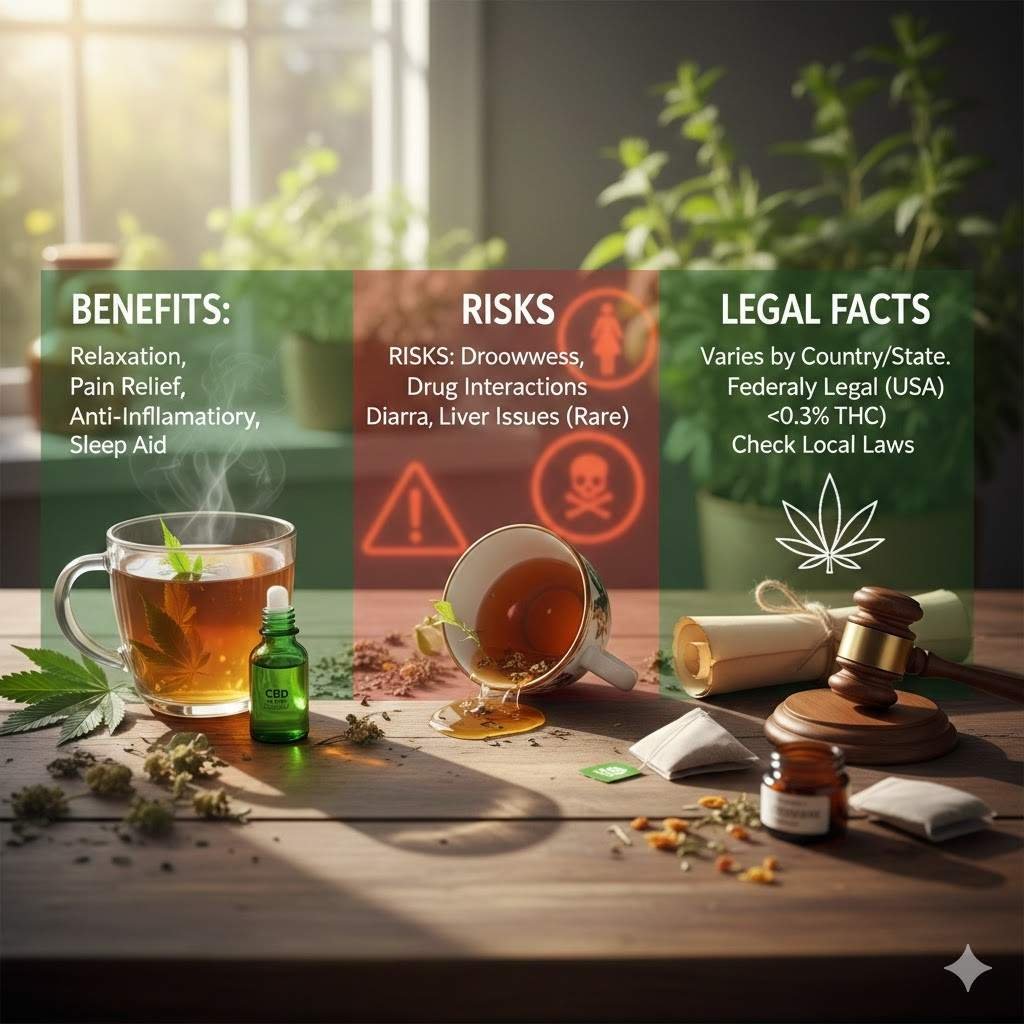
CBD tea has rapidly entered the wellness spotlight, marketed as a calming drink that blends traditional tea culture with modern cannabis science. Advocates claim it relieves stress, improves sleep, and supports overall health—but critics argue the science is still evolving and regulations remain unclear.
So is CBD tea truly a breakthrough health beverage, or just another wellness trend? This comprehensive guide explores what CBD tea is, how it works, potential benefits, side effects, and the legal landscape—especially relevant if you live in India or other regions with strict cannabis laws.
What Is CBD Tea?
CBD tea is a beverage infused with cannabidiol (CBD), a compound found in the cannabis plant. Unlike THC, the psychoactive component of marijuana, CBD does not cause a “high.”
Most CBD teas combine hemp-derived CBD with herbal blends, green tea, or other botanicals to create a relaxing drink experience.
👉 Important context: Research into CBD is still ongoing, and many of its potential uses are “not entirely determined.”
How CBD Works in the Body
CBD interacts with the body’s endocannabinoid system—a network that helps regulate mood, sleep, appetite, and pain response.
Research suggests CBD may:
- Improve mood
- Reduce pain
- Help manage symptoms in certain medical conditions
However, scientists emphasize that more research is needed before firm health conclusions can be made.
Types of CBD Tea
CBD tea comes in multiple formats:
1. Herbal CBD Tea
Often caffeine-free and designed for relaxation.
2. Green Tea + CBD
Combines CBD with antioxidants naturally present in green tea, which may support cardiovascular health and cholesterol levels.
3. Specialty Blends
Flavors range widely, allowing consumers to choose according to taste preferences.
Potential Benefits of CBD Tea
1. May Help Reduce Anxiety
CBD may help ease symptoms of anxiety and neurological disorders, though research is still developing.
2. Could Improve Sleep
CBD tea is often promoted as a nighttime drink because CBD may support sleep regulation.
3. Anti-Inflammatory Potential
Early findings suggest CBD could help with inflammation-related conditions.
4. Pain Relief Possibilities
Some research indicates CBD may reduce certain types of pain.
But Here’s the Reality: Evidence Is Limited
Even though CBD is promising, experts warn that:
- Scientific studies backing many benefits are limited.
- CBD products are often not regulated or approved by major authorities.
This means product quality and effectiveness can vary significantly.
Pros and Cons of CBD Tea
✔ Pros
- May support relaxation, sleep, and inflammation.
- Available in many flavors.
- Can provide additional benefits when paired with antioxidant teas.
❌ Cons
- Limited scientific evidence.
- Can be expensive.
- Some products contain trace THC that could trigger drug tests.
- Cannabis may negatively affect fertility.
Side Effects and Health Risks
CBD is generally well tolerated, but it is not risk-free.
Common Side Effects
- Dry mouth
- Diarrhea
- Reduced appetite
- Drowsiness
- Fatigue
Other reported effects include stomach upset and fatigue, though symptoms are usually mild.
Safety studies also note possible:
- Sedation
- Changes in appetite
- Sleep disturbances
Drug Interactions Matter
CBD can interact with medications such as blood thinners.
Health experts recommend consulting a qualified professional before trying CBD products.
Possible Safety Concerns
Regulators have raised several issues:
- Potential liver effects
- Unknown long-term impacts
- Effects on fertility and pregnancy still unclear
Additionally, studies have found many CBD products are mislabeled regarding their actual content.
Is CBD Tea Legal?
Global Perspective
Cannabis laws vary widely, making CBD legality complex worldwide.
Legal Status in India
Cannabis remains illegal under the Narcotic Drugs and Psychotropic Substances Act, with limited exceptions for medical or scientific use.
However, hemp-derived products may be allowed under certain regulations.
For example:
- Hemp foods must keep CBD below 75 mg/kg.
- THC levels must stay under strict safety thresholds.
Some sources note that hemp-based CBD products containing less than 0.3% THC can be authorized if they comply with regulatory frameworks.
👉 Bottom line: CBD is legal in India only under specific conditions, and not all products qualify.
Labeling Rules You Should Know
Indian hemp regulations also state that food products:
- Cannot claim health benefits from CBD.
- Cannot imply psychoactive effects.
This reinforces the idea that CBD tea should not be marketed as a cure.
Why CBD Tea Is Trending
The global wellness movement is increasingly embracing CBD, encouraging entrepreneurs to explore CBD-based products.
Meanwhile, regulatory clarity has encouraged more companies to enter the hemp food market, potentially improving product quality over time.
Realistic Expectations: What CBD Tea Can—and Cannot—Do
What It Might Do
- Promote relaxation
- Support sleep
- Help with mild discomfort
What It Cannot Do
- Replace medical treatment
- Cure diseases
- Guarantee results
Experts caution that CBD is not currently recommended as a treatment for serious conditions due to limited evidence.
Does CBD Tea Actually Work?
Effectiveness depends on multiple factors:
- Dosage
- Product quality
- Body chemistry
- Brewing method
When ingested, CBD products may take 45 minutes to 2 hours to work, with effects lasting several hours.
Community Perspectives (Reddit Insights)
Online discussions reveal mixed experiences.
One user wrote that CBD tea is “perfect for right before bed,” suggesting relaxation benefits.
Another commenter noted that CBD is hydrophobic and “largely ineffective” in water from a scientific standpoint, highlighting skepticism about absorption.
These contrasting views reflect the broader uncertainty around CBD beverages.
Who Should Avoid CBD Tea?
You should be cautious if you:
- Take prescription medications
- Have liver issues
- Are pregnant or breastfeeding
- Have low blood pressure
Healthcare guidance is strongly recommended before use.
Tips for Choosing a Safe CBD Tea
Look for:
✅ Third-party lab testing
✅ THC levels within legal limits
✅ Transparent labeling
✅ Trusted brands
Avoid products making dramatic medical claims.
The Future of CBD Tea
CBD tea sits at the intersection of herbal tradition and modern science. As research expands and regulations mature, we may see:
- Better product standardization
- Clear dosing guidelines
- Stronger clinical evidence
Until then, consumers should approach CBD tea with curiosity—but also caution.
Final Verdict: Wellness Drink or Overhyped Trend?
CBD tea is neither pure hype nor a miracle cure.
✔ Early research suggests real potential.
✔ Many users report relaxation benefits.
❗ But scientific proof remains limited.
❗ Legal frameworks are still evolving.
The smartest approach? Treat CBD tea as a complementary wellness beverage—not a medical solution.
If you’re considering trying it, prioritize safety, legality, and professional guidance.
FAQs About CBD Tea
1. What is CBD tea?
CBD tea is a beverage infused with cannabidiol (CBD), a non-psychoactive compound derived from hemp or cannabis plants. It is often blended with herbal or traditional teas for relaxation.
2. Will CBD tea make you feel high?
No. CBD does not produce the “high” associated with THC, the psychoactive component of cannabis.
3. What are the main benefits of CBD tea?
CBD tea may promote relaxation, support better sleep, help manage mild discomfort, and reduce stress. However, research is still evolving.
4. Is CBD tea safe to drink daily?
Many people tolerate CBD well, but daily use should be discussed with a healthcare professional—especially if you take medications.
5. Are there side effects of CBD tea?
Possible side effects include drowsiness, dry mouth, fatigue, changes in appetite, and digestive discomfort.
6. How long does CBD tea take to work?
Since it is consumed as a drink, effects may take 30–90 minutes to appear, depending on metabolism and dosage.
7. Is CBD tea legal?
Legality varies by country. In some regions, hemp-derived CBD with very low THC is allowed, while in others it may be restricted. Always check local laws before purchasing.
8. Can CBD tea help with anxiety?
Some studies suggest CBD may support anxiety management, but it should not replace professional medical treatment.
9. Can you drink CBD tea before bed?
Yes. Many people prefer it in the evening because it may encourage relaxation and improve sleep quality.
10. Who should avoid CBD tea?
Pregnant or breastfeeding women, people with liver conditions, and those taking medications should consult a doctor before use.
11. Does CBD tea interact with medications?
Yes, CBD can interact with certain drugs such as blood thinners. Medical advice is recommended if you are on prescription medication.
12. How much CBD tea is safe?
There is no universal dosage. Start with a low amount and monitor how your body responds.
13. Is CBD tea addictive?
CBD is generally considered non-addictive and does not create dependency.
14. Can CBD tea fail a drug test?
Some products may contain trace amounts of THC, which could potentially show up on a drug test.
15. Is CBD tea better than CBD oil?
It depends on your preference. Tea offers a slower, more relaxing experience, while oils typically absorb faster.
Also Read: