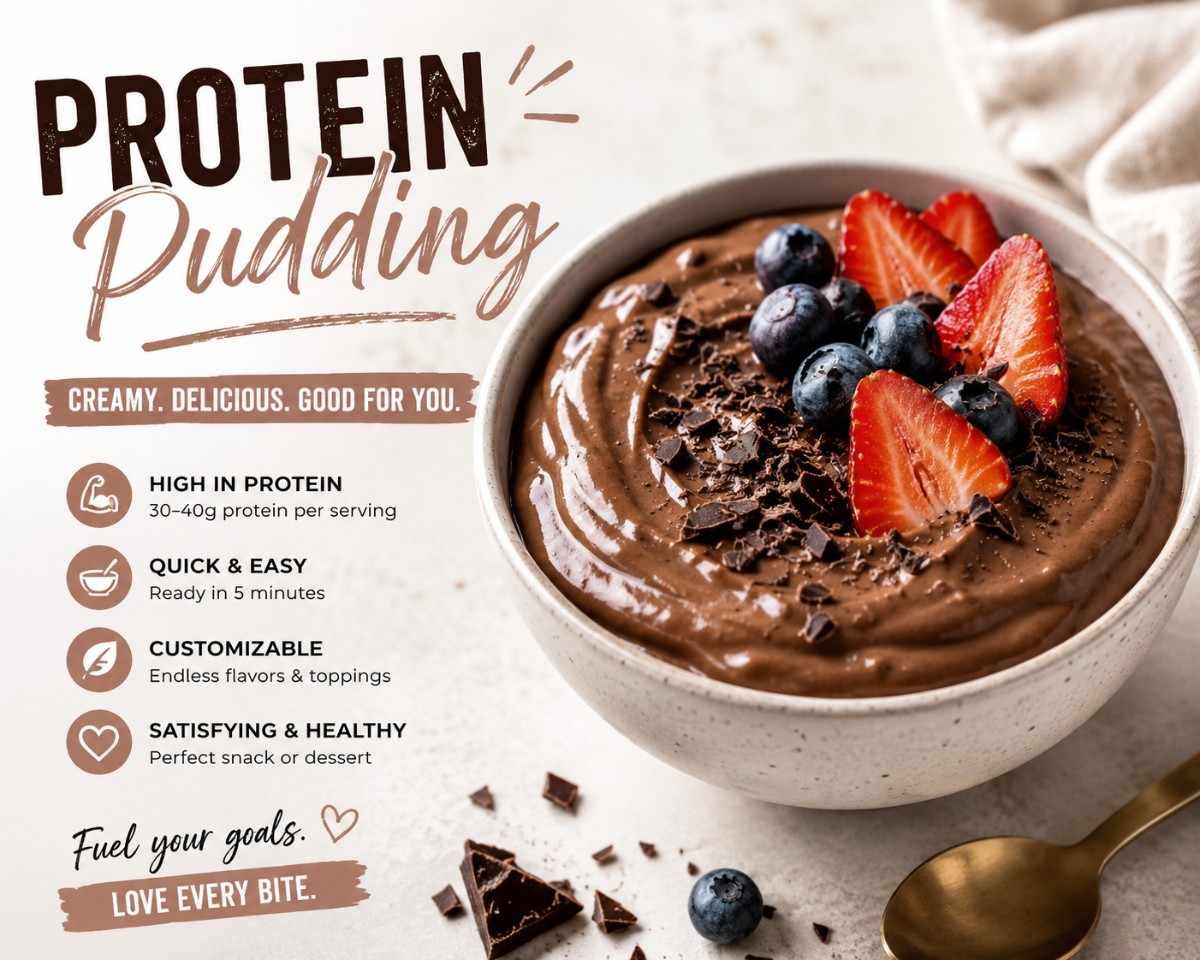
Protein pudding has become one of the most popular healthy dessert alternatives in modern nutrition and fitness culture. It is creamy, sweet, satisfying, and packed with protein—making it a perfect choice for people who want to enjoy dessert without breaking their health or fitness goals.
Unlike traditional puddings that are often loaded with sugar, cream, and refined ingredients, protein dessert is designed to support muscle recovery, weight management, and balanced nutrition. It can be eaten as a snack, post-workout meal, breakfast option, or even a healthy dessert replacement.
In this detailed guide, you will learn what protein pudding is, how it is made, its health benefits, variations, recipes, nutrition facts, and how to include it in your daily diet. Protein pudding is not the only healthy breakfast option—many people also enjoy other nutritious meals like Avocado Toast for a balanced and energy-rich diet.
What Is Protein Pudding?
Protein pudding is a high-protein dessert or snack made by combining protein-rich ingredients such as protein powder, Greek yogurt, milk, plant-based alternatives, or protein blends with thickening agents like chia seeds, pudding mix, or gelatin.
The result is a thick, creamy, dessert-like texture that tastes like traditional pudding but contains significantly more protein and fewer unhealthy sugars.
Simple Definition:
Protein dessert is a healthy dessert made to deliver high protein content in a creamy, pudding-like form.
Why Is Protein Pudding So Popular?
Protein dessert has gained popularity for several reasons:
1. Fitness-Friendly Dessert
People on fitness journeys often struggle with cravings. Protein dessert satisfies sweet cravings while supporting muscle growth.
2. Weight Management Support
High protein foods help reduce hunger and increase satiety, making it easier to control calorie intake.
3. Quick and Easy Preparation
Most protein dessert recipes require only a few ingredients and take less than 5 minutes to prepare.
4. Versatile Taste Options
It can be flavored in multiple ways—chocolate, vanilla, strawberry, peanut butter, coffee, and more.
5. Better Alternative to Sugary Desserts
Traditional desserts are high in sugar and low in nutrients. Protein pudding offers a healthier balance.
Nutritional Profile of Protein Pudding
The nutrition value depends on ingredients, but a typical serving includes:
- Calories: 150–300 kcal
- Protein: 15–30 grams
- Carbohydrates: 5–25 grams
- Fat: 2–10 grams
- Fiber: 2–8 grams
Key Nutrients:
- Protein (whey, casein, or plant-based)
- Calcium (from milk or yogurt)
- Fiber (from chia seeds or oats)
- Healthy fats (from nuts or seeds)
Main Ingredients Used in Protein Pudding
Protein pudding can be customized, but common ingredients include:
1. Protein Powder
The core ingredient. It can be:
- Whey protein
- Casein protein
- Pea protein
- Soy protein
- Blended plant protein
2. Milk or Milk Alternatives
Used for creaminess:
- Cow’s milk
- Almond milk
- Oat milk
- Soy milk
3. Greek Yogurt
Adds thickness, creaminess, and extra protein.
4. Chia Seeds
Used for natural thickening and fiber boost.
5. Cocoa Powder
Used for chocolate flavor without sugar.
6. Natural Sweeteners
- Honey
- Stevia
- Maple syrup
- Dates
You may also like these:
Types of Protein Pudding
There are many variations depending on dietary goals:
1. Whey Protein Pudding
Best for muscle building and fast protein absorption.
2. Casein Protein Pudding
Slow-digesting protein ideal for night-time consumption.
3. Vegan Protein Pudding
Made with plant-based protein powders like pea or rice protein.
4. Greek Yogurt Protein Pudding
Naturally high in protein and very creamy.
5. Chia Protein Pudding
Made using chia seeds for fiber-rich, gel-like texture.
6. Low-Carb Protein Pudding
Designed for keto or low-carb diets.
Health Benefits of Protein Pudding
Protein dessert is more than just a tasty dessert. It offers several health advantages:
1. Supports Muscle Growth and Recovery
Protein is essential for muscle repair. After workouts, protein dessert helps rebuild muscle fibers and improve recovery.
2. Helps in Weight Loss
High-protein foods increase satiety and reduce cravings. This helps control overeating and supports fat loss goals.
3. Reduces Sugar Cravings
Because it tastes sweet and creamy, protein dessert helps reduce the desire for unhealthy sugary snacks.
4. Improves Metabolism
Protein has a higher thermic effect than fats or carbs, meaning your body burns more calories digesting it.
5. Supports Bone Health
Dairy-based protein dessert provides calcium, which supports bone strength.
6. Enhances Digestion (When Fiber-Rich)
When made with chia seeds or oats, protein dessert supports gut health and digestion.
7. Convenient Nutritional Snack
It is easy to prepare and can be eaten on-the-go, making it ideal for busy lifestyles.
How to Make Protein Pudding (Basic Recipe)
Here is a simple and effective protein dessert recipe:
Ingredients:
- 1 scoop protein powder (chocolate or vanilla)
- 1 cup milk or almond milk
- ½ cup Greek yogurt
- 1 tablespoon chia seeds
- Sweetener (optional)
Instructions:
- Add milk and protein powder in a bowl.
- Mix until smooth and lump-free.
- Add Greek yogurt and stir well.
- Add chia seeds and mix again.
- Refrigerate for 30–60 minutes.
- Serve chilled and enjoy.
Chocolate Protein Pudding Recipe
Ingredients:
- 1 scoop chocolate protein powder
- 1 cup almond milk
- 2 tablespoons cocoa powder
- ½ cup Greek yogurt
- Stevia or honey
Method:
Mix all ingredients until smooth, refrigerate for 1 hour, and serve.
This version tastes like a chocolate dessert but is high in protein and low in sugar.
Vanilla Protein Pudding Recipe
Ingredients:
- 1 scoop vanilla protein powder
- 1 cup milk
- ½ cup yogurt
- 1 teaspoon vanilla extract
- Sweetener
Method:
Mix well and chill. Add fruits or nuts for extra flavor.
Peanut Butter Protein Pudding
A rich, creamy option:
Ingredients:
- Protein powder
- Milk
- 1 tablespoon peanut butter
- Greek yogurt
This is high in protein and healthy fats, ideal for energy.
When to Eat Protein Pudding?
Protein dessert can be eaten at different times depending on your goals:
1. Post-Workout
Helps muscle recovery and reduces soreness.
2. Breakfast
Provides long-lasting energy.
3. Evening Snack
Prevents late-night junk food cravings.
4. Dessert Replacement
A healthy alternative after meals.
Is Protein Pudding Good for Weight Loss?
Yes, protein dessert can support weight loss when consumed correctly.
Why it helps:
- Keeps you full for longer
- Reduces calorie intake
- Controls cravings
- Maintains muscle mass during fat loss
However, portion control is important because excess calories can still lead to weight gain.
For weight loss you can also try this: Overnight Oats
Common Mistakes to Avoid
1. Adding Too Much Sweetener
This increases sugar content and reduces health benefits.
2. Using Low-Quality Protein Powder
Always choose clean, tested protein brands.
3. Overeating
Even healthy desserts should be consumed in moderation.
4. Skipping Fiber
Adding chia seeds or fruits improves digestion and satiety.
Protein Pudding vs Regular Pudding
| Feature | Protein Pudding | Regular Pudding |
|---|---|---|
| Protein | High | Low |
| Sugar | Low | High |
| Health Value | High | Low |
| Fitness Friendly | Yes | No |
| Satiety | High | Low |
Can You Eat Protein Pudding Every Day?
Yes, protein dessert can be eaten daily if it fits your calorie and protein requirements. It is a convenient way to meet protein needs, especially for active individuals.
Best Toppings for Protein Pudding
To enhance taste and nutrition, try:
- Almonds
- Walnuts
- Blueberries
- Banana slices
- Dark chocolate chips
- Coconut flakes
- Peanut butter drizzle
Who Should Eat Protein Pudding?
Protein dessert is suitable for:
- Gym-goers
- Athletes
- Weight loss individuals
- Busy professionals
- Vegetarians (with plant protein)
- Kids (in healthy versions)
FAQs
1. Is protein pudding healthy?
Yes, it is healthy when made with clean ingredients and low sugar.
2. Can I use protein pudding for weight loss?
Yes, it helps reduce cravings and supports calorie control.
3. Can vegans eat protein pudding?
Yes, using plant-based protein powder and almond or soy milk.
4. How much protein is in protein pudding?
Usually between 15–30 grams per serving.
5. Can I eat it at night?
Yes, especially casein-based versions which digest slowly.
Conclusion
Protein pudding is a simple, delicious, and highly nutritious dessert that fits perfectly into modern healthy lifestyles. It offers the perfect balance of taste and nutrition, making it an excellent alternative to traditional sugary desserts.
Whether your goal is weight loss, muscle building, or simply healthier eating, protein dessert can be a powerful addition to your diet. With endless variations and easy preparation, it is one of the most practical healthy recipes you can include in your daily routine.
If you enjoy easy and healthy cooking ideas, you may also like these 25 Easy One-Pot Meals that make everyday eating simple, nutritious, and time-saving.
About the Author
This article is written by Hitasha, a health and nutrition content creator who focuses on simple, practical, and science-based wellness information to help readers make healthier lifestyle choices.
Disclaimer
This content is for informational purposes only and should not be considered medical advice. Please consult a qualified healthcare professional or nutritionist before making any major dietary changes.