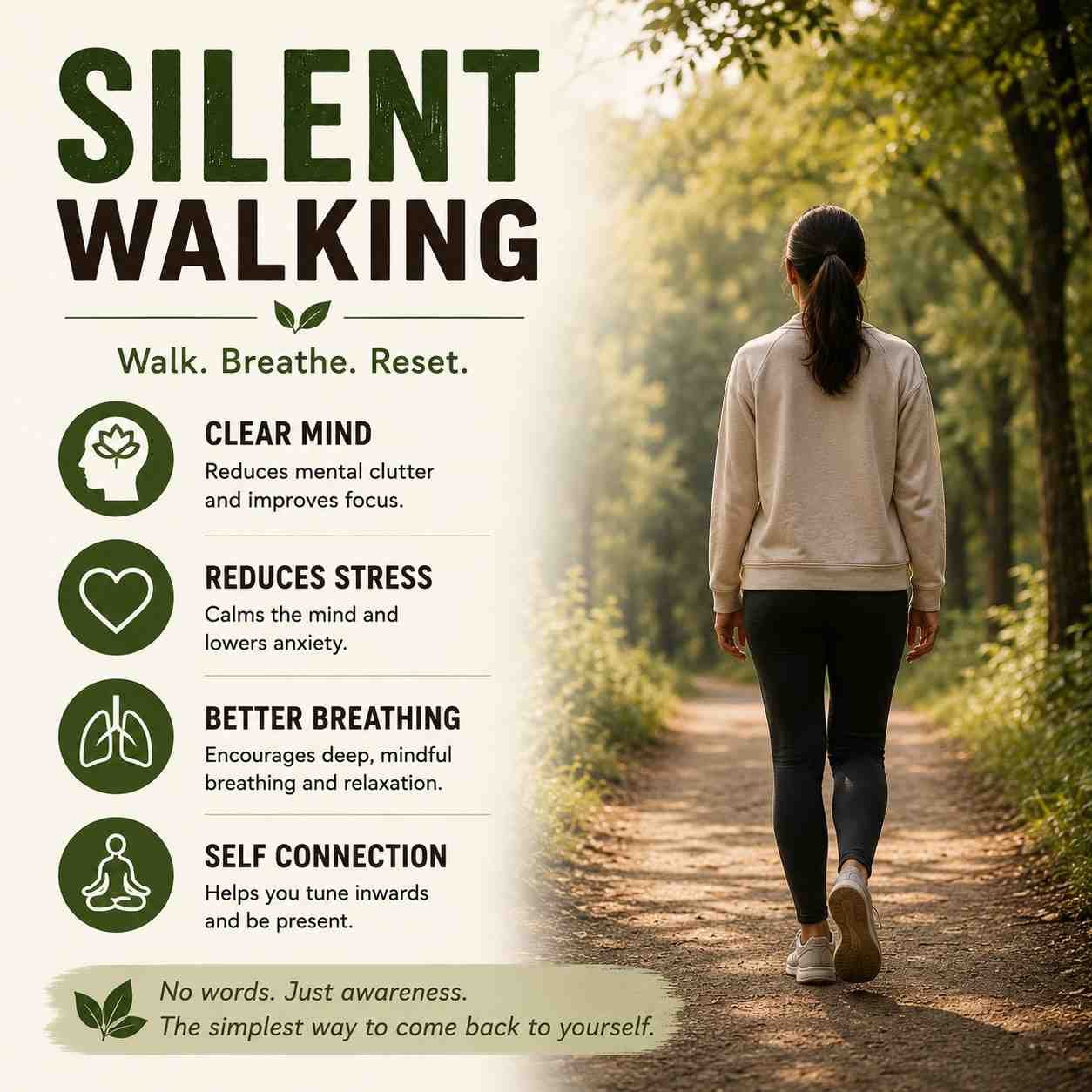
In today’s hyper-connected world, silence has become increasingly rare. Many people wake up to phone notifications, listen to music during workouts, stream podcasts while commuting, and spend hours scrolling through social media. As a result, moments of true quiet are becoming harder to find.
This constant stimulation has led to the rise of a new wellness trend called Silent Walking. Unlike traditional walks where people listen to music, podcasts, or audiobooks, Silent Walking encourages participants to walk without digital distractions and simply focus on the present moment.Silent Walking is becoming one of the most popular wellness trends. Similar to the 6-6-6 Walking Trend for Weight Loss, it encourages people to make walking a regular part of their daily routine.
What began as a social media trend has evolved into a mindfulness practice embraced by mental health advocates, fitness enthusiasts, and wellness experts. Silent Walking requires no equipment, gym membership, or special training. All it asks is that you walk and pay attention to your surroundings, your breathing, and your thoughts.
In this comprehensive guide, we’ll explore what Silent Walking is, its potential benefits, how it works, and why millions of people are incorporating it into their daily routines.
What Is Silent Walking?
Silent Walking is the practice of walking without external entertainment or distractions.
During a Silent Walking session, you avoid:
- Music
- Podcasts
- Audiobooks
- Phone calls
- Social media
- Texting
Instead, you focus on:
- Your breathing
- Natural sounds
- Body movement
- Thoughts and emotions
- Surroundings
- Mindfulness
The goal is to become fully present during the walk.
Unlike meditation, Silent Walking combines mindfulness with physical activity, making it appealing to people who find traditional seated meditation difficult.
Why Has Silent Walking Become Popular?
Several factors have contributed to the popularity of Silent Walking.
Digital Overload
People spend countless hours consuming information through screens and headphones.
Silent Walking offers a break from:
- Notifications
- News
- Social media
- Endless content
Mental Health Awareness
Growing awareness of stress, anxiety, and burnout has encouraged people to seek simple wellness practices.
Accessibility
Anyone can practice Silent Walking regardless of age, fitness level, or experience.
Social Media Influence
The trend gained popularity through wellness influencers sharing their experiences of improved focus, calmness, and emotional well-being.
How Silent Walking Works
Silent Walking works by encouraging mindfulness and reducing sensory overload.
When distractions are removed, the brain can:
- Process emotions
- Organize thoughts
- Reduce mental clutter
- Improve focus
- Increase awareness
Walking itself also stimulates circulation, movement, and physical health.
The combination of movement and mindfulness creates a powerful wellness practice.
Top Silent Walking Benefits
1. Reduces Mental Clutter
Modern life constantly bombards us with information.
Silent Walking creates space for the mind to slow down and process thoughts naturally.
Many people report feeling mentally refreshed after a quiet walk.
2. Supports Stress Reduction
Walking has long been associated with stress relief.
Adding silence may further enhance relaxation by reducing external stimulation and encouraging mindfulness. Staying hydrated before and after your walk is important. Drinking Warm Water in the morning can complement your wellness routine and support overall hydration.
3. Encourages Mindfulness
Mindfulness involves paying attention to the present moment without judgment.
Silent Walking naturally encourages mindfulness through:
- Observing surroundings
- Noticing sensations
- Focusing on breathing
- Becoming aware of thoughts
4. Improves Focus and Concentration
Constant multitasking can fragment attention.
Practicing Silent Walking may help train the brain to focus on one activity at a time.
Many people notice improved concentration after regular Silent Walking sessions.
5. Supports Emotional Processing
When distractions disappear, emotions often become more noticeable.
Silent Walking allows individuals to:
- Reflect on experiences
- Process feelings
- Gain perspective
- Improve emotional awareness
6. Promotes Better Mental Clarity
Many people use Walking Meditation to think through challenges and decisions.
Walking can stimulate creativity while silence allows thoughts to develop naturally.
Many people combine Silent Walking with gut-friendly habits, as research increasingly shows a connection between mental well-being and digestive health. You may also enjoy reading about Best Morning Drinks for Gut Health.
7. Supports Physical Fitness
Walking Meditation still provides all the benefits of regular walking, including:
- Calorie burning
- Improved endurance
- Better circulation
- Joint mobility
- Cardiovascular support
8. May Help Reduce Anxiety
Mindful movement practices are often associated with reduced anxiety symptoms.
Walking Meditation encourages grounding and present-moment awareness.
9. Encourages Connection with Nature
Many people practice Walking Meditation outdoors.
This creates opportunities to notice:
- Trees
- Birds
- Fresh air
- Sunlight
- Natural sounds
Nature exposure has been linked to improved well-being.
10. Improves Self-Awareness
Without distractions, individuals often become more aware of:
- Thoughts
- Habits
- Emotions
- Physical sensations
This increased awareness can support personal growth.
11. May Enhance Creativity
Some of the best ideas emerge during quiet walks.
The brain often forms new connections when given space away from constant stimulation.
12. Supports Healthy Sleep
Reducing stress and increasing physical activity may contribute to improved sleep quality.
Even a short Walking Meditation session can help create a calming effect.
13. Builds a Healthy Relationship with Technology
Many people realize how dependent they are on constant entertainment.
Walking Meditation encourages intentional breaks from technology.
14. Encourages Gratitude
As awareness increases, people often begin noticing small details they normally overlook.
This can encourage appreciation and gratitude for everyday experiences.
15. Helps Break Negative Thought Patterns
Walking can shift attention away from repetitive mental loops.
Combining movement with mindfulness may help create healthier thinking habits.
16. Supports Heart Health
Walking is one of the most accessible forms of cardiovascular exercise.
Regular walking may support:
- Heart health
- Blood circulation
- Healthy blood pressure
- Overall fitness
17. Increases Present-Moment Awareness
Many people spend much of their day thinking about the past or future.
Walking Meditation helps bring attention back to the present moment.
18. Requires No Equipment
One reason Walking Meditation is so appealing is its simplicity.
You don’t need:
- Gym memberships
- Special clothing
- Fitness trackers
- Expensive equipment
Just a safe place to walk.
19. Can Be Practiced Anywhere
Walking Meditation can be done:
- In parks
- Around neighborhoods
- On walking trails
- At beaches
- In gardens
- Even indoors
20. Supports Overall Well-Being
The combination of movement, mindfulness, and reduced digital stimulation can contribute to improved overall wellness.
Can Silent Walking Help with Weight Loss?
Walking Meditation is not specifically a weight-loss program.
However, it can support weight management by:
- Increasing daily activity
- Burning calories
- Reducing stress-related eating
- Encouraging healthy habits
- Supporting consistency
Walking regularly remains one of the most sustainable forms of exercise. If your goal is weight management, Silent Walking can be paired with Volume Eating, a dietary approach that helps you feel full while consuming fewer calories.
How to Practice Silent Walking
Step 1: Leave the Headphones Behind
Avoid:
- Music
- Podcasts
- Audiobooks
Allow yourself to experience silence.
Step 2: Put Away Your Phone
Keep your phone for safety if necessary, but avoid checking notifications.
Step 3: Focus on Breathing
Notice your breathing rhythm while walking.
Step 4: Observe Your Surroundings
Pay attention to:
- Colors
- Sounds
- Smells
- Weather
- Movement
Step 5: Accept Your Thoughts
Allow thoughts to come and go without judgment.
Step 6: Walk Naturally
There’s no need to walk at a specific speed.
The goal is awareness rather than performance.
Best Time for Silent Walking
Many people enjoy Walking Meditation:
- Early morning
- During lunch breaks
- After work
- Before bedtime
Morning walks are especially popular because they create a calm start to the day.
Common Mistakes During Silent Walking
Avoid these mistakes:
- Checking your phone frequently
- Judging your thoughts
- Rushing the experience
- Treating it like a competition
- Expecting instant results
Consistency is more important than perfection.
Silent Walking vs Regular Walking
| Feature | Silent Walking | Regular Walking |
|---|---|---|
| Music | No | Often |
| Podcasts | No | Often |
| Mindfulness | High | Variable |
| Physical Benefits | Yes | Yes |
| Mental Clarity | Often Greater | Moderate |
| Digital Detox | Yes | Not Always |
Both forms of walking are beneficial, but Walking Meditation adds an intentional mindfulness component.
FAQs
What is Silent Walking?
Walking Meditation is walking without music, podcasts, audiobooks, or digital distractions while focusing on the present moment.
Does Silent Walking help mental health?
Many people find Walking Meditation helpful for reducing stress, increasing mindfulness, and improving mental clarity.
Can Silent Walking help with weight loss?
Walking Meditation burns calories like any other form of walking and may support healthy lifestyle habits.
How long should a Silent Walking session last?
Many people begin with 10 to 20 minutes and gradually increase duration as desired.
Can I do Silent Walking indoors?
Yes. Walking Meditation can be practiced indoors or outdoors.
Do I need special equipment?
No. Comfortable shoes and a safe walking environment are generally sufficient.
Is Silent Walking a form of meditation?
It shares similarities with meditation because it encourages mindfulness, awareness, and presence.
Can beginners try Silent Walking?
Absolutely. Walking Meditation is suitable for people of all fitness and experience levels.
How often should I practice Silent Walking?
Many people benefit from practicing several times per week or even daily.
Why is Silent Walking becoming popular?
People are seeking simple ways to reduce stress, disconnect from technology, and improve mental well-being.
Conclusion
Silent Walking is a simple yet powerful wellness practice that combines the physical benefits of walking with the mental benefits of mindfulness. By stepping away from constant digital stimulation and embracing a few moments of quiet, individuals can cultivate greater awareness, reduce stress, improve focus, and reconnect with themselves and their surroundings.
Whether you’re looking for a mindful morning routine, a break from technology, or a new way to support your mental health, Walking Meditation offers an accessible and effective solution. Sometimes the most meaningful wellness habits are also the simplest.
Sources & References
- Healthline – Silent Walking Trend and Mental Health (https://www.healthline.com/health-news/tiktoks-silent-walking-trend-is-a-great-way-to-burn-calories-and-relieve-stress)
- Health.com – Silent Walking and Mental Health Benefits (https://www.health.com/silent-walking-trend-mental-health-7965822)
- Verywell Health – Does the Silent Walking Trend Offer Any Health Benefits? (https://www.verywellhealth.com/silent-walking-8731872)
- Healthline – Physical and Mental Health Benefits of Silence (https://www.healthline.com/health/mind-body/physical-and-mental-health-benefits-of-silence)
- Cleveland Clinic – What Is Walking Meditation? (https://health.clevelandclinic.org/walking-meditation)
- Psychology Today – 2 Mental Health Benefits of Silent Walking (https://www.psychologytoday.com/us/blog/social-instincts/202311/2-mental-health-benefits-of-silent-walking)
- Prevention – The Surprising Benefits of Mindful Walking (https://www.prevention.com/fitness/fitness-tips/a71201289/mindful-walking-top-health-benefits)
- Marie Claire – I Tried the Silent Walking Trend for a Week (https://www.marieclaire.co.uk/life/health-fitness/silent-walking-trend)
About the Author
Hitasha is a health and wellness content writer with a strong interest in nutrition, fitness, and mindful living. She focuses on creating well-researched, easy-to-understand articles that help readers make informed decisions about their lifestyle and overall well-being.
Her writing covers topics such as superfoods, natural health remedies, mental wellness, fitness trends, and balanced living. The goal of her content is to provide clear, practical, and reliable information that supports healthier daily habits.
Hitasha is committed to delivering content that is informative, reader-friendly, and based on general wellness knowledge from trusted sources.
Disclaimer
The information provided on this website is for general informational and educational purposes only. All content related to health, wellness, nutrition, fitness, and lifestyle is not intended as medical advice, diagnosis, or treatment.
Always seek the advice of a qualified healthcare professional or medical provider before making any changes to your diet, exercise routine, or health practices, especially if you have any pre-existing medical conditions or concerns.
While we make every effort to ensure the information is accurate and up to date, we do not make any guarantees regarding completeness, reliability, or accuracy. Any action you take based on the information found on this website is strictly at your own risk.
This website and its authors will not be held responsible for any losses, injuries, or damages arising from the use of the information provided.