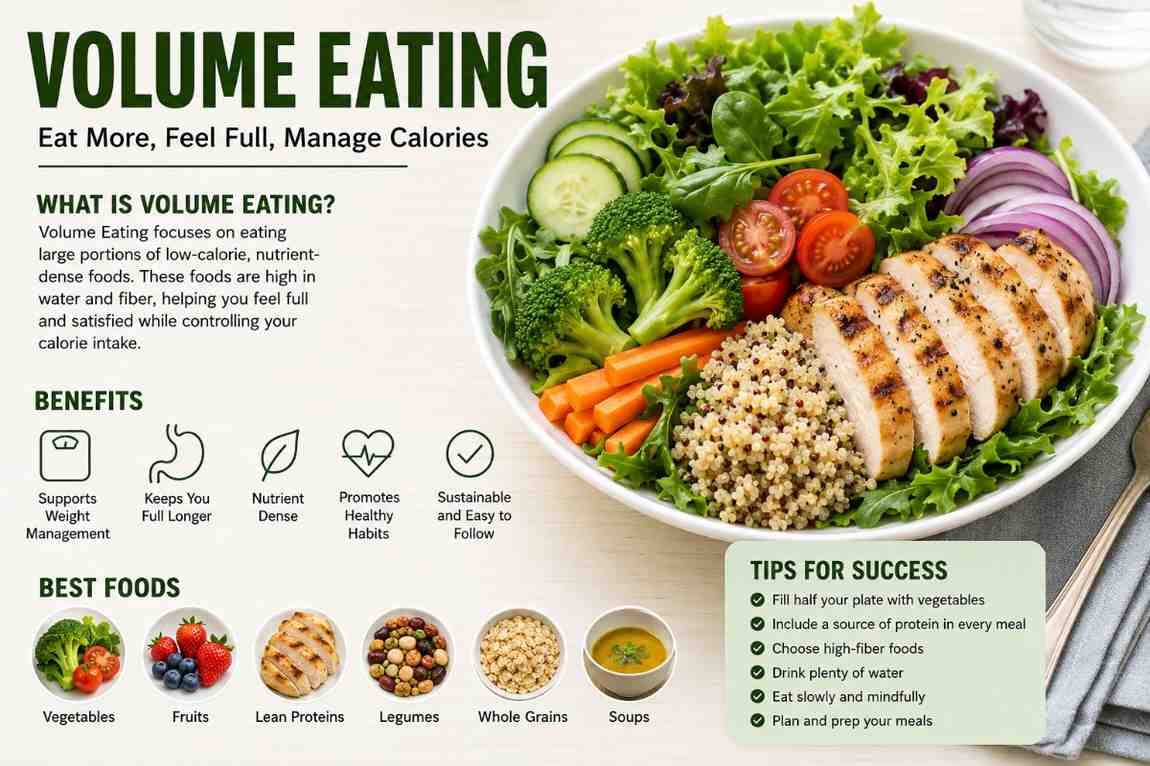
Volume Eating has become one of the most popular nutrition trends among health-conscious individuals, fitness enthusiasts, and people looking to manage their weight without feeling deprived. Unlike restrictive diets that focus on eating less food, Volume Eating emphasizes consuming larger portions of low-calorie, nutrient-dense foods that help you feel full and satisfied.
The concept is simple: choose foods that provide a high volume of food for relatively few calories. By filling your plate with fruits, vegetables, lean proteins, and high-fiber foods, you can enjoy satisfying meals while maintaining a calorie deficit if weight loss is your goal.
Volume eating focuses on consuming foods that are low in calories but high in volume, helping you feel full while managing your calorie intake. Along with portion control, proper hydration also plays an important role. Learn more in our guide on How Much Water Do I Need to Drink?
What Is Volume Eating?
Volume Eating is a nutritional approach that focuses on consuming foods with low calorie density. Calorie density refers to the number of calories contained in a specific weight or volume of food.
Foods with high water content, high fiber content, and lower fat content typically have fewer calories per gram, allowing you to eat larger portions for fewer calories.
For example:
- 100 calories of lettuce fills a large bowl.
- 100 calories of potato chips fills only a small handful.
The goal is to maximize fullness while minimizing calorie intake.
Understanding Calorie Density
Calorie density is one of the key principles behind Volume Eating.
Low-Calorie Density Foods
These foods contain fewer calories per gram:
- Vegetables
- Fruits
- Broths
- Lean proteins
- Legumes
- Whole grains
High-Calorie Density Foods
These foods contain more calories per gram:
- Fried foods
- Candy
- Cookies
- Chips
- Butter
- Oils
Volume Eating encourages prioritizing low-calorie-density foods while still enjoying higher-calorie foods in moderation.
Why Volume Eating Works
Increased Fullness
Large portions help stretch the stomach, sending signals of fullness to the brain.
Higher Fiber Intake
Fiber slows digestion and helps you stay satisfied longer.
Better Hydration
Many volume foods contain large amounts of water, which contributes to satiety.
Reduced Hunger
Eating larger portions can reduce feelings of deprivation often associated with dieting.
Sustainable Habits
Most people find Volume Eating easier to maintain compared to highly restrictive diets.
Benefits of Volume Eating
Supports Weight Management
This nutrition strategy can help reduce calorie intake naturally while maintaining meal satisfaction.
Reduces Cravings
Feeling full throughout the day may decrease cravings for unhealthy snacks. Many high-volume foods are rich in fiber, which supports digestion and gut health. You may also enjoy our article on 15 Best Morning Drinks for Gut Health for additional digestive support.
Encourages Healthier Food Choices
The approach emphasizes nutrient-dense foods rich in vitamins and minerals.
Improves Digestive Health
Many volume foods contain dietary fiber that supports healthy digestion.
Makes Dieting Easier
People often find it easier to stick to a nutrition plan when they can eat larger portions.
Supports Fitness Goals
Athletes and active individuals can use Volume Eating to manage body composition while maintaining energy levels.
Best Foods for Volume Eating
Non-Starchy Vegetables
These are among the best volume foods available.
Examples include:
- Lettuce
- Spinach
- Kale
- Cucumber
- Zucchini
- Broccoli
- Cauliflower
- Bell peppers
- Celery
- Cabbage
These vegetables are low in calories and high in nutrients.
Fruits
Many fruits contain water and fiber that increase fullness.
Examples include:
- Watermelon
- Strawberries
- Oranges
- Apples
- Grapefruit
- Peaches
- Berries
Lean Proteins
Protein is one of the most filling nutrients. Superfoods such as chia seeds can help increase satiety due to their fiber content. Read our detailed comparison of Hemp Seeds vs Chia Seeds to learn more.
Good choices include:
- Chicken breast
- Turkey breast
- Fish
- Shrimp
- Egg whites
- Greek yogurt
- Cottage cheese
- Tofu
Legumes
Legumes provide both protein and fiber.
Examples:
- Lentils
- Chickpeas
- Black beans
- Kidney beans
Whole Grains
Whole grains can contribute to satiety when consumed in appropriate portions. Nutrient-dense foods can support overall wellness while following a volume eating approach. Explore the benefits of Baobab Powder as part of a balanced diet.
Examples:
- Oats
- Brown rice
- Quinoa
- Barley
Low-Calorie Soups
Broth-based soups can be very filling while remaining relatively low in calories.
Foods to Limit During Volume Eating
Volume Eating does not ban foods, but some foods are less filling for their calorie content.
Examples include:
- Potato chips
- Candy
- Ice cream
- Fast food
- Fried foods
- Sugary beverages
- Pastries
These foods can still fit into a balanced diet when enjoyed in moderation.
High-Volume Breakfast Ideas
Vegetable Omelet
Combine egg whites with:
- Spinach
- Mushrooms
- Tomatoes
- Onions
Greek Yogurt Bowl
Add:
- Fresh berries
- Chia seeds
- Cinnamon
Oatmeal with Fruit
Top oats with:
- Strawberries
- Blueberries
- Apples
High-Volume Lunch Ideas
Large Salad Bowl
Include:
- Lettuce
- Cucumber
- Tomatoes
- Bell peppers
- Grilled chicken
Vegetable Soup
Pair with lean protein for a satisfying meal.
Cottage cheese is a popular volume eating food because it provides protein with relatively few calories. You may also like our collection of Cottage Cheese Recipes for healthy meal ideas.
Grain and Vegetable Bowl
Combine:
- Brown rice
- Roasted vegetables
- Chickpeas
High-Volume Dinner Ideas
Stir-Fry
Mix:
- Broccoli
- Bell peppers
- Carrots
- Lean protein
Grilled Fish and Vegetables
Serve fish with a large portion of roasted vegetables.
Cauliflower Rice Bowl
Use cauliflower rice as a low-calorie base.
Smart Volume Eating Snacks
Fresh Fruit
Examples:
- Apples
- Oranges
- Berries
Air-Popped Popcorn
Popcorn provides large volume for relatively few calories.
Raw Vegetables
Pair with a light yogurt-based dip.
Greek Yogurt
High in protein and satisfying.
The Role of Protein in Volume Eating
Protein is essential because it helps:
- Increase fullness
- Preserve muscle mass
- Support recovery
- Reduce hunger
Try including a source of protein in every meal.
The Role of Fiber
Fiber is another key component.
Benefits include:
- Slower digestion
- Improved fullness
- Better digestive health
- More stable energy levels
Foods rich in fiber include fruits, vegetables, legumes, and whole grains.
Hydration and Volume Eating
Water plays an important role in satiety.
Tips:
- Drink water before meals
- Eat water-rich foods
- Stay hydrated throughout the day
Examples of water-rich foods:
- Watermelon
- Cucumber
- Lettuce
- Tomatoes
Volume Eating for Weight Loss
Many people use Volume Eating to support weight loss because it allows them to consume satisfying portions while maintaining a calorie deficit.
The key is choosing foods that provide:
- High volume
- High nutrients
- Moderate calories
Consistency is more important than perfection.
Volume Eating for Muscle Building
Volume Eating can also support muscle-building goals.
Focus on:
- Lean protein
- Complex carbohydrates
- Fruits
- Vegetables
Athletes may need additional calorie-dense foods to meet higher energy demands.
Common Mistakes to Avoid
Ignoring Protein
Eating only vegetables may leave you hungry later.
Avoiding Healthy Fats Completely
Healthy fats support hormone production and overall health.
Examples:
- Avocado
- Nuts
- Seeds
- Olive oil
Eating Too Fast
Slow eating allows fullness signals to develop.
Not Planning Meals
Meal preparation can make Volume Eating much easier.
Overeating Healthy Foods
Even healthy foods contain calories.
Balance remains important.
Sample Volume Eating Day
Breakfast
Vegetable omelet with fruit.
Snack
Apple and Greek yogurt.
Lunch
Large salad with grilled chicken.
Snack
Raw vegetables and hummus.
Dinner
Grilled fish with roasted vegetables and quinoa.
Evening Snack
Air-popped popcorn.
Who Can Benefit from Volume Eating?
Volume Eating may be helpful for:
- People trying to lose weight
- Fitness enthusiasts
- Individuals who feel hungry while dieting
- Busy professionals
- Students
- Families seeking healthier eating habits
Is Volume Eating Safe?
For most healthy adults, Volume Eating is considered a balanced and practical approach to nutrition.
However, individuals with specific medical conditions should consult a healthcare professional before making major dietary changes.
Long-Term Success Tips
Focus on Consistency
Small sustainable habits often produce the best results.
Fill Half Your Plate with Vegetables
This simple strategy can dramatically increase meal volume.
Prioritize Protein
Include protein in each meal.
Stay Active
Regular exercise complements healthy eating habits.
Practice Mindful Eating
Pay attention to hunger and fullness cues.
Conclusion
This nutrition strategy is a simple yet effective strategy that allows people to enjoy larger portions while managing calorie intake. By focusing on low-calorie-density foods such as vegetables, fruits, lean proteins, legumes, and whole grains, you can feel satisfied without excessive calories.
Whether your goal is weight loss, fitness improvement, or simply healthier eating, This nutrition strategy can be a practical and enjoyable approach that helps you build lasting nutritional habits while still enjoying generous, satisfying meals.
Volume eating is a simple and sustainable way to enjoy satisfying meals while managing your calorie intake. By choosing foods rich in water, fiber, and nutrients, you can stay fuller for longer and support your health goals. To continue your healthy eating journey, explore our related guides on How Long Can a Person Live Without Food and Water?
FAQs
What is Volume Eating?
Volume Eating is a nutrition strategy that focuses on consuming larger amounts of low-calorie, nutrient-dense foods to help you feel full while managing your calorie intake. The approach emphasizes foods with high water and fiber content, such as fruits, vegetables, and lean proteins, allowing you to eat satisfying portions without consuming excessive calories.
How does Volume Eating work?
Volume Eating works by prioritizing foods that have a low calorie density, meaning they contain fewer calories per gram. These foods take up more space in your stomach, helping you feel fuller for longer while consuming fewer calories overall.
Can Volume Eating help with weight loss?
Yes, Volume Eating can support weight loss because it allows you to eat larger portions while maintaining a calorie deficit. By choosing foods that are filling but lower in calories, many people find it easier to manage hunger and stick to their weight-loss goals.
What foods are best for Volume Eating?
The best foods for This nutrition strategy include vegetables, fruits, lean proteins, legumes, broth-based soups, and whole grains. Foods such as spinach, broccoli, cucumbers, berries, apples, chicken breast, Greek yogurt, and lentils are commonly included in a Volume Eating plan.
Is Volume Eating healthy?
For most people, This nutrition strategy can be a healthy approach because it encourages the consumption of nutrient-rich foods that provide vitamins, minerals, fiber, and protein. It promotes balanced eating habits rather than extreme restriction.
Can I eat carbohydrates while practicing Volume Eating?
Yes, carbohydrates can be part of a This nutrition strategy plan. Whole grains, fruits, vegetables, beans, and legumes provide important nutrients and fiber that contribute to fullness and overall health.
Do I need to count calories with Volume Eating?
Not necessarily. Some people choose to track calories, while others focus on filling their plates with low-calorie-density foods. However, understanding portion sizes and overall calorie intake can still be helpful for specific goals such as weight loss.
What are examples of low-calorie-density foods?
Examples include lettuce, cucumbers, tomatoes, celery, zucchini, watermelon, strawberries, oranges, broth-based soups, and many leafy green vegetables. These foods contain a lot of water and fiber relative to their calorie content.
Can Volume Eating reduce hunger?
Yes, one of the main benefits of This nutrition strategy is its ability to reduce hunger. Larger portions of high-fiber and high-water foods help increase satiety, making it easier to feel satisfied between meals.
Is protein important in Volume Eating?
Protein is an essential part of Volume Eating because it helps increase fullness and supports muscle maintenance. Including protein sources such as chicken, fish, eggs, tofu, Greek yogurt, and legumes can improve meal satisfaction.
Can Volume Eating help prevent overeating?
This nutrition strategy may help prevent overeating by promoting fullness through larger portions of low-calorie foods. Feeling satisfied after meals can reduce the likelihood of excessive snacking or binge eating later in the day.
Are snacks allowed on a Volume Eating plan?
Yes, snacks can be included. Popular This nutrition strategy snacks include fresh fruit, air-popped popcorn, raw vegetables, Greek yogurt, and other nutrient-dense foods that provide fullness without excessive calories.
Can athletes use Volume Eating?
Athletes can use This nutrition strategy as part of a balanced nutrition plan. However, individuals with high energy needs may need to include additional calorie-dense foods to support training, recovery, and performance.
What are common mistakes people make with Volume Eating?
Common mistakes include eating too little protein, completely avoiding healthy fats, relying only on vegetables, and ignoring overall nutritional balance. A successful This nutrition strategy plan should include a variety of nutrient-rich foods.
Who should try Volume Eating?
This nutrition strategy may be beneficial for individuals looking to lose weight, manage hunger, improve eating habits, or maintain a healthy lifestyle. It is particularly appealing to people who enjoy larger meals and want a more sustainable approach to nutrition.
About the Author
Hitasha is a health and wellness content writer who creates simple, SEO-friendly articles on nutrition, weight management, hydration, superfoods, and healthy lifestyle habits.
Disclaimer
This article is for informational and educational purposes only and should not be considered medical advice. Consult a qualified healthcare professional before making significant dietary or lifestyle changes.
Sources & References
- Harvard T.H. Chan School of Public Health – Healthy Eating PlateMayo Clinic – Weight Loss and Healthy Eating Strategies
- CDC (Centers for Disease Control and Prevention) – Healthy Weight, Nutrition, and Physical Activity
- National Institute of Diabetes and Digestive and Kidney Diseases (NIDDK) – Healthy Eating and Weight Management
- Academy of Nutrition and Dietetics – Smart Eating Tips
- Healthline – Volume Eating: What It Is and How It Works
- Cleveland Clinic – Healthy Weight Management Tips