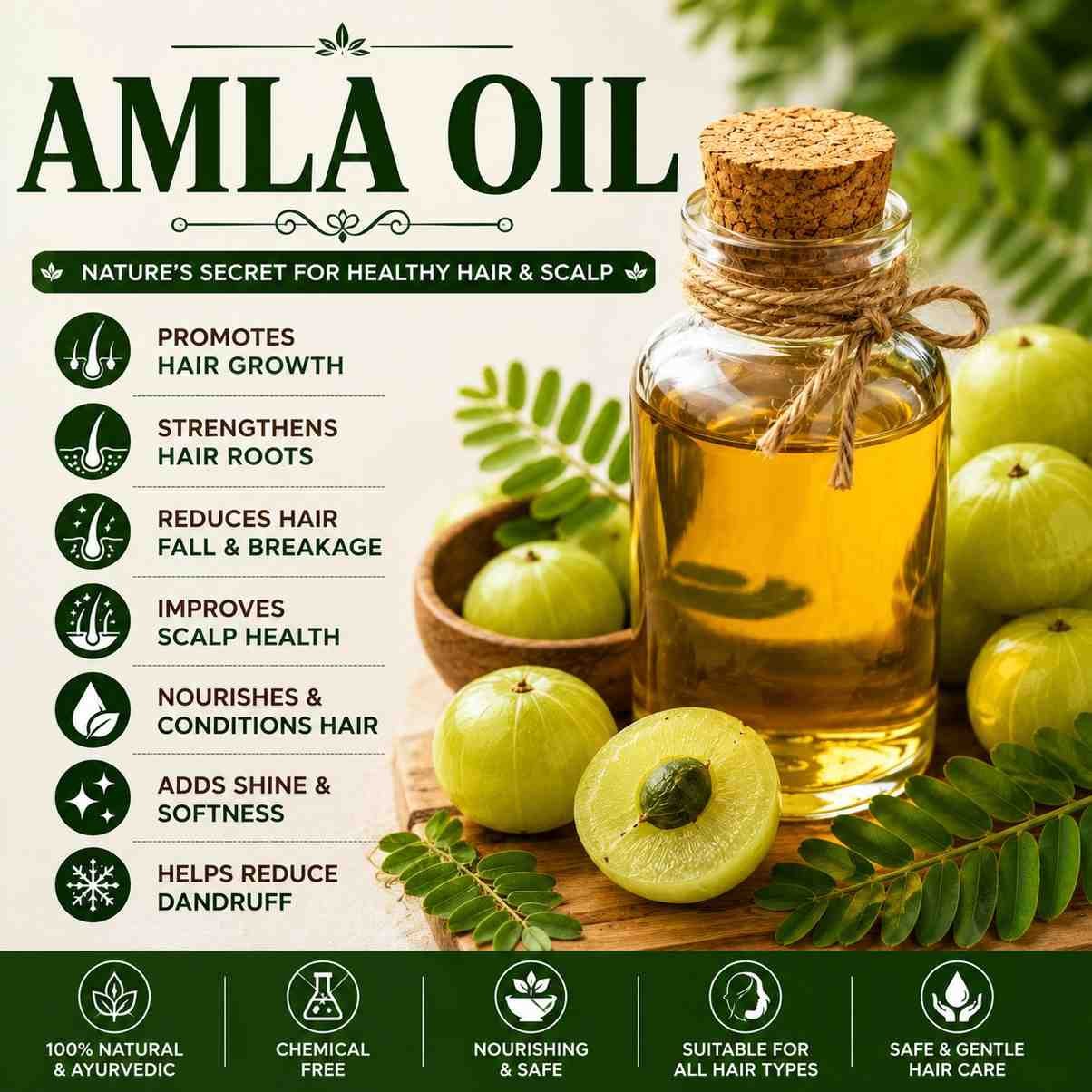
Amla oil has been a staple in traditional Indian hair care for centuries, and today it’s gaining worldwide popularity as a natural remedy for healthier hair and scalp. Made from the nutrient-rich amla (Indian gooseberry) fruit, this oil is valued for its high concentration of antioxidants, vitamin C, and plant compounds that help nourish both the hair and skin.
Whether you’re dealing with dry hair, dandruff, frizz, or simply want shinier-looking locks, adding amla oil to your weekly routine may help support overall hair health. While no oil can guarantee rapid hair growth, regular scalp massage with amla oil can improve scalp hydration and reduce hair breakage, helping hair appear fuller and healthier over time.
Amla is a versatile superfruit that can be enjoyed in many forms. While this guide focuses on the topical benefits of amla oil, you can also explore our articles on Amla Water and Amla Tea to learn how consuming amla may support your overall wellness and complement a healthy beauty routine from the inside out.
What Is Amla Oil?
Amla oil is a herbal oil made by infusing dried or fresh amla (Emblica officinalis) fruit into a carrier oil such as:
- Coconut oil
- Sesame oil
- Mineral oil
- Sunflower oil
The infusion process allows beneficial plant compounds from the fruit to blend with the carrier oil, creating a nourishing treatment commonly used for hair and scalp care.
Amla has long been used in Ayurveda, India’s traditional system of wellness, where it is valued for promoting healthy hair, scalp, and skin.
Nutritional Compounds Found in Amla Oil
Although the exact composition varies depending on how it’s prepared, amla oil contains beneficial plant compounds such as:
- Vitamin C (present in the fruit; levels in infused oil vary)
- Polyphenols
- Flavonoids
- Tannins
- Gallic acid
- Ellagic acid
- Essential fatty acids (from the carrier oil)
- Antioxidants
These compounds help protect the hair and scalp from oxidative stress while supporting healthy-looking hair.
Top Amla Oil Benefits
1. Helps Nourish the Scalp
A healthy scalp creates a better environment for healthy-looking hair.
Massaging amla oil into the scalp helps moisturize dry areas while improving the appearance of the scalp.
A well-hydrated scalp may also feel less itchy and flaky.
2. May Reduce Hair Breakage
Hair often breaks because of:
- Dryness
- Heat styling
- Chemical treatments
- Environmental damage
Regular use of amla oil helps coat the hair shaft, improving softness and reducing friction that can lead to breakage. Hair breakage is commonly caused by heat styling, chemical treatments, and excessive friction. Mayo Clinic recommends minimizing these factors to help reduce hair damage and maintain stronger hair.
3. Supports Stronger Hair
Amla oil contains antioxidant-rich plant compounds that help protect hair from environmental stress.
Although it doesn’t permanently strengthen hair internally, conditioning the hair helps reduce damage and improves manageability.
4. Adds Natural Shine
One of the most noticeable benefits of amla oil is healthier-looking shine.
After regular use, many people notice:
- Smoother strands
- Less frizz
- Better light reflection
- Softer texture
5. Helps Manage Dry Hair
Dry hair loses moisture easily.
Applying amla oil before shampooing helps reduce moisture loss and leaves hair feeling softer after washing.
6. Supports a Healthy Scalp Barrier
The scalp has its own protective barrier.
Keeping it moisturized may reduce dryness and improve overall scalp comfort.
7. Helps Reduce Frizz
Humidity and damaged hair often lead to frizz.
Amla oil smooths the hair cuticle, making hair appear more polished and easier to style.
8. Improves Hair Softness
Many users notice softer hair after consistent use.
This is especially beneficial for:
- Curly hair
- Thick hair
- Color-treated hair
- Heat-damaged hair
9. Helps Protect Hair from Environmental Damage
Sun exposure, pollution, and harsh weather can affect hair quality.
The antioxidants found in amla help protect against oxidative stress, while the carrier oil helps reduce dryness.
10. Encourages Healthier-Looking Hair
Healthy hair isn’t only about growth.
It’s also about:
- Smoothness
- Elasticity
- Hydration
- Reduced breakage
- Stronger appearance
Amla oil supports these qualities when used consistently.
11. Supports Hair Manageability
Dry, tangled hair is harder to style.
Using amla oil as a pre-wash treatment can make detangling easier while reducing friction during brushing.
12. Complements a Healthy Hair Care Routine
Amla oil works best when combined with:
- Gentle shampoo
- Conditioner
- Balanced diet
- Scalp massage
- Reduced heat styling
Amla Oil for Hair Growth
One of the biggest reasons people use amla oil is to support hair growth.
Current research does not prove that amla oil directly causes faster hair growth in humans. However, maintaining a healthy scalp and reducing breakage can help hair retain its length over time.
Regular scalp massage may also increase blood circulation to the scalp, which supports overall scalp health.
For best results:
- Massage the scalp for 5–10 minutes.
- Leave the oil on for at least 30 minutes before washing.
- Use it consistently 2–3 times per week.
While amla oil helps nourish the scalp and reduce hair breakage, healthy hair growth also depends on getting enough essential nutrients. Learn how the B vitamin biotin supports stronger, healthier hair in our complete guide to Biotin for Hair Growth. Combining a balanced diet with a consistent hair care routine may help improve overall hair health.
Amla Oil for Dandruff
Dry scalp and dandruff can make hair look unhealthy.
Amla oil may help:
- Moisturize the scalp
- Reduce dryness
- Improve scalp comfort
- Minimize visible flakes caused by dryness
If dandruff is persistent or severe, consult a dermatologist for proper diagnosis and treatment.
Amla Oil for Premature Gray Hair
In Ayurveda, amla has traditionally been used to support natural hair pigmentation.
However, there is limited scientific evidence that amla oil can prevent or reverse gray hair.
Keeping hair healthy with regular oiling may improve its overall appearance, but it should not be considered a proven treatment for premature graying.
Amla Oil for Scalp Health
A healthy scalp is the foundation of healthy hair.
Benefits include:
- Better moisture balance
- Reduced dryness
- Improved comfort
- Softer scalp
- Easier massage
A weekly scalp massage can also become a relaxing self-care ritual.
Amla Oil for Skin
Although primarily used for hair, amla oil can also be applied to certain areas of the skin.
Potential benefits include:
- Helps lock in moisture
- Softens rough skin
- Supports the skin barrier
- Leaves skin feeling smooth
Always patch test before applying it to larger areas, especially if you have sensitive or acne-prone skin.
How to Use Amla Oil
As a Pre-Shampoo Treatment
- Warm a small amount of amla oil.
- Massage into the scalp using your fingertips.
- Work the remaining oil through the lengths of your hair.
- Leave it on for 30–60 minutes.
- Wash with a gentle shampoo.
Overnight Hair Treatment
If your scalp tolerates oils well, you can leave amla oil on overnight.
Protect your pillow with a towel or pillowcase cover and shampoo your hair the next morning.
Scalp Massage
Massage gently in circular motions for 5–10 minutes to distribute the oil evenly and create a relaxing self-care ritual.
DIY Amla Oil Hair Massage Routine
Follow this simple routine once or twice a week:
- Warm 2–3 tablespoons of amla oil until slightly warm.
- Part your hair into sections.
- Apply the oil directly to your scalp using your fingertips.
- Massage gently for 5–10 minutes using circular motions.
- Smooth the remaining oil through the mid-lengths and ends of your hair.
- Leave it on for at least 30 minutes, or overnight if desired.
- Wash with a mild, sulfate-free shampoo and follow with conditioner if needed.
This routine can help improve scalp hydration, reduce dryness, and leave your hair feeling softer and more manageable.
Amla Oil for Different Hair Types
Choosing the right way to use amla oil depends on your hair type. While it can benefit most people, adjusting the amount and frequency helps achieve the best results.
Dry Hair
Dry hair benefits from richer hydration.
Tips:
- Apply amla oil 2–3 times per week.
- Leave it on for at least one hour or overnight.
- Focus on the ends to reduce dryness and split ends.
According to the American Academy of Dermatology (AAD), moisturizing the hair and scalp can help reduce dryness and improve overall hair manageability.
Oily Hair
If your scalp becomes oily quickly, use a smaller amount.
Tips:
- Apply mainly to the scalp.
- Leave it on for 30–60 minutes before shampooing.
- Wash thoroughly with a gentle shampoo.
Curly Hair
Curly hair naturally loses moisture more easily.
Amla oil may help:
- Improve softness
- Reduce frizz
- Enhance shine
- Make detangling easier
Fine Hair
People with fine hair should avoid applying too much oil.
A few drops are often enough to smooth the hair without weighing it down.
Color-Treated Hair
Color-treated hair can become dry after chemical processing.
This oil may help improve softness and reduce the appearance of dryness between salon visits.
How Often Should You Use Amla Oil?
Your ideal routine depends on your hair type.
| Hair Type | Frequency |
|---|---|
| Dry Hair | 2–3 times weekly |
| Normal Hair | 1–2 times weekly |
| Oily Hair | Once weekly |
| Curly Hair | 2–3 times weekly |
| Damaged Hair | 2–3 times weekly |
Consistency is more important than using large amounts of oil.
Best Time to Apply Amla Oil
Both morning and evening applications can be effective.
Morning
Morning application works well if you plan to shampoo afterward.
Benefits include:
- Easy pre-wash treatment
- Fresh scalp
- Less overnight mess
Night
Many people prefer applying this oil before bedtime.
Benefits include:
- Longer absorption time
- Deep conditioning
- Convenient weekly treatment
Can You Leave Amla Oil Overnight?
Yes.
Leaving this oil overnight is generally safe for most people if it doesn’t irritate the scalp.
However:
- Protect your pillow with a towel.
- Shampoo thoroughly the next morning.
- Avoid overnight use if your scalp becomes itchy or excessively oily.
Amla Oil vs Coconut Oil
| Feature | Amla Oil | Coconut Oil |
|---|---|---|
| Primary Benefit | Scalp nourishment | Moisture retention |
| Texture | Medium | Rich |
| Hair Shine | Excellent | Excellent |
| Best For | Scalp care | Dry hair |
| Traditional Use | Ayurvedic hair care | Daily moisturizing |
Many people combine coconut oil with amla extract for added nourishment.
Amla Oil vs Rosemary Oil
| Feature | Amla Oil | Rosemary Oil |
|---|---|---|
| Main Focus | Hair conditioning | Scalp stimulation |
| Rich in Antioxidants | Yes | Yes |
| Helps Reduce Breakage | Yes | May help |
| Suitable for Regular Use | Yes | Must be diluted |
| Traditional Use | Ayurveda | Aromatherapy |
Possible Side Effects
Although this oil is generally well tolerated, some people may experience:
- Mild skin irritation
- Allergic reactions
- Itching
- Scalp redness
Always perform a patch test before first use.
Stop using the product if irritation develops.
Precautions
- Avoid contact with your eyes.
- Do not apply to broken or infected skin.
- Store the oil in a cool, dry place.
- Choose high-quality, cold-pressed or reputable brands whenever possible.
- Consult a dermatologist if you have ongoing scalp conditions.
FAQs
Does amla oil really help hair grow faster?
Current scientific evidence does not confirm that this oil directly speeds up hair growth. However, it may help reduce breakage and support a healthier scalp, which can improve overall hair appearance.
Can I use amla oil every day?
Most people only need it one to three times per week. Daily use may be too heavy for oily hair.
Is amla oil suitable for all hair types?
Yes. The amount and frequency should be adjusted based on your hair type and scalp condition.
Can I mix amla oil with coconut oil?
Yes.
Many homemade hair treatments combine this oil with coconut oil for additional conditioning.
Does amla oil help with dandruff?
It may improve dryness and scalp comfort. Persistent dandruff should be evaluated by a healthcare professional.
Can men use amla oil?
Absolutely.
Amla oil can be used by both men and women.
How long does it take to see results?
Many people notice softer hair after a few uses, while improvements in overall hair condition may become more noticeable with consistent use over several weeks.
Concusion
Amla oil remains one of the most trusted natural hair care ingredients thanks to its rich antioxidant content and long history of use in Ayurvedic wellness. While it isn’t a miracle cure for hair loss or gray hair, regular use can help improve scalp hydration, reduce hair breakage, enhance shine, and leave hair feeling softer and healthier.
For the best results, combine this oil with a balanced diet, gentle hair care practices, and consistent scalp massage. Healthy hair starts with a healthy scalp, and this oil can be a valuable addition to your weekly routine.
To build a complete beauty routine, don’t forget to explore our guides on Body Oiling Routine, , Lip Oils here on Trendyopedia.
Author Bio
Author: Hitasha
Hitasha is a beauty and wellness writer at Trendyopedia, specializing in evidence-based skincare, natural hair care, and wellness trends. She creates easy-to-understand, research-backed content to help readers make informed beauty and self-care decisions.
Disclaimer
This article is for informational purposes only and should not be considered medical advice. Individual results may vary. If you have persistent hair loss, scalp conditions, allergies, or other concerns, consult a dermatologist or qualified healthcare professional before using new hair care products.