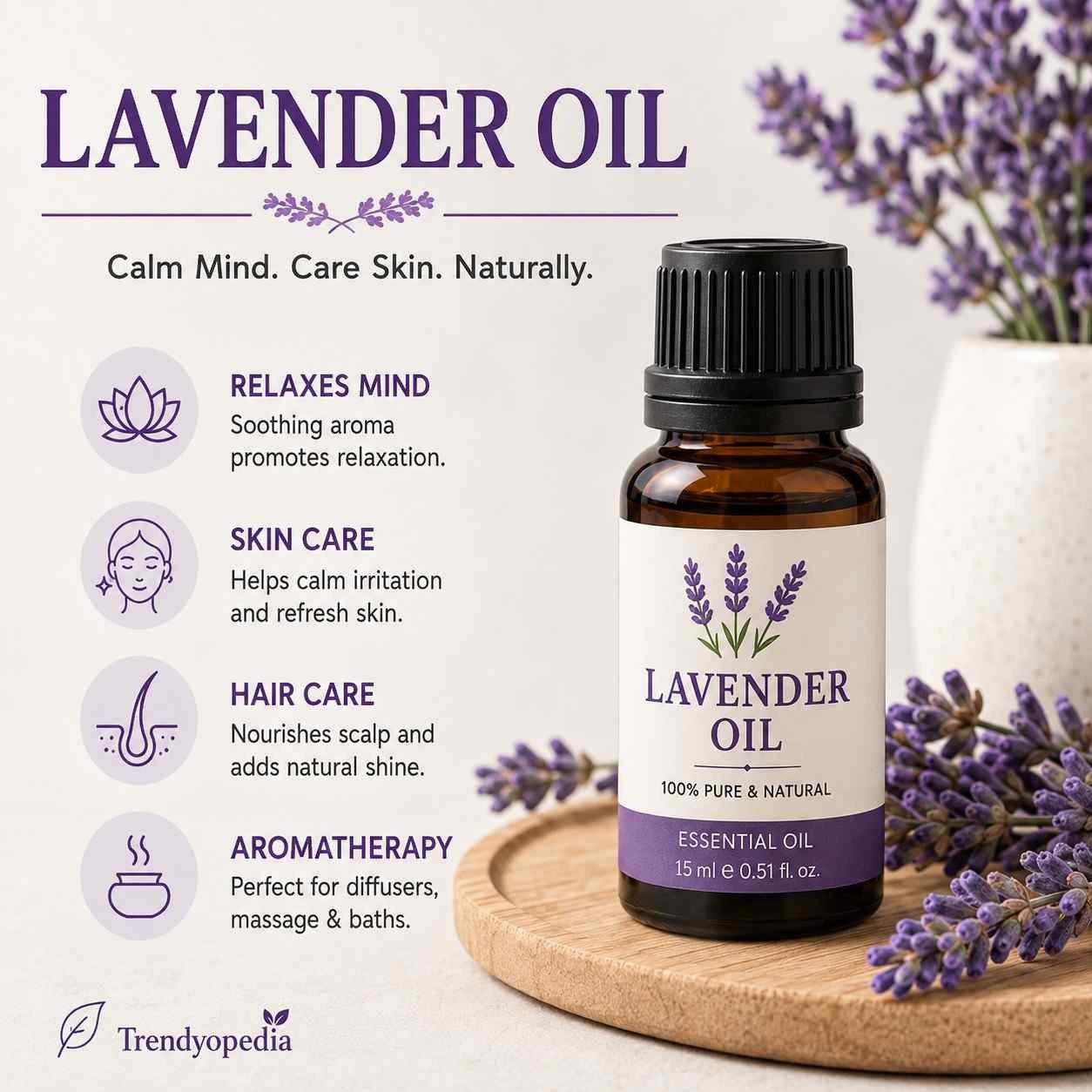
Lavender Oil is one of the most popular essential oils used in aromatherapy, personal care, massage, and home fragrance. It is typically obtained from lavender plants, especially Lavandula angustifolia. Its gentle floral aroma makes it a common ingredient in skincare and relaxation products.
Although lavender oil is widely used, not every health claim associated with it is well established. Research suggests some possible benefits, particularly around anxiety, but more high-quality research is needed.
If you’re exploring natural oils for skincare and hair care, you can also read our guides to Jojoba Oil, Argan Oil, and Almond Oil.
What Is Lavender Oil?
Lavender oil is a concentrated essential oil produced from lavender plants.
It is commonly used for:
- Aromatherapy
- Massage
- Skincare products
- Hair-care products
- Bath products
- Home fragrance
- Personal-care products
Because it is an essential oil, lavender oil is much more concentrated than lavender flowers or lavender tea.
Lavender Oil Benefits
Lavender oil is commonly used for its:
- Relaxing aroma
- Aromatherapy applications
- Skin-care applications
- Massage use
- Fragrance
- Hair-care applications
However, it is important not to overstate these benefits. NCCIH notes that evidence for many uses of lavender remains uncertain.
Lavender Oil for Relaxation
Lavender is particularly popular in aromatherapy because of its pleasant floral scent.
Some research has investigated lavender for anxiety and stress. However, the evidence differs depending on how lavender is used, and researchers say more rigorous studies are needed.
You can use lavender oil in an aromatherapy diffuser according to the manufacturer’s instructions.
Lavender Oil for Sleep
Lavender aromatherapy is often used as part of a nighttime routine.
Research on aromatherapy and sleep has shown some promising results, but NCCIH notes that larger and more rigorous studies are still needed.
A simple nighttime routine could include:
Bath → Skincare → Lavender Aromatherapy → Relaxation
This oil should not be considered a guaranteed treatment for insomnia.
Lavender Oil for Skin
This oil is found in many cosmetic and personal-care products.
However, essential oil should not be applied directly to the skin without appropriate dilution.
Topical lavender products can cause allergic skin reactions in some people.
If you’re using a diluted product, follow the manufacturer’s instructions and stop using it if you develop irritation.
If you’re comparing facial oils and moisturizers, read our Face Oil vs Moisturizer: What’s the Difference? guide.
Lavender Oil for Hair
Lavender oil is sometimes added to hair-care and scalp products because of its fragrance.
It can be used as part of a properly formulated hair-care product, but there isn’t enough evidence to claim that This oil is a proven treatment for hair loss or guaranteed hair growth.
For natural hair-oil options, explore:
- Amla Oil
- Castor Oil
- Argan Oil
- Jojoba Oil
- Moringa Oil
Lavender Oil for Scalp
Some people include diluted This oil in scalp-oiling routines.
However, essential oils can irritate the scalp, particularly when used at high concentrations.
If you have persistent:
- Itching
- Redness
- Scaling
- Burning
- Hair loss
consider consulting a dermatologist rather than relying on essential oils.
How to Use Lavender Oil Safely
This oil can be used in different ways.
Aromatherapy
Use a diffuser according to the product instructions.
Topical Use
Use only a properly diluted product or a commercially formulated skincare product.
Massage
Lavender essential oil can be incorporated into massage blends after appropriate dilution.
Bath
Avoid adding undiluted essential oil directly to bathwater because oil and water do not mix evenly.
Before applying lavender essential oil to your skin, learn How to Dilute Essential Oils Safely.
Can You Apply Lavender Oil Directly to Skin?
It is better not to apply undiluted lavender essential oil directly to your skin.
Essential oils are concentrated, and This oil has been associated with allergic contact dermatitis. A 2023 study of patients with essential-oil-related allergic contact dermatitis identified lavender among the oils commonly involved.
Oxidation can also increase the sensitizing potential of This oil.
Lavender Oil for Sensitive Skin
If you have sensitive skin, be especially careful with lavender essential oil.
Before using a new product:
- Check the ingredient list.
- Follow the recommended dilution.
- Test a small area when appropriate.
- Avoid broken or irritated skin.
- Stop if burning, itching, redness, or swelling occurs.
If you already have fragrance allergies, speak with a dermatologist before using essential oils.
Lavender Oil vs Lavender Water
These products are not the same.
Lavender Oil: A concentrated essential oil.
Lavender Water: Usually a much more diluted aromatic product, such as a floral water or hydrosol.
Because their concentrations and formulations differ, they shouldn’t be used interchangeably.
Lavender Oil vs Lavender Tea
Lavender tea and lavender essential oil are also very different.
Lavender tea uses lavender in a form intended for consumption, while essential oil is a highly concentrated aromatic product.
Never assume that an essential oil is safe to drink simply because the plant itself is commonly used as a food or tea ingredient.
Can Lavender Oil Help Anxiety?
Lavender has been studied for anxiety, and some research suggests potential benefits for certain lavender preparations.
However, NCCIH says limitations in the research mean definite conclusions cannot be made for many uses.
Lavender aromatherapy should therefore be considered a complementary wellness practice rather than a replacement for professional treatment.
Lavender Oil and Depression
Lavender is sometimes promoted online for depression.
The evidence is not strong enough to recommend topical This oil as a treatment for depression. NCCIH specifically notes that topical lavender does not appear to improve depression symptoms.
If you experience persistent sadness, loss of interest, or other symptoms of depression, speak with a qualified healthcare professional.
Lavender Oil Safety
Possible issues with This oil include:
- Skin irritation
- Allergic reactions
- Headache
- Coughing during aromatherapy
- Increased sensitivity after oxidation
NCCIH considers lavender aromatherapy possibly safe but notes that some people may experience headache or coughing.
Lavender Oil During Pregnancy
There isn’t enough reliable information to establish the safety of lavender during pregnancy or breastfeeding.
If you’re pregnant, breastfeeding, taking medications, or preparing for surgery, discuss lavender products with your healthcare professional before using them.
Lavender Oil and Children
Extra caution is appropriate when using concentrated essential oils around children.
NCCIH notes reports of breast-tissue swelling in children who used topical products containing lavender, although it remains unclear whether lavender caused the swelling.
Keep essential oils safely stored and follow age-specific product instructions.
Lavender Oil vs Other Oils
This oil is an essential oil, while oils such as jojoba, almond, argan, and coconut oil are commonly used as carrier or cosmetic oils.
For example:
| Oil | Common Beauty Use |
|---|---|
| Lavender Oil | Aromatherapy & fragrance |
| Jojoba Oil | Skin & hair conditioning |
| Argan Oil | Hair & skin care |
| Almond Oil | Body & skin care |
| Rosehip Oil | Facial skincare |
| Coconut Oil | Hair & body care |
Essential oils are different from carrier oils. Read our Carrier Oil vs Essential Oil guide to understand how they are used.
FAQs
Is lavender oil good for skin?
This oil is commonly used in cosmetic products, but it can cause irritation or allergic reactions in some people.
Can I apply lavender oil directly to my face?
It’s best to avoid undiluted essential oil on the face. Use a properly formulated product or an appropriately diluted preparation.
Can lavender oil grow hair?
There isn’t enough evidence to claim that This oil is a proven hair-growth treatment.
Can lavender oil help with sleep?
Lavender aromatherapy may help some people relax, but evidence for improving sleep remains limited.
Can lavender oil reduce anxiety?
Some lavender preparations have shown potential for anxiety, but more research is needed and results vary by preparation and method of use.
Can I drink lavender essential oil?
Don’t consume essential oil unless you have specific professional guidance for a product intended for oral use.
Is lavender oil safe for sensitive skin?
It can cause allergic reactions or irritation, so sensitive skin requires extra caution.
Conclusion
Lavender Oil is a popular essential oil used in aromatherapy, massage, fragrance, and personal-care products. Its relaxing aroma makes it a common choice for evening and wellness routines.
However, This oil is concentrated and isn’t risk-free. It can cause skin irritation or allergic reactions, particularly when improperly used or when the oil has oxidized.
For safe topical use, follow appropriate dilution guidance and consider your individual skin sensitivity. For more information, explore our Carrier Oil, Cinnamon Oil, Jojoba Oil vs Almond Oil and guides.
Author
Hitasha is a beauty, nutrition, and wellness writer at Trendyopedia, creating reader-friendly, research-informed content about natural oils, skincare, hair care, nutrition, and healthy lifestyle topics.
Disclaimer
This article is for informational purposes only and does not replace professional medical advice. Essential oils are highly concentrated and may cause irritation or allergic reactions. Consult a qualified healthcare professional if you have persistent symptoms, allergies, are pregnant or breastfeeding, or take medications.