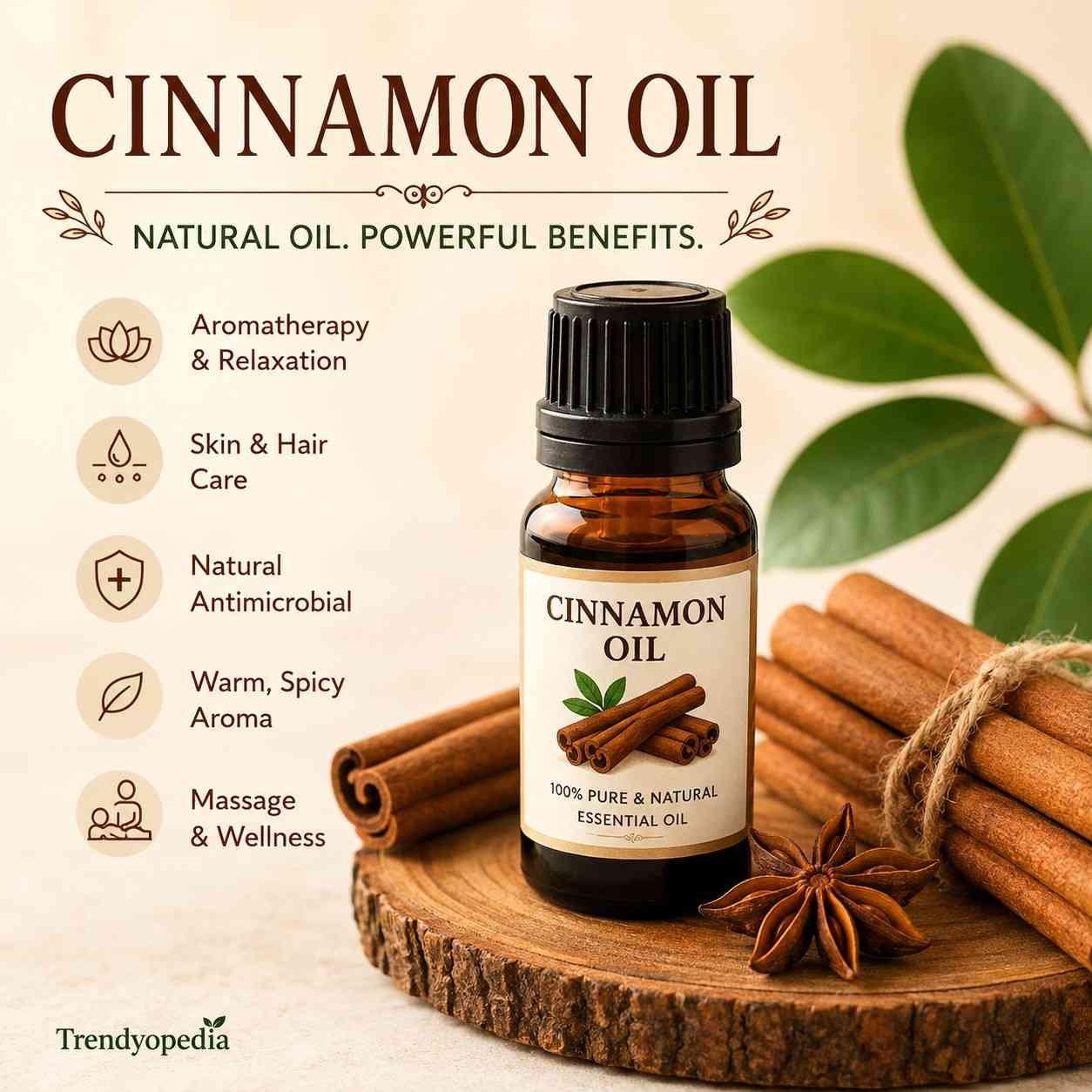
Cinnamon Oil is a concentrated aromatic oil made from parts of cinnamon trees. It is popular in aromatherapy, personal care products, massage blends, and home fragrance because of its warm, spicy aroma.
Cinnamon oil is highly concentrated, however, and it should not be treated like ordinary cooking cinnamon. Topical cinnamon products can cause skin irritation or contact dermatitis in some people, so proper dilution and careful use are important.
If you’re exploring natural oils, you can also read our guides to Ginger Oil, Jojoba Oil, and Almond Oil.
What Is Cinnamon Oil?
Cinnamon oil is an essential oil obtained from cinnamon plants. Different cinnamon species and different plant parts can produce oils with different chemical compositions.
Two commonly discussed cinnamon species are:
- Ceylon cinnamon (Cinnamomum verum)
- Cassia cinnamon (Cinnamomum aromaticum)
The composition of cinnamon products can vary depending on the species and plant part used.
Cinnamon Oil vs Cinnamon
Although they come from the same general plant family, cinnamon spice and cinnamon essential oil are not the same.
Cinnamon: A culinary spice commonly used in food.
Cinnamon Oil: A concentrated aromatic extract that contains much higher concentrations of volatile compounds.
Because cinnamon oil is concentrated, using it requires more caution than simply adding cinnamon to food.
Popular Uses of Cinnamon Oil
This oil is commonly used for:
- Aromatherapy
- Home fragrance
- Massage blends
- Personal-care products
- Cosmetic formulations
- Hair and scalp products
- DIY scented products
Its strong, warm aroma makes it particularly popular in autumn and winter-inspired fragrance blends.
Cinnamon Oil for Aromatherapy
This oil is valued primarily for its distinctive spicy aroma.
It can be incorporated into aromatherapy blends with other essential oils such as:
- Orange
- Clove
- Frankincense
- Ginger
- Lavender
However, aromatherapy should not be presented as a guaranteed treatment for medical conditions. Evidence for cinnamon specifically treating health conditions remains limited.
Cinnamon Oil for Skin
This oil is sometimes included in cosmetic and massage formulations.
However, cinnamon oil requires particular caution on the skin. Cinnamon and its components have been associated with allergic contact dermatitis and irritation.
Never assume that applying more will provide greater benefits.
For topical use, always follow appropriate dilution guidance for the specific This oil product.
Cinnamon Oil for Hair
Cinnamon oil is sometimes included in hair and scalp oil blends because of its strong aroma.
If used topically, it should be properly diluted with a suitable carrier oil.
Popular carrier oils include:
- Jojoba Oil
- Almond Oil
- Coconut Oil
- Avocado Oil
There isn’t enough evidence to claim that cinnamon oil is a proven treatment for hair loss or hair growth.
For more natural hair-care ideas, explore Amla Oil, Castor Oil, Moringa Oil, and Hibiscus Oil.
Cinnamon Oil for Massage
Because This oil has a strong fragrance, some people include a small amount in massage blends.
However, it should be appropriately diluted before topical application.
People with sensitive skin should be especially cautious because This oil can cause irritation or allergic reactions.
How to Dilute Cinnamon Oil
This oil is highly concentrated, so don’t apply it directly to your skin.
A carrier oil can be used to create a diluted blend.
Common carrier oils include:
- Jojoba Oil
- Sweet Almond Oil
- Coconut Oil
- Olive Oil
- Avocado Oil
The appropriate dilution depends on the specific product, intended application, and individual sensitivity.
Because This oil has a higher irritation and sensitization concern than many gentler essential oils, do not use a generic essential-oil recipe without checking the specific safety guidance for your product.
Because essential oils are highly concentrated, learn How to Dilute Essential Oils Safely before using cinnamon oil topically.
Can You Use Cinnamon Oil Directly on Skin?
No, undiluted cinnamon essential oil should not be casually applied directly to the skin.
This oil and cinnamon-containing products have been associated with contact dermatitis. Published case reports describe allergic reactions involving cinnamon oil and cinnamaldehyde.
If you experience burning, redness, itching, swelling, or a rash, stop using the product.
Cinnamon Oil Safety
Cinnamon oil deserves extra attention when it comes to safety.
Possible reactions include:
- Skin irritation
- Burning or stinging
- Redness
- Itching
- Allergic contact dermatitis
- Sensitization
NCCIH notes that some topical This oil or powder products may cause skin irritation or contact dermatitis.
Cinnamon Oil and Sensitive Skin
If you have sensitive or reactive skin, This oil may not be the best choice for a DIY skincare routine.
If you decide to use a properly diluted product:
- Follow the product’s instructions.
- Use the lowest appropriate concentration.
- Test a small area first.
- Avoid broken or irritated skin.
- Stop if irritation develops.
People with a history of fragrance allergies should be particularly careful.
Can Cinnamon Oil Be Used on the Face?
Extra caution is recommended for facial use.
The face can be more sensitive to concentrated fragrance ingredients, and cinnamon compounds can cause contact reactions.
For this reason, This oil is generally not an ideal beginner essential oil for DIY facial products.
A simpler carrier oil such as Jojoba Oil may be a better choice if your goal is basic facial moisturization.
Can You Ingest Cinnamon Oil?
Do not assume that an essential oil intended for fragrance or topical use is safe to swallow.
Essential oils are highly concentrated products, and ingestion can have risks.
If you’re interested in consuming cinnamon as a food or supplement, that’s a different question from using cinnamon essential oil.
NCCIH notes that evidence does not clearly support cinnamon for treating a specific health condition, and safety varies depending on the product and amount used.
Cinnamon Oil and Pregnancy
Pregnancy requires additional caution with concentrated essential oils.
There is limited information about the safety of using larger amounts of cinnamon products during pregnancy, and This oil should not be used casually without professional guidance.
If you’re pregnant or breastfeeding, ask your healthcare professional before using concentrated essential oils.
Cinnamon Oil vs Other Essential Oils
This oil is different from many commonly used essential oils because its strong aromatic compounds can be more irritating to the skin.
If you’re new to essential oils, you may prefer to start by learning about safer dilution practices and choosing products specifically formulated for topical use.
Cinnamon Oil: What the Science Says
Cinnamon has been studied for various health purposes, particularly diabetes and weight management. However, NCCIH says the research does not clearly support cinnamon as an effective treatment for any health condition, and studies can be difficult to interpret because they may use different cinnamon species or plant parts.
It’s therefore better to describe This oil as a fragrance and personal-care ingredient rather than claiming that it cures infections, burns fat, treats diabetes, or stimulates hair growth.
FAQs
Is cinnamon oil good for skin?
It can be used in appropriately formulated cosmetic products, but This oil can irritate skin and cause contact dermatitis.
Can I apply cinnamon oil directly to my skin?
Undiluted This oil should not be casually applied to skin because of its irritation and sensitization potential.
Can cinnamon oil help hair growth?
There isn’t enough evidence to claim that This oil is a proven hair-growth treatment.
What carrier oil can I use with cinnamon oil?
Jojoba, Almond, Coconut, and Avocado oils are examples of carrier oils, but the appropriate dilution should be determined before mixing.
Is cinnamon oil safe for sensitive skin?
It may not be suitable for sensitive skin because cinnamon compounds can cause irritation or allergic reactions.
Can cinnamon oil be used on the face?
Facial use requires particular caution. Because This oil can irritate skin, it isn’t an ideal choice for casual DIY facial application.
Does cinnamon oil have health benefits?
Cinnamon has been studied for several health conditions, but current evidence does not clearly establish cinnamon as an effective treatment for a specific health condition.
Conclusion
Cinnamon Oil is best known for its warm, spicy aroma and use in aromatherapy, personal-care products, and fragrance blends. However, it is a concentrated essential oil that requires more caution than ordinary cinnamon used in food.
Because This oil can cause skin irritation and allergic reactions, proper dilution is essential for topical use. Avoid applying it directly to the skin or using it as a DIY treatment for medical or hair-growth problems.
For more information, explore our Carrier Oil, Carrier Oil vs Essential Oil, Face Oil vs Moisturizer guides on Trendyopedia.
Author
Hitasha is a beauty, nutrition, and wellness writer at Trendyopedia, creating reader-friendly, research-informed content about natural oils, skincare, hair care, nutrition, and healthy lifestyle topics.
Disclaimer
This article is for informational purposes only and is not medical advice. Essential oils are highly concentrated and may cause irritation, allergic reactions, or other adverse effects. Always follow product-specific safety instructions and consult a qualified healthcare professional when necessary.