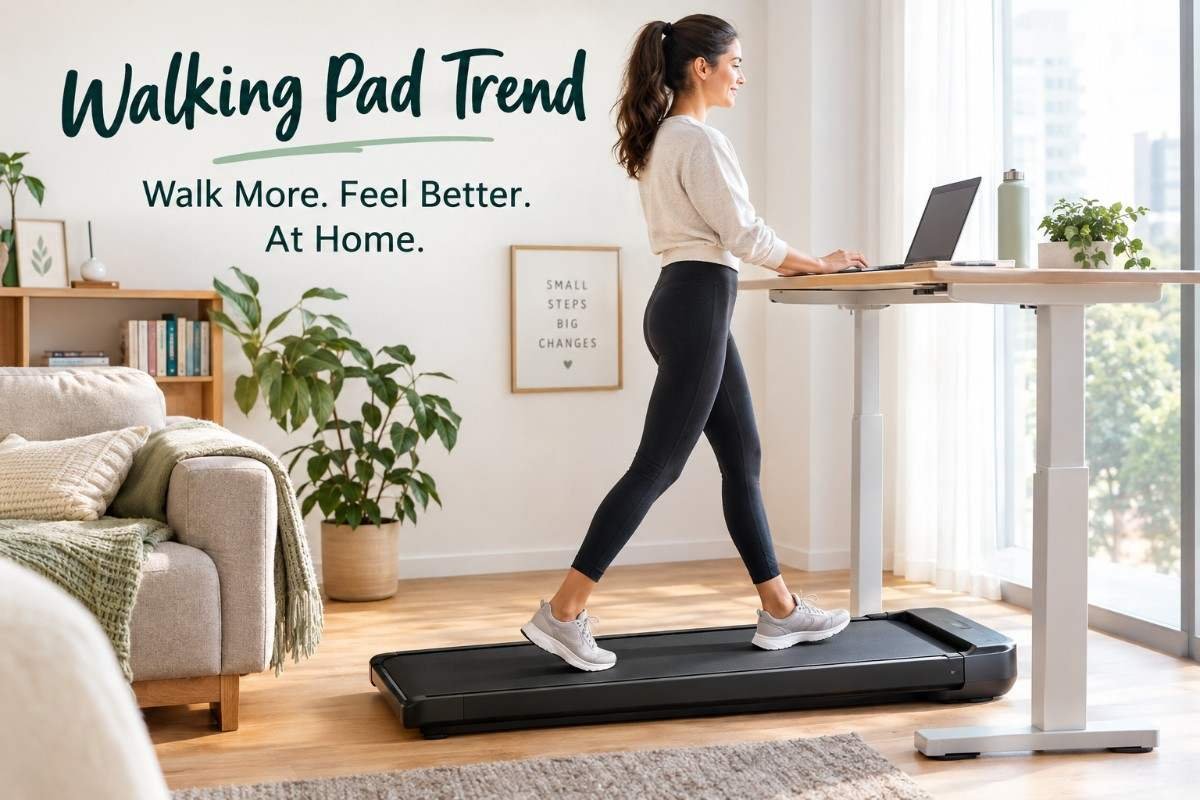
The Walking Pad Trend is turning everyday walking into one of the simplest fitness habits of 2026. Instead of going to the gym or waiting for perfect weather, people are using compact walking pads at home while working, watching TV, listening to podcasts, or scrolling through their phones.
The idea is simple: walk more without completely changing your daily routine.
As interest in low-impact fitness, step goals, home workouts, and wellness routines continues to grow, walking pads have become especially popular among people who want an easy way to stay active.
This growing interest in convenient walking also connects with other popular fitness routines such as the 6-6-6 Walking Trend for Weight Loss
But is the walking pad trend actually useful, and what should you know before trying it?
What Is the Walking Pad Trend?
The Walking Pad Trend refers to the growing popularity of compact, often foldable treadmills designed primarily for walking.
Unlike traditional treadmills, walking pads are generally smaller and designed to fit more easily into apartments, bedrooms, home offices, or other limited spaces.
Many models are designed for relatively slow walking rather than intense running.
The trend has grown alongside the popularity of:
- Daily step goals
- Walking workouts
- Home fitness
- Standing desks
- Low-impact exercise
- Work-from-home lifestyles
- Short movement breaks
- Wellness tracking
The biggest attraction is convenience. A walking pad can make it easier to add movement to a day that might otherwise involve hours of sitting.
Why Is the Walking Pad Trend So Popular?
One major reason is that walking is accessible to many people.
You don’t necessarily need an advanced workout program, expensive gym membership, or complicated equipment to start walking.
A walking pad can also fit into activities you already do.
For example, someone might walk slowly while:
- Watching a TV show
- Listening to music
- Taking a phone call
- Watching a podcast
- Reading selected content
- Working at a suitable standing desk
- Taking a short movement break
This makes the walking pad different from a traditional workout that requires setting aside a dedicated hour.
Convenience Is the Biggest Appeal
For many people, the hardest part of exercising isn’t knowing what to do—it’s finding the time.
A walking pad can help turn small periods of free time into opportunities for movement.
Instead of thinking, “I need to exercise for an hour,” someone might think:
“I’ll walk for 10 or 15 minutes while I watch this episode.”
Those small sessions can add up throughout the day.
Walking Pad vs. Traditional Treadmill
Walking pads and traditional treadmills have similar basic purposes, but they’re designed with different priorities.
| Walking Pad | Traditional Treadmill |
|---|---|
| Compact | Larger |
| Primarily designed for walking | Walking, jogging, and running |
| Easier to store | Requires more space |
| Often minimalist | Usually has more features |
| Good for home or office use | Better suited to dedicated workouts |
| Usually lower-profile | Larger frame and running deck |
If your main goal is simply to walk more, a walking pad may be more practical than a full-sized treadmill.
However, people who want to run or perform high-intensity treadmill workouts may need a traditional treadmill.
Can a Walking Pad Help You Get More Steps?
Yes, potentially.
The main advantage of a walking pad is that it provides another opportunity to accumulate steps.
For example, instead of sitting continuously during a long workday, you could incorporate several short walking sessions.
A simple routine might look like:
Morning: 10-minute walk
Lunch: 15-minute walk
Afternoon: 10-minute walk
Evening: 20-minute walk
That’s 55 minutes of additional walking without requiring one long workout session.
Your actual step count will depend on walking speed, stride length, and duration.
The important idea is consistency rather than chasing a specific number of steps.
Walking Pad Trend and Weight Management
The walking pad trend is also connected to growing interest in everyday movement and weight management.
Walking uses energy, and increasing physical activity can contribute to overall energy expenditure.
However, a walking pad isn’t a magic weight-loss machine.
Body weight is influenced by many factors, including:
- Food intake
- Physical activity
- Sleep
- Genetics
- Stress
- Age
- Overall lifestyle
If weight loss is your goal, think of a walking pad as one tool within a broader healthy lifestyle, rather than a standalone solution.
Another popular structured walking approach is the Japanese Walking Method, which uses alternating walking intensities rather than maintaining the same pace throughout a session.
Is Walking on a Walking Pad Good Exercise?
Walking Pad Trend: Walking can be a useful form of physical activity, particularly when performed regularly.
Depending on your speed and fitness level, walking can raise your heart rate and contribute to your overall physical activity.
A walking pad is particularly useful for people who want to reduce long periods of sitting.
However, walking shouldn’t necessarily replace every other form of exercise.
A balanced fitness routine can include:
- Walking
- Strength training
- Mobility exercises
- Balance activities
- More vigorous cardiovascular exercise when appropriate
The right combination depends on your individual fitness level and goals.
If you prefer a more structured low-intensity approach, Zone 2 Walking is another popular way to incorporate walking into a fitness routine.
Walking Pad Trend for Work-From-Home Workers
Walking Pad Trend: One of the biggest audiences for the walking pad trend is people who work from home.
Sitting at a desk for much of the day can make it difficult to get enough movement.
Some people place a walking pad beneath or near a standing desk and use it during suitable tasks.
This can be especially practical during:
- Phone calls
- Online meetings where appropriate
- Listening to presentations
- Brainstorming
- Reading
- Routine computer tasks
However, walking while working isn’t appropriate for every task.
Activities requiring precise typing, intense concentration, or careful coordination may be easier while stationary.
Walking Pad and the “10,000 Steps” Idea
Walking Pad Trend: The popularity of walking pads is partly connected to the widespread cultural focus on 10,000 steps a day.
But 10,000 isn’t a universal requirement for good health.
Your ideal activity level can depend on your age, fitness, health status, lifestyle, and goals.
Instead of becoming obsessed with reaching an arbitrary number, a better approach may be to gradually increase your daily movement.
For someone currently taking 3,000 steps a day, consistently reaching 4,000 or 5,000 may be a meaningful improvement.
Can You Walk on a Walking Pad Every Day?
Walking Pad Trend: For many healthy adults, walking can be incorporated into a daily routine.
The key is to pay attention to how your body responds.
If you’re new to regular walking, start with manageable sessions and gradually increase duration or frequency.
You don’t need to immediately spend hours on a walking pad.
Starting with 10–15 minutes at a comfortable pace can be a more realistic approach.
If you experience persistent pain, dizziness, unusual shortness of breath, or other concerning symptoms, stop and seek appropriate medical advice.
Walking Pad Safety Tips
Although walking pads look simple, basic safety precautions are important.
1. Start Slowly
Don’t immediately choose a fast speed if you’re unfamiliar with the equipment.
Start at a comfortable walking pace.
2. Keep the Area Clear
Make sure there is enough space around the walking pad and that cords or other objects aren’t creating a trip hazard.
3. Wear Appropriate Shoes
Walking barefoot may not be appropriate for every machine or situation. Comfortable, secure footwear can provide better stability.
4. Don’t Multitask Beyond Your Ability
Watching television may be relatively easy, but trying to perform complicated tasks while walking can increase your risk of losing balance.
5. Follow the Manufacturer’s Instructions
Always follow the manufacturer’s safety, weight-limit, maintenance, and operating instructions.
How to Start the Walking Pad Trend
You don’t need to completely redesign your lifestyle.
Start small.
Step 1: Choose a Regular Time
Pick a time that naturally fits into your schedule.
For example:
After breakfast → 10 minutes
During a work break → 10 minutes
After dinner → 15 minutes
Step 2: Start With Comfortable Walking
Don’t worry about speed initially.
Focus on developing consistency.
Step 3: Make Walking Enjoyable
Create a walking playlist or listen to podcasts and audiobooks.
You could also watch a favorite show during an appropriate walking session.
Step 4: Track Your Progress
You can track:
- Walking time
- Distance
- Steps
- Weekly consistency
But don’t let tracking become more important than the activity itself.
Step 5: Gradually Increase Movement
Once short sessions feel comfortable, you can gradually increase your walking time.
Walking Pad Trend vs. Outdoor Walking
Does a walking pad replace outdoor walking?
Not necessarily.
Outdoor walking provides additional benefits that a walking pad can’t fully replicate, including changes in scenery and exposure to outdoor environments.
Outdoor walking can also make movement feel more enjoyable and less repetitive.
A walking pad is best viewed as another option.
You might walk outside when the weather is pleasant and use your walking pad when it’s raining, extremely hot, cold, or inconvenient to go outside.
For people who enjoy combining movement with mindfulness, Walking Yoga offers another gentle approach to everyday walking.
Who Might Like a Walking Pad?
Walking Pad Trend: The walking pad trend may appeal to people who:
- Spend long periods sitting
- Work from home
- Live in smaller spaces
- Prefer low-impact movement
- Want to increase daily walking
- Don’t enjoy traditional gym workouts
- Want convenient home fitness equipment
- Like short exercise sessions
It may not be the best choice for someone whose main fitness goal is running, sprinting, or high-intensity treadmill training.
Is the Walking Pad Trend Worth Trying?
For many people, the appeal isn’t that a walking pad offers a revolutionary new workout.
It’s that it makes walking more convenient.
That convenience can be valuable.
If a piece of equipment helps you consistently move more instead of sitting for another hour, it may have a useful place in your routine.
The biggest benefit of the walking pad trend may therefore be its simplicity.
You don’t need to turn every walk into a serious workout. Sometimes, getting up and moving is the goal.
Walking Pad Trend: Conclusion
The Walking Pad Trend reflects a larger shift toward convenient, low-impact fitness.
Rather than treating exercise as something that only happens at the gym, people are finding ways to incorporate movement into ordinary parts of their day.
A walking pad can make it easier to walk while working, watching television, listening to podcasts, or taking short breaks.
It isn’t a replacement for every type of exercise, and it shouldn’t be treated as a guaranteed weight-loss solution. But for people who want a simple way to increase daily movement, it can be a practical option.
The Walking Pad Trend is part of a much larger shift toward simple and accessible movement. From Incline Walking, today’s fitness trends increasingly focus on making movement easier to fit into everyday life.
The real trend isn’t just the machine.
It’s making movement easier to fit into everyday life.
FAQs
What is a walking pad?
A walking pad is a compact treadmill primarily designed for walking. It is generally smaller than a traditional treadmill and can be convenient for home or office use.
Is a walking pad good for beginners?
A walking pad can be suitable for beginners when used safely. Starting slowly and gradually increasing walking time is a sensible approach.
Can you lose weight using a walking pad?
Walking can contribute to physical activity and energy expenditure, but weight management depends on multiple factors. A walking pad should be viewed as one part of an overall lifestyle.
Can you use a walking pad while working?
Some people use walking pads while performing suitable low-complexity work tasks. However, tasks requiring precise typing, concentration, or coordination may be better performed while stationary.
Is walking on a walking pad better than sitting?
Replacing some sedentary time with light walking can increase your physical activity. The amount and intensity of movement matter, so short walking sessions can still be useful.
Can you use a walking pad every day?
Many people can incorporate walking into their daily routine, but the appropriate amount varies. Start gradually and pay attention to discomfort or other symptoms.
What speed should beginners use on a walking pad?
There isn’t one ideal speed for everyone. Beginners should start at a comfortable pace that allows them to maintain balance and control.
Does a walking pad count as exercise?
Walking is a form of physical activity. Depending on the pace and duration, it can contribute to your overall cardiovascular and movement routine.
About the Author
Hitasha is the author of Trendyopedia, covering trending wellness, fitness, lifestyle, beauty, and everyday health topics. She focuses on creating simple, useful, and research-informed content to help readers understand emerging trends and make informed lifestyle choices.
Disclaimer
This article is for general informational and educational purposes only and does not constitute medical or professional advice. Fitness and health needs vary from person to person. Consult a qualified healthcare professional before starting a new exercise routine, especially if you have an existing health condition or concerns.
Sources & References