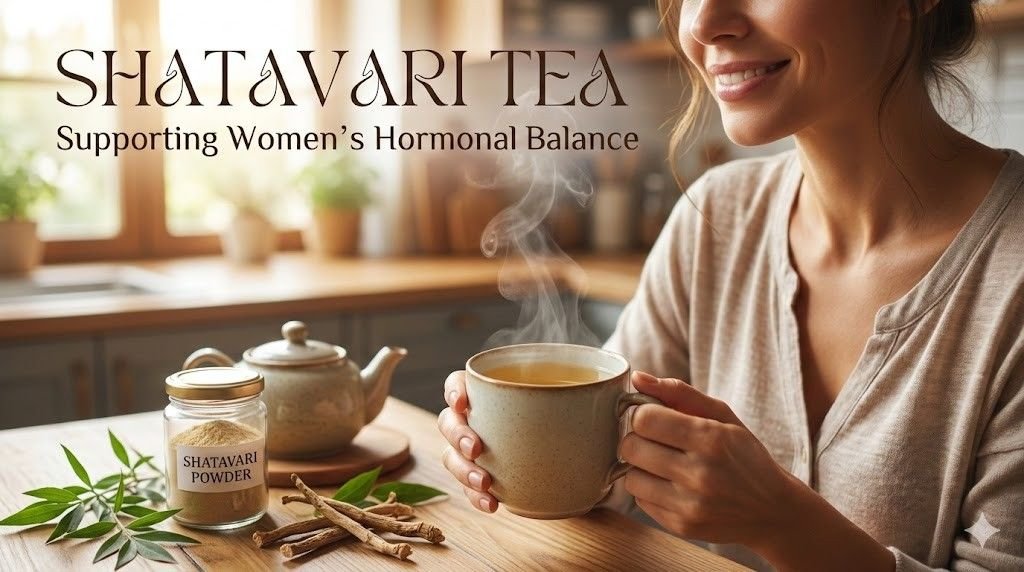
Women’s hormonal health is deeply connected to overall well-being — influencing energy levels, mood, metabolism, reproductive health, skin condition, sleep quality, and emotional balance. Modern lifestyles, stress, irregular eating habits, and environmental factors can disrupt hormonal harmony, leading many women to seek natural, gentle solutions instead of aggressive interventions.
One herbal remedy that has stood the test of time is Shatavari tea, a traditional Ayurvedic tonic specifically revered for supporting women’s health across all life stages. Often called the “Queen of Herbs” in Ayurveda, Shatavari has been used for centuries to nourish reproductive tissues, promote hormonal balance, and restore vitality.
Unlike stimulant-based wellness trends, Shatavari works as an adaptogenic and nourishing herb — helping the body regulate itself naturally. This comprehensive guide explores Shatavari tea in depth, including its history, benefits, preparation, scientific insights, and practical ways to integrate it into daily wellness routines.
What Is Shatavari Tea?
Shatavari tea is an herbal infusion made from the root of Asparagus racemosus, a climbing plant native to India and parts of Asia. The root is dried, powdered, or cut into small pieces and steeped to create a nourishing herbal drink.
The Sanskrit word Shatavari translates to “she who possesses a hundred husbands,” symbolizing vitality, fertility, and feminine strength.
Unlike caffeinated teas, Shatavari tea is naturally caffeine-free and traditionally consumed as a rejuvenating tonic.
Shatavari in Ayurveda: The Feminine Rasayana
In Ayurveda, Shatavari is classified as a Rasayana — a rejuvenating herb that promotes longevity, tissue nourishment, and resilience.
It is particularly known for balancing:
- Pitta dosha (cooling and calming effects)
- Vata dosha (nourishing and grounding qualities)
Ayurvedic practitioners traditionally use Shatavari to support:
- Menstrual health
- Fertility and reproductive wellness
- Lactation support
- Menopause transition
- Emotional balance
Nutritional and Phytochemical Profile
Shatavari contains bioactive compounds that contribute to its hormonal-supportive effects.
Key Compounds
- Steroidal saponins (shatavarins)
- Phytoestrogen-like compounds
- Flavonoids
- Alkaloids
- Antioxidants
Nutritional Elements
- Trace minerals
- Natural plant sugars
- Amino acids
These compounds help nourish endocrine and reproductive systems gently over time.
How Shatavari Tea Supports Hormonal Balance
1. Adaptogenic Stress Support
Stress significantly impacts hormonal health by increasing cortisol levels.
Shatavari acts as an adaptogen, helping the body:
- Regulate stress responses
- Maintain hormonal equilibrium
- Improve emotional resilience
Lower stress often leads to more balanced menstrual cycles and improved mood stability.
2. Supports Menstrual Cycle Balance
Traditionally, Shatavari tea is used to support regular menstrual function.
Potential benefits include:
- Reduced menstrual discomfort
- Improved cycle regularity
- Relief from PMS symptoms
- Hormonal stability
Its cooling nature helps soothe excess internal heat associated with hormonal imbalance.
3. Promotes Fertility and Reproductive Health
Shatavari is considered a uterine tonic in Ayurveda.
It may help:
- Nourish reproductive tissues
- Support ovulatory health
- Improve reproductive vitality
- Enhance natural lubrication
While not a fertility treatment, it supports overall reproductive wellness.
4. Supports Menopause Transition
Hormonal fluctuations during menopause may cause hot flashes, mood changes, and dryness.
Shatavari tea may help:
- Reduce heat-related symptoms
- Support emotional balance
- Maintain hydration and tissue nourishment
- Promote calm sleep patterns
5. Encourages Lactation Support
Traditionally, Shatavari has been used as a galactagogue — an herb believed to support healthy milk production in breastfeeding mothers (under professional guidance).
6. Supports Digestive Health
Hormones and digestion are closely linked.
Shatavari tea may:
- Soothe digestive irritation
- Reduce acidity
- Support gut lining health
- Improve nutrient absorption
7. Enhances Skin Health
Balanced hormones often reflect in skin condition.
Benefits may include:
- Improved hydration
- Reduced hormonal acne
- Enhanced skin glow
- Anti-aging antioxidant support
8. Emotional and Mental Wellness
Shatavari’s calming properties may support:
- Mood stability
- Reduced irritability
- Better emotional resilience
- Nervous system nourishment
9. Supports Energy Without Stimulation
Rather than acting like caffeine, Shatavari builds energy gradually by nourishing body tissues and supporting hormonal balance.
10. Immune System Support
Antioxidants present in Shatavari may help strengthen immune defenses while reducing inflammation.
Scientific Interest in Shatavari
Modern research has explored Shatavari’s potential roles in:
- Hormonal regulation
- Adaptogenic stress response
- Anti-inflammatory activity
- Reproductive health support
- Antioxidant protection
Although more research is ongoing, early findings support traditional uses.
How to Make Shatavari Tea
Basic Shatavari Tea Recipe
Ingredients
- ½ teaspoon Shatavari root powder
- 1 cup hot water
Instructions
- Add Shatavari powder to a cup.
- Pour hot water over it.
- Stir well.
- Steep for 10–15 minutes.
- Strain if desired and drink warm.
Traditional Nourishing Version
For enhanced nourishment:
- Add warm milk (dairy or plant-based)
- Add a pinch of cardamom
- Sweeten lightly with honey or dates
This version is commonly consumed at night.
Taste Profile
Shatavari tea has a:
- Mildly bitter
- Slightly sweet
- Earthy
- Creamy undertone
It is gentler in taste compared to strong detox herbs.
Best Time to Drink Shatavari Tea
| Goal | Best Time |
|---|---|
| Hormonal support | Morning or evening |
| Stress relief | Afternoon |
| Sleep support | Before bedtime |
| Menstrual comfort | Evening |
Consistency is more important than timing.
Who Should Drink Shatavari Tea?
Shatavari tea may benefit:
- Women with hormonal imbalance
- Those experiencing PMS symptoms
- Women entering menopause
- Individuals under chronic stress
- Women seeking natural reproductive support
- Anyone wanting gentle adaptogenic nourishment
Who Should Avoid Shatavari Tea?
Consult a healthcare professional if you:
- Have estrogen-sensitive conditions
- Are pregnant without medical guidance
- Take hormone-related medications
- Have severe digestive disorders
Possible Side Effects
Shatavari is generally well tolerated, but some individuals may experience:
- Mild digestive discomfort
- Allergic reactions (rare)
- Increased mucus production in sensitive individuals
Start with small amounts.
How Much Shatavari Tea Should You Drink?
General recommendations:
- Beginners: 3–4 cups weekly
- Regular support: 1 cup daily
- Therapeutic use: As guided by a practitioner
Shatavari Tea vs Other Women’s Herbal Teas
| Herb | Primary Benefit |
|---|---|
| Shatavari | Hormonal nourishment |
| Red raspberry leaf | Uterine toning |
| Chamomile | Relaxation |
| Peppermint | Digestive relief |
| Ashwagandha | Stress adaptation |
Shatavari stands out for its deep reproductive nourishment.
Daily Routine Ideas
- Morning wellness ritual
- Evening calming drink
- PMS support routine
- Menopause comfort tea
- Post-stress recovery beverage
Conclusion
Shatavari tea embodies Ayurveda’s nurturing approach to health — gentle, restorative, and deeply supportive rather than forceful. By nourishing the reproductive system, calming stress responses, and promoting hormonal equilibrium, it offers a natural pathway toward feminine wellness.
In a world where hormonal imbalance has become increasingly common, Shatavari reminds us that healing often begins with nourishment and consistency. Whether used during reproductive years, periods of stress, or menopause transitions, this ancient herbal tonic provides a steady foundation for balance and vitality.
A daily cup of Shatavari tea is more than a wellness habit — it is a ritual of self-care rooted in centuries of wisdom, supporting harmony from the inside out.
FAQs: Shatavari Tea for Women’s Hormonal Balance
1. What is Shatavari tea?
Shatavari tea is a herbal infusion made from the root of the Shatavari plant (Asparagus racemosus), widely used in Ayurveda to support women’s hormonal and reproductive health.
2. Why is Shatavari called a women’s herb?
In Ayurveda, Shatavari is known as a nourishing tonic for the female reproductive system because it helps balance hormones, support fertility, and promote overall feminine wellness.
3. Can Shatavari tea help balance hormones?
Yes, Shatavari is considered an adaptogenic herb that may help regulate hormonal fluctuations and support endocrine system balance.
4. Is Shatavari tea good for menstrual health?
Many women use Shatavari tea to help reduce menstrual discomfort, support cycle regularity, and ease PMS symptoms.
5. Can Shatavari tea help with menopause symptoms?
Yes, it may help reduce hot flashes, mood swings, dryness, and fatigue associated with menopause.
6. Does Shatavari tea improve fertility?
Traditionally, Shatavari has been used to nourish reproductive tissues and support fertility in women.
7. Can Shatavari tea increase breast milk production?
In Ayurveda, Shatavari is considered a galactagogue, meaning it may support healthy lactation in breastfeeding mothers.
8. When is the best time to drink Shatavari tea?
It can be taken in the morning for nourishment or at night for calming and restorative benefits.
9. Is Shatavari tea safe for daily consumption?
Yes, moderate daily consumption is generally considered safe for healthy adults.
10. Does Shatavari tea contain caffeine?
No, Shatavari tea is naturally caffeine-free.
11. Can Shatavari tea help with stress and anxiety?
Yes, as an adaptogen, it may help the body manage stress and promote emotional balance.
12. How long does Shatavari tea take to show results?
Some benefits may appear within a few weeks, while hormonal balance improvements often develop over 4–8 weeks of consistent use.
13. Can Shatavari tea help with PCOS symptoms?
It may support hormonal balance and stress reduction, which can indirectly help manage PCOS symptoms alongside medical care.
14. Are there any side effects of Shatavari tea?
Most people tolerate it well, but excessive intake may cause mild digestive discomfort in some individuals.
15. Who should avoid Shatavari tea?
People with estrogen-sensitive conditions or known allergies to asparagus-family plants should consult a healthcare provider before use.
16. Can men drink Shatavari tea?
Yes, although traditionally used for women, Shatavari may also support digestion, immunity, and stress balance in men.
17. Should Shatavari tea be taken on an empty stomach?
It can be taken either on an empty stomach or after meals depending on individual digestion.
18. Can Shatavari tea improve skin health?
Yes, hormonal balance and hydration support may contribute to healthier, more radiant skin.
19. Is Shatavari tea safe during pregnancy?
Pregnant individuals should consult a healthcare professional before using Shatavari.
20. How much Shatavari tea should I drink daily?
Typically, 1 cup per day made with about ½ teaspoon of Shatavari powder or root is recommended for regular wellness support.
Also read: