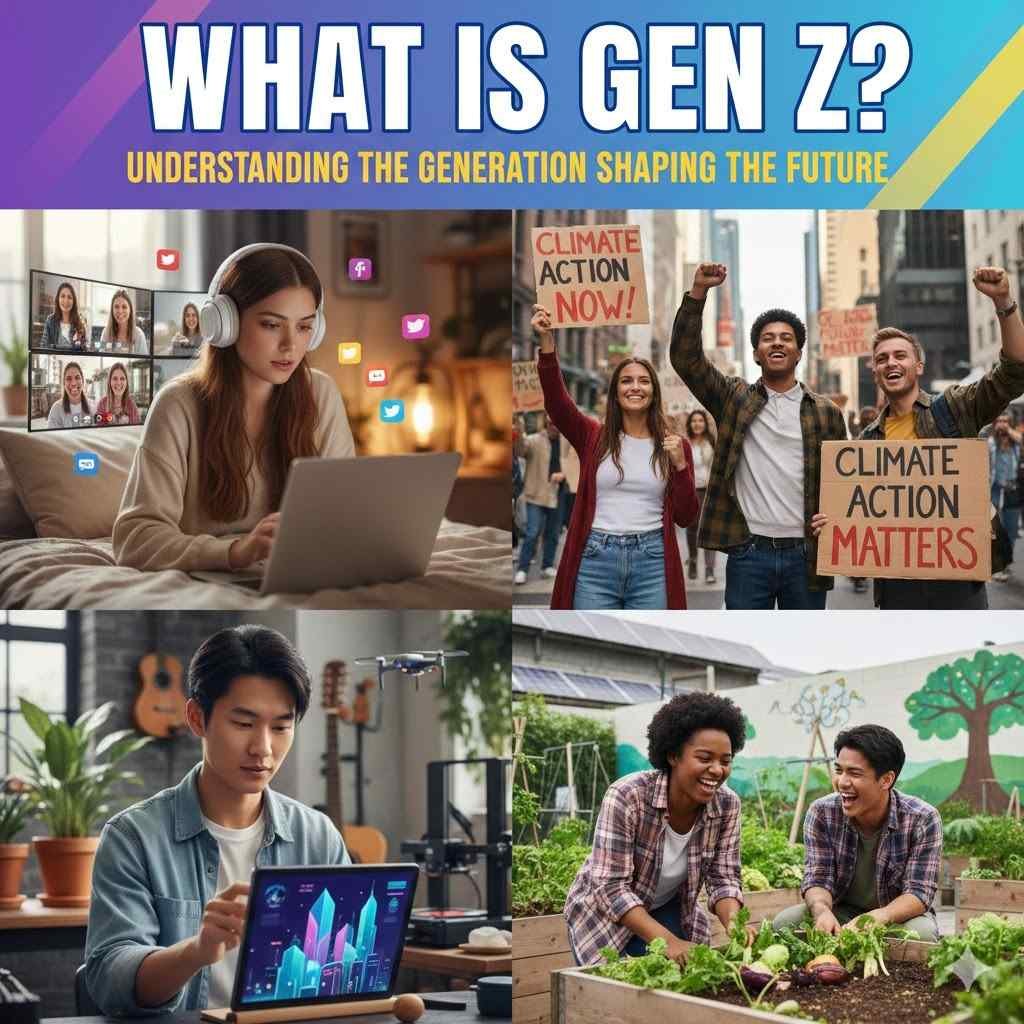
Generation Z, commonly known as Gen Z, represents one of the most influential and transformative generations in modern history. Born roughly between 1997 and 2012, Gen Z has grown up in a world defined by rapid technological change, global connectivity, social media, economic uncertainty, and evolving social values. As the first generation to be truly digital-native, Gen Z is not only adapting to change but actively shaping the future of culture, work, education, politics, and consumption.
From how they communicate and learn to how they shop, eat, and express identity, Gen Z is redefining norms established by previous generations. Understanding who Gen Z is and what defines them is essential for educators, employers, policymakers, marketers, and anyone interested in the future of society.
This in-depth blog explores what Gen Z is, their defining characteristics, values, behaviours, challenges, and the impact they are having on the world.
Who Is Gen Z?
Gen Z refers to people born after Millennials and before Generation Alpha. While birth-year definitions vary slightly, most researchers agree that Gen Z includes individuals born between 1997 and 2012. As of today, Gen Z ranges from teenagers to young adults in their mid-to-late twenties.
What distinguishes Gen Z is not just age, but shared experiences. This generation grew up during:
- The rise of smartphones and social media
- Global economic instability
- Climate change awareness
- Rapid political and social movements
- The COVID-19 pandemic
These formative experiences have shaped Gen Z’s worldview, priorities, and behaviors in powerful ways.
Gen Z as the First True Digital Natives
While Millennials witnessed the rise of the internet, Gen Z was born into it. Smartphones, Wi-Fi, streaming platforms, and social media have always existed in their world.
Technology and Communication
Gen Z communicates primarily through:
- Messaging apps
- Short-form video platforms
- Visual content such as emojis, GIFs, and memes
They favor authenticity and speed over formality. Traditional communication methods like phone calls and emails are often seen as inefficient or intimidating.
Attention and Media Consumption
Gen Z consumes information in short, digestible formats. Platforms such as TikTok, YouTube Shorts, and Instagram Reels dominate their media habits. However, this does not mean Gen Z lacks depth—rather, they prefer efficient, engaging content.
Core Values of Gen Z
1. Authenticity and Transparency
Gen Z values honesty and realness. They are quick to reject brands, leaders, and institutions that appear performative or inauthentic. Transparency is not optional—it is expected.
2. Diversity and Inclusion
This generation is the most diverse in history. Gen Z embraces different cultures, identities, and perspectives, often advocating for equality and representation across race, gender, sexuality, and ability.
3. Social and Environmental Responsibility
Gen Z is deeply concerned about climate change, sustainability, and social justice. They prefer organizations and leaders that align with their values and are willing to take action.
4. Mental Health Awareness
Unlike previous generations, Gen Z openly discusses mental health. Therapy, self-care, emotional intelligence, and work-life balance are normalized and prioritized.
Education and Learning Styles of Gen Z
Gen Z approaches learning differently than past generations.
Digital and Self-Directed Learning
They rely heavily on:
- Online tutorials
- Educational videos
- Learning apps
- Peer-to-peer knowledge sharing
Gen Z values practical skills and real-world application over traditional rote memorization.
Views on Higher Education
While college remains important, Gen Z is more skeptical about student debt and traditional academic paths. Many explore alternatives such as:
- Online certifications
- Trade skills
- Entrepreneurship
- Freelancing
Gen Z in the Workplace
As Gen Z enters the workforce, they are reshaping workplace culture.
What Gen Z Wants at Work
- Purpose-driven roles
- Flexible schedules
- Mental health support
- Opportunities for growth
- Inclusive and respectful environments
They value outcomes over hours and expect employers to support well-being alongside productivity.
Attitude Toward Authority
Gen Z respects leadership that is collaborative and transparent rather than hierarchical. They value mentorship over micromanagement.
Gen Z as Consumers
Gen Z’s buying behavior is driven by values rather than brand loyalty.
Conscious Consumption
Gen Z prefers:
- Ethical sourcing
- Sustainable packaging
- Transparent pricing
- Honest marketing
They research before buying and often rely on peer reviews and social proof.
Influence of Social Media
Social media plays a major role in purchasing decisions. Influencers, user-generated content, and viral trends often shape Gen Z’s preferences more than traditional advertising.
Gen Z and Culture
Fashion and Identity
Gen Z views fashion as a form of self-expression rather than status. Thrifting, customization, and gender-fluid styles are common.
Music, Art, and Entertainment
They embrace diverse genres and global influences. Algorithms and digital platforms have allowed Gen Z to discover niche creators and subcultures.
Humor and Creativity
Gen Z humor is often ironic, self-aware, and meme-driven. Creativity thrives through remix culture and collaborative expression.
Gen Z and Social Activism
Gen Z is politically and socially engaged, often using digital platforms to organize, educate, and advocate.
They support causes related to:
- Climate justice
- Human rights
- Economic equality
- Mental health
This generation believes that awareness must be paired with action.
Challenges Facing Gen Z
Despite their strengths, Gen Z faces significant challenges:
- Rising cost of living
- Student debt and job insecurity
- Mental health struggles
- Climate anxiety
- Information overload
These challenges have shaped Gen Z into a generation that is pragmatic, adaptable, and resilient.
How Gen Z Differs from Millennials
While often compared to Millennials, Gen Z is more:
- Financially cautious
- Individualistic
- Realistic rather than idealistic
- Focused on stability
They value independence and are less interested in traditional markers of success.
The Global Impact of Gen Z
Gen Z’s influence extends beyond national borders. Through social media and digital communities, Gen Z has created a global culture that transcends geography.
They are shaping trends in:
- Technology
- Education
- Work culture
- Sustainability
- Entertainment
As they gain economic and political power, their impact will only grow.
The Future of Gen Z
Looking ahead, Gen Z is expected to continue driving change through innovation, advocacy, and creativity. Their ability to adapt to uncertainty, embrace diversity, and leverage technology positions them as a powerful force for transformation.
Rather than following traditional paths, Gen Z is building new systems that prioritize balance, purpose, and inclusion.
Conclusion
Gen Z is more than just a demographic label—it is a generation defined by resilience, awareness, and intentionality. Growing up in a rapidly changing world has made Gen Z thoughtful, values-driven, and future-focused.
By understanding what Gen Z is and what they stand for, we gain insight into the direction society is heading. Whether in business, education, culture, or global issues, Gen Z is not waiting for the future—they are actively creating it.
Frequently Asked Questions (FAQ)
1. What does Gen Z stand for?
Gen Z stands for Generation Z, the demographic group born roughly between 1997 and 2012. They come after Millennials and before Generation Alpha.
2. What age group is Gen Z?
As of today, Gen Z ranges from early teenagers to people in their mid-to-late twenties, depending on the exact birth-year definition used.
3. What are Gen Z known for?
Gen Z is known for being digital-native, socially conscious, diverse, and highly aware of mental health, sustainability, and global issues.
4. How is Gen Z different from Millennials?
Compared to Millennials, Gen Z is more financially cautious, prefers short-form content, values stability, and is more skeptical of institutions and traditional career paths.
5. What are Gen Z core values?
Gen Z values authenticity, diversity and inclusion, social and environmental responsibility, transparency, and mental well-being.
6. How does Gen Z use social media?
Gen Z uses social media primarily for communication, entertainment, education, and shopping. Platforms like TikTok, Instagram, and YouTube are especially popular.
7. What does Gen Z want from work?
Gen Z seeks purpose-driven jobs, flexible work arrangements, mental health support, fair pay, and opportunities for learning and growth.
8. Is Gen Z politically active?
Yes. Gen Z is highly engaged in social and political issues, often using digital platforms to raise awareness, advocate for change, and participate in activism.
9. How does Gen Z influence consumer trends?
Gen Z influences trends through social media, viral content, and value-based purchasing. Brands that align with their ethics and authenticity gain their trust.
10. Why is Gen Z important for the future?
Gen Z will shape the future workforce, economy, culture, and politics. Their values-driven mindset and adaptability position them as a powerful force for long-term change.
Also Read :