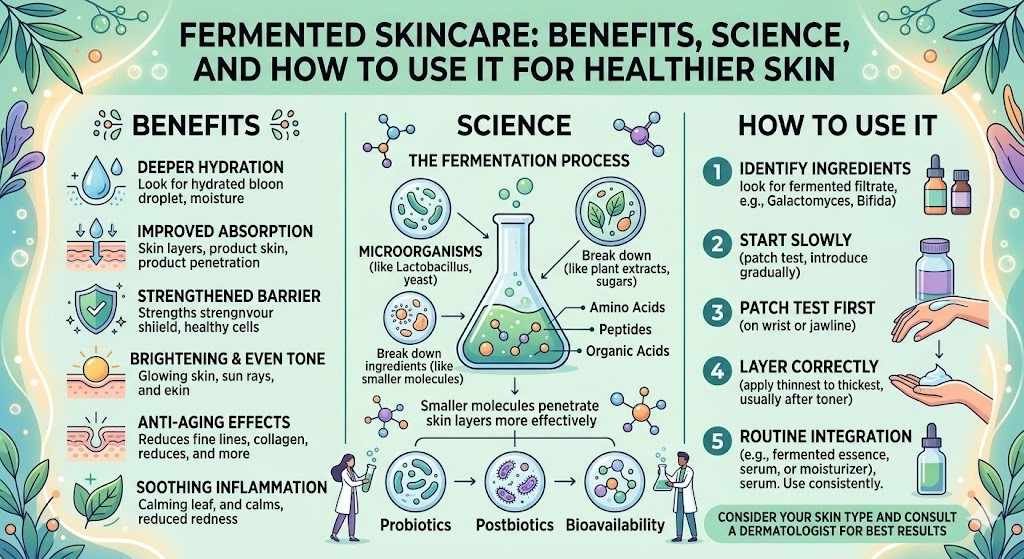
Fermented skincare has quickly become one of the most exciting innovations in the beauty industry. Inspired by traditional Korean beauty rituals and supported by modern skincare science, fermented ingredients are now found in toners, serums, essences, and creams across many skincare brands.
Advocates claim that fermented skincare products can improve hydration, enhance ingredient absorption, strengthen the skin barrier, and even provide anti-aging benefits. But what exactly is fermented skincare? How does fermentation benefit the skin, and how should you use these products in your routine?
This comprehensive guide explores what fermented skincare is, the science behind it, its benefits, potential risks, and how to incorporate it into your skincare routine.
What Is Fermented Skincare?
Fermented skincare refers to beauty products made with ingredients that have undergone fermentation, a natural process where microorganisms like yeast or bacteria break down substances into smaller molecules.
This process is similar to how foods like yogurt, kimchi, and kombucha are made.
In skincare, fermentation helps transform raw ingredients into more potent and easily absorbable compounds that can benefit the skin.
Common fermented skincare ingredients include:
- Fermented rice
- Fermented soy
- Fermented tea
- Fermented yeast
- Fermented plant extracts
Fermentation can enhance the effectiveness of skincare ingredients by increasing their nutrient concentration and bioavailability.
The History of Fermented Skincare
Fermentation has been used in beauty practices for centuries, particularly in East Asian cultures.
For example, Japanese sake brewers historically noticed that their hands looked youthful and smooth despite their age. Researchers later discovered that fermented rice and yeast contained powerful skin-conditioning compounds.
These discoveries inspired modern fermented skincare formulas, which are now widely used in Korean and Japanese beauty products.
Today, fermented ingredients are popular worldwide due to their ability to support hydration, skin barrier repair, and anti-aging effects.
How Fermentation Improves Skincare Ingredients
Fermentation changes the structure of skincare ingredients in several ways.
1. Smaller Molecules
During fermentation, large molecules break down into smaller ones, allowing them to penetrate the skin more easily.
2. Increased Nutrients
Fermentation increases levels of beneficial compounds such as:
- Amino acids
- Vitamins
- Antioxidants
- Organic acids
These nutrients support overall skin health.
3. Enhanced Antioxidant Activity
Fermented ingredients often contain higher concentrations of antioxidants that protect skin from environmental stressors.
4. Improved Absorption
Because fermented compounds are smaller and more bioavailable, the skin can absorb them more effectively.
Key Benefits of Fermented Skincare
Fermented skincare products offer multiple benefits for different skin types.
1. Improves Skin Hydration
One of the biggest benefits of fermented skincare is enhanced hydration.
Fermented ingredients help the skin retain moisture and strengthen the skin barrier, which prevents water loss.
Hydrated skin appears:
- Softer
- Smoother
- More radiant
2. Strengthens the Skin Barrier
The skin barrier protects against pollutants, bacteria, and moisture loss.
Fermented ingredients contain probiotics and amino acids that help support the skin’s natural barrier function.
A stronger barrier means healthier, more resilient skin.
3. Boosts Skin Radiance
Many fermented ingredients help brighten dull skin.
They improve cell turnover and support healthy skin renewal, leading to a more radiant complexion.
4. Provides Anti-Aging Benefits
Fermented skincare ingredients often contain antioxidants and peptides that help reduce signs of aging.
Regular use may help improve:
- Fine lines
- Wrinkles
- Skin elasticity
These compounds help support collagen production and protect the skin from free radical damage.
5. Enhances Product Absorption
Fermentation breaks down ingredients into smaller particles that penetrate deeper into the skin.
This means fermented skincare products may work more effectively than non-fermented ones.
6. Helps Balance the Skin Microbiome
The skin microbiome refers to the community of microorganisms living on the skin.
Fermented skincare products may support a balanced microbiome, helping maintain healthy skin.
7. Soothes Sensitive Skin
Many fermented ingredients have calming properties that can help reduce redness and irritation.
This makes fermented skincare suitable for people with sensitive or reactive skin.
Popular Fermented Ingredients in Skincare
Several fermented ingredients are commonly used in skincare formulations.
Fermented Rice Extract
Fermented rice is rich in vitamins, amino acids, and antioxidants.
Benefits include:
- Skin brightening
- Hydration
- Improved texture
Galactomyces Ferment Filtrate
This ingredient comes from fermented yeast and is widely used in Korean skincare.
Benefits include:
- Oil control
- Brightening
- Improved skin clarity
Fermented Green Tea
Fermented green tea contains powerful antioxidants that help protect the skin from environmental damage.
It also provides soothing and anti-aging benefits.
Bifida Ferment Lysate
This probiotic ingredient helps repair the skin barrier and reduce sensitivity.
It is often used in anti-aging and repairing skincare products.
Lactobacillus Ferment
Lactobacillus is a probiotic bacteria commonly used in fermented skincare.
It helps support the skin microbiome and maintain healthy skin balance.
Who Should Use Fermented Skincare?
Fermented skincare can benefit many skin types.
Best for:
- Dry skin
- Dull skin
- Aging skin
- Sensitive skin
- Uneven skin texture
Because fermented ingredients are gentle, they work well for people looking to strengthen their skin barrier.
Who Should Be Careful with Fermented Skincare?
Although fermented skincare is generally safe, some people may need caution.
Possible concerns:
- People with fungal acne may react to certain fermented ingredients
- Some individuals may experience irritation from yeast extracts
- Highly sensitive skin may require patch testing
Always perform a patch test before introducing new products.
How to Use Fermented Skincare in Your Routine
Fermented ingredients are commonly found in essences, toners, serums, and moisturizers.
Here’s how to include them in your routine.
Step-by-Step Fermented Skincare Routine
Step 1: Cleanse
Start with a gentle cleanser to remove dirt and impurities.
Clean skin allows fermented ingredients to absorb properly.
Step 2: Toner
Apply a hydrating toner to prepare your skin.
This step helps balance the skin’s pH level.
Step 3: Fermented Essence
Essences often contain high concentrations of fermented ingredients.
Gently pat the product into the skin to improve absorption.
Step 4: Serum
Follow with a targeted serum that may contain fermented extracts along with other active ingredients.
Step 5: Moisturizer
Seal in hydration with a moisturizer.
This step helps maintain skin barrier protection.
Step 6: Sunscreen (Morning Routine)
Always apply sunscreen during the day to protect your skin from UV damage.
Fermented Skincare vs Probiotic Skincare
Although related, fermented skincare and probiotic skincare are slightly different.
| Feature | Fermented Skincare | Probiotic Skincare |
|---|---|---|
| Source | Fermented ingredients | Live beneficial bacteria |
| Main benefit | Nutrient-rich extracts | Skin microbiome balance |
| Stability | More stable | Often requires special formulation |
Both approaches aim to improve skin health through microbiome support.
Potential Side Effects of Fermented Skincare
Fermented skincare is generally well tolerated, but some people may experience mild reactions.
Possible side effects include:
- Skin irritation
- Breakouts
- Allergic reactions
These issues are uncommon but can occur depending on the formulation.
Tips for Choosing Fermented Skincare Products
When selecting fermented skincare products, consider the following factors:
Check the Ingredient List
Look for fermented ingredients listed near the top.
Avoid Excess Fragrance
Fragrance can irritate sensitive skin.
Look for Reputable Brands
Quality fermentation processes produce better skincare results.
Future of Fermented Skincare
The fermented skincare trend continues to grow as researchers explore new fermentation techniques.
Emerging innovations include:
- Microbiome-friendly skincare
- Precision fermentation ingredients
- Advanced probiotic formulations
These developments could lead to even more effective skincare products in the future.
Conclusion
Fermented skincare represents a fascinating blend of traditional beauty wisdom and modern science.
Through the process of fermentation, skincare ingredients become more potent, easier for the skin to absorb, and rich in beneficial nutrients.
From improved hydration and barrier support to anti-aging benefits and enhanced skin radiance, fermented skincare offers multiple advantages for those seeking healthier skin.
While not every fermented product will work for everyone, incorporating carefully formulated fermented skincare products into your routine may help improve overall skin health and appearance.
FAQs
1. What is fermented skincare?
Fermented skincare uses ingredients that have been fermented using microorganisms, which helps break down compounds into smaller, more absorbable molecules.
2. Is fermented skincare good for sensitive skin?
Yes, many fermented ingredients help soothe and strengthen the skin barrier, making them suitable for sensitive skin.
3. What are the benefits of fermented skincare?
Benefits include improved hydration, better ingredient absorption, stronger skin barrier, enhanced glow, and potential anti-aging effects.
4. Can fermented skincare help acne?
Some fermented ingredients contain antimicrobial compounds that may help reduce acne and balance the skin microbiome.
5. Is fermented skincare safe for daily use?
Most fermented skincare products are gentle enough to be used daily, depending on the formulation.
6. What is the difference between fermented skincare and probiotic skincare?
Fermented skincare contains fermented extracts, while probiotic skincare may contain live beneficial bacteria to support the skin microbiome.
7. Can fermented skincare brighten the skin?
Yes, many fermented ingredients support skin renewal and help improve overall skin radiance.
8. How long does fermented skincare take to show results?
Hydration improvements may appear within days, while visible skin texture and brightness improvements may take several weeks.
9. Is fermented skincare better than regular skincare?
Fermented skincare can be more effective for some people because the fermentation process breaks ingredients into smaller molecules, making them easier for the skin to absorb. It may also increase the concentration of beneficial nutrients.
10. Can fermented skincare help with dull skin?
Yes. Fermented ingredients often contain antioxidants and amino acids that promote healthy skin renewal, which may help brighten dull skin and improve overall radiance.
11. Is fermented skincare suitable for oily skin?
Yes, fermented skincare products can work well for oily skin. Some fermented ingredients help regulate oil production and improve skin balance without clogging pores.
Also read :