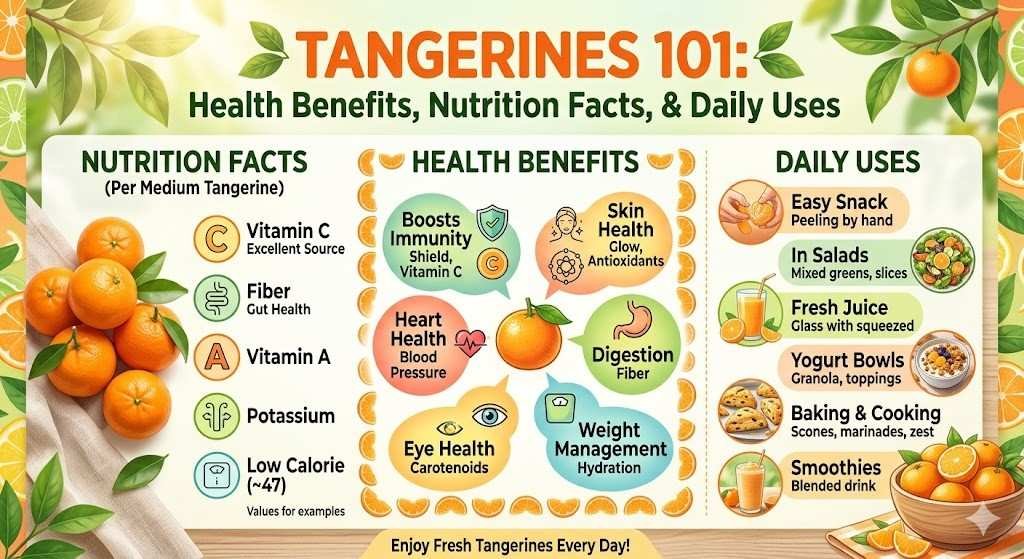
Tangerines are one of the most loved citrus fruits in the world because they are sweet, easy to peel, refreshing, and packed with nutrients. Often confused with mandarins and oranges, tangerines have their own unique taste, aroma, and nutritional profile that make them special. Whether eaten fresh, added to salads, blended into juices, or used in desserts, tangerines are both delicious and highly beneficial for health.
This complete guide explores everything about tangerines—from nutrition and health benefits to uses, storage tips, and why they are considered one of the healthiest fruits for all age groups.
What Are Tangerines?
Tangerine are a small citrus fruit belonging to the mandarin family. They are smaller than regular oranges, have thinner skin, and are much easier to peel. Their flavor is sweeter and less acidic than many other citrus fruits, which makes them highly popular among children and adults alike.
The fruit originally gained popularity through trade routes connected to Tangier, which is why the name “tangerine” developed.
Tangerines usually have:
- Bright orange skin
- Soft, juicy segments
- Sweet and mild flavor
- Few seeds depending on variety
- Easy-to-remove peel
They are available mainly during winter and early spring, making them a seasonal favorite.
Nutritional Value of Tangerines
Tangerines are low in calories but rich in essential nutrients.
Nutrition in One Medium Tangerine
- Calories: 45–50
- Carbohydrates: 12 grams
- Fiber: 2 grams
- Protein: 1 gram
- Fat: 0 grams
- Vitamin C: 25–30% daily requirement
- Vitamin A: 8% daily requirement
- Folate: 4% daily requirement
- Potassium: 130 mg
- Calcium: Small amount
- Magnesium: Small amount
This nutrient profile makes tangerines ideal for healthy snacking.
Health Benefits of Tangerines
1. Strengthens Immunity
Tangerines are rich in vitamin C, which supports the immune system and helps the body fight infections.
Regular intake may help:
- Reduce cold symptoms
- Improve immune defense
- Protect against seasonal infections
Vitamin C also supports white blood cell production.
2. Supports Healthy Skin
Vitamin C helps produce collagen, which improves skin elasticity and reduces signs of aging.
Tangerines may help:
- Brighten skin naturally
- Reduce dullness
- Support collagen formation
- Protect against free radical damage
The antioxidants in tangerines help keep skin youthful.
3. Helps Digestion
Fiber in tangerines improves digestion and supports bowel regularity.
Benefits include:
- Better gut movement
- Reduced constipation
- Improved nutrient absorption
Eating whole tangerines is better than juice because fiber remains intact.
4. Good for Heart Health
Potassium and antioxidants in tangerines support heart health.
They may help:
- Balance blood pressure
- Improve circulation
- Reduce oxidative stress
Citrus compounds may support healthy cholesterol levels.
5. Supports Weight Management
Tangerines are naturally low in calories and satisfy sweet cravings.
Why they help:
- Low calorie snack
- High water content
- Fiber creates fullness
- Naturally sweet without added sugar
They are ideal for healthy diet plans.
6. Rich in Antioxidants
Tangerines contain flavonoids and carotenoids that help protect cells.
These antioxidants may:
- Reduce inflammation
- Protect against cell damage
- Support long-term health
Natural plant compounds in citrus fruits are important for disease prevention.
7. Supports Eye Health
Vitamin A and carotenoids help maintain healthy vision.
Regular consumption may support:
- Eye tissue health
- Better night vision
- Protection from oxidative stress
8. Helps Hydration
Tangerines contain high water content.
They help:
- Refresh the body
- Support hydration
- Provide electrolytes naturally
This makes them excellent during warm weather.
Tangerines vs Oranges
Orange and tangerines are related but different.
Tangerines:
- Smaller
- Sweeter
- Easy peel
- Softer segments
Oranges:
- Larger
- Slightly more acidic
- Thicker peel
- Firmer flesh
Many people prefer tangerines for convenience.
Tangerines vs Mandarins
Mandarin orange is the broader category.
Important fact:
- All tangerines are mandarins
- Not all mandarins are tangerines
Tangerines usually have deeper orange-red skin.
Tangerines vs Clementines
| Feature | Tangerine | Clementine |
|---|---|---|
| Size | Slightly larger | Smaller |
| Taste | Sweet with slight tang | Sweeter and milder |
| Seeds | May contain seeds | Usually seedless |
| Peel | Loose and easy to peel | Very thin and smooth peel |
| Juiciness | More juicy | Slightly less juicy |
| Best For | Strong citrus flavor lovers | Easy snack for kids |
✅ In short: Tangerines are juicier and tangier, while clementines are sweeter and seedless
Popular Types of Tangerines
Different varieties exist worldwide.
Common Types
- Clementines
- Honey Tangerines
- Dancy Tangerines
- Sunburst Tangerines
- Murcott Tangerines
Clementine is especially popular because it is seedless and very sweet.
Best Time to Eat Tangerines
Tangerines can be eaten at many times of day.
Best times include:
- Morning breakfast
- Midday snack
- Before workouts
- After meals
Avoid excessive intake late at night if acidity affects digestion.
Are Tangerines Good for Children?
Yes, tangerines are excellent for children because they are:
- Easy to chew
- Naturally sweet
- Rich in vitamin C
- Hydrating
Always remove seeds for younger children.
Are Tangerines Good for Older Adults?
Yes, they support healthy aging because they provide:
- Antioxidants
- Easy digestion
- Soft texture
- Hydration support
Tangerines for Women
Tangerines can support women’s health in many ways.
Benefits include:
- Skin health support
- Iron absorption due to vitamin C
- Hydration
- Low calorie fruit option
Tangerines for Men
Men also benefit because tangerines help:
- Support recovery
- Improve antioxidant intake
- Promote heart health
Can Diabetics Eat Tangerines?
People with diabetes can usually eat tangerines in moderation.
Benefits:
- Moderate glycemic load
- Fiber slows sugar absorption
Recommended:
- Whole fruit instead of juice
- Controlled portions
Always follow medical advice for specific conditions.
Can Tangerines Help in Weight Loss?
Yes.
Why:
- Low calorie
- Sweet taste controls cravings
- Fiber helps fullness
They are ideal instead of processed snacks.
Tangerine Juice Benefits
Fresh tangerine juice offers:
- Vitamin C
- Fast hydration
- Natural flavor
But whole fruit is healthier because fiber remains present.
Tangerine Peel Benefits
The peel also contains nutrients.
Uses include:
- Tea infusion
- Zest in cooking
- Natural fragrance
Peel contains citrus oils and antioxidants.
Ways to Eat Tangerines
Tangerines are versatile.
Fresh Uses
- Eat raw
- Add to salads
- Fruit bowls
- Lunchbox snack
Cooking Uses
- Desserts
- Cakes
- Smoothies
- Yogurt topping
Tangerines in Salads
Tangerines add sweetness to salads.
Good combinations:
- Spinach
- Nuts
- Cheese
- Pomegranate
Tangerines in Desserts
They work well in:
- Fruit cakes
- Citrus tarts
- Sorbet
- Frozen yogurt
Tangerines in Smoothies
Blend with:
- Banana
- Yogurt
- Mango
- Carrot
Smoothies become naturally sweet.
How to Select Good Tangerines
Choose fruits that are:
- Bright orange
- Slightly soft
- Heavy for size
- Free from mold
Avoid fruits with dry skin or dark spots.
How to Store Tangerines
Storage tips:
- Room temperature for a few days
- Refrigerate for longer freshness
In refrigerator they may last 1–2 weeks.
Are Tangerines Seasonal?
Yes.
Best season:
- Winter
- Early spring
Fresh seasonal fruit usually tastes sweeter.
Can You Eat Tangerines Daily?
Yes, moderate daily intake is healthy.
Recommended:
- 1–2 tangerines daily
Too much citrus may cause acidity in sensitive individuals.
Possible Side Effects of Too Many Tangerines
Excessive intake may cause:
- Acidity
- Stomach discomfort
- Tooth enamel sensitivity
Moderation is best.
Tangerines and Skin Glow
Because of vitamin C and antioxidants, tangerines are often linked to glowing skin.
They help:
- Fight dullness
- Support collagen
- Hydrate skin internally
Tangerines and Immunity in Winter
Tangerines are especially popular in winter because they help maintain vitamin intake during cold season.
Why Tangerines Are Popular Worldwide
Tangerines are loved globally because they are:
- Easy to carry
- Easy to peel
- Naturally sweet
- Family-friendly
Major producers include countries such as China, Spain, and India.
Tangerines in Traditional Food Culture
In many cultures, citrus fruits symbolize freshness, luck, and prosperity.
In several Asian traditions, mandarins and tangerines are offered during celebrations.
Conclusion
Tangerines are one of the best fruits for daily nutrition because they combine taste, convenience, and health benefits in one small fruit. Their vitamin C content, fiber, antioxidants, and refreshing flavor make them ideal for children, adults, and older people alike.
Whether eaten fresh, added to meals, or used in recipes, tangerines are a simple way to improve daily nutrition naturally.
Adding tangerines to your routine can support immunity, digestion, skin health, and hydration—all while satisfying sweet cravings in a healthy way.
FAQs About Tangerines
1.Are tangerines healthier than oranges?
Both are healthy, but tangerines are usually sweeter and easier to peel.
2. Can I eat tangerines every day?
Yes, 1–2 daily is generally healthy.
3.Are tangerines good for skin?
Yes, vitamin C supports collagen and skin brightness.
4.Do tangerines help weight loss?
Yes, they are low calorie and filling.
5.Can children eat tangerines daily?
Yes, in moderate portions.
6.Is tangerine juice healthy?
Fresh juice is healthy, but whole fruit provides more fiber.
7.Are tangerines acidic?
They are mildly acidic but less than many oranges.
8.What is the best season for tangerines?
Winter is the best season.
9.Can diabetics eat tangerines?
Usually yes, in moderation.
10.Are tangerines seedless?
Some varieties are seedless, especially clementines
Also read :
Top 10 Bananas Benefits for Health, Skin, and Daily Nutrition