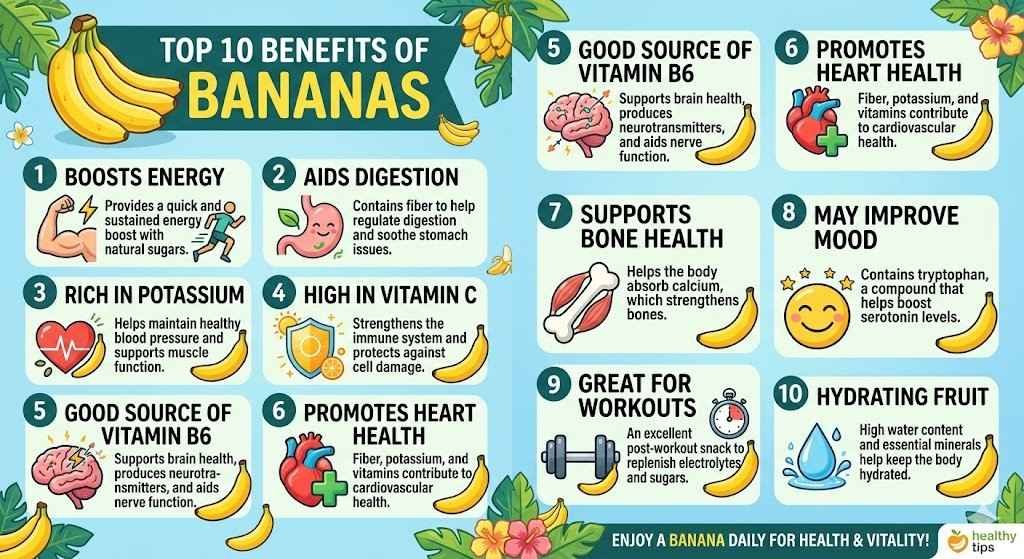
Banana is one of the most widely eaten fruits in the world. It is affordable, naturally sweet, easy to carry, and packed with nutrients that support energy, digestion, and overall health. Found in homes, schools, gyms, and markets across the globe, bananas have become a daily food for millions of people.
This yellow fruit is loved by children and adults because it is soft, filling, and versatile. It can be eaten raw, blended into smoothies, baked into desserts, sliced over cereals, or added to healthy snacks. Bananas are available almost all year and come in many varieties, from small sweet bananas to larger cooking bananas.
Beyond convenience, bananas provide potassium, fiber, vitamins, and antioxidants that support heart health, digestion, muscle recovery, and sustained energy. In this complete guide, you will learn everything about bananas—their nutritional profile, health benefits, uses, varieties, possible side effects, and why they remain one of the most important fruits worldwide.
What Are Bananas?
Bananas grow on large herb-like plants rather than trees. They belong to the genus Musa and are cultivated in tropical and subtropical regions worldwide.
Although many people think bananas are a single fruit type, there are hundreds of banana varieties grown globally.
The most common types include:
- Dessert bananas
- Plantains
- Red bananas
- Small sweet bananas
- Green bananas
Bananas are consumed at different ripeness stages depending on taste and cooking use.
Nutritional Value of Bananas
A medium banana contains approximately:
- Calories: 105
- Carbohydrates: 27 grams
- Fiber: 3 grams
- Protein: 1.3 grams
- Fat: 0.3 grams
- Potassium: 422 mg
- Vitamin B6
- Vitamin C
- Magnesium
- Manganese
Bananas provide natural sugar combined with fiber, which gives steady energy.
Why Bananas Are So Popular Worldwide
Bananas have global popularity because they are:
- Easy to eat without preparation
- Affordable in many countries
- Naturally sweet
- Portable
- Available year-round
- Gentle on digestion
Their convenience makes them one of the most frequently purchased fruits worldwide.
Top 10 Health Benefits of Bananas
1. Excellent Natural Energy Source
Bananas contain natural carbohydrates that quickly provide usable energy.
This is why athletes often eat bananas before or after exercise.
The fruit gives:
- Fast glucose release
- Moderate sustained energy
- Easy digestion
Bananas are ideal before workouts, school, travel, or busy mornings.
2. Rich in Potassium for Heart Health
Potassium is one of the most important nutrients in bananas.
Potassium helps:
- Maintain normal blood pressure
- Support heart rhythm
- Balance body fluids
- Reduce sodium effects
A potassium-rich diet supports cardiovascular health.
3. Supports Digestion Naturally
Bananas contain soluble fiber that supports digestion.
Benefits include:
- Improved bowel regularity
- Softer stool movement
- Reduced digestive discomfort
Ripe bananas are often easy for sensitive stomachs.
4. May Help Prevent Muscle Cramps
Because bananas contain potassium and magnesium, they are often linked to muscle support.
Athletes commonly use bananas because minerals help muscle function.
5. Gentle on the Stomach
Bananas are often recommended during stomach discomfort because they are soft and easy to digest.
They are commonly included in simple diets during recovery.
6. Supports Healthy Gut Bacteria
Bananas contain prebiotic fibers that feed beneficial gut bacteria.
This may improve digestive balance over time.
7. Helps Maintain Steady Energy
Unlike sugary snacks that cause rapid spikes, bananas provide more stable energy because fiber slows sugar absorption.
8. Supports Brain Function
Vitamin B6 in bananas supports neurotransmitter production.
This nutrient helps:
- Mood balance
- Cognitive function
- Nervous system support
9. May Help Reduce Hunger
Bananas are filling because of fiber and natural carbohydrate density.
They work well as a snack between meals.
10. Supports Kidney Health
Potassium supports fluid balance, which contributes to kidney function in healthy individuals.
People with kidney restrictions should manage potassium intake carefully.
Banana Benefits for Men
Bananas may help men because they support:
- Workout energy
- Muscle recovery
- Heart health
- Sustained stamina
Many physically active men include bananas daily.
Banana Benefits for Women
Women often benefit from bananas because they support:
- Energy levels
- Digestive comfort
- Potassium intake
- Convenient healthy snacking
Bananas are often useful during busy schedules.
Banana for Skin Health
Bananas support skin because they contain:
- Vitamin C
- Antioxidants
- Water
Some people use mashed banana in homemade face masks.
Potential benefits include:
- Temporary softness
- Moisture support
Banana for Hair Care
Bananas are also used in home hair treatments.
Mashed banana may help temporarily soften hair texture.
Nutrients support overall body nutrition, which indirectly supports healthy hair.
Are Bananas Good for Weight Loss?
Bananas can support weight management when eaten in balanced portions.
Why bananas help:
- Filling fiber
- Portable healthy snack
- Replaces processed sweets
Portion matters because bananas contain natural sugars.
Are Bananas Good for Weight Gain?
Bananas can also support weight gain when paired with calorie-rich foods such as:
- Milk
- Peanut butter
- Oats
Banana smoothies are common for healthy calorie increase.
Best Time to Eat Bananas
Bananas can be eaten:
- Morning
- Before workouts
- Midday snack
- Post-exercise
Many people enjoy bananas at breakfast for energy.
Can You Eat Bananas Daily?
Yes, one banana daily fits well into a healthy diet for most people.
Moderation and variety remain important.
Ripe vs Green Bananas
Ripe bananas:
- Sweeter
- Softer
- Easier digestion
Green bananas:
- More resistant starch
- Lower sweetness
- Often cooked
Green bananas may support slower digestion.
Banana Varieties Around the World
Different banana varieties include:
- Cavendish
- Red bananas
- Baby bananas
- Plantains
Each has slightly different taste and use.
Plantains vs Bananas
Plantain is related to banana but usually cooked.
Plantains are:
- Less sweet
- Firmer
- Common in savory dishes
Banana in Sports Nutrition
Bananas are a classic sports snack because they provide:
- Carbohydrates
- Potassium
- Easy digestion
Many athletes prefer bananas over processed snacks.
Banana for Children
Bananas are often one of the first fruits given to babies because they are soft and easy to mash.
Benefits:
- Gentle texture
- Natural sweetness
- Easy swallowing
Banana in Breakfast Meals
Popular breakfast uses:
- Banana with oats
- Banana smoothie
- Banana pancakes
- Banana yogurt bowl
Banana Smoothie Benefits
Banana smoothies provide:
- Fast energy
- Creamy texture
- Easy nutrient combinations
Common ingredients:
- Milk
- Oats
- Nuts
Banana in Baking
Bananas are widely used in baking because they add sweetness naturally.
Popular recipes:
- Banana bread
- Muffins
- Pancakes
Banana and Blood Sugar
Bananas contain natural sugar, but fiber slows absorption.
Riper bananas usually raise blood sugar faster than greener bananas.
People managing sugar should monitor portions.
Possible Side Effects of Eating Too Many Bananas
Too many bananas may cause:
- Excess calorie intake
- Digestive heaviness
- High potassium intake in sensitive individuals
Moderation matters.
Who Should Eat Bananas Carefully?
People with:
- Severe kidney disease
- Potassium restrictions
Should follow medical advice.
How to Choose Good Bananas
Choose bananas with:
- Bright peel
- Few dark spots
- Firm texture
Spotty bananas are sweeter.
How to Store Bananas
- Keep at room temperature
- Separate bunches to slow ripening
- Refrigerate when ripe
Fun Facts About Bananas
- Bananas are technically berries
- They float in water
- Hundreds of varieties exist
- Bananas are one of the most traded fruits globally
Why Bananas Matter in Global Food Security
Bananas are important because they are affordable and widely available in many developing regions.
They contribute significantly to daily calorie intake worldwide.
Conclusion
Bananas remain one of the most valuable fruits because they combine convenience, taste, affordability, and nutrition. They support energy, digestion, heart health, and active lifestyles while fitting easily into daily meals.
Whether eaten fresh, blended, baked, or sliced into breakfast bowls, bananas continue to be one of the smartest fruit choices for people of all ages.
Adding bananas regularly can support simple, affordable, everyday wellness
FAQs About Bananas
1. Are bananas healthy to eat every day?
Yes, bananas are nutritious and can be eaten daily in moderation, providing potassium, fiber, and vitamins.
2. Can bananas help with digestion?
Yes, bananas contain soluble fiber which supports smooth digestion and bowel regularity.
3. Are bananas good for energy?
Absolutely. Bananas are rich in natural carbohydrates and sugars, making them an excellent pre- or post-workout snack.
4. Do bananas help with muscle cramps?
Yes, the potassium and magnesium in bananas can help prevent or reduce muscle cramps.
5. Are green bananas healthier than ripe bananas?
Green bananas contain more resistant starch, which is beneficial for gut health and may help regulate blood sugar.
6. Can bananas help with weight loss?
Yes, bananas are filling due to their fiber content and can replace high-calorie snacks in a balanced diet.
7. Are bananas good for heart health?
Yes, potassium in bananas helps maintain healthy blood pressure and supports cardiovascular health.
8. Can bananas improve skin health?
Vitamin C and antioxidants in bananas may support collagen production and skin hydration.
9. Are bananas safe for children?
Yes, bananas are soft, naturally sweet, and easy to digest, making them ideal for children.
10. Can eating too many bananas be harmful?
Excessive consumption may cause digestive issues or high potassium intake in sensitive individuals, so moderation is important.
11. Which banana variety is the most popular?
The Cavendish banana is the most commonly consumed variety worldwide.
12. Can bananas help with nausea or morning sickness?
Yes, bananas are gentle on the stomach and can help reduce nausea in pregnancy or upset stomachs.
13. Are bananas gluten-free?
Yes, bananas are naturally gluten-free and safe for people with celiac disease or gluten sensitivity.
14. Can bananas help lower blood pressure?
Potassium-rich bananas may help lower blood pressure and support heart health.
15. How should bananas be stored?
Store at room temperature until ripe. Once ripe, they can be refrigerated to extend freshness.
16. Can bananas be frozen?
Yes, peeled bananas can be frozen for smoothies, baking, or desserts.
17. Are bananas good for athletes?
Yes, they provide quick energy, electrolytes, and minerals that support performance and recovery.
18. Do bananas contain protein?
Yes, bananas contain small amounts of protein (around 1.3 grams per medium banana).
19. Are bananas acidic?
Bananas are low in acid, making them gentle on the stomach and safe for people with mild acid reflux.
20. Can bananas help improve mood?
Bananas contain vitamin B6, which helps produce neurotransmitters like serotonin, potentially supporting mood.
Also read :