Sapodilla is one of the most underrated tropical fruits in the world, yet it offers a delicious caramel-like flavor, rich nutrition, and multiple health benefits. Known for its brown rough skin and soft grainy flesh, sapodilla has long been popular in tropical countries where it is enjoyed fresh, blended into drinks, or added to desserts. This naturally sweet fruit is not only satisfying but also loaded with fiber, antioxidants, vitamins, and minerals that support digestion, immunity, and overall wellness.
In recent years, sapodilla has gained more attention because people are searching for natural fruits that offer sweetness without processed sugar. Its pleasant taste makes it popular among both children and adults, while its nutritional profile makes it attractive for health-conscious consumers. Whether you know it as chikoo, sapota, or sapodilla, this fruit deserves a place in a balanced diet.
What Is Sapodilla?
Sapodilla is a tropical fruit native to southern Mexico, Central America, and the Caribbean, but today it is widely grown in India, Thailand, the Philippines, and many tropical regions around the world.

The fruit is oval or round with rough brown skin and soft brownish flesh inside. It contains several shiny black seeds and has a unique sweet taste often compared to pear mixed with caramel or brown sugar.
Sapodilla trees are evergreen and can produce fruit for many years. The fruit is harvested when mature and allowed to ripen until soft before eating.
Nutritional Value of Sapodilla
Sapodilla contains many nutrients that contribute to good health.
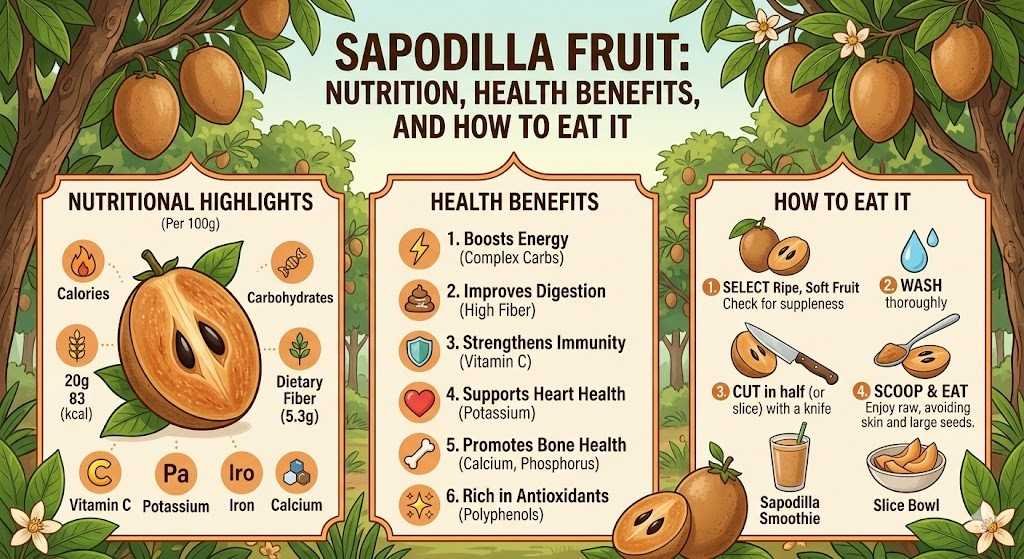
Per 100 grams of sapodilla contains approximately:
- Calories: 83
- Carbohydrates: 20 g
- Fiber: 5 g
- Protein: 0.4 g
- Fat: 1.1 g
- Vitamin C
- Vitamin A
- Potassium
- Calcium
- Iron
- Magnesium
Its natural sugars provide quick energy, making it useful as a healthy snack.
Health Benefits of Sapodilla
1. Supports Digestive Health
Sapodilla is rich in dietary fiber, which improves bowel movement and helps prevent constipation.
Fiber also supports beneficial gut bacteria and promotes smoother digestion. People who often experience digestive discomfort may benefit from moderate sapodilla intake.
2. Provides Natural Energy
Because sapodilla contains natural fructose and sucrose, it quickly supplies energy to the body.
This makes it ideal for:
- Athletes
- Growing children
- People recovering from fatigue
- Busy adults needing quick energy
3. Strengthens Immunity
Vitamin C and antioxidants in sapodilla help strengthen the immune system.
These nutrients protect the body against infections and reduce oxidative stress caused by free radicals.
4. Promotes Healthy Skin
Sapodilla contains antioxidants that help protect skin cells from damage.
Benefits for skin include:
- Improved skin texture
- Reduced dryness
- Better collagen support
- Slower visible aging
Regular fruit intake may contribute to naturally healthy skin.
5. Good for Bone Strength
Sapodilla provides minerals such as calcium, phosphorus, and iron that support bone development and maintenance.
These minerals are especially important for:
- Children
- Women
- Older adults
6. Supports Heart Health
Potassium in sapodilla helps regulate blood pressure by balancing sodium levels.
Fiber may also help support healthy cholesterol levels when combined with an overall balanced diet.
7. Helps Reduce Stress
Sapodilla contains natural compounds that may calm nerves and reduce tension.
Many people enjoy sapodilla as an evening fruit because of its soothing sweetness.
8. Rich in Antioxidants
Sapodilla contains polyphenols and antioxidants that help protect body cells.
Antioxidants may help reduce long-term inflammation and support healthy aging.
9. Supports Healthy Pregnancy
Pregnant women often benefit from fruits rich in energy and minerals.
Sapodilla may help:
- Reduce weakness
- Support digestion
- Provide natural nutrients
However, it should always be eaten in moderation.
10. Helps Maintain Weight When Controlled
Although sweet, sapodilla can fit into a balanced diet when portion size is controlled.
Fiber helps increase fullness, reducing unnecessary snacking.
Sapodilla for Men
Sapodilla may support male health through:
- Quick energy for active lifestyles
- Potassium for muscle function
- Antioxidants for cell protection
- Natural carbohydrates for stamina
Men who exercise regularly may use sapodilla as a natural energy fruit.
Sapodilla for Women
Women may benefit from sapodilla because of:
- Iron support
- Skin-friendly antioxidants
- Fiber for digestion
- Mineral support for bones
Its sweetness also helps satisfy sugar cravings naturally.
Sapodilla for Children
Soft ripe sapodilla is easy for children to eat.
Benefits include:
- Natural energy
- Digestive fiber
- Mild sweetness without processed sugar
Seeds must always be removed carefully before serving.
Why Sapodilla Is Called Chikoo in India
Discuss regional names:
- Chikoo in India
- Sapota in some Asian regions
- Naseberry in Caribbean regions
This helps capture regional keyword searches.
Sapodilla and Modern Healthy Eating
Explain why health-conscious readers now choose sapodilla:
- Natural sweetness instead of processed sugar
- Fiber support
- Easy snack option
How to Eat Sapodilla
Sapodilla is best eaten when fully ripe and soft.
Common ways:
- Eat fresh with spoon
- Blend into smoothies
- Add to fruit salads
- Make milkshakes
- Use in desserts

How to Know Sapodilla Is Ripe
A ripe sapodilla should:
- Feel slightly soft
- Have dull brown skin
- Not release sticky sap when cut
Unripe fruit contains latex and tastes unpleasant.
Sapodilla in Different Countries
Sapodilla is called by many names worldwide:
- Chikoo in India
- Sapota in some Asian regions
- Naseberry in Caribbean areas
It remains a highly valued tropical fruit in local markets.
Sapodilla Farming and Cultivation
Sapodilla grows best in warm climates.
Ideal growing conditions:
- Tropical temperature
- Well-drained soil
- Full sunlight
- Moderate watering
Trees are drought-tolerant once established.
How to Grow Sapodilla Step by Step
Step 1: Select healthy seeds or grafted plants
Choose fresh seeds or nursery-grown plants.
Step 2: Prepare soil
Use well-drained fertile soil.
Step 3: Plant in sunny area
Sapodilla needs strong sunlight.
Step 4: Water regularly early on
Young plants need regular watering.
Step 5: Add organic compost
This improves fruit production.
Step 6: Prune branches occasionally
This helps tree shape and fruit quality.
Step 7: Wait patiently
Fruit production may take several years.
Possible Side Effects of Sapodilla
Sapodilla is generally safe but excess intake may cause:
- High sugar intake
- Mild digestive heaviness
- Discomfort if eaten unripe
Unripe fruit should be avoided because of latex content.
Sapodilla vs Other Tropical Fruits
| Fruit | Taste | Fiber | Energy |
|---|---|---|---|
| Sapodilla | Sweet caramel | High | High |
| Mango | Sweet juicy | Medium | Medium |
| Banana | Sweet soft | Medium | High |
| Papaya | Mild sweet | High | Medium |
Sapodilla stands out for its unique sugar-rich taste.
Why Sapodilla Is Becoming Popular Globally
Global fruit markets now value unique tropical fruits.
Sapodilla is gaining popularity because:
- Natural sweetness
- Exotic flavor
- Health benefits
- Easy use in smoothies and desserts
Consumers increasingly seek fruits beyond common options.
Best Time to Eat Sapodilla
Ideal times include:
- Mid-morning
- Afternoon snack
- Before exercise
Avoid overeating late at night if digestion is sensitive.
Sapodilla in Smoothies and Desserts
Sapodilla blends well with:
- Milk
- Yogurt
- Banana
- Dates
It also works well in:
- Ice cream
- Custard
- Fruit cream
Storage Tips
To store sapodilla:
- Keep unripe fruit at room temperature
- Refrigerate ripe fruit
- Consume within 2–3 days after ripening
Conclusion
Sapodilla is a naturally sweet tropical fruit that offers more than flavor alone. Its fiber, minerals, antioxidants, and energy content make it valuable for digestion, immunity, skin health, and overall wellness. Whether eaten fresh, blended into drinks, or used in desserts, sapodilla easily fits into a healthy lifestyle.
As global interest in tropical fruits continues to rise, sapodilla is becoming recognized as a delicious and nutritious fruit worth adding to regular diets.
FAQs
1.Is sapodilla good for daily eating?
Yes, moderate daily intake is generally safe.
2.Can diabetic people eat sapodilla?
Only in controlled portions because it contains natural sugars.
3.Is sapodilla good for digestion?
Yes, fiber supports healthy digestion.
4.Can children eat sapodilla?
Yes, remove seeds first.
5.Is sapodilla good for skin?
Its antioxidants may support skin health.
6.Does sapodilla increase energy?
Yes, natural sugars provide quick energy.
7.Can sapodilla help with constipation?
Fiber may improve bowel movement.
8.Is sapodilla better eaten ripe?
Yes, ripe fruit is safest and tastiest.
9.What is sapodilla called in India?
Chikoo
10.Are sapodilla and chikoo the same?
Yes, sapodilla and chikoo are the same fruit
Also read:
Cloudberries: The Rare Arctic Superfruit with Powerful Health Benefits