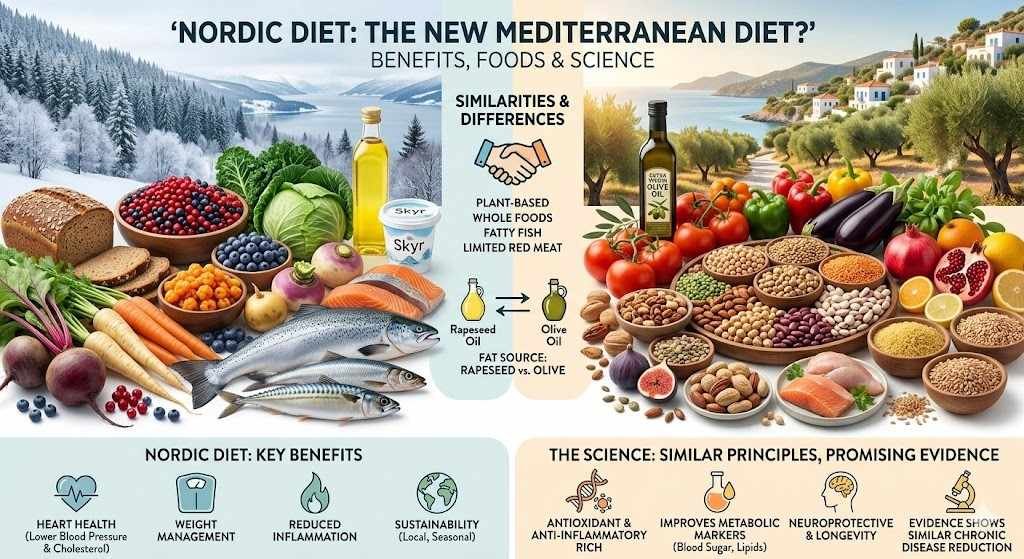
For years, the Mediterranean Diet has been considered the gold standard for healthy eating. Rich in olive oil, fresh vegetables, fish, and whole grains, it has earned global praise for promoting heart health and longevity.
But recently, another dietary pattern has been gaining attention—one rooted not in sunny coastal regions, but in the colder climates of Northern Europe. Enter the Nordic Diet, often dubbed the “New Mediterranean Diet.”
So, is the Nordic diet truly comparable to its Mediterranean counterpart? Does it offer similar—or even better—health benefits? And most importantly, is it worth adopting in your daily life?
In this comprehensive guide, we’ll explore everything you need to know about the Nordic diet, including its principles, foods, benefits, scientific evidence, and how it compares to the Mediterranean diet.
What Is the Nordic Diet?
The Nordic diet is based on traditional eating habits from Scandinavian countries like:
- Denmark
- Sweden
- Norway
- Finland
- Iceland
It emphasizes local, seasonal, and sustainable foods that thrive in cold climates.
Core Principles
- Eat locally sourced foods
- Focus on seasonal produce
- Choose whole, minimally processed ingredients
- Include more plant-based foods
- Reduce food waste
- Prefer sustainable seafood
Key Foods in the Nordic Diet
1. Whole Grains
Unlike the Mediterranean diet, which favors wheat, the Nordic diet focuses on:
- Rye
- Barley
- Oats
These grains are rich in fiber and help regulate blood sugar levels.
2. Fatty Fish
Cold-water fish are a staple, including:
- Salmon
- Mackerel
- Herring
These fish are packed with omega-3 fatty acids, essential for heart and brain health.
3. Root Vegetables
Due to harsh climates, root vegetables dominate:
- Carrots
- Potatoes
- Beets
- Turnips
They are nutrient-dense, affordable, and long-lasting.
4. Berries
Nordic countries are famous for wild berries:
- Blueberries
- Lingonberries
- Cloudberries
These berries are rich in antioxidants and support immune health.
5. Healthy Fats
Instead of olive oil, the Nordic diet uses:
- Rapeseed oil (canola oil)
- Nuts and seeds
These provide essential fatty acids and support heart health.
How the Nordic Diet Works
The Nordic diet is less about strict rules and more about a lifestyle approach.
Key Guidelines
- Fill half your plate with vegetables
- Eat fish 2–3 times per week
- Replace refined grains with whole grains
- Limit processed foods and sugar
- Choose organic and local products when possible
Health Benefits of the Nordic Diet
1. Heart Health
Like the Mediterranean diet, the Nordic diet supports cardiovascular health by:
- Lowering bad cholesterol (LDL)
- Improving blood pressure
- Reducing inflammation
2. Weight Management
The diet is naturally high in fiber and low in processed foods, which helps:
- Control appetite
- Reduce calorie intake
- Support sustainable weight loss
3. Improved Gut Health
Whole grains, vegetables, and fermented foods promote a healthy gut microbiome.
4. Better Blood Sugar Control
Low-glycemic foods like oats and rye help stabilize blood sugar levels.
5. Environmental Sustainability
One of the biggest advantages of the Nordic diet is its focus on sustainability:
- Locally sourced foods reduce carbon footprint
- Seasonal eating supports eco-friendly agriculture
- Reduced meat consumption benefits the environment
Scientific Evidence: What Research Says
Several studies have shown promising results:
- Improved cholesterol levels
- Reduced inflammation markers
- Better insulin sensitivity
In many cases, the Nordic diet performs similarly to the Mediterranean Diet, especially in terms of heart health.
Nordic Diet vs Mediterranean Diet
Similarities
- Emphasis on whole foods
- High intake of fruits and vegetables
- Healthy fats
- Limited processed foods
Differences
| Feature | Nordic Diet | Mediterranean Diet |
|---|---|---|
| Main Oil | Canola oil | Olive oil |
| Grains | Rye, barley, oats | Wheat |
| Fruits | Berries | Citrus fruits |
| Climate | Cold regions | Warm regions |
Sample 1-Day Nordic Diet Meal Plan
Breakfast
- Oatmeal with berries and nuts
Snack
- Apple with seeds
Lunch
- Rye bread sandwich with smoked salmon and greens
Snack
- Yogurt with berries
Dinner
- Grilled fish with roasted root vegetables
Who Should Try the Nordic Diet?
- People looking for a heart-healthy diet
- Those interested in sustainable eating
- Individuals wanting a balanced, non-restrictive plan
- Anyone bored with traditional diet plans
Potential Downsides
1. Limited Availability
Some Nordic foods like lingonberries may not be easily available worldwide.
2. Taste Adaptation
The flavor profile may take time to adjust to.
3. Not a Quick-Fix Diet
This is a long-term lifestyle, not a rapid weight-loss plan.
Is the Nordic Diet Better Than the Mediterranean Diet?
Not necessarily better—but equally effective.
The key difference lies in regional adaptation. If you live in Northern Europe, the Nordic diet may be more practical. In warmer regions, the Mediterranean diet might be easier to follow.
How to Start the Nordic Diet Anywhere
Even if you don’t live in Scandinavia, you can follow the principles:
- Use local seasonal produce
- Replace refined grains with whole grains
- Eat more fish
- Include berries or local fruits
- Reduce processed food
Common Myths About the Nordic Diet
Myth 1: It’s Only for Scandinavians
Reality: Anyone can adapt it using local foods.
Myth 2: It’s Expensive
Reality: Seasonal and local foods can actually be cost-effective.
Myth 3: It’s Just Another Trend
Reality: It’s based on traditional eating patterns, not a fad.
Final Verdict: The New Mediterranean Diet?
The Nordic diet is not just a trend—it’s a scientifically supported, sustainable, and balanced way of eating.
So, is it the “new Mediterranean diet”?
Yes—and no.
- Yes, because it offers similar health benefits
- No, because it’s not a replacement—just an alternative
Both diets are excellent choices. The best one depends on your lifestyle, location, and food preferences.
Conclusion
The Nordic diet proves that healthy eating doesn’t have to come from a single region or culture. By focusing on local, seasonal, and whole foods, it offers a flexible and sustainable approach to nutrition.
Whether you choose the Nordic diet, the Mediterranean diet, or a blend of both, the ultimate goal remains the same: eat real food, stay balanced, and prioritize long-term health.
FAQs
1.What is the Nordic diet?
A diet based on traditional Scandinavian foods focusing on whole, seasonal, and local ingredients.
2.Is the Nordic diet healthy?
Yes, it supports heart health, weight management, and overall wellness.
3.How is it different from the Mediterranean diet?
It uses different regional foods but shares similar health principles.
4.Can it help with weight loss?
Yes, due to high fiber and low processed food intake.
5.Is it vegetarian-friendly?
It can be adapted, though it traditionally includes fish.
6.What oil is used in the Nordic diet?
Rapeseed (canola) oil.
7.Are berries important in this diet?
Yes, they are a key source of antioxidants.
8.Is it expensive?
Not necessarily—local foods can reduce costs.
9.Can I follow it in India?
Yes, by using local seasonal foods and similar principles.
10.Is it better than other diets?
It’s one of the healthiest options but depends on personal preference.
Also read :