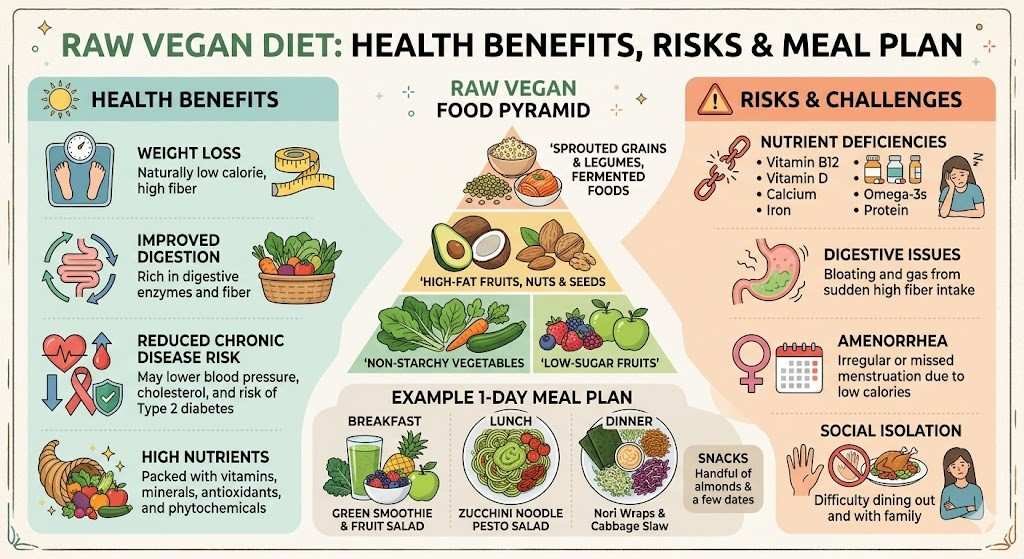
The raw vegan diet has surged in popularity among health enthusiasts, influencers, and those seeking a more “natural” way of eating. Promising benefits like increased energy, glowing skin, weight loss, and detoxification, it’s often portrayed as one of the cleanest diets you can follow.
But is it truly a nutritional powerhouse—or a restrictive trend with hidden risks?
In this comprehensive guide, we’ll break down everything you need to know about the raw vegan diet: what it is, how it works, its benefits, potential dangers, and whether it’s a sustainable lifestyle choice.
What Is a Raw Vegan Diet?
A raw vegan diet is a plant-based eating pattern that excludes all animal products and avoids cooking food above a certain temperature—typically around 40–48°C (104–118°F).
Core Principles
- 100% plant-based (no meat, dairy, eggs, or honey)
- No cooked foods (or minimal heating)
- Focus on whole, unprocessed ingredients
- Emphasis on fresh fruits, vegetables, nuts, and seeds
Foods You Can Eat
- Fresh fruits (bananas, apples, berries, mangoes)
- Raw vegetables (spinach, kale, carrots, cucumbers)
- Nuts and seeds (almonds, chia seeds, sunflower seeds)
- Sprouted grains and legumes
- Cold-pressed oils (olive oil, coconut oil)
- Dried fruits (in moderation)
- Raw plant-based milk (almond, cashew)
Foods You Avoid
- Meat, poultry, fish
- Dairy products
- Eggs
- Cooked grains and legumes
- Processed foods
- Refined sugar
- Caffeine and alcohol (often excluded)
Why Do People Follow a Raw Vegan Diet?
People choose this diet for a variety of reasons:
- Health improvement
- Weight loss
- Ethical concerns about animal welfare
- Environmental sustainability
- Belief in natural healing
Some followers also believe that cooking destroys essential nutrients and enzymes, making raw foods more beneficial.
Claimed Benefits of a Raw Vegan Diet
1. High Nutrient Intake
Raw vegan diets are rich in vitamins, minerals, antioxidants, and fiber due to high consumption of fruits and vegetables.
2. Weight Loss
This diet is naturally low in calories and high in fiber, which can promote satiety and reduce overall calorie intake.
3. Improved Digestion
Fiber-rich foods support gut health and regular bowel movements.
4. Better Skin Health
Many followers report clearer skin, possibly due to hydration and nutrient-dense foods.
5. Increased Energy Levels
Eliminating processed foods and sugar spikes may lead to more stable energy levels.
What Does Science Say?
While some benefits are real, others are exaggerated.
Nutrient Density: True (to an extent)
Raw fruits and vegetables are indeed nutrient-rich. However, some nutrients become more bioavailable when cooked—like lycopene in tomatoes and beta-carotene in carrots.
Enzymes Argument: Misleading
The body produces its own digestive enzymes. Dietary enzymes from raw foods are not essential for digestion.
Weight Loss: Supported
Most people lose weight due to reduced calorie intake—not because the food is raw.
Health Benefits Backed by Evidence
1. Improved Heart Health
A raw vegan diet may help lower:
- LDL (bad cholesterol)
- Blood pressure
- Risk of heart disease
2. Better Blood Sugar Control
High fiber intake can stabilize blood sugar levels, which may benefit people with insulin resistance.
3. Reduced Inflammation
Plant-based foods are rich in anti-inflammatory compounds.
Risks of a Raw Vegan Diet
While the diet has benefits, it also comes with significant risks if not carefully planned.
1. Nutrient Deficiencies
This is the biggest concern.
Common deficiencies include:
- Vitamin B12
- Vitamin D
- Iron
- Calcium
- Zinc
- Omega-3 fatty acids
- Protein
Vitamin B12 is especially critical, as it is not found in plant foods and must be supplemented.
2. Low Protein Intake
Without proper planning, protein intake can be insufficient, leading to:
- Muscle loss
- Weakness
- Fatigue
3. Bone Health Issues
Low intake of calcium and vitamin D may increase the risk of weak bones and fractures.
4. Digestive Problems
Excess fiber can cause:
- Bloating
- Gas
- Digestive discomfort
5. Hormonal Imbalance
Extremely low-calorie intake may disrupt hormones, especially in women, potentially affecting menstrual cycles.
6. Difficulty Maintaining Long-Term
The diet is highly restrictive, making it challenging to sustain socially and practically.
Raw Vegan Diet vs Traditional Vegan Diet
| Aspect | Raw Vegan Diet | Vegan Diet |
|---|---|---|
| Cooking | Not allowed | Allowed |
| Flexibility | Low | High |
| Nutritional Risk | Higher | Moderate |
| Sustainability | Difficult | Easier |
Sample 1-Day Raw Vegan Meal Plan
Breakfast
- Smoothie with banana, spinach, berries, and almond milk
Snack
- Apple with soaked almonds
Lunch
- Zucchini noodles with avocado pesto
Snack
- Carrot sticks with raw hummus
Dinner
- Large salad with mixed greens, nuts, seeds, and olive oil dressing
Dessert
- Date and cocoa energy balls
Tips for Following a Raw Vegan Diet Safely
1. Supplement Wisely
- Vitamin B12 (essential)
- Vitamin D
- Omega-3 (algae-based)
2. Eat Enough Calories
Don’t undereat—include calorie-dense foods like nuts, seeds, and avocados.
3. Include Variety
Diverse foods help cover nutrient needs.
4. Monitor Your Health
Regular blood tests can help detect deficiencies early.
5. Consider a Balanced Approach
Some people follow a “high-raw” diet (70–80% raw) instead of going 100% raw.
Who Should Avoid This Diet?
- Pregnant or breastfeeding women
- Children and teenagers
- Elderly individuals
- People with medical conditions
- Athletes with high protein needs
Common Myths About Raw Vegan Diet
Myth 1: Cooking Destroys All Nutrients
Reality: Some nutrients are enhanced by cooking.
Myth 2: Raw Diet Detoxes the Body
Reality: The liver and kidneys already detoxify your body.
Myth 3: You Don’t Need Supplements
Reality: Vitamin B12 supplementation is essential.
Is the Raw Vegan Diet Sustainable?
For most people, the answer is no—at least not in its strictest form.
While it offers short-term benefits like weight loss and improved eating habits, long-term adherence can be challenging and nutritionally risky.
A more sustainable approach is:
- A balanced vegan diet
- Or a partially raw (high-raw) lifestyle
Final Verdict: Benefits vs Risks
Benefits
- High in fiber and antioxidants
- Promotes weight loss
- Supports heart health
- Encourages clean eating
Risks
- Nutrient deficiencies
- Low protein intake
- Bone health concerns
- Hard to sustain long-term
Conclusion
The raw vegan diet sits at the intersection of health, philosophy, and lifestyle. While it can offer real benefits—especially when it comes to increasing whole, plant-based food intake—it also comes with serious risks if followed strictly without proper planning.
Rather than viewing it as an all-or-nothing approach, many experts recommend incorporating raw foods into a balanced diet instead of completely eliminating cooked foods.
Ultimately, the best diet is one that is nutritionally complete, sustainable, and suited to your individual needs.
FAQs
1.What is a raw vegan diet?
A diet that includes only plant-based foods that are uncooked or minimally heated.
2.Can you lose weight on a raw vegan diet?
Yes, mainly due to low calorie intake and high fiber.
3.Is the raw vegan diet healthy?
It can be, but only if properly planned to avoid deficiencies.
4.Do raw vegans need supplements?
Yes, especially vitamin B12.
5.Can you build muscle on a raw vegan diet?
It’s possible but challenging due to lower protein intake.
6.Is cooking really harmful?
No, cooking can actually improve nutrient absorption for some foods.
7.What are the biggest risks?
Nutrient deficiencies, especially B12, iron, and calcium.
8.Is it better than a regular vegan diet?
Not necessarily—a balanced vegan diet is generally more sustainable.
9.Can beginners try this diet?
Yes, but starting with a partially raw approach is recommended.
10.How long can you stay on a raw vegan diet?
Short-term is easier; long-term requires careful planning and monitoring.
Also read :