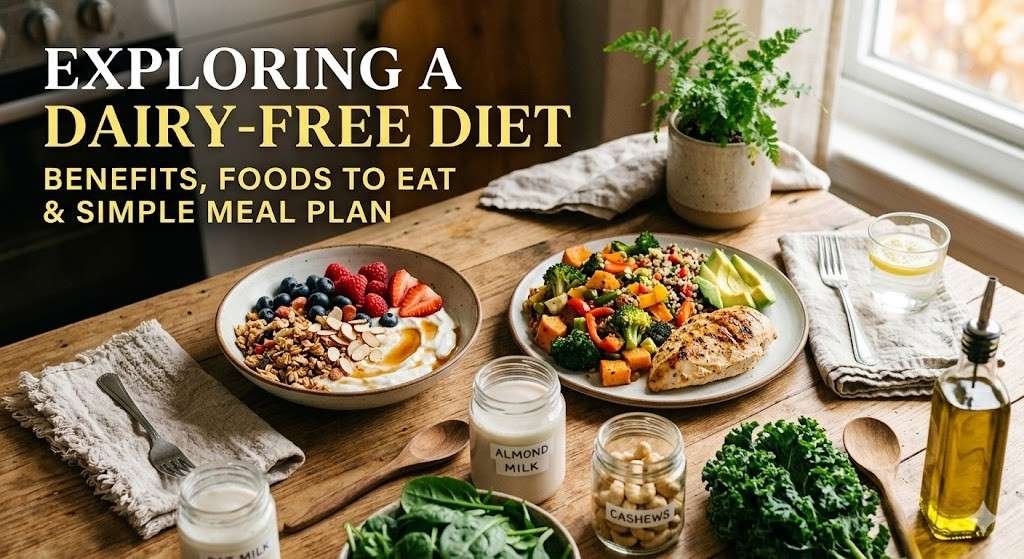
A dairy-free diet has become increasingly popular—not only for people with lactose intolerance or milk allergies but also for those seeking better digestion, clearer skin, and a healthier lifestyle. Eliminating dairy products such as milk, cheese, butter, and yogurt may seem difficult at first, but with the wide variety of dairy-free alternatives available today, it has never been easier.
Whether you’re considering going dairy-free for health reasons, ethical choices, or dietary preferences, this guide will explain everything you need to know—from the benefits of a dairy-free diet to the foods you can enjoy and a practical meal plan to get started.
What Is a Dairy-Free Diet?
A dairy-free diet excludes all products made from animal milk, especially cow’s milk. This means avoiding foods such as:
- Milk
- Cheese
- Butter
- Cream
- Yogurt
- Ice cream
- Whey and casein
People often confuse a dairy-free diet with a vegan diet, but they are different. A dairy-free diet removes milk products but may still include meat, eggs, and other animal products. A vegan diet, on the other hand, excludes all animal-derived foods.
Following a dairy-free diet requires reading labels carefully because dairy ingredients can be hidden in processed foods like breads, sauces, soups, and snacks.
Why Do People Choose a Dairy-Free Diet?
There are several reasons why someone may adopt a dairy-free lifestyle.
1. Lactose Intolerance
One of the most common reasons is lactose intolerance, where the body lacks enough lactase enzyme to digest lactose, the sugar found in milk. This can cause:
- Bloating
- Gas
- Diarrhea
- Stomach cramps
Removing dairy often relieves these symptoms quickly.
2. Milk Allergy
Unlike lactose intolerance, a milk allergy involves the immune system reacting to milk proteins like casein or whey. Symptoms may include:
- Hives
- Swelling
- Digestive issues
- Breathing problems
A strict dairy-free diet is essential for people with milk allergies.
3. Better Digestion
Some people notice improved digestion and reduced bloating after removing dairy, even if they do not have a diagnosed intolerance.
4. Skin Improvements
Some studies suggest that dairy may contribute to acne in sensitive individuals. Going dairy-free may help improve skin clarity.
5. Ethical or Lifestyle Reasons
Some people avoid dairy for environmental, ethical, or personal reasons, choosing plant-based alternatives instead.
Benefits of a Dairy-Free Diet
Switching to a dairy-free diet can provide several health benefits.
Improved Digestion
For people sensitive to dairy, eliminating it can reduce:
- Bloating
- Gas
- Indigestion
- Stomach discomfort
Many people report feeling lighter and less sluggish after removing dairy products.
Reduced Inflammation
Some individuals experience inflammation due to dairy sensitivity. A dairy-free diet may help reduce:
- Joint discomfort
- Skin irritation
- Digestive inflammation
Better Skin Health
Dairy may trigger acne in some individuals by affecting hormone levels. Removing dairy may help reduce breakouts and improve skin texture.
Increased Variety in Food Choices
Adopting a dairy-free diet often encourages eating more:
- Fruits
- Vegetables
- Nuts
- Seeds
- Whole grains
This can improve overall diet quality.
Encourages Cleaner Eating
Since dairy is often found in processed foods, avoiding it can naturally reduce intake of highly processed items.
Foods to Avoid on a Dairy-Free Diet
To successfully follow a dairy-free diet, you need to avoid all dairy-based products.
Main Dairy Foods to Avoid
- Cow’s milk
- Goat’s milk
- Cheese
- Butter
- Yogurt
- Cream
- Ice cream
- Condensed milk
- Sour cream
Hidden Dairy Ingredients
Watch labels for ingredients such as:
- Whey
- Casein
- Lactose
- Milk solids
- Milk powder
- Curds
- Ghee
These ingredients are commonly found in:
- Packaged snacks
- Chocolate
- Salad dressings
- Instant soups
- Protein powders
Reading labels is essential.
Foods You Can Eat on a Dairy-Free Diet
The good news is that there are plenty of delicious dairy-free foods.
Dairy-Free Milk Alternatives
- Almond milk
- Soy milk
- Oat milk
- Coconut milk
- Rice milk
These can replace regular milk in cereals, coffee, smoothies, and baking.
Dairy-Free Protein Sources
- Eggs
- Chicken
- Fish
- Lentils
- Beans
- Tofu
- Tempeh
- Nuts
These help maintain adequate protein intake.
Healthy Dairy-Free Fats
- Avocados
- Olive oil
- Coconut oil
- Nuts
- Seeds
- Nut butters
These provide essential fatty acids and support satiety.
Dairy-Free Calcium Sources
Without dairy, calcium is still available from:
- Leafy greens
- Almonds
- Chia seeds
- Tofu
- Fortified plant milks
- Sesame seeds
This is important for bone health.
Nutrients to Watch on a Dairy-Free Diet
While a dairy-free diet can be healthy, some nutrients need special attention.
Calcium
Dairy is a major calcium source, so replace it with:
- Fortified almond milk
- Kale
- Broccoli
- Tofu
- Sesame seeds
Vitamin D
Vitamin D supports calcium absorption. Dairy-free sources include:
- Sunlight exposure
- Fortified plant milk
- Fatty fish
- Supplements if needed
Protein
If dairy was a major protein source, include enough:
- Eggs
- Fish
- Chicken
- Beans
- Lentils
Vitamin B12
If your dairy-free diet is also plant-based, ensure adequate B12 from fortified foods or supplements.
Sample Dairy-Free Meal Plan
Here is a simple one-day dairy-free meal plan:
Breakfast
Oatmeal with Almond Milk and Fruit
- Rolled oats
- Almond milk
- Banana
- Berries
- Chia seeds
A fiber-rich breakfast with calcium from fortified almond milk.
Snack
Apple with Peanut Butter
- One apple
- Two tablespoons peanut butter
Provides fiber and healthy fats.
Lunch
Grilled Chicken Salad
- Mixed greens
- Grilled chicken breast
- Avocado
- Olive oil dressing
- Nuts or seeds
High in protein and healthy fats.
Snack
Dairy-Free Smoothie
- Oat milk
- Banana
- Spinach
- Peanut butter
Nutritious and filling.
Dinner
Salmon with Quinoa and Vegetables
- Grilled salmon
- Quinoa
- Steamed broccoli
- Olive oil
Rich in protein, calcium, and omega-3 fats.
Dessert
Coconut Yogurt with Berries
A delicious dairy-free option.
Tips for Starting a Dairy-Free Diet
Transitioning to dairy-free is easier with the right strategy.
Start with Simple Swaps
Replace:
- Milk with oat milk
- Butter with olive oil
- Yogurt with coconut yogurt
- Cheese with dairy-free cheese
Read Ingredient Labels
Dairy hides in many processed foods, so label reading is essential.
Focus on Whole Foods
Base meals around:
- Fruits
- Vegetables
- Lean proteins
- Whole grains
- Healthy fats
This naturally reduces dairy intake.
Plan Ahead
Meal planning helps avoid accidental dairy consumption.
Try Dairy-Free Alternatives
There are many dairy-free versions of:
- Cheese
- Yogurt
- Ice cream
- Creamers
Experiment to find your favorites.
Common Challenges of a Dairy-Free Diet
Missing Cheese or Milk
Cravings are common at first. Over time, plant-based alternatives become easier to enjoy.
Hidden Dairy in Foods
Many packaged foods contain milk ingredients, making label reading important.
Nutrient Gaps
Without planning, you may miss calcium and vitamin D. Focus on fortified foods and balanced meals.
Is a Dairy-Free Diet Healthy?
Yes, a dairy-free diet can be healthy, provided it includes enough:
- Calcium
- Vitamin D
- Protein
- Healthy fats
The key is replacing dairy with nutrient-rich alternatives rather than simply removing dairy without substitutes.
A balanced dairy-free diet based on whole foods can support:
- Digestive health
- Better energy
- Healthy skin
- Weight management
Final Thoughts
A dairy-free diet can be a smart choice for people with lactose intolerance, dairy allergies, or those looking to improve digestion and overall wellness. By removing dairy and replacing it with nutritious alternatives, you can maintain a healthy, balanced diet without feeling deprived.
The best approach is to focus on whole, nutrient-dense foods while ensuring you get enough calcium, vitamin D, and protein. With good planning, a dairy-free diet can be satisfying, healthy, and sustainable for the long term.
If you’re thinking about making the switch, start gradually, explore dairy-free alternatives, and build meals around wholesome ingredients. Over time, living dairy-free can become a natural and enjoyable part of your lifestyle.
Frequently Asked Questions
1. What is a dairy-free diet?
A dairy-free diet eliminates all foods made from animal milk, including milk, cheese, butter, yogurt, and cream. It also avoids ingredients like whey, casein, and lactose found in processed foods.
2. Is dairy-free the same as lactose-free?
No. A lactose-free diet only removes lactose (milk sugar), while a dairy-free diet removes all milk-based products, including proteins like casein and whey.
3. Who should follow a dairy-free diet?
A dairy-free diet is beneficial for:
- People with lactose intolerance
- Individuals with milk allergies
- Those with digestive issues linked to dairy
- People choosing a plant-based or clean eating lifestyle
4. Can I get enough calcium without dairy?
Yes. You can get calcium from:
- Fortified plant-based milk (almond, soy, oat)
- Leafy greens (kale, spinach)
- Almonds and sesame seeds
- Tofu and chia seeds
5. What are the best dairy-free milk alternatives?
Popular options include:
- Almond milk
- Soy milk
- Oat milk
- Coconut milk
- Rice milk
Each has different taste, texture, and nutritional benefits.
6. Is a dairy-free diet good for weight loss?
It can support weight loss if it reduces processed food intake and promotes whole foods. However, weight loss depends on overall calorie intake and lifestyle, not just removing dairy.
7. Can I eat eggs on a dairy-free diet?
Yes. Eggs are not dairy products, so they are allowed unless you are following a vegan diet.
8. Are dairy-free and vegan diets the same?
No. A dairy-free diet excludes milk products but may include meat and eggs. A vegan diet excludes all animal-derived foods.
9. How do I know if a product contains dairy?
Check ingredient labels for:
- Milk
- Whey
- Casein
- Lactose
- Milk solids
Also look for allergen statements like “Contains milk.”
10. What are common hidden sources of dairy?
Dairy can be found in:
- Bread and baked goods
- Chocolate and sweets
- Salad dressings
- Instant soups
- Processed snacks
11. Can a dairy-free diet improve skin?
Some people notice clearer skin and reduced acne after eliminating dairy, especially if they are sensitive to milk proteins or hormones.
12. Is dairy-free safe for children?
Yes, but children need adequate nutrients like calcium, vitamin D, and protein. Consult a healthcare professional for balanced meal planning.
13. What can I use instead of butter?
Good dairy-free substitutes include:
- Olive oil
- Coconut oil
- Vegan butter
- Avocado
14. Are dairy-free products healthier?
Not always. Some processed dairy-free products can be high in sugar or additives. Whole, natural foods are the healthiest choice.
15. How long does it take to feel benefits after going dairy-free?
Some people notice improvements in digestion within a few days, while skin or inflammation changes may take a few weeks.
16. Can I eat out on a dairy-free diet?
Yes. Many restaurants offer dairy-free options. You can:
- Ask for no cheese or butter
- Choose grilled, steamed, or plant-based dishes
- Check menus in advance
17. Is ghee dairy-free?
No. Even though it contains very little lactose, ghee is derived from milk and is not considered dairy-free.
18. What are the signs I should go dairy-free?
You may benefit if you experience:
- Bloating or gas after dairy
- Stomach cramps
- Skin breakouts
- Fatigue after consuming milk products
19. Can I drink coffee on a dairy-free diet?
Yes. Just replace regular milk with:
- Almond milk
- Oat milk
- Soy milk
- Coconut milk
20. Is a dairy-free diet sustainable long-term?
Yes. With proper planning and balanced nutrition, a dairy-free diet can be healthy and sustainable for life.
Also read :