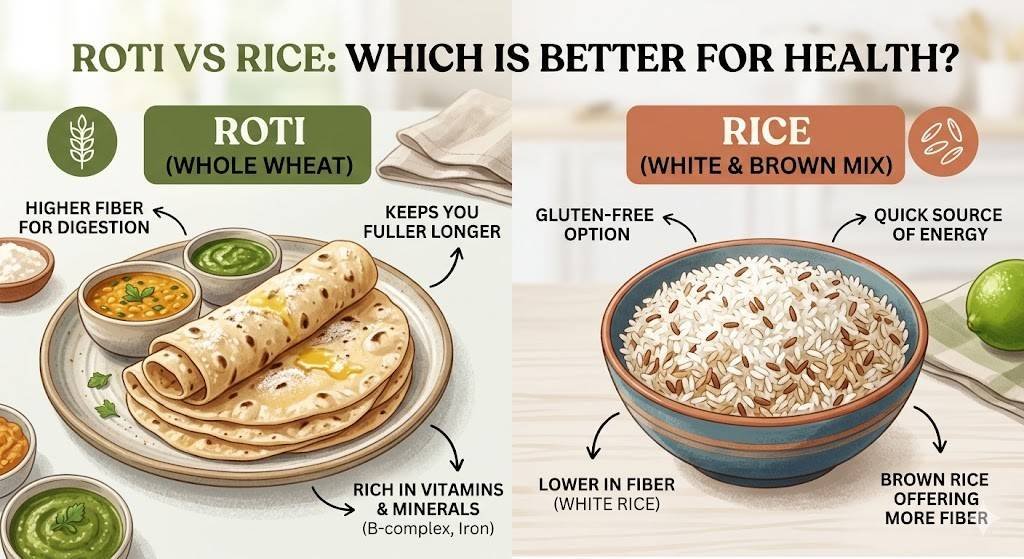
Roti vs Rice-In many households, especially across South Asia, the debate of roti vs rice is almost as common as daily meals themselves. Both are staple foods, deeply rooted in culture, tradition, and daily nutrition. But when it comes to health, weight loss, diabetes management, and overall well-being, people often wonder:
👉 Which is better—roti or rice?
The answer isn’t as simple as choosing one over the other. It depends on your lifestyle, health goals, metabolism, and portion sizes.
This detailed guide breaks down everything you need to know—from calories and nutrients to expert recommendations—so you can make the smartest choice for your diet.
What Is Roti?
Roti, also known as chapati, is a flatbread made primarily from whole wheat flour (atta) and water. It is usually cooked on a hot pan (tawa) without oil.
Key Features of Roti
- Made from whole grains
- High in fiber
- Low glycemic index (GI)
- Rich in complex carbohydrates
What Is Rice?
Rice is a cereal grain that comes in various forms—white rice, brown rice, basmati rice, and more. It is one of the most consumed foods globally.
Key Features of Rice
- Easy to digest
- Quick source of energy
- Available in refined (white) and whole (brown) forms
- Naturally gluten-free
Nutritional Comparison: Roti vs Rice
Let’s compare the nutrition of 1 medium roti vs 1 cup cooked rice:
| Nutrient | Roti (1 medium) | Rice (1 cup cooked) |
|---|---|---|
| Calories | ~70–80 kcal | ~200–220 kcal |
| Carbohydrates | ~15g | ~45g |
| Protein | ~3g | ~4g |
| Fiber | ~2–3g | ~0.5–1g |
| Fat | ~0.5g | ~0.4g |
| Glycemic Index | Low | High (white rice) |
Calories: Which Has More?
Rice is significantly higher in calories compared to roti.
- 1 roti = ~70–80 calories
- 1 bowl rice = ~200+ calories
👉 This means eating rice can quickly increase calorie intake, especially if portion control isn’t maintained.
Carbohydrates: Energy vs Overload
Both roti and rice are rich in carbohydrates, but the type matters.
Roti
- Complex carbs
- Slower digestion
- Sustained energy
Rice
- Simple carbs (especially white rice)
- Quick digestion
- Rapid blood sugar spikes
👉 If you need quick energy (like athletes), rice can help. But for long-lasting energy, roti is better.
Fiber Content: The Game Changer
Fiber plays a key role in digestion, weight management, and blood sugar control.
- Roti (whole wheat): High fiber
- White rice: Very low fiber
- Brown rice: Moderate fiber
👉 Winner: Roti
Roti vs Rice for Weight Loss
If your goal is weight loss, this is where the difference becomes clear.
Why Roti Is Better for Weight Loss
- Keeps you full longer
- Lower calories per serving
- Slower digestion reduces hunger
- Prevents overeating
Rice and Weight Gain
- Easy to overeat
- High calorie density
- Causes hunger sooner
👉 Best choice for weight loss: Roti (in moderation)
Roti vs Rice for Diabetes
Managing blood sugar is critical for people with diabetes.
Roti
- Lower glycemic index
- Slower sugar release
- Better blood sugar control
White Rice
- High glycemic index
- Rapid sugar spikes
- Risky for diabetics
👉 Best choice: Roti or brown rice
Digestibility: Which Is Easier on the Stomach?
Rice
- Easy to digest
- Ideal for sick people
- Good for weak digestion
Roti
- Takes longer to digest
- Heavier on the stomach for some people
👉 Best choice for digestion: Rice
Gluten Factor
- Roti: Contains gluten (from wheat)
- Rice: Naturally gluten-free
👉 If you have gluten intolerance or celiac disease, rice is the better option.
Roti vs Rice for Muscle Gain
If you’re trying to build muscle:
Rice
- Provides quick carbs for energy
- Good post-workout meal
Roti
- Offers steady energy
- Slightly higher protein content
👉 Best strategy: Include both
Brown Rice vs Roti: A Better Comparison
Brown rice is often considered healthier than white rice.
Brown Rice Benefits
- Higher fiber than white rice
- Rich in nutrients
- Lower GI than white rice
But still:
- Slightly more calories than roti
- Less fiber than whole wheat roti
👉 Winner: Roti (slightly)
Cultural and Lifestyle Factors
Food choices are not just about nutrition—they’re also about habits and lifestyle.
North India
- Roti is a staple
- Fits well with dry sabzis
South India & East India
- Rice is a staple
- Ideal for curries and dals
👉 The “best” option often depends on what your body is used to.
Portion Control Matters More Than Choice
Here’s a key truth:
👉 Eating too much of either roti or rice can lead to weight gain.
Healthy Portion Guide:
- 1–2 rotis per meal OR
- 1 small bowl of rice
Balance it with:
- Vegetables
- Protein (dal, paneer, eggs)
- Healthy fats
Myths About Roti and Rice
❌ Myth 1: Rice Always Causes Weight Gain
✔ Truth: Overeating rice causes weight gain
❌ Myth 2: Roti Is Always Healthy
✔ Truth: Too many rotis = excess calories
❌ Myth 3: You Must Avoid Rice Completely
✔ Truth: Moderation is key
Expert Diet Tips
For Weight Loss:
- Prefer roti over rice
- Eat dinner early
- Reduce carb portion at night
For Fitness:
- Combine both roti and rice
- Focus on protein intake
For Diabetes:
- Choose multigrain roti
- Avoid white rice or limit intake
Which Should You Choose?
Choose Roti If:
✔ You want to lose weight
✔ You need better blood sugar control
✔ You want more fiber
Choose Rice If:
✔ You need quick energy
✔ You have digestion issues
✔ You prefer gluten-free food
The Final Verdict Roti vs Rice
👉 Roti is generally healthier than rice due to:
- Lower calories
- Higher fiber
- Better blood sugar control
However…
👉 Rice is not unhealthy—it depends on:
- Type (brown vs white)
- Quantity
- Your lifestyle
Best Approach: Balance Both
Instead of choosing one over the other:
✅ Eat roti during the day
✅ Eat small portions of rice occasionally
✅ Focus on overall diet quality
Sample Balanced Meal Plan
Lunch
- 2 rotis
- Dal
- Vegetable sabzi
- Salad
Dinner
- 1 small bowl rice
- Curry
- Protein source
FAQs Roti vs Rice
1. Is roti better than rice for belly fat?
Yes, roti is better due to lower calories and higher fiber.
2. Can I eat rice daily?
Yes, but in controlled portions.
3. Which is better at night—roti or rice?
Roti is usually better for weight management.
4. Is brown rice healthier than roti?
Both are healthy, but roti has slightly more fiber.
5. Can I mix roti and rice in one meal?
Yes, but keep portions small.
6.Which is healthier rice or roti?
Roti is objectively better than rice
7.How many roti is equal to rice?
One medium roti provides the same energy as half a cup of cooked rice.
8,Why do bodybuilders eat rice instead of roti?
provide quick fuel for hard workouts and facilitate muscle recovery
Conclusion
The roti vs rice debate doesn’t have a one-size-fits-all answer. Both foods have their benefits and drawbacks.
👉 If you’re aiming for weight loss and better blood sugar control, roti is the better choice.
👉 If you need quick energy or easy digestion, rice works well.
At the end of the day, the healthiest diet is not about eliminating foods—it’s about balance, portion control, and consistency.
Also read :