Casein Vs Whey ProteinProtein supplements have become one of the most popular nutrition products in the fitness world. Whether your goal is muscle gain, fat loss, faster recovery, or improved athletic performance, protein plays a major role in helping your body repair and build muscle tissue.
Among all protein supplements available today, whey protein and casein protein are considered the two most popular options. Both are derived from milk, both contain essential amino acids, and both can support muscle growth. However, they work very differently inside the body.
The biggest difference comes down to digestion speed.
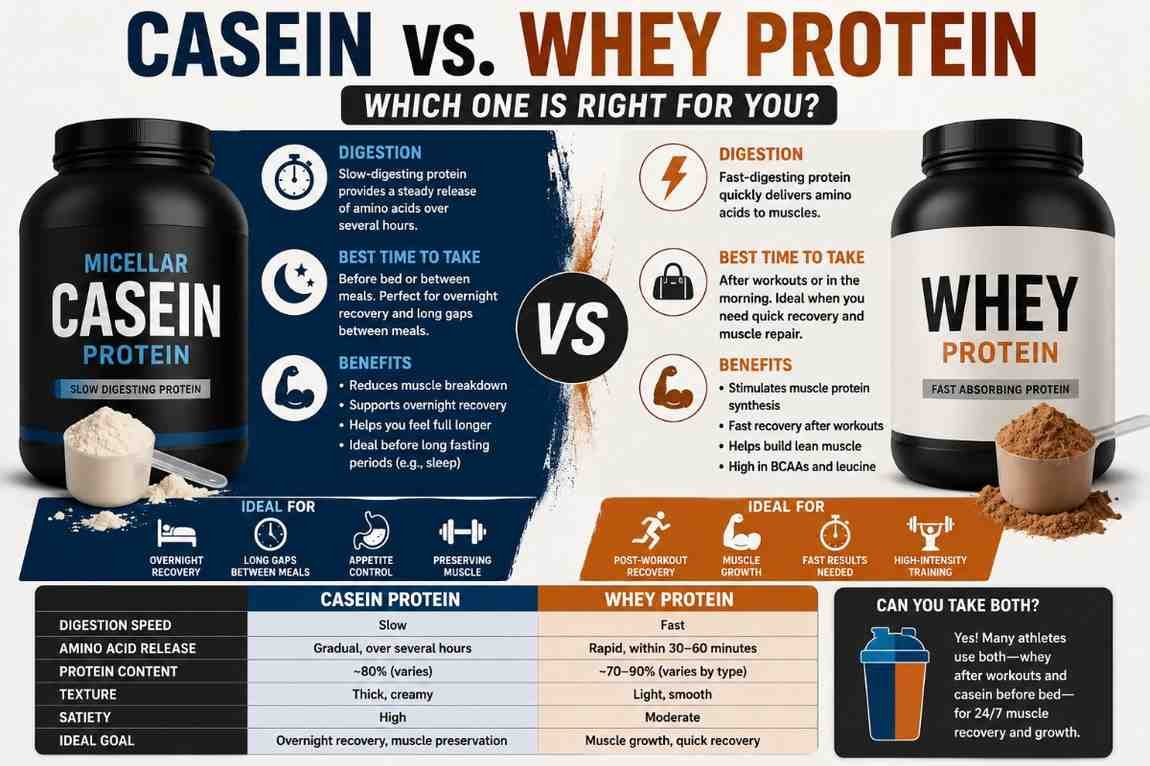
Whey protein digests quickly and rapidly delivers amino acids to muscles, making it ideal after workouts. Casein protein digests slowly, providing a steady release of amino acids over several hours, which is why many people take it before bed.
But which protein is actually better for your goals?
The answer depends on your lifestyle, training routine, diet, and fitness objectives.
In this detailed guide, you’ll learn:
- What whey protein is
- What casein protein is
- Key differences between them
- Muscle-building benefits
- Weight loss effects
- Best timing for each protein
- Side effects and safety
- Which protein is best for beginners
- Whether you can take both together
What Is Whey Protein?
Whey protein is a fast-digesting protein extracted from milk during the cheese-making process.
Milk contains two main proteins:
- Casein (about 80%)
- Whey (about 20%)
When milk curdles during cheese production, the liquid portion left behind contains whey. This liquid is processed and dried into whey protein powder.
Whey protein is considered a “complete protein” because it contains all nine essential amino acids. It is also especially rich in leucine, an amino acid strongly linked to muscle protein synthesis.
Types of Whey Protein
1. Whey Protein Concentrate (WPC)
- Contains 70–80% protein
- Includes some fats and carbohydrates
- More affordable
- Creamier taste
2. Whey Protein Isolate (WPI)
- 90% or more protein
- Lower in lactose and fat
- Faster digestion
- Popular for lean muscle gain
3. Whey Protein Hydrolysate (WPH)
- Pre-digested for rapid absorption
- Often used in medical nutrition and sports recovery
- Usually more expensive
What Is Casein Protein?
Casein is the main protein naturally found in milk.
Unlike whey, casein digests slowly because it forms a gel-like substance in the stomach. This allows amino acids to be released gradually into the bloodstream over several hours.
Because of this slow-release effect, casein is commonly called a “time-release protein.”
Types of Casein Protein
1. Micellar Casein
- Least processed form
- Slowest digestion
- Most popular casein supplement
2. Casein Hydrolysate
- Broken down for easier digestion
- Faster absorption than regular casein
Main Difference Between Whey and Casein
Casein Vs Whey Protein: The primary difference is digestion speed.
| Feature | Whey Protein | Casein Protein |
|---|---|---|
| Digestion Speed | Fast | Slow |
| Amino Acid Release | Rapid | Gradual |
| Best Time | Post-workout | Before bed |
| Muscle Recovery | Excellent | Excellent |
| Satiety | Moderate | High |
| Texture | Light | Thick |
| Leucine Content | Higher | Slightly lower |
How Whey Protein Works
Casein Vs Whey Protein: Whey protein rapidly increases amino acid levels in the blood.
This quick delivery helps:
- Stimulate muscle protein synthesis
- Improve workout recovery
- Reduce muscle breakdown
- Support lean muscle growth
Research consistently shows whey protein is highly effective after resistance training because muscles are especially responsive to nutrients after exercise.
How Casein Protein Works
Casein Vs Whey Protein: Casein breaks down more slowly in the digestive system.
This creates a steady flow of amino acids that may help:
- Reduce overnight muscle breakdown
- Support recovery during fasting periods
- Improve fullness and appetite control
Because it digests slowly, many athletes consume casein before sleeping.
Which Protein Builds More Muscle?
Casein Vs Whey Protein: Both whey and casein can help build muscle when combined with resistance training.
However, whey protein generally stimulates muscle protein synthesis more rapidly due to its high leucine content and fast digestion.
Several studies suggest whey may produce slightly better short-term muscle-building effects immediately after exercise.
That said, long-term muscle growth often depends more on:
- Total daily protein intake
- Training quality
- Recovery
- Sleep
- Calorie intake
In many cases, both proteins can be effective.
Whey Protein Benefits
1. Fast Muscle Recovery
Whey quickly delivers amino acids after exercise.
2. Supports Muscle Growth
Rich in leucine for muscle protein synthesis.
3. Convenient and Easy to Mix
Most whey proteins blend easily into shakes.
4. May Help Fat Loss
Protein can increase fullness and preserve muscle during calorie deficits.
5. High Biological Value
Whey contains highly absorbable amino acids.
Casein Protein Benefits
1. Slow Amino Acid Release
Supports muscles over several hours.
2. Great Before Bed
May reduce overnight muscle breakdown.
3. Helps You Stay Full Longer
Slow digestion can improve satiety.
4. Good for Meal Replacement
Thicker texture helps control hunger.
5. Sustained Recovery Support
Provides prolonged amino acid delivery.
Which Protein Is Better for Weight Loss?
Casein Vs Whey Protein: Both proteins may help with weight loss because protein increases fullness and preserves muscle mass.
However, casein may provide better appetite control because it digests more slowly.
Some research suggests casein can help reduce hunger between meals.
Whey protein, meanwhile, may support fat loss by:
- Increasing metabolism slightly
- Preserving lean muscle during dieting
- Supporting workout performance
Best Time to Take Whey Protein
After Workouts
This is the most common time.
The fast absorption helps recovery and muscle repair.
Morning
Some people use whey at breakfast because it digests quickly.
Between Meals
Useful for increasing daily protein intake.
Best Time to Take Casein Protein
Before Bed
The most popular timing for casein.
Slow digestion provides amino acids overnight.
During Long Gaps Between Meals
Can help reduce hunger and muscle breakdown.
Can You Take Whey and Casein Together?
Yes — many people combine both proteins.
This may provide:
- Fast amino acid delivery from whey
- Long-lasting support from casein
Some protein blends already contain both.
Which Protein Is Better for Beginners?
Casein Vs Whey Protein: Whey protein is usually the easiest starting option because:
- It mixes well
- It tastes lighter
- It’s widely available
- It supports post-workout recovery
Casein may be added later depending on goals.
Which Protein Is Better for Muscle Gain?
Casein Vs Whey Protein:
Whey May Be Better If:
- You train intensely
- You need quick recovery
- You want rapid amino acid absorption
- You consume protein after workouts
Casein May Be Better If:
- You struggle to meet protein goals
- You want nighttime recovery
- You get hungry easily
- You want a slower-digesting option
Which Protein Is Better for Women?
Both are effective for women.
Women often use whey for:
- Lean muscle support
- Fitness recovery
- Weight management
Casein may help women who:
- Experience nighttime hunger
- Want longer fullness
- Prefer meal replacement shakes
Which Protein Is Better for Older Adults?
Casein Vs Whey Protein: Older adults may benefit from both proteins because aging increases the risk of muscle loss.
Whey may be particularly useful due to its high leucine content, which supports muscle protein synthesis.
Side Effects of Whey and Casein
Most healthy people tolerate both proteins well.
However, some individuals may experience:
- Bloating
- Gas
- Digestive discomfort
- Acne (in some cases)
- Lactose intolerance symptoms
People with milk allergies should avoid both because they are dairy proteins.
Is Whey or Casein Better for Lactose Intolerance?
Casein Vs Whey Protein: Whey isolate usually contains less lactose than whey concentrate or casein.
People with mild lactose intolerance often tolerate whey isolate better.
Plant Protein vs Whey vs Casein
Plant proteins are alternatives for vegans or dairy-sensitive individuals.
Whey Advantages
- Higher leucine
- Fast absorption
- Strong muscle-building research
Casein Advantages
- Slow digestion
- Better satiety
Plant Protein Advantages
- Dairy-free
- Vegan-friendly
- Easier for some people to digest
Casein Vs Whey Protein for Bodybuilding
Bodybuilders commonly use both strategically.
Typical approach:
- Whey after workouts
- Casein before bed
This combination may maximize muscle recovery throughout the day.
Which Protein Tastes Better?
Casein Vs Whey Protein :This depends on personal preference.
Whey Protein
- Lighter texture
- Easier to blend
- More flavor options
Casein Protein
- Thicker and creamier
- Can resemble pudding
How Much Protein Do You Actually Need?
General recommendations:
| Goal | Protein Intake |
|---|---|
| General Health | 0.8 g/kg body weight |
| Muscle Gain | 1.6–2.2 g/kg |
| Fat Loss | 1.6–2.4 g/kg |
| Athletes | Higher needs |
Supplements should complement a balanced diet, not replace whole foods entirely.
Best Natural Protein Sources
Even if you use supplements, whole foods matter.
Excellent Protein Foods
- Eggs
- Chicken
- Fish
- Greek yogurt
- Cottage cheese
- Lentils
- Tofu
- Beans
- Lean beef
Common Myths About Protein Supplements
| Myth | Fact |
|---|---|
| Protein damages kidneys in healthy people | No strong evidence in healthy individuals |
| More protein always means more muscle | Training matters too |
| Whey is only for bodybuilders | Anyone can use it |
| Casein causes fat gain | Total calories matter |
| Supplements replace real food | Whole foods remain important |
Should You Choose Whey or Casein?
Casein Vs Whey Protein: The best choice depends on your goals.
Choose Whey Protein If You Want:
- Faster workout recovery
- Quick digestion
- Lean muscle gain
- Post-workout nutrition
Choose Casein Protein If You Want:
- Overnight recovery
- Longer fullness
- Reduced hunger
- Slow protein release
Choose Both If You Want:
- Complete daily protein support
- Recovery throughout the day and night
- Maximum convenience
Final Verdict: Casein Vs Whey Protein
Whey and casein are both high-quality proteins that can support muscle growth, recovery, and overall fitness.
Whey protein works best when you need rapid amino acid delivery, especially after workouts. Casein protein works best when you want slow, sustained protein release, particularly overnight.
Neither protein is universally “better.” The right choice depends on your:
- Fitness goals
- Digestion
- Diet
- Workout schedule
- Personal preferences
For many people, using both proteins strategically may offer the best overall results.
FAQs Casein Vs Whey Protein
Is whey better than casein for muscle gain?
Whey may stimulate muscle protein synthesis faster, especially after workouts, but both support muscle growth.
Can I take whey and casein together?
Yes, combining both proteins can provide fast and slow amino acid delivery.
Is casein good before bed?
Yes, casein is commonly taken before sleep because it digests slowly.
Which protein is better for weight loss?
Both can help, but casein may increase fullness for longer periods.
Does whey protein cause acne?
Some people report acne, especially with dairy-sensitive skin.
Is casein harder to digest?
Casein digests more slowly and may feel heavier for some individuals.
Can beginners use whey protein?
Yes, whey is one of the most beginner-friendly protein supplements.
Is whey isolate lactose-free?
It contains very little lactose but may not be completely lactose-free.
Do women need different protein supplements?
No, protein needs depend more on goals and body weight than gender.
Can protein supplements replace meals?
They can occasionally help, but whole foods should remain the foundation of a healthy diet.
Also read :
Dairy-Free Diet: Benefits, Foods to Eat, and a Simple Meal Plan