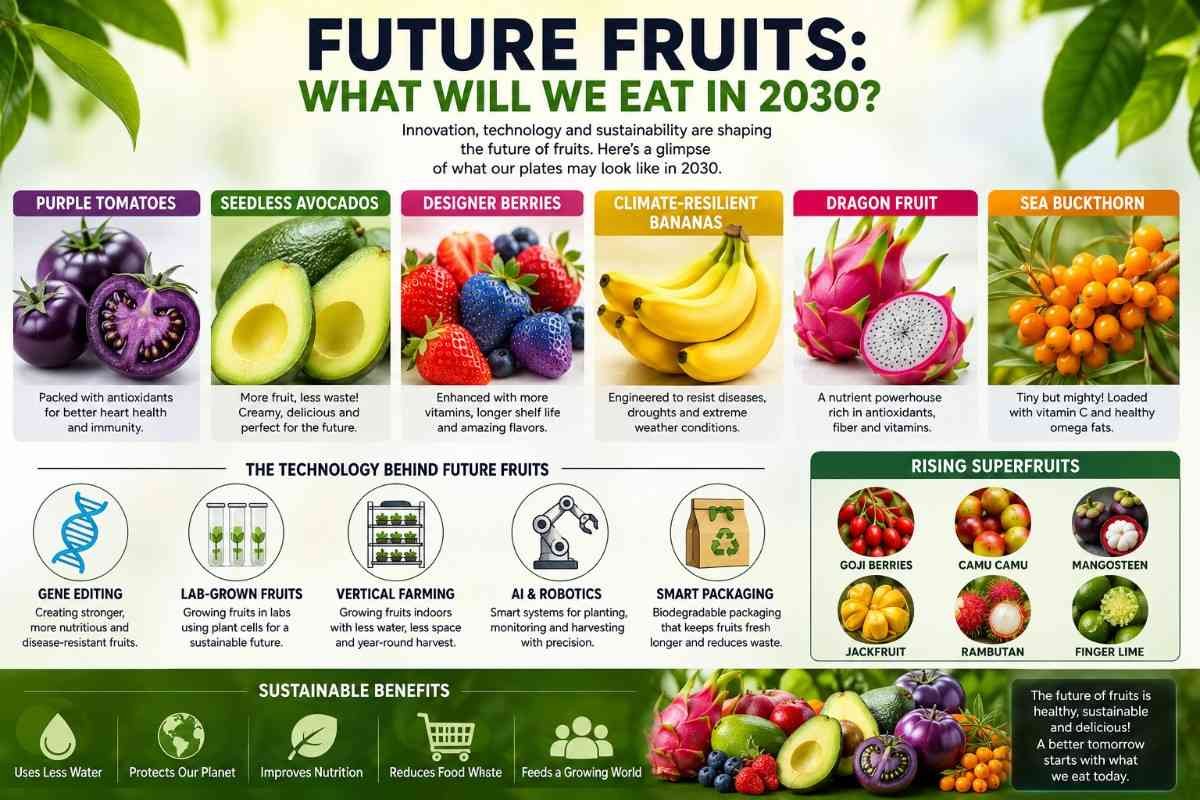
The way we eat is changing faster than ever. Climate change, population growth, technology, and health trends are transforming the global food industry—and fruits are no exception. By 2030, the fruits on our plates may look very different from what we eat today.
From lab-grown berries to drought-resistant bananas, the future of fruit is being shaped by science, sustainability, and consumer demand. People are looking for healthier foods, eco-friendly farming, and exciting flavors. As a result, researchers and farmers are developing “future fruits” that can survive extreme weather, provide better nutrition, and even reduce food waste.
In this article, we’ll explore the fruits of the future, how technology is changing agriculture, which superfruits may dominate by 2030, and what your grocery basket could look like in the next decade.
Why the Future of Fruits Is Changing
Several major factors are reshaping fruit production worldwide.
1. Climate Change
Extreme heat, droughts, floods, and unpredictable weather patterns are affecting traditional fruit farming. Crops like apples, bananas, and grapes are becoming harder to grow in some regions.
Scientists are now creating climate-resilient fruit varieties that can tolerate:
- High temperatures
- Water shortages
- Soil degradation
- New plant diseases
Future fruits must survive a changing planet.
2. Growing Global Population
By 2030, the world population is expected to exceed 8.5 billion people. Feeding everyone will require more efficient farming systems and nutrient-rich foods.
Fruits of the future may need to:
- Grow faster
- Use less water
- Provide more vitamins
- Last longer during transport
3. Rising Health Awareness
Consumers today want foods that improve immunity, energy, digestion, and longevity. Functional fruits packed with antioxidants, probiotics, and vitamins are becoming increasingly popular.
By 2030, fruits may be designed specifically for:
- Better gut health
- Brain performance
- Athletic recovery
- Anti-aging benefits
- Blood sugar control
4. Food Technology Revolution
Artificial intelligence, genetic research, vertical farming, and lab cultivation are revolutionizing agriculture.
Future fruit farming may involve:
- Indoor fruit factories
- AI-controlled irrigation
- Robotic harvesting
- Gene-edited crops
- Smart packaging
Technology will play a huge role in what we eat.
What Fruits Could Become Popular by 2030?
1. Climate-Resistant Bananas
Bananas are among the world’s most consumed fruits, but diseases and rising temperatures threaten global production.
Future bananas may be:
- Disease-resistant
- Drought-tolerant
- Higher in nutrients
- Longer-lasting
Scientists are already working on improved banana varieties that can survive climate stress.
Why They Matter
Bananas are affordable and nutrient-rich. Making them more resilient could help feed millions of people worldwide.
2. Purple Tomatoes
Purple tomatoes are genetically enhanced to contain extra antioxidants called anthocyanins—the same compounds found in blueberries.
Potential Benefits
- Better heart health
- Strong antioxidant support
- Reduced inflammation
- Enhanced immune function
These colorful fruits may become common in supermarkets by 2030.
3. Seedless Avocados
Avocados are hugely popular, but many consumers dislike the large seed.
Future innovations may create:
- Smaller-seed avocados
- Completely seedless avocados
- Faster-ripening avocados
These could reduce food waste and increase edible content.
4. Designer Berries
Berries are already considered superfoods, but future versions may contain enhanced nutrients.
Imagine strawberries with:
- More vitamin C
- Higher protein content
- Longer shelf life
- Extra antioxidants
Scientists are experimenting with breeding methods and biotechnology to improve berry nutrition.
5. Drought-Proof Watermelons
Watermelons require large amounts of water to grow. By 2030, new varieties may thrive with significantly less irrigation.
Future watermelons may feature:
- Faster growth cycles
- Enhanced sweetness
- Improved hydration benefits
- Better heat resistance
This could make watermelon farming more sustainable.
The Rise of Superfruits
What Are Superfruits?
Superfruits are fruits packed with high levels of nutrients, antioxidants, and health-promoting compounds.
By 2030, several emerging superfruits may dominate global markets.
1. Dragon Fruit
Dragon fruit is gaining popularity because of its vibrant appearance and nutritional value.
Benefits
- Rich in antioxidants
- Supports digestion
- High in fiber
- Low in calories
Its adaptability to warm climates makes it a strong future fruit candidate.
2. Goji Berries
Goji berries have long been used in traditional medicine and may become even more mainstream by 2030.
Potential Benefits
- Immune support
- Eye health
- Anti-aging effects
- Energy support
3. Sea Buckthorn
Sea buckthorn is an orange berry loaded with nutrients.
Why It May Become Popular
- Extremely high vitamin C
- Healthy fats
- Skin health benefits
- Sustainable farming potential
4. Camu Camu
This Amazonian fruit contains enormous amounts of vitamin C.
Possible Future Uses
- Immune supplements
- Functional beverages
- Sports nutrition products
5. Blue Spirulina Fruit Blends
Though spirulina itself is algae, fruit-based spirulina smoothies and bowls are becoming trendy due to their bright color and nutrient density.
By 2030, colorful “functional fruit blends” may become everyday breakfast foods.
Lab-Grown Fruits: Science Fiction or Reality?
One of the biggest innovations in food technology is lab-grown food.
Scientists are researching ways to grow fruit tissue in laboratories without traditional farming.
How Lab-Grown Fruit Works
Researchers use plant cells to grow fruit tissues under controlled conditions.
Potential benefits include:
- Less land usage
- Reduced pesticide use
- Year-round production
- Lower environmental impact
Could We Eat Lab-Grown Strawberries?
Possibly.
Future lab-grown fruits may:
- Taste identical to natural fruit
- Have enhanced nutrients
- Require fewer resources
- Be produced closer to cities
Although still expensive today, costs may decrease by 2030.
Vertical Farming and Indoor Fruit Production
What Is Vertical Farming?
Vertical farming involves growing crops indoors in stacked layers using artificial lighting and controlled environments.
This method is already being used for leafy greens and could expand to fruits.
Future Indoor Fruits
By 2030, we may see:
- Indoor strawberries
- Indoor blueberries
- Indoor dwarf mangoes
- Indoor grapes
Advantages of Vertical Fruit Farming
1. Less Water Usage
Indoor farms can use up to 90% less water compared to traditional agriculture.
2. Reduced Pesticides
Controlled environments reduce pest exposure.
3. Faster Growth
LED lighting and climate control can optimize growth conditions.
4. Urban Farming
Cities may produce fresh fruits locally, reducing transportation emissions.
Gene Editing and Future Fruits
What Is Gene Editing?
Gene editing technologies like CRISPR allow scientists to modify plant DNA more precisely than traditional breeding.
This could create fruits that are:
- Sweeter
- More nutritious
- Disease-resistant
- Longer-lasting
Examples of Future Gene-Edited Fruits
Non-Browning Apples
These apples stay fresh longer after slicing, reducing food waste.
Allergy-Friendly Fruits
Scientists are researching ways to reduce allergenic proteins in fruits.
Vitamin-Boosted Fruits
Future fruits may naturally contain extra vitamins and minerals.
Fruits Designed for Space Travel
As humanity explores long-term space missions, astronauts will need fresh food sources.
Scientists are already studying how fruits can grow in space environments.
Future Space Fruits Could Include
- Compact strawberries
- Mini bananas
- Fast-growing berries
- Hydroponic melons
Space agriculture research could also improve farming on Earth.
Sustainable Fruits and Eco-Friendly Farming
Consumers are becoming more environmentally conscious.
By 2030, sustainable fruits may become a major priority.
Eco-Friendly Fruit Trends
1. Regenerative Farming
This method improves soil health while growing crops.
2. Reduced Packaging
Biodegradable fruit packaging may replace plastic.
3. Local Fruit Production
More communities may grow fruits closer to home.
4. Zero-Waste Fruits
Scientists may develop fruits with edible peels and reduced waste.
Personalized Nutrition Fruits
The future of nutrition may become highly personalized.
Imagine fruits tailored specifically to your health needs.
Examples
Fruits for Athletes
High-electrolyte fruits for recovery.
Fruits for Brain Health
Extra omega-3s and antioxidants.
Fruits for Better Sleep
Naturally enhanced melatonin levels.
Fruits for Blood Sugar Balance
Lower-sugar fruits with more fiber.
Technology and health data could influence future food development.
AI and Smart Agriculture
Artificial intelligence is already transforming farming.
How AI Helps Fruit Farming
Predicting Weather
AI systems can help farmers prepare for climate risks.
Monitoring Crop Health
Drones and sensors detect plant diseases early.
Smart Irrigation
AI reduces water waste by monitoring soil moisture.
Automated Harvesting
Robots may pick fruits more efficiently.
This could improve fruit quality while reducing costs.
Exotic Fruits That May Become Mainstream
Many exotic fruits are becoming globally popular due to social media and wellness trends.
By 2030, these fruits could become household names.
1. Rambutan
A tropical fruit with sweet, juicy flesh.
2. Mangosteen
Known as the “queen of fruits.”
3. Jackfruit
Popular as a plant-based meat alternative.
4. Soursop
Used in smoothies and wellness drinks.
5. Finger Lime
A citrus fruit containing pearl-like pulp.
Global food trends are rapidly introducing new fruits to international markets.
Will Traditional Fruits Disappear?
Some fruits may become harder to grow because of climate challenges.
Potentially vulnerable fruits include:
- Certain apple varieties
- Coffee cherries
- Traditional bananas
- Some grape species
However, science and agricultural innovation may help preserve them.
Future Fruit Flavors and Experiences
Food companies are constantly experimenting with flavor innovation.
By 2030, fruits may be designed for:
- Unique colors
- Enhanced sweetness
- Flavor combinations
- Better textures
Imagine naturally blue strawberries or tropical-flavored apples.
The Role of Biotechnology in Fruit Development
Biotechnology could reshape agriculture in several ways.
Potential Benefits
- Improved crop yields
- Reduced pesticide use
- Better nutritional quality
- Enhanced food security
Potential Concerns
Some consumers worry about:
- Genetic modification safety
- Biodiversity loss
- Corporate control of seeds
Public opinion will influence how quickly these technologies spread.
Will Future Fruits Be More Expensive?
Initially, advanced fruits may cost more because of research and technology costs.
However, over time:
- Production may scale up
- Farming efficiency may improve
- Food waste may decrease
This could make future fruits more affordable.
What Your Grocery Store Could Look Like in 2030
By 2030, grocery stores may feature:
- AI freshness tracking
- Smart fruit packaging
- Personalized nutrition sections
- Lab-grown produce
- Hyper-local indoor fruits
Consumers may even scan fruits with smartphones to see:
- Nutritional details
- Farm origin
- Carbon footprint
- Ripeness level
Benefits of Future Fruits
1. Better Nutrition
Enhanced vitamins and antioxidants.
2. Greater Sustainability
Reduced environmental impact.
3. Improved Food Security
Climate-resistant crops could prevent shortages.
4. Less Food Waste
Longer shelf life and durable fruits.
5. More Variety
Consumers may discover exciting new flavors.
Challenges Facing Future Fruit Development
1. High Costs
Research and technology require investment.
2. Consumer Acceptance
Some people remain skeptical about genetically modified foods.
3. Climate Uncertainty
Extreme weather may still threaten agriculture.
4. Ethical Concerns
Debates about biotechnology will continue.
What Can Consumers Do Today?
You don’t have to wait until 2030 to explore future food trends.
Start By:
- Trying exotic fruits
- Supporting sustainable farms
- Reducing food waste
- Eating seasonal produce
- Learning about food technology
Small choices today can shape the future of food.
Conclusion
The future of fruits is exciting, innovative, and rapidly evolving. By 2030, our diets may include climate-resistant bananas, designer berries, lab-grown strawberries, and nutrient-enhanced superfruits.
Technology, sustainability, and health awareness are driving major changes in agriculture. Future fruits could help solve global challenges such as food shortages, environmental damage, and poor nutrition.
While some innovations may seem futuristic today, many are already being developed in laboratories and farms around the world.
The next decade could completely transform what we eat—and the fruits of the future may be healthier, smarter, and more sustainable than ever before.
FAQs About Future Fruits
What are future fruits?
Future fruits are fruits developed or improved using technology, sustainable farming, and scientific innovation to meet future food demands.
Will genetically modified fruits become common by 2030?
Yes, gene-edited and improved fruits are likely to become more common as farmers adapt to climate and food challenges.
Are lab-grown fruits safe?
Researchers aim to make lab-grown fruits safe and nutritious, but regulations and long-term studies will influence adoption.
Which fruits may become most popular in the future?
Dragon fruit, goji berries, sea buckthorn, purple tomatoes, and climate-resistant bananas are strong candidates.
Why are climate-resistant fruits important?
They help farmers continue producing food despite droughts, heatwaves, and changing weather patterns.
What is vertical farming?
Vertical farming is the practice of growing crops indoors in stacked layers using controlled environments and LED lighting.
Will traditional fruits disappear?
Some varieties may become harder to grow, but agricultural innovation may help preserve them.
Can AI really improve fruit farming?
Yes. AI can optimize irrigation, monitor crop health, predict weather, and improve harvest efficiency.
Will future fruits taste different?
Some future fruits may have enhanced flavors, sweeter profiles, or unique textures created through breeding and biotechnology.
Are super fruits the future of healthy eating?
Many experts believe nutrient-dense superfruits will continue growing in popularity because consumers want healthier foods.
Also read :
10 Surprising Benefits of Black Sapote (Chocolate Pudding Fruit) for Health