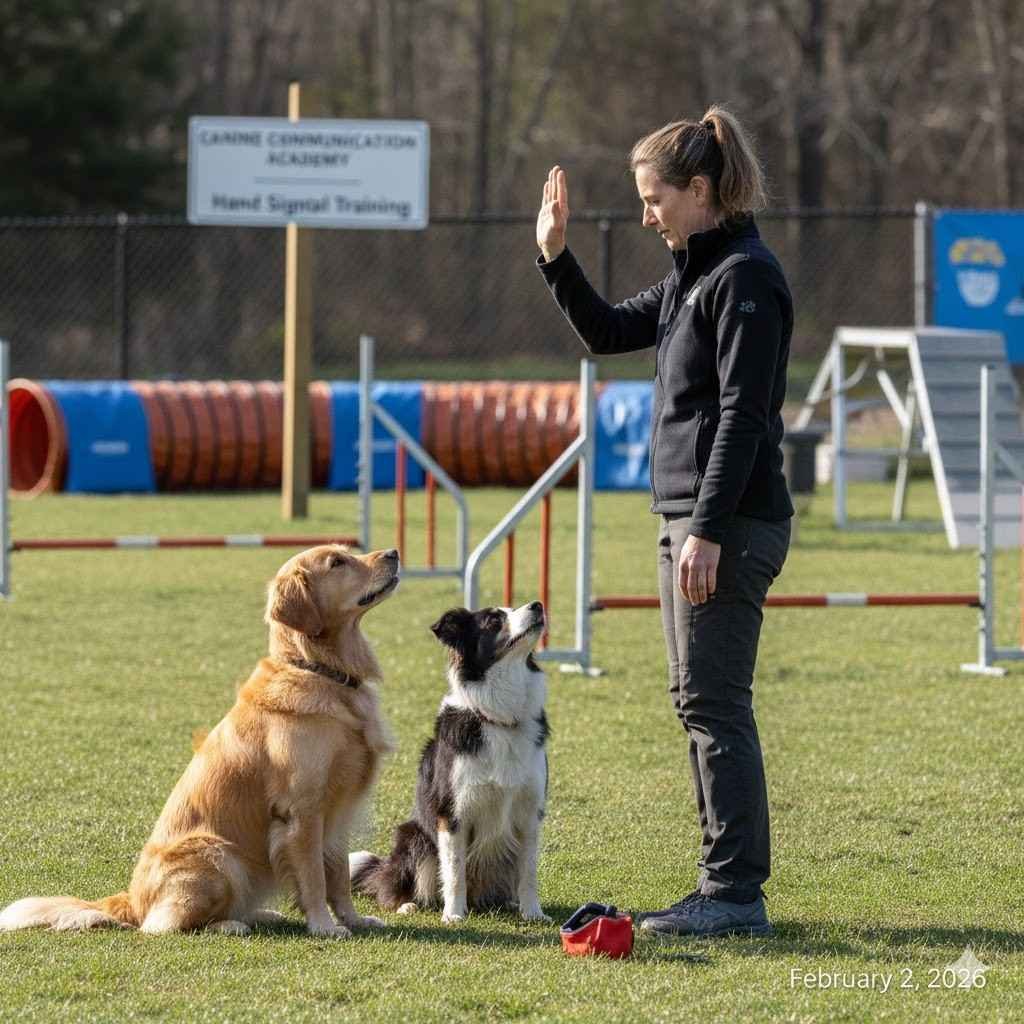
Training a dog is one of the most rewarding experiences for any pet owner. While most people rely heavily on verbal commands, dogs actually communicate far more through body language than spoken words. This is why hand signal training has become increasingly popular among professional trainers and everyday dog owners alike.
Hand signals provide clarity, reduce confusion, and create a stronger connection between you and your dog. Whether your goal is better obedience, advanced training, or helping a hearing-impaired dog, teaching visual cues can transform the way your dog responds.
In this comprehensive guide, you’ll learn what hand signal training is, why it works, how to teach it step-by-step, and expert tips to speed up results.
What Is Hand Signal Training for Dogs?
Hand signal training is a method of teaching dogs to respond to visual cues instead of — or alongside — verbal commands. Instead of saying “sit,” you might raise your palm upward. Rather than saying “stay,” you could hold your hand out like a stop sign.
Dogs are natural observers. In fact, research shows dogs often read human gestures faster than they process spoken language.
Common Examples of Hand Signals:
- Raised palm → Sit
- Palm facing forward → Stay
- Finger pointing down → Lie down
- Sweeping arm toward you → Come
- Finger to lips → Quiet
Hand signals can be used alone or paired with voice commands, but many trainers recommend teaching both for maximum reliability.
Why Hand Signal Training Works So Well
Dogs evolved to pay close attention to movement and posture. Long before domestication, their survival depended on reading subtle physical cues from other animals.
Here’s why visual training is so effective:
Dogs Process Visual Information Quickly
Dogs are masters at noticing motion. A clear hand gesture often cuts through distractions better than sound.
Useful in Noisy Environments
At parks, busy streets, or during gatherings, verbal commands can get lost. A visible signal keeps communication clear.
Perfect for Deaf or Aging Dogs
Many older dogs develop hearing loss. Hand signals allow you to continue communicating effectively.
Strengthens Your Bond
When dogs focus on your movements, they naturally pay more attention to you, increasing trust and engagement.
Improves Training Precision
Visual cues are consistent. Unlike voice tone — which can change depending on mood — a hand signal remains the same.
When Should You Start Hand Signal Training?
The simple answer: as early as possible — but it’s never too late.
- Puppies: Learn extremely fast and adapt quickly.
- Adult dogs: Can easily transition from verbal to visual.
- Senior dogs: Benefit greatly, especially if hearing declines.
Remember the golden rule of dog training:
Dogs don’t care how old they are — they care how clear you are.
Preparing for Successful Training
Before you begin, set yourself up for success.
✔ Choose Clear, Distinct Signals
Avoid gestures that look similar. Dogs may confuse them.
✔ Keep Training Sessions Short
Aim for 5–10 minutes to maintain focus.
✔ Use High-Value Rewards
Treats, praise, or favorite toys work wonders.
✔ Train in a Low-Distraction Area First
Start indoors before progressing to busy environments.
✔ Stay Consistent
Everyone in the household should use the same signals.
Step-by-Step Guide to Teaching Hand Signals
Let’s walk through the most important commands.
Teach “Sit” with a Hand Signal
Best signal: Raise your palm upward.
Steps:
- Hold a treat near your dog’s nose.
- Slowly move your hand upward.
- As their head follows, their bottom will lower.
- The moment they sit, reward immediately.
- Repeat until they associate the motion with the action.
👉 Once consistent, remove the treat and use only the gesture.
Teach “Stay”
Best signal: Palm facing outward like a stop sign.
Steps:
- Ask your dog to sit.
- Show the palm signal.
- Take one step back.
- Reward if they remain still.
- Gradually increase distance and duration.
Patience is key — don’t rush this command.
Teach “Down”
Best signal: Move your hand downward toward the floor.
Steps:
- Start with your dog sitting.
- Lower a treat to the ground.
- Slide it forward slightly.
- When they lie down, reward instantly.
Dogs learn quickly when success is easy.
Teach “Come”
Best signal: Sweep your arm toward your chest.
Steps:
- Stand a few feet away.
- Show the gesture.
- Reward heavily when they reach you.
- Make it exciting — never punish a dog for coming slowly.
Your dog should think: Running to you is the best decision ever.
Teach “Leave It”
Best signal: Closed fist or downward palm.
Steps:
- Place a treat on the floor.
- Cover it if your dog moves toward it.
- Show the signal.
- Reward when they look away.
This command can literally save your dog’s life.
Pairing Verbal Commands with Hand Signals
Many trainers recommend teaching both simultaneously.
Why? Because flexibility matters.
Use this formula:
👉 Say the command → show the signal → reward.
Over time, you can phase out the verbal cue if desired.
Some owners prefer silent communication, while others enjoy having both options.
How Long Does Hand Signal Training Take?
Every dog is different, but here’s a rough timeline:
- Basic recognition: 1–2 weeks
- Reliable response: 3–6 weeks
- Advanced fluency: 2–3 months
Consistency matters far more than speed.
Training 5 minutes daily beats one long weekly session.
Common Mistakes to Avoid
Even dedicated owners make these errors.
❌ Changing Signals Too Often
Dogs thrive on repetition.
❌ Training Too Long
Overtraining leads to frustration.
❌ Skipping Rewards
Reinforcement drives learning.
❌ Moving Too Fast
Master one command before adding another.
❌ Using Vague Gestures
Make your signals bold and obvious.
Advanced Hand Signal Training
Once your dog masters basics, you can level up.
Distance Commands
Teach your dog to respond from across a park.
Directional Signals
Use left/right gestures for agility-style training.
Silent Walks
Guide your dog without speaking — great for calm outings.
Emergency Stop
Train a sudden stop gesture for safety near roads.
Advanced training stimulates your dog mentally and reduces boredom.
Training Deaf Dogs with Hand Signals
Hand signals aren’t just helpful — they’re essential for deaf dogs.
Tips for Success:
- Get attention with gentle floor vibrations.
- Use a flashlight flicker at night.
- Reward generously.
- Maintain eye contact.
Deaf dogs are just as capable as hearing dogs when trained properly.
Can You Train an Older Dog?
Absolutely.
Older dogs often focus better because they’re calmer.
Just remember:
- Be patient.
- Move at their pace.
- Keep sessions positive.
You’re never “too late” to improve communication.
Benefits Beyond Obedience
Hand signal training offers more than commands.
✔ Builds Confidence
Dogs feel secure when expectations are clear.
✔ Reduces Anxiety
Predictable communication lowers stress.
✔ Encourages Mental Exercise
Thinking tires dogs in a healthy way.
✔ Strengthens Leadership
Your dog naturally looks to you for guidance.
Pro Tips from Professional Trainers
Want faster results? Follow these expert strategies:
⭐ Train before meals — motivation is higher.
⭐ Practice daily — consistency beats intensity.
⭐ End on a win — finish with success.
⭐ Be enthusiastic — energy is contagious.
⭐ Use marker words or clickers to pinpoint correct behavior.
Most importantly…
👉 Make training fun. Dogs learn best when they enjoy the process.
How to Practice in Real-Life Situations
Training shouldn’t stay inside your living room.
Gradually introduce distractions:
- Backyard
- Quiet park
- Busier streets
- Dog parks
Increase difficulty slowly so your dog keeps succeeding.
Signs Your Dog Is Learning
Look for these indicators:
- Faster responses
- Less hesitation
- Better focus
- Tail wagging during training
- Anticipation of cues
Progress may feel slow day-to-day, but consistency creates dramatic long-term results.
Should You Use Treats Forever?
Not necessarily.
Follow this reward progression:
- Treat every success
- Treat intermittently
- Replace with praise or play
Eventually, obedience becomes habit.
Creating a Silent Language Between You and Your Dog
One of the most beautiful aspects of hand signal training is the quiet understanding it builds.
Imagine communicating across a crowded park…
Or guiding your dog with a simple glance.
This silent dialogue deepens trust in a way words sometimes cannot.
Dogs begin watching you more closely — and that attention strengthens your relationship every day.
Is Hand Signal Training Better Than Verbal Training?
Not better — but more versatile.
The best-trained dogs understand both.
Think of it as being bilingual.
When one method fails, the other succeeds.
Final Thoughts
Hand signal training isn’t just a technique — it’s a smarter way to communicate with your dog.
By tapping into your dog’s natural ability to read movement, you create clearer expectations, reduce confusion, and build a deeper bond.
Remember:
👉 Be patient.
👉 Stay consistent.
👉 Keep it positive.
Training is not about perfection — it’s about connection.
Start today with one simple signal, and you’ll be amazed at how quickly your dog begins to understand you without a single word.
Your dog is always watching.
FAQ: Hand Signal Training for Dogs
1. What is hand signal training for dogs?
Hand signal training is a method of teaching dogs to respond to visual gestures instead of relying only on verbal commands. It improves communication and often helps dogs react faster.
2. Are hand signals better than verbal commands?
Hand signals are not necessarily better, but they are often clearer for dogs. The best approach is to teach both so your dog can respond in any situation.
3. At what age can I start hand signal training?
You can begin as early as 8 weeks old, but dogs of any age — even seniors — can successfully learn visual commands.
4. How long does it take for a dog to learn hand signals?
Most dogs understand basic signals within 1–2 weeks with consistent practice, while full reliability may take 4–6 weeks.
5. Can older dogs learn hand signals?
Absolutely. Older dogs are often calmer and more focused, which can make training easier than expected.
6. Are hand signals useful for deaf dogs?
Yes! Hand signals are essential for deaf or hearing-impaired dogs and allow owners to communicate effectively without sound.
7. What are the easiest hand signals to teach first?
Start with simple commands like:
- Sit
- Stay
- Come
- Down
- Leave it
These build a strong training foundation.
8. Do I need treats for hand signal training?
Treats help motivate dogs and speed up learning, especially in the early stages. Over time, you can replace treats with praise or play.
9. How long should training sessions be?
Keep sessions short — about 5 to 10 minutes — to prevent your dog from getting bored or overwhelmed.
10. Why is my dog ignoring hand signals?
Your dog may be distracted, confused, or not fully trained yet. Try practicing in a quieter space, use clearer gestures, and reward correct behavior immediately.
11. Should I teach verbal commands first or hand signals?
You can teach both at the same time. Many trainers say the command first, then show the signal, helping dogs associate the two.
12. Can hand signals help with behavior problems?
Yes. Clear visual cues reduce confusion, which can decrease unwanted behaviors like jumping, barking, or pulling on the leash.
13. How do I make my hand signals clearer?
Use large, consistent gestures and avoid changing them once your dog starts learning. Consistency is the key to success.
14. Can I create my own hand signals?
Yes! Dogs don’t care what the signal is — they just need it to be consistent and easy to recognize.
15. Is hand signal training good for busy environments?
Definitely. In noisy places where verbal commands may not be heard, hand signals can grab your dog’s attention quickly.
16. What is the biggest mistake owners make during training?
Inconsistency. Changing signals, skipping rewards, or training irregularly can slow progress.
17. How often should I practice hand signals?
Daily practice is ideal. Even a few minutes each day can lead to noticeable improvement.
18. Will my dog eventually respond without treats?
Yes. Once the behavior becomes a habit, you can gradually reduce treats and rely more on praise or toys.
19. Can hand signals strengthen the bond with my dog?
Absolutely. Visual communication encourages your dog to focus on you, building trust and improving your relationship.
20. Is professional training necessary?
Not always. Many owners successfully teach hand signals at home, but a professional trainer can help if your dog has serious behavior challenges.
Also Read: