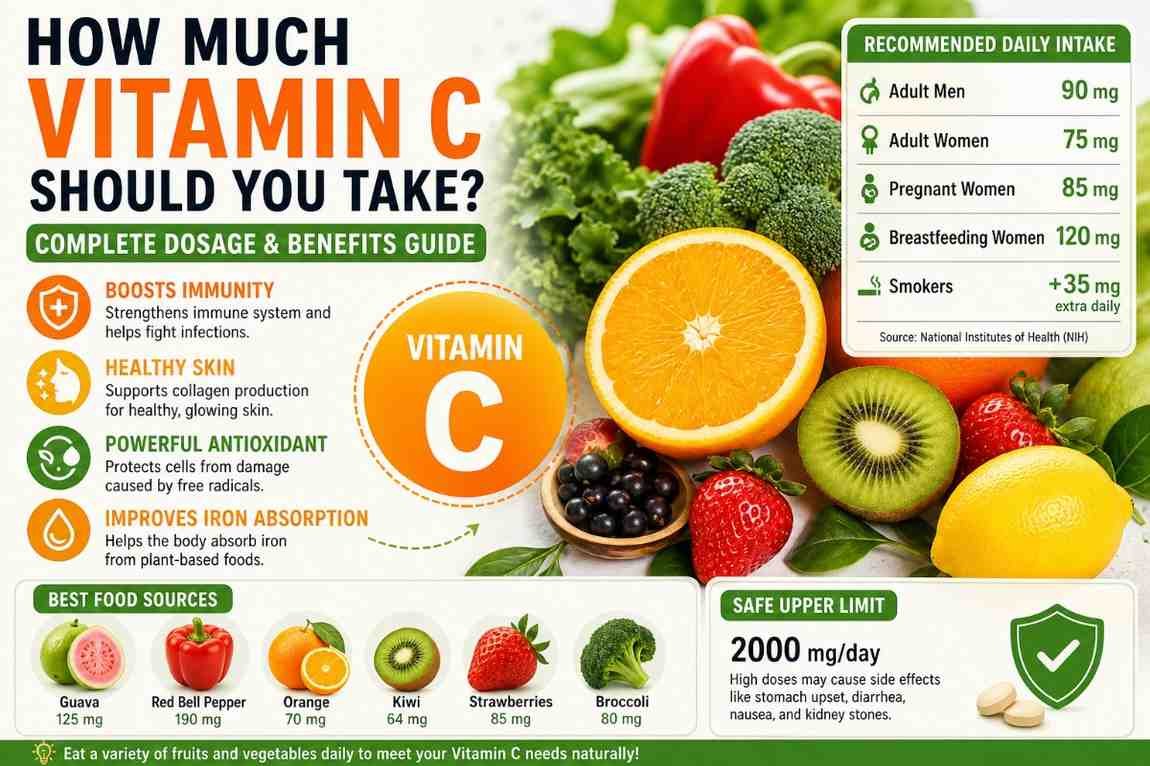
Vitamin C is one of the most popular nutrients in the world. From boosting immunity to improving skin health, this powerful antioxidant plays a major role in overall wellness. But one common question remains: How much Vitamin C should you take daily?
Some people take only the recommended daily amount, while others consume high-dose supplements hoping for faster health benefits. The truth is, your ideal Vitamin C intake depends on your age, lifestyle, health conditions, and goals.
In this complete guide, you’ll learn:
- Recommended daily Vitamin C intake
- Best dosage for immunity, skin, and overall health
- Signs of Vitamin C deficiency
- Risks of taking too much Vitamin C
- Best food sources
- Frequently asked questions
Let’s explore everything you need to know about Vitamin C dosage.
What Is Vitamin C?
Vitamin C, also known as ascorbic acid, is a water-soluble vitamin essential for many body functions. Since your body cannot produce or store it efficiently, you must get it from foods or supplements regularly.
Vitamin C helps:
- Support immune function
- Produce collagen for healthy skin
- Heal wounds
- Protect cells from free radicals
- Improve iron absorption
- Maintain healthy bones and blood vessels
Because it acts as a strong antioxidant, Vitamin C is important for preventing oxidative stress and supporting long-term health.
Why Is Vitamin C Important?
Vitamin C affects nearly every system in the body. Here are some of its most important benefits.
1. Strengthens the Immune System
Vitamin C supports white blood cell production and helps your body fight infections. Many people increase Vitamin C intake during cold and flu season.
2. Improves Skin Health
Vitamin C plays a vital role in collagen production, helping keep skin firm, youthful, and healthy.
3. Helps Iron Absorption
Vitamin C improves the absorption of non-heme iron from plant foods, helping reduce the risk of iron deficiency anemia.
4. Acts as a Powerful Antioxidant
It protects cells from damage caused by free radicals and oxidative stress.
5. Supports Heart Health
Some studies suggest Vitamin C may help support healthy blood pressure and cardiovascular health.
6. Helps Wound Healing
Collagen production supported by Vitamin C helps wounds heal faster.
Recommended Daily Intake of Vitamin C
The recommended daily intake varies depending on age, sex, and lifestyle factors.
Vitamin C Daily Requirement Table
| Group | Recommended Daily Intake |
|---|---|
| Infants (0–6 months) | 40 mg |
| Infants (7–12 months) | 50 mg |
| Children (1–3 years) | 15 mg |
| Children (4–8 years) | 25 mg |
| Children (9–13 years) | 45 mg |
| Teen Boys (14–18 years) | 75 mg |
| Teen Girls (14–18 years) | 65 mg |
| Adult Men | 90 mg |
| Adult Women | 75 mg |
| Pregnant Women | 85 mg |
| Breastfeeding Women | 120 mg |
| Smokers | +35 mg extra daily |
Smokers require more Vitamin C because smoking increases oxidative stress and lowers Vitamin C levels in the body.
How Much Vitamin C Should Adults Take?
Most healthy adults can meet their Vitamin C needs through a balanced diet. However, supplements may be useful in certain situations.
General Health
For general wellness:
- Men: 90 mg daily
- Women: 75 mg daily
This amount is usually enough to prevent deficiency and support normal body function.
For Immunity Support
Some people take:
- 200–500 mg daily
during cold and flu season or periods of stress.
For Skin Health
Vitamin C supplements commonly range between:
- 500–1000 mg daily
for collagen support and antioxidant protection.
For Athletes or High Stress
People exposed to intense exercise, pollution, or stress may benefit from slightly higher intake levels.
Can You Take Too Much Vitamin C?
Yes. Although Vitamin C is water-soluble and excess amounts are usually excreted through urine, extremely high doses can cause side effects.
Upper Safe Limit
The tolerable upper intake level for adults is:
2000 mg/day
Taking more than this regularly may increase the risk of side effects.
Side Effects of Too Much Vitamin C
Excessive Vitamin C intake may cause:
- Diarrhea
- Stomach cramps
- Nausea
- Bloating
- Heartburn
- Kidney stones in sensitive individuals
People with kidney disorders should avoid very high-dose supplements unless advised by a healthcare professional.
Signs of Vitamin C Deficiency
Vitamin C deficiency can develop if intake remains low for long periods.
Common Symptoms
- Fatigue
- Weak immunity
- Dry skin
- Bleeding gums
- Slow wound healing
- Joint pain
- Easy bruising
- Frequent infections
Severe deficiency may lead to scurvy, a condition caused by prolonged Vitamin C deficiency.
Best Natural Sources of Vitamin C
Getting Vitamin C from whole foods is often the best option because these foods also provide fiber, antioxidants, and other nutrients.
Fruits Rich in Vitamin C
- Oranges
- Lemons
- Kiwi
- Strawberries
- Guava
- Papaya
- Pineapple
Vegetables Rich in Vitamin C
- Bell peppers
- Broccoli
- Spinach
- Tomatoes
- Kale
- Cabbage
- Brussels sprouts
Foods Highest in Vitamin C
| Food | Approximate Vitamin C |
|---|---|
| Guava (1 fruit) | 125 mg |
| Red bell pepper (1 cup) | 190 mg |
| Orange (1 medium) | 70 mg |
| Kiwi (1 medium) | 64 mg |
| Strawberries (1 cup) | 85 mg |
| Broccoli (1 cup cooked) | 80 mg |
Guava and red bell peppers actually contain more Vitamin C than oranges.
Should You Take Vitamin C Supplements?
Supplements may help if:
- Your diet lacks fruits and vegetables
- You smoke
- You are under chronic stress
- You have poor nutrient absorption
- You get frequent infections
- You have increased nutritional needs
However, supplements should not replace a healthy diet.
Best Time to Take Vitamin C
Vitamin C can be taken:
- In the morning
- With meals
- Divided into smaller doses throughout the day
Taking it with food may reduce stomach discomfort.
Vitamin C for Immunity
Vitamin C is widely known for immune support.
Does Vitamin C Prevent Colds?
Research suggests Vitamin C may not completely prevent the common cold in most people, but it may:
- Reduce cold duration
- Decrease symptom severity
- Support immune recovery
Regular intake appears more effective than taking it only after symptoms begin.
Vitamin C for Skin Health
Vitamin C supports collagen formation, making it beneficial for:
- Skin elasticity
- Anti-aging
- Wound healing
- Brightening skin tone
Many skincare products also use topical Vitamin C serums.
Vitamin C and Iron Absorption
Vitamin C helps your body absorb iron from plant-based foods.
For example:
- Adding lemon juice to spinach
- Eating oranges with meals
- Combining Vitamin C foods with lentils
can improve iron absorption significantly.
Vitamin C During Pregnancy
Pregnant women need slightly more Vitamin C to support:
- Fetal growth
- Tissue repair
- Immune health
The recommended intake during pregnancy is:
85 mg/day
Breastfeeding women generally require even higher intake.
Vitamin C for Smokers
Smoking increases oxidative stress and reduces Vitamin C levels.
Smokers are usually advised to consume:
35 mg/day extra
above the normal recommended intake.
Is Liposomal Vitamin C Better?
Liposomal Vitamin C is marketed as having improved absorption compared to standard Vitamin C supplements.
Some studies suggest it may:
- Improve absorption
- Reduce stomach irritation
- Maintain blood levels longer
However, regular Vitamin C supplements are still effective for most people.
Different Forms of Vitamin C Supplements
1. Ascorbic Acid
The most common and affordable form.
2. Sodium Ascorbate
Less acidic and gentler on the stomach.
3. Calcium Ascorbate
Buffered form often easier for sensitive individuals.
4. Liposomal Vitamin C
Encapsulated for potentially better absorption.
Can Vitamin C Help With Fatigue?
Low Vitamin C levels may contribute to fatigue because the nutrient supports energy metabolism and iron absorption.
Correcting deficiency may improve:
- Energy levels
- Mental clarity
- Recovery from illness
Vitamin C and Weight Loss
Vitamin C is not a magic weight-loss supplement, but it may support metabolism and exercise recovery.
People with adequate Vitamin C levels may experience:
- Better fat oxidation during exercise
- Improved workout recovery
- Reduced inflammation
Can Children Take Vitamin C Supplements?
Yes, but dosage should match age recommendations.
Too much Vitamin C in children may cause digestive discomfort.
Children should primarily get Vitamin C from:
- Fruits
- Vegetables
- Balanced meals
Vitamin C and Kidney Stones
Very high doses of Vitamin C may increase oxalate levels in some individuals, potentially contributing to kidney stone formation.
People with a history of kidney stones should avoid excessive supplementation.
Tips for Getting Enough Vitamin C Naturally
Eat Fresh Produce Daily
Fresh fruits and vegetables are the best sources.
Avoid Overcooking
Vitamin C is sensitive to heat and can be destroyed during prolonged cooking.
Include Raw Foods
Raw fruits and salads help preserve Vitamin C content.
Eat a Variety of Colors
Colorful produce often contains more antioxidants and nutrients.
Who May Need More Vitamin C?
Some groups may require additional Vitamin C:
- Smokers
- Athletes
- Older adults
- Pregnant women
- People under chronic stress
- Individuals with poor diets
- People recovering from illness
Is Daily Vitamin C Supplementation Necessary?
Not always.
If your diet includes plenty of fruits and vegetables, you may already get enough Vitamin C naturally.
Supplements are most useful when:
- Dietary intake is low
- Nutritional needs increase
- Deficiency symptoms appear
Vitamin C Myths
Myth 1: More Vitamin C Always Means Better Immunity
Extremely high doses do not necessarily improve immune function further.
Myth 2: Vitamin C Can Cure a Cold Instantly
Vitamin C may help reduce symptoms, but it is not an instant cure.
Myth 3: Only Citrus Fruits Contain Vitamin C
Many vegetables and fruits contain even more Vitamin C than oranges.
How to Choose a Vitamin C Supplement
When selecting a supplement:
- Choose reputable brands
- Check dosage levels
- Avoid unnecessary additives
- Consider buffered forms if you have stomach sensitivity
Final Thoughts
Vitamin C is an essential nutrient that supports immunity, skin health, collagen production, and overall wellness. Most adults need between 75–90 mg daily, although some individuals may benefit from slightly higher amounts.
While Vitamin C supplements can be helpful, getting nutrients from whole foods remains the healthiest approach. Fruits like guava, kiwi, oranges, and vegetables such as bell peppers and broccoli can easily help you meet your daily needs naturally.
Avoid excessive supplementation, especially above safe upper limits, since too much Vitamin C may lead to digestive issues or kidney stone risk in sensitive individuals.
The best strategy is balanced nutrition, healthy lifestyle habits, and moderate supplementation when necessary.
FAQs About Vitamin C
1.How much Vitamin C should I take daily?
Most adults need 75–90 mg daily. Some people may take 200–500 mg for additional immune support.
2.Is 1000 mg of Vitamin C too much?
For most healthy adults, 1000 mg is generally safe, but taking high doses regularly may cause digestive side effects.
3.Can I take Vitamin C every day?
Yes, daily Vitamin C intake is important because the body does not store large amounts efficiently.
4.What happens if you take too much Vitamin C?
Too much Vitamin C may cause diarrhea, nausea, bloating, and stomach cramps.
5.Is Vitamin C good for skin?
Yes, Vitamin C supports collagen production and antioxidant protection for healthier skin.
6.Which fruit has the most Vitamin C?
Guava and red bell peppers contain extremely high amounts of Vitamin C.
7.Can Vitamin C prevent colds?
Vitamin C may reduce cold duration and severity, but it may not completely prevent colds.
8.Should I take Vitamin C in the morning or at night?
Most people take Vitamin C in the morning or with meals, but timing is flexible.
9.Can children take Vitamin C supplements?
Yes, but only in age-appropriate amounts.
10.Is it better to get Vitamin C from food or supplements?
Whole foods are usually the best source because they provide additional nutrients and fiber.
Also read :