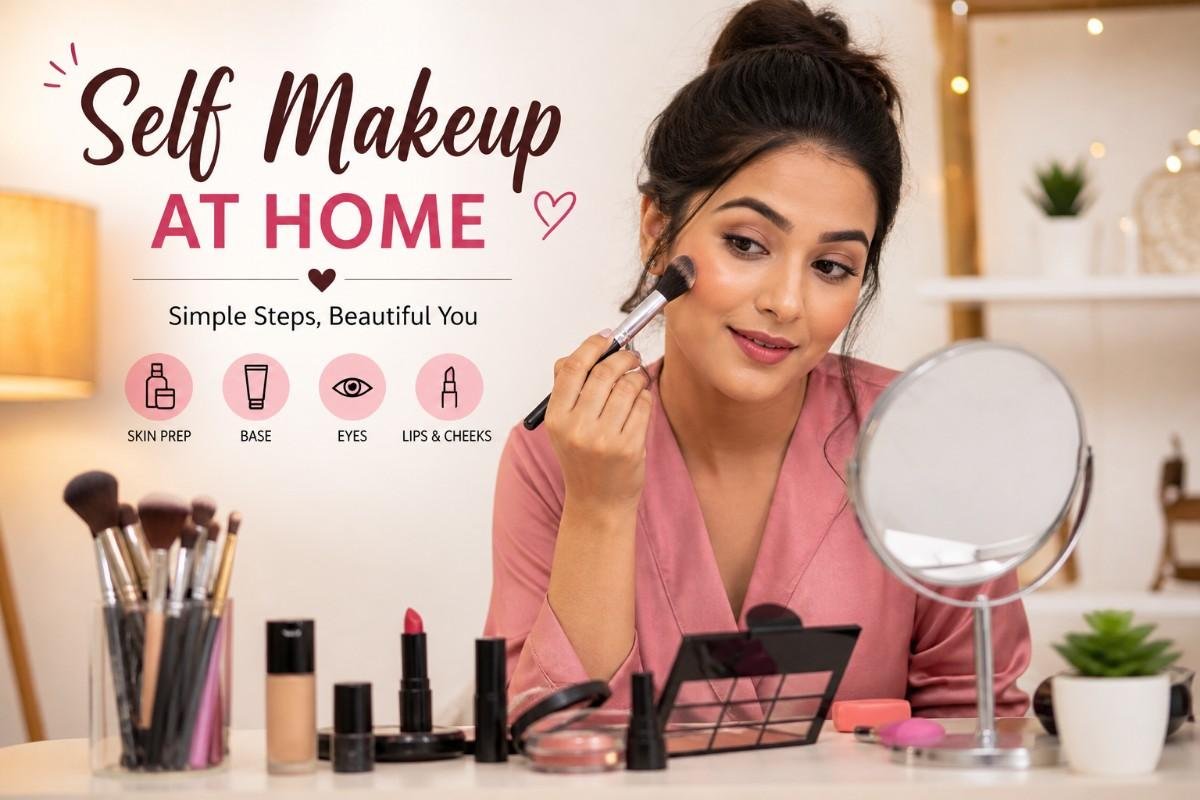
Self makeup at home: Doing your own makeup at home isn’t just about saving money—it’s about gaining confidence, creativity, and control over your personal style. Whether you’re getting ready for work, a party, or a casual day out, learning self makeup can completely transform how you present yourself.
With the right tools, techniques, and a little practice, you can achieve a salon-like finish without stepping outside your home. This guide will walk you through everything you need to know—from basic skincare prep to a flawless full-face makeup routine.
Why Learn Self Makeup at Home?
Before diving into techniques, let’s understand why self makeup is worth learning:
1. Saves Money
Salon visits can be expensive, especially for regular events. Doing your Self Makeup at Home helps you cut costs while still looking great.
2. Saves Time
No appointments, no waiting. You can get ready anytime—perfect for busy mornings or last-minute plans.
3. Boosts Confidence
When you know how to enhance your own features, you naturally feel more confident and comfortable in your skin.
4. Full Control Over Your Look
You decide everything—foundation shade, lipstick color, intensity of makeup—based on your mood and occasion.
5. Encourages Creativity
Makeup is like art. You can experiment with different styles, colors, and trends to create your own signature look.
6. Hygienic & Safe
Using your own products reduces the risk of infections and ensures better hygiene compared to shared tools.
7. Personalized for Your Skin
You understand your skin better than anyone else—what suits you, what doesn’t—leading to better results.
8. Skill for Every Occasion
From daily office looks to party glam, you’ll be ready for any event without depending on others.
9. Stress Relief & Self-Care
For many, makeup is relaxing. It becomes a form of self-care and “me time.”
10. Career & Side Hustle Potential
Once you master it, you can even offer freelance makeup services or create beauty content online.
Essential Makeup Products You Need Self Makeup at Home
You don’t need a huge collection. Start with these basics:
Face Products
- Cleanser
- Moisturizer
- Primer
- Foundation or BB Cream
- Concealer
- Compact powder
Eye Makeup
- Eyebrow pencil
- Eyeshadow palette
- Eyeliner
- Mascara
Lips & Cheeks
- Lipstick or lip gloss
- Blush
- Highlighter (optional)
Tools
- Makeup brushes
- Beauty blender/sponges
- Mirror
Step 1: Skin Preparation (The Secret to Flawless Makeup)

Makeup looks best on healthy skin. Follow this routine:
- Cleanse – Remove dirt and oil
- Moisturize – Keeps skin hydrated
- Apply sunscreen (daytime)
- Use primer – Smoothens skin and helps makeup last longer
Step 2: Base Makeup (Foundation Routine)

Foundation
- Choose a shade matching your skin tone
- Apply dots on face and blend evenly
Concealer
- Use under eyes and on blemishes
- Blend gently
Compact/Setting Powder
- Sets makeup and reduces shine
Step 3: Eye Makeup

Eyebrows
- Fill lightly for a natural look
Eyeshadow
- Use neutral shades for beginners
- Blend well to avoid harsh lines
Eyeliner
- Start with a thin line close to lashes
Mascara
- Apply 1–2 coats for volume and length
Step 4: Cheeks & Contouring

Blush
- Apply on the apples of cheeks
Contour (Optional)
- Define cheekbones and jawline
Highlighter
- Apply on cheekbones, nose, and brow bone
Step 5: Lip Makeup
- Outline lips with a liner
- Fill with lipstick or gloss
- Choose shades based on occasion
Everyday Natural Makeup Look (Quick Routine)
If you’re in a hurry, follow this 10-minute routine:
- Moisturizer + sunscreen
- BB cream
- Concealer
- Compact powder
- Eyebrow pencil
- Mascara
- Lip balm or nude lipstick
This gives a fresh, clean, and natural look.
Party Makeup Look at Home
Self Makeup at Home For special occasions:
- Use full-coverage foundation
- Add shimmer eyeshadow
- Apply winged eyeliner
- Use bold lipstick
- Highlight cheekbones
Makeup Tips for Beginners in Self Makeup at Home
- Start with less product
- Blend, blend, blend
- Always match foundation to your neck
- Clean brushes regularly
- Practice regularly
Common Makeup Mistakes to Avoid
- Using the wrong foundation shade
- Skipping skincare prep
- Over-applying powder
- Not blending properly
- Ignoring lighting while applying makeup
Makeup According to Skin Type
Oily Skin
- Use matte products
- Set with powder
Dry Skin
- Use hydrating foundation
- Avoid too much powder
Combination Skin
- Balance matte and hydrating products
Natural DIY Makeup Alternatives
If you prefer natural options:
- Beetroot tint for lips & cheeks
- Aloe vera gel as primer
- Coconut oil as makeup remover
How to Remove Makeup Properly
Never sleep with makeup on!
Step 1: Start with a Makeup Remover
Use a gentle remover to break down makeup:
- Micellar water – great for light makeup
- Cleansing oil/balm – best for heavy or waterproof makeup
Soak a cotton pad and gently wipe your face—don’t rub harshly.
Step 2: Focus on Eyes & Lips
These areas often have stubborn products:
- Hold the cotton pad on your eyes for 10–15 seconds
- Gently wipe downward
- Use a separate pad for lips
This helps dissolve mascara and lipstick without irritation.
Step 3: Double Cleansing (Very Important)
After removing makeup, wash your face:
- Oil-based cleanser – removes leftover makeup & sunscreen
- Water-based cleanser – cleans dirt, sweat, and oil
This ensures your skin is completely clean.
Step 4: Rinse with Lukewarm Water
Avoid hot water—it can dry out your skin. Lukewarm water is best.
Step 5: Pat Dry (Don’t Rub)
Use a soft towel and gently pat your skin dry to avoid irritation.
Step 6: Apply Toner (Optional)
Helps balance skin pH and removes any leftover residue.
Step 7: Moisturize
Hydrate your skin after cleansing:
- Use a light moisturizer for oily skin
- Use a rich cream for dry skin
Building Your Confidence with Self Makeup at Home
Makeup is not about hiding flaws—it’s about enhancing your natural beauty. Practice different looks, experiment with colors, and most importantly, enjoy the process.
Start Simple, Not Perfect
Practice Makes You Better
Understand Your Unique Features
Create a Personal Routine
Learn from Mistakes
Focus on Skin Health
Express Your Creativity
Turn It into Self-Care Time
Celebrate Small Wins
Don’t Compare Yourself to Others
Confidence in makeup doesn’t come from expensive products—it comes from practice, patience, and self-acceptance. The more you experiment and learn, the more comfortable and confident you’ll feel every day.
Conclusion Self Makeup at Home
Learning self makeup at home is a valuable skill that combines art and self-care. With the right steps—skincare prep, a good base, simple eye makeup, and the perfect lip—you can achieve a flawless look anytime.
Consistency and practice are key. Start simple, build your skills, and soon you’ll be creating professional-level looks from the comfort of your home.
FAQs Self Makeup at Home
Q1. Can beginners learn Self Makeup at Home?
Yes, with practice and basic products, anyone can learn.
Q2. What is the correct order of makeup?
Skincare → Primer → Foundation → Concealer → Powder → Eyes → Lips.
Q3. How long does it take to learn makeup?
Basic skills can be learned in a few days; mastering takes practice.
Q4. Do I need expensive products?
No, affordable products work well if used correctly.
Q5. How can I make makeup last longer?
Use primer and setting powder/spray.
Q6. What is the 3-1-1 rule for makeup?
The 3-1-1 rule is a travel guideline (commonly used in airport security, especially by the Transportation Security Administration) for carrying liquids in your hand luggage.
Q7. How to fix ptosis with makeup?
While makeup can’t medically fix ptosis (drooping eyelid), it can visually lift and open the eyes:
- Keep eyeliner thin and close to the lash line (thick liner makes lids look heavier)
- Lifted eyeshadow placement: blend darker shades slightly above the natural crease
- Highlight inner corners & brow bone to create brightness
- Curl lashes + mascara to open up the eyes
- Avoid heavy shimmer on droopy areas—use matte shades instead
- Optional: use eyelid tape/glue for a temporary lifting effect
Q8. Can makeup cause hyperpigmentation?
Yes, makeup can contribute to hyperpigmentation, but usually indirectly:
- Clogged pores from heavy or non-comedogenic products
- Allergic reactions or irritation
- Poor makeup removal habits
- Expired or low-quality products
Prevention tips:
- Always remove makeup properly before sleeping
- Use gentle, skin-friendly products
- Clean brushes regularly
- Apply sunscreen daily (very important)
Q9. How can I naturally lift my droopy eyelids?
You can improve the appearance naturally with consistent habits:
1. Eye exercises
- Gentle brow lifts and eyelid strengthening exercises
2. Cold therapy
- Use cold spoons, cucumber slices, or ice packs to reduce puffiness
3. Proper sleep
- Lack of sleep can worsen droopy eyelids
4. Hydration & diet
- Drink enough water and eat antioxidant-rich foods
5. Facial massage
- Improves circulation and may tighten skin slightly
6. Sun protection
- Prevents skin sagging caused by UV damage
It means:
- 3 = Each liquid must be in a container of 3.4 ounces (100 ml) or less
- 1 = All containers must fit into 1 quart-sized transparent zip-lock bag
- 1 = Each passenger is allowed 1 such bag
Also read :
What Is the 3-1-1 Rule for Makeup? Travel Guide for Carry-On Liquids