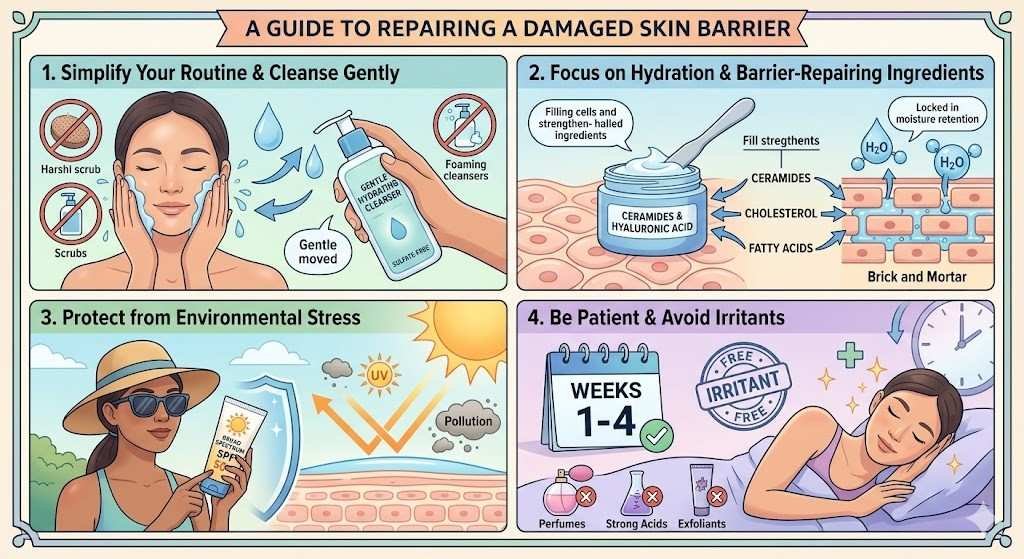
Damaged skin barrier :A healthy skin barrier is the foundation of clear, comfortable, and resilient skin. You can use the best serums, expensive creams, or advanced treatments, but if your skin barrier is damaged, your skin often reacts with dryness, redness, breakouts, sensitivity, and irritation.
In recent years, dermatologists have increasingly emphasized barrier repair because many modern skincare habits unintentionally weaken the skin’s natural protection. Over-exfoliation, strong acids, retinoid misuse, harsh cleansers, pollution, UV exposure, and even stress can disrupt the barrier and lead to long-term sensitivity. Current dermatology guidance describes barrier repair as one of the first priorities before treating acne, pigmentation, or aging concerns.
If your skin suddenly burns after applying products, feels tight after washing, flakes easily, or reacts to products you once tolerated, your skin barrier may be damaged.
This complete guide explains what the skin barrier is, what damages it, how to recognize the signs, and exactly how to repair it safely and effectively.
What Is the Skin Barrier?
The skin barrier is the outermost protective layer of your skin.
Its main job is to protect your body from external stress while keeping moisture inside.
This outer layer is scientifically called the stratum corneum.
It works like a brick wall:
- Skin cells are the bricks
- Natural lipids are the mortar
Those lipids mainly include:
- Ceramides
- Cholesterol
- Fatty acids
When these components stay balanced, skin remains:
- Smooth
- Hydrated
- Calm
- Strong
A healthy barrier prevents:
- Water loss
- Irritation
- Pollution penetration
- Bacterial invasion
Why the Skin Barrier Matters So Much
The barrier affects almost every skin concern.
When healthy, it supports:
- Stable hydration
- Better healing
- Less redness
- Stronger tolerance to active ingredients
- Better overall skin appearance
When damaged, skin becomes vulnerable.
This often leads to:
- Burning
- Tightness
- Dry patches
- Breakouts
- Sensitivity
- Redness
Recent research also shows that chronic barrier damage can increase low-level inflammation, which contributes to premature aging.
Signs of a Damaged Skin Barrier
Your skin may have barrier damage if you notice:
Sudden Sensitivity
Products that once felt normal now sting.
Tightness After Washing
Skin feels uncomfortable immediately after cleansing.
Flaking or Rough Texture
Dry patches appear despite moisturizing.
Redness
Skin looks irritated without obvious cause.
Breakouts and Irritation Together
Barrier damage often causes both acne and dryness.
Burning Sensation
Especially after acids, vitamin C, or retinol.
Increased Oil with Dehydration
Skin may feel oily but still tight.
This happens because skin overproduces oil to compensate for water loss.
Common Causes of Skin Barrier Damage
Over-Exfoliation
This is one of the biggest causes today.
Too much use of:
- AHAs
- BHAs
- Scrubs
- Peeling masks
can weaken protective lipids.
Harsh Cleansers
Strong sulfates remove natural oils too aggressively.
Retinol Misuse
Using retinol too often or too strong too early can damage the barrier.
Hot Water
Very hot water strips protective lipids.
Sun Exposure
UV radiation damages barrier proteins.
Pollution
Pollution increases oxidative stress on skin.
Weather Extremes
Cold wind and dry air weaken moisture retention.
Too Many Active Ingredients
Layering too many treatments together often overwhelms skin.
Stress and Poor Sleep
Internal stress affects skin repair.
How Long Does Skin Barrier Repair Take?
Barrier repair depends on damage level.
Mild Damage
Usually 1–2 weeks.
Moderate Damage
Often 3–6 weeks.
Severe Damage
May take 2–3 months.
Consistency matters more than product quantity.
First Rule: Stop Irritating the Skin
Before adding repair products, remove triggers.
Pause temporarily:
- Strong acids
- Scrubs
- Retinol
- High-strength vitamin C
- Harsh cleansers
This gives skin time to recover.
Simplify Your Routine Immediately
Barrier repair works best with fewer products.
Use only:
- Gentle cleanser
- Moisturizer
- Sunscreen
Optional:
- Simple hydrating serum
Best Ingredients to Repair a Damaged Skin Barrier
Ceramides
Ceramides are the most important barrier-repair ingredient.
They replace missing skin lipids.
Benefits:
- Reduce water loss
- Improve comfort
- Strengthen protection
Dermatology literature consistently recommends ceramides as first-line barrier support.
Hyaluronic Acid
Helps bind water into skin.
Best used under moisturizer.
Glycerin
Powerful humectant that improves hydration.
Cholesterol
Works together with ceramides.
Fatty Acids
Support lipid repair.
Panthenol (Vitamin B5)
Excellent for soothing irritated skin.
Niacinamide
Low-strength niacinamide helps barrier recovery.
Use gentle concentrations.
Colloidal Oatmeal
Very helpful for irritated skin.
Benefits:
- Reduces itching
- Soothes redness
- Supports barrier balance
Squalane
Lightweight barrier-friendly oil.
Best Cleanser for Barrier Repair
Choose cleansers that are:
- Sulfate-free
- Fragrance-free
- Low-foam
- Non-stripping
Avoid cleansers that leave skin squeaky clean.
That feeling usually means lipids were removed.
Best Moisturizer for Barrier Recovery
A barrier-repair moisturizer should contain:
- Ceramides
- Cholesterol
- Fatty acids
Texture depends on skin type:
Dry Skin
Use richer cream.
Oily Skin
Use lightweight barrier lotion.
Why Sunscreen Is Essential During Barrier Repair
A damaged barrier is highly vulnerable to UV damage.
Without sunscreen:
- Healing slows
- Redness increases
- Pigmentation worsens
Choose gentle broad-spectrum SPF daily.
Morning Routine for Damaged Skin Barrier
Gentle Cleanser
Use lukewarm water.
Hydrating Serum
Optional simple formula.
Barrier Moisturizer
Apply generously.
Sunscreen
Every morning.
Night Routine for Damaged Skin Barrier
Gentle Cleanser
No double cleansing unless necessary.
Hydrating Layer
Optional soothing serum.
Rich Moisturizer
Seal moisture overnight.
Should You Stop All Actives Completely?
Usually yes, temporarily.
Especially if skin burns.
Pause:
- Retinol
- Exfoliating acids
- Benzoyl peroxide
Restart only after skin feels stable.
When to Restart Active Ingredients
Once skin feels:
- Comfortable
- Less red
- Less reactive
- Smooth again
Restart slowly:
Retinol
1–2 nights weekly first.
Acids
Once weekly initially.
Can Overwashing Damage the Barrier?
Yes.
Too frequent cleansing removes protective oils.
Most people only need:
- Morning gentle cleanse or water rinse
- Evening cleanse once
Does Slugging Help Barrier Repair?
Slugging means sealing moisturizer with an occlusive layer.
This can help some people.
Benefits:
- Reduces water loss
- Supports overnight repair
Best for:
- Dry skin
- Very irritated skin
Avoid if acne-prone and heavy occlusives clog pores.
Can Skin Barrier Damage Cause Acne?
Yes.
Barrier damage often leads to:
- Inflammation
- Oil imbalance
- Increased irritation
This can trigger acne-like breakouts.
Treating acne aggressively while barrier is damaged often worsens both problems.
Barrier Repair for Oily Skin
Many oily skin types mistakenly avoid moisturizer.
But oily skin also needs barrier repair.
Choose:
- Lightweight gel-cream
- Non-comedogenic ceramide formulas
Barrier Repair for Sensitive Skin
Sensitive skin often improves dramatically with barrier support.
Avoid:
- Fragrance
- Essential oils
- Multiple actives
Barrier Repair for Retinol Damage
If retinol caused burning:
Stop retinol for 1–2 weeks.
Focus only on:
- Ceramides
- Panthenol
- Sunscreen
Restart slowly later.
Barrier Repair for Exfoliation Damage
Acid overuse often causes invisible barrier stress.
Signs:
- Shiny but irritated skin
- Sudden redness
- Tightness
Pause exfoliation completely.
Can Diet Help Barrier Repair?
Yes.
Nutrients that support skin repair include:
- Omega-3 fats
- Protein
- Zinc
- Vitamin E
- Vitamin C
Hydration also matters.
Lifestyle Habits That Improve Barrier Healing
Better Sleep
Skin repairs most at night.
Lower Stress
Stress increases inflammation.
Humidifier Use
Dry indoor air worsens barrier damage.
Avoid Touching Skin
Friction delays healing.
Common Mistakes During Barrier Repair
Using Too Many Products
More products slow recovery.
Changing Products Constantly
Consistency is crucial.
Restarting Actives Too Early
This often causes repeated damage.
Skipping Moisturizer Because Skin Feels Oily
Oil does not replace barrier lipids.
How to Know Your Barrier Is Healing
Signs of improvement:
- Less redness
- Less stinging
- Softer texture
- Better hydration
- Improved product tolerance
When to See a Dermatologist
See a professional if:
- Burning persists
- Severe rash develops
- Skin cracks
- Symptoms worsen
Persistent barrier problems may overlap with eczema, rosacea, or dermatitis.
Long-Term Prevention of Barrier Damage
Once healed:
- Exfoliate less often
- Use actives carefully
- Moisturize daily
- Wear sunscreen
- Avoid product overload
Healthy skin responds better to treatment when the barrier stays strong.
Final Thoughts
Repairing a damaged skin barrier is less about buying more products and more about giving skin what it truly needs: calm, moisture, lipids, and protection.
Strong skin heals faster, tolerates active ingredients better, and looks healthier naturally.
The most effective barrier-repair routine is simple, consistent, and gentle.
When your barrier is healthy, every other skincare step works better.
Healthy skin begins with protection first—not correction.
FAQs: How to Repair a Damaged Skin Barrier
1. What is a damaged skin barrier?
A damaged skin barrier occurs when the outer layer of skin loses its protective lipids, causing dryness, redness, sensitivity, and irritation.
2. How do I know if my skin barrier is damaged?
Signs include tightness after washing, flaking, redness, stinging from products, burning sensations, and increased breakouts.
3. What causes skin barrier damage?
Common causes include over-exfoliation, harsh cleansers, retinol misuse, hot water, sun exposure, pollution, stress, and layering too many active ingredients.
4. How long does it take to repair a damaged skin barrier?
Mild damage may heal in 1–2 weeks, moderate damage in 3–6 weeks, and severe damage can take 2–3 months with consistent care.
5. Which ingredients are best for repairing a damaged skin barrier?
Key ingredients include ceramides, hyaluronic acid, glycerin, cholesterol, fatty acids, panthenol, niacinamide, colloidal oatmeal, and squalane.
6. Can I continue using retinol or acids while repairing my skin barrier?
No. Pause strong actives until the barrier feels calm, then reintroduce slowly.
7. Is moisturizer important for barrier repair?
Yes, a moisturizer rich in ceramides and lipids helps restore and protect the barrier.
8. Can sunscreen help repair a skin barrier?
Sunscreen prevents UV damage, which slows barrier healing and reduces inflammation.
9. Does diet affect skin barrier repair?
Yes. Omega-3 fats, protein, zinc, vitamins C and E, and staying hydrated support barrier recovery.
10. Can oily skin also have a damaged barrier?
Yes. Even oily skin needs barrier repair with lightweight, non-comedogenic moisturizers.
11. Is over-cleansing harmful?
Yes. Excessive washing strips natural oils and weakens the barrier.
12. Can lifestyle changes help repair the skin barrier?
Yes. Adequate sleep, stress management, avoiding friction, and using a humidifier improve recovery.
13. Can damaged skin barrier cause acne?
Yes. Barrier damage can trigger inflammation and oil imbalance, which may lead to breakouts.
14. Can I use oils to repair my skin barrier?
Yes, lightweight oils like squalane can help seal moisture and restore lipids.
15. When should I see a dermatologist for barrier damage?
See a dermatologist if irritation persists, redness worsens, skin cracks, or symptoms don’t improve with gentle care.
Also read :
Peptides in Skincare: Benefits, Uses, and How They Improve Skin