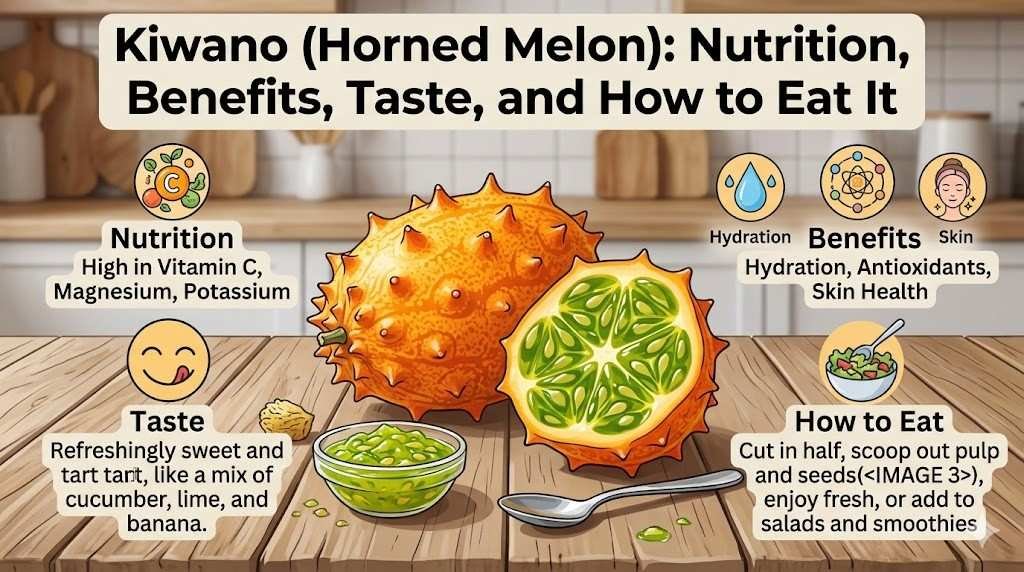
Kiwano (Horned Melon), also known as horned melon, is one of the most unusual-looking fruits in the world. With its bright orange spiky shell and vibrant green jelly-like interior, this exotic fruit attracts attention instantly. Scientifically known as Cucumis metuliferus, Kiwano belongs to the cucumber and melon family and is native to parts of southern Africa. Today, it is cultivated in countries such as New Zealand, Australia, and the United States, where it is valued both for its nutritional profile and decorative appeal.
Often called African horned cucumber or jelly melon, Kiwano has a mild taste that combines hints of cucumber, banana, kiwi, and lime. Because of its high water content and rich micronutrient profile, it has become popular among health-conscious eaters looking for low-calorie fruits that support hydration and digestion.
In this complete guide, you will learn everything about Kiwano—its nutrition, health benefits, how to eat it, possible side effects, growing methods, and why this unusual fruit deserves more attention.
What Is Kiwano (Horned Melon)?
Kiwano is a tropical fruit recognized by its spiky orange skin and emerald-green seed-filled pulp. It belongs to the same botanical family as cucumber and melon.
Key characteristics:
- Oval shape with horn-like spikes
- Bright orange skin when ripe
- Green jelly interior with edible seeds
- Mild refreshing flavor
- Very high water content
The fruit is commonly eaten fresh, added to salads, smoothies, desserts, and decorative fruit platters.
Nutritional Value of Kiwano (Horned Melon)
Kiwano is low in calories but rich in essential micronutrients.
Approximate nutrition per 100 grams:
- Calories: 44
- Water: 88%
- Carbohydrates: 8 grams
- Protein: 1.8 grams
- Fat: 1.3 grams
- Fiber: 3 grams
- Vitamin C
- Vitamin A
- Magnesium
- Potassium
- Iron
- Zinc
Its nutrient combination makes it excellent for hydration and mineral support.
9 Amazing Health Benefits of Kiwano (Horned Melon)
1. Supports Body Hydration
Because Kiwano contains very high water content, it helps maintain fluid balance, especially during hot weather.
Benefits include:
- Prevents dehydration
- Supports electrolyte balance
- Helps maintain skin moisture
This makes it ideal in summer diets.
2. Rich in Antioxidants
Kiwano contains antioxidants such as beta-carotene, vitamin C, and plant compounds that help fight oxidative stress.
Antioxidants help:
- Protect cells from damage
- Slow aging signs
- Support immune defense
3. Promotes Digestive Health
The edible seeds and pulp provide dietary fiber.
Fiber supports:
- Better bowel movement
- Reduced constipation
- Healthier gut bacteria
Regular intake may improve digestive comfort.
4. Good for Heart Health
Potassium and magnesium in Kiwano help regulate blood pressure.
Benefits:
- Supports normal heart rhythm
- Helps balance sodium levels
- Improves circulation
5. Supports Eye Health
Vitamin A and carotenoids contribute to vision support.
These nutrients help:
- Protect retina function
- Reduce eye strain
- Support night vision
6. Helps Strengthen Immunity
Vitamin C supports immune function by encouraging white blood cell activity.
This helps:
- Fight infections
- Improve healing
- Protect during seasonal changes
7. May Support Blood Sugar Balance
Kiwano has low sugar compared with many tropical fruits.
Its fiber slows sugar absorption, making it suitable in moderate portions.
8. Supports Skin Health
Antioxidants plus hydration improve skin freshness.
Benefits:
- Better skin elasticity
- Reduced dryness
- Natural glow support
9. Low-Calorie Fruit for Weight Management
Kiwano is filling but low in calories.
This helps:
- Reduce excess snacking
- Improve satiety
- Fit low-calorie meal plans
What Does Kiwano (Horned Melon) Taste Like?
The taste of Kiwano is often described as a combination of:
- Cucumber
- Kiwi
- Banana
- Lime
Some people notice a slight passion-fruit-like freshness.
Its texture is jelly-like and seed-rich.
How to Eat Kiwano (Horned Melon) Properly

Simple steps:
- Wash the fruit
- Cut in half
- Scoop pulp with spoon
- Eat directly or add to recipes
Popular ways:
- Smoothies
- Fruit salads
- Yogurt topping
- Juice
- Desserts
Kiwano in Smoothies
Kiwano blends well with:
- Banana
- Mango
- Pineapple
- Coconut water
Easy smoothie recipe:
- 1 Kiwano
- 1 banana
- 1 cup yogurt
- Honey
Blend until smooth.
Kiwano (Horned Melon) vs Kiwi Fruit
| Feature | Kiwano | Kiwi |
|---|---|---|
| Texture | Jelly-like | Soft flesh |
| Taste | Mild cucumber-lime | Sweet-tart |
| Skin | Spiky orange | Brown fuzzy |
| Seeds | Large edible seeds | Tiny edible seeds |
| Water content | Very high | Moderate |
How to Grow Kiwano (Horned Melon)
Climate needed:
- Warm weather
- Full sunlight
- Well-drained soil
Step-by-step growing:
- Sow seeds after frost
- Provide climbing support
- Water regularly
- Harvest when skin turns orange
It grows similarly to cucumber vines.
Possible Side Effects of Kiwano (Horned Melon)
Although Kiwano is generally safe for most people, eating it in excess or consuming unripe fruit may cause mild discomfort in some cases.
1. Digestive discomfort
Because Kiwano contains fiber and edible seeds, eating too much may lead to:
- Bloating
- Gas
- Mild stomach discomfort
2. Unripe fruit bitterness
Unripe Kiwano may taste bitter and can sometimes irritate digestion. Always eat fully ripe fruit with bright orange skin.
3. Rare allergy possibility
People sensitive to fruits in the cucumber or melon family may rarely experience:
- Itching
- Mouth irritation
- Mild allergic reaction
4. Excess intake may affect sensitive stomachs
Large portions may be difficult for people with weak digestion because of the seed texture.
5. Blood sugar caution in very large portions
Even though Kiwano is low in sugar, excessive intake is not ideal for people carefully monitoring sugar intake.
Safe eating tip
Eat 1 fresh ripe Kiwano in moderate quantity and observe tolerance.
Important note
Avoid fruit that tastes extremely bitter, as naturally bitter unripe fruits may not be suitable for eating.
Who Should Eat Kiwano (Horned Melon)?
Good for:
- Athletes
- Children
- Elderly adults
- Summer diets
- Hydration-focused diets
Why Kiwano Is Trending Globally
Kiwano has gained popularity in countries such as Japan and United Kingdom because:
- Unique appearance
- Social media appeal
- Healthy exotic fruit trend
- Decorative culinary use
Storage Tips
Best storage:
- Room temperature until ripe
- Refrigerate after cutting
Whole ripe fruit lasts several weeks because of its thick shell.
Fun Facts About Kiwano (Horned Melon)
- Kiwano is also called horned melon because of the sharp horn-like spikes on its bright outer skin.
- It belongs to the same plant family as cucumber, pumpkin, and melon.
- The fruit originally comes from southern parts of Africa, where it grows naturally in warm climates.
- A ripe Kiwano changes color from green to bright orange, which is the easiest sign that it is ready to eat.
- Inside the fruit, the green jelly pulp contains many edible seeds that can be eaten directly.
- Its taste is often described as a mix of cucumber, kiwi, banana, and lime.
- Because of its unusual appearance, Kiwano is often used in hotel fruit displays and gourmet food decoration.
- The thick outer shell helps the fruit stay fresh longer than many soft fruits.
- Kiwano contains a high amount of water, making it a refreshing summer fruit.
- In some countries, it is grown as an ornamental fruit because the bright orange spiky shell looks decorative.
- It is sometimes called jelly melon because of its soft jelly-like interior.
- Kiwano can grow on climbing vines similar to cucumber plants.
- The fruit is low in calories, so it is often included in healthy diets.
- Its unusual appearance makes it popular in social media fruit trends worldwide 🌍 In New Zealand, Kiwano became commercially popular and helped spread global cultivation.
Frequently Asked Questions about Kiwano (Horned Melon)
1.Is Kiwano sweeter than kiwi?
No, Kiwano is milder and less sweet.
2.Can diabetics eat Kiwano?
Yes, in moderate portions because sugar content is low.
3.Are Kiwano seeds edible?
Yes, seeds are edible and nutritious.
4.Can Kiwano help in summer dehydration?
Yes, its water content makes it excellent for hydration.
5.Is horned melon good for skin?
Yes, antioxidants and water support skin freshness.
6.Can Kiwano be grown in India?
Yes, warm climates in many parts of India are suitable.
7.Is Kiwano eaten raw or cooked?
Kiwano is most commonly eaten raw. The pulp is scooped out with a spoon and eaten fresh.
8.Can you eat Kiwano seeds?
Yes, the seeds are fully edible and safe to consume.
9.What does ripe Kiwano taste like?
A ripe Kiwano tastes mild, refreshing, and slightly similar to cucumber, kiwi, and banana.
10.How do you know when Kiwano is ripe?
A ripe Kiwano has bright orange skin and slightly soft texture.
11.Can Kiwano help with hydration?
Yes, because it contains high water content, it supports hydration especially in hot weather.
12.Is Kiwano good for weight loss?
Yes, it is low in calories and contains fiber that helps you feel full.
13.Is Kiwano acidic?
It has mild acidity but is generally gentle for most people.
14.Can Kiwano be added to smoothies?
Yes, it blends well with banana, mango, and yogurt.
15.Can Kiwano be grown at home?
Yes, it grows well in warm climates with sunlight and vine support.
16.Is Kiwano seasonal?
It is usually harvested in warm growing seasons but may be available year-round in some markets.
17.Why is Kiwano called horned melon?
Because of the horn-like spikes on its outer skin.
Final Thoughts Kiwano (Horned Melon)
Kiwano is more than an unusual-looking fruit—it is a nutrient-rich hydration fruit that supports digestion, immunity, skin health, and heart wellness. Its exotic appearance, mild refreshing taste, and low-calorie profile make it an excellent addition to modern healthy diets.
If you enjoy discovering unique fruits, Kiwano is worth trying for both nutrition and culinary creativity
Also read:
9 Surprising Benefits of Loquat for Health and Daily Wellness