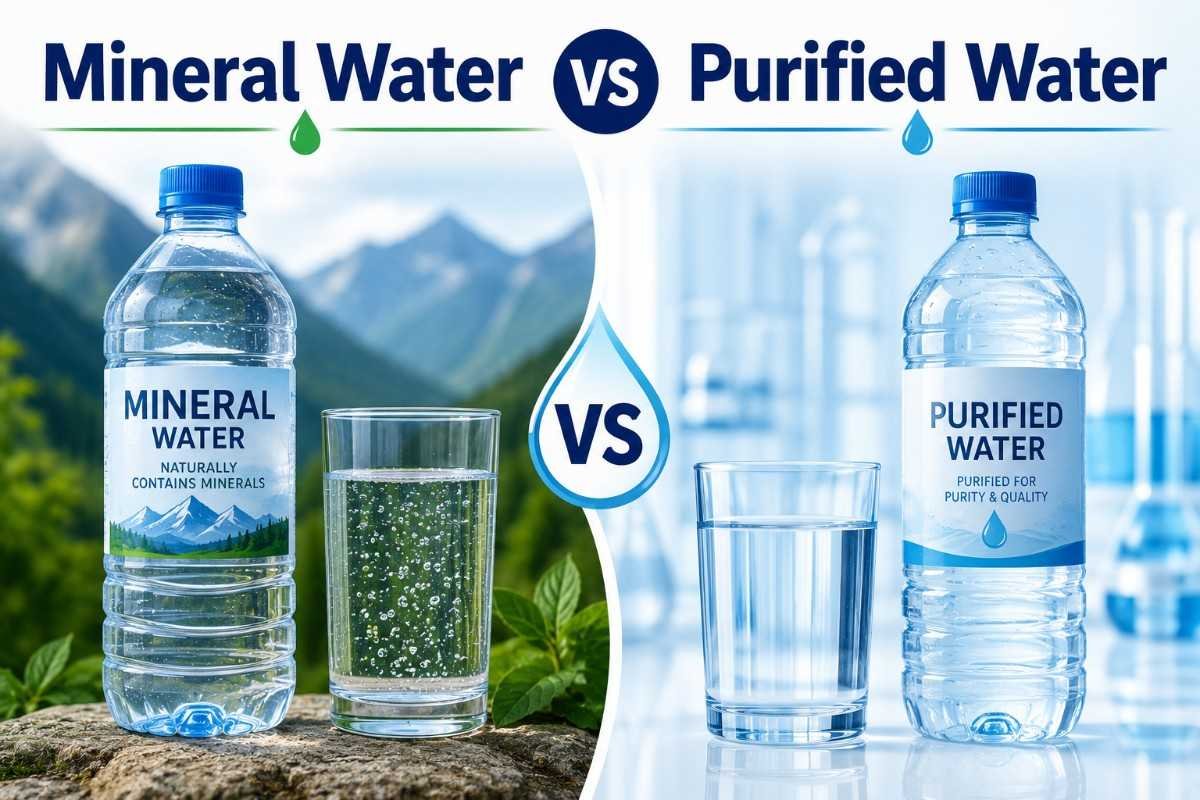
Mineral Water vs Purified Water: Water is essential for life, yet many consumers find themselves confused by the various types of drinking water available today. Among the most popular options are Mineral Water and Purified Water. Both are widely consumed around the world and are considered safe drinking water options, but they differ significantly in their source, treatment methods, mineral content, taste, and potential benefits.
As health-conscious consumers become more interested in hydration, wellness, and water quality, understanding the differences between Mineral Water and Purified Water has become increasingly important. Grocery stores, restaurants, fitness centers, and households often stock both varieties, leaving many people wondering which option is better for their needs.
While both types of water help maintain hydration, each offers unique characteristics that may appeal to different individuals. This comprehensive guide explores everything you need to know about Mineral Water vs Purified Water, including their definitions, nutritional profiles, health benefits, safety considerations, environmental impact, and which one may be the best choice for you.
What Is Mineral Water?
Mineral Water is water that naturally comes from underground sources such as springs and aquifers. It contains naturally occurring minerals and trace elements that are absorbed from rocks and soil as the water travels through the earth.
To be classified as mineral water in many regions, the water must contain a consistent level of minerals and originate from a protected underground source.
Common minerals found in Mineral Water include:
- Calcium
- Magnesium
- Potassium
- Sodium
- Bicarbonate
- Sulfates
- Chlorides
Unlike many other types of drinking water, Mineral Water typically undergoes minimal processing to preserve its natural mineral composition.
What Is Purified Water?
Purified Water is water that has undergone extensive treatment processes to remove impurities, contaminants, bacteria, chemicals, and dissolved solids.
Purified Water can originate from:
- Tap water
- Groundwater
- Surface water
- Municipal water supplies
Common purification methods include:
- Reverse osmosis
- Distillation
- Deionization
- Carbon filtration
- Ultraviolet treatment
The goal is to produce highly purified water with very low levels of dissolved substances.
Mineral Water vs Purified Water: Key Differences
| Feature | Mineral Water | Purified Water |
|---|---|---|
| Source | Natural springs and aquifers | Various water sources |
| Treatment | Minimal processing | Extensive purification |
| Mineral Content | Naturally contains minerals | Most minerals removed |
| Taste | Rich and distinctive | Neutral and clean |
| Nutritional Value | Contains natural minerals | Very limited minerals |
| Consistency | Varies by source | Highly consistent |
| Processing Level | Low | High |
| Cost | Usually higher | Often lower |
Nutritional Comparison (Mineral Water vs Purified Water)
Mineral Water
Mineral Water may provide:
- Calcium
- Magnesium
- Potassium
- Sodium
- Bicarbonates
- Trace minerals
The exact mineral profile depends on the source.
Purified Water
Purified Water generally contains:
- Very low mineral content
- Few dissolved solids
- Minimal nutrients
Its primary purpose is hydration rather than mineral intake.
15 Benefits of Mineral Water
1. Supports Hydration
Like all drinking water, Mineral Water helps maintain proper hydration.
2. Contains Natural Minerals
It naturally provides essential minerals.
3. May Contribute to Calcium Intake
Some varieties contain significant calcium levels.
4. Provides Magnesium
Magnesium plays important roles in numerous body functions.
5. Minimal Processing
Many consumers appreciate its natural origin.
6. Unique Taste Profile
Minerals contribute to a distinctive flavor.
7. Naturally Occurring Electrolytes
Some Mineral Waters contain electrolytes.
8. Convenient Source of Trace Minerals
Provides small amounts of important nutrients.
9. Widely Available
Sold globally in bottled form.
10. Suitable for Daily Consumption
Can be part of a healthy hydration routine.
11. Often Sourced from Protected Springs
Many brands use carefully protected sources.
12. May Support Active Lifestyles
Mineral-containing water can complement hydration.
13. Refreshing Beverage Option
Popular among wellness enthusiasts.
14. Naturally Carbonated Options Available
Some Mineral Waters contain natural carbonation.
15. Popular Worldwide
Consumed in many cultures.
15 Benefits of Purified Water
1. Highly Clean Drinking Water
Designed to remove many contaminants.
2. Consistent Quality
Purification processes produce reliable results.
3. Neutral Taste
Many people prefer its clean flavor.
4. Low Dissolved Solids
Contains minimal impurities.
5. Widely Available
Commonly sold in stores worldwide.
6. Suitable for Sensitive Taste Preferences
Lacks strong mineral flavors.
7. Effective Filtration
Removes many unwanted substances.
8. Convenient for Everyday Use
Easy to find and purchase.
9. Supports Hydration
Provides essential fluid intake.
10. Often Used in Home Filtration Systems
Many households produce purified water.
11. Suitable for Cooking
Its neutral flavor works well in recipes.
12. Reliable Quality Standards
Manufacturers often follow strict guidelines.
13. Popular in Urban Areas
Common where municipal water is treated extensively.
14. Frequently Used in Medical and Laboratory Settings
High purity is often preferred.
15. Available in Multiple Formats
Sold in bottles, dispensers, and filtration systems.
Taste Comparison (Mineral Water vs Purified Water)
Mineral Water Taste
Mineral Water often has:
- Earthy notes
- Slight saltiness
- Distinctive mineral flavor
- Variable taste depending on source
Purified Water Taste
Purified Water usually tastes:
- Clean
- Neutral
- Crisp
- Consistent
Taste preference is highly personal.
Which Water Has More Minerals?
Mineral Water vs Purified Water: Mineral Water contains significantly more naturally occurring minerals than Purified Water.
Common minerals include:
- Calcium
- Magnesium
- Potassium
- Sodium
Purified Water typically has most minerals removed during processing.
Which Water Is Better for Hydration?
Mineral Water vs Purified Water: Both Mineral Water and Purified Water effectively hydrate the body.
Hydration depends primarily on:
- Total fluid intake
- Activity level
- Climate
- Health status
For most people, both options provide excellent hydration.
Safety Considerations (Mineral Water vs Purified Water)
Mineral Water Safety
Reputable Mineral Water brands follow strict quality standards and monitoring procedures.
Purified Water Safety
Purified Water undergoes extensive treatment designed to remove contaminants.
Both are generally considered safe when sourced from reputable manufacturers.
Environmental Considerations
Mineral Water vs Purified Water: Environmental impact depends largely on packaging and transportation.
Consumers can reduce environmental impact by:
- Recycling bottles
- Using refillable containers
- Choosing local products
- Using home filtration systems
Who Should Choose Mineral Water?
Mineral Water vs Purified Water: Mineral Water may appeal to:
- Individuals who enjoy mineral-rich taste
- People seeking natural mineral intake
- Fitness enthusiasts
- Consumers who prefer minimally processed beverages
Who Should Choose Purified Water?
Mineral Water vs Purified Water: Purified Water may appeal to:
- Individuals who prefer neutral taste
- Those seeking highly purified drinking water
- People using water for cooking
- Consumers sensitive to mineral flavors
Mineral Water vs Purified Water: Which Is Better?
Mineral Water vs Purified Water: There is no universal winner.
Choose Mineral Water if you prefer:
- Natural minerals
- Distinctive taste
- Spring-sourced water
Choose Purified Water if you prefer:
- Neutral flavor
- Highly filtered water
- Consistent quality
For most healthy individuals, either option can be part of a balanced hydration routine.
FAQs
What is the main difference between Mineral Water and Purified Water?
Mineral Water comes from natural underground sources and contains naturally occurring minerals, while Purified Water undergoes extensive filtration and purification processes that remove most impurities and minerals.
Is Mineral Water healthier than Purified Water?
Both can be healthy hydration options. Mineral Water provides naturally occurring minerals, while Purified Water focuses on high purity and contaminant removal.
Which water contains more minerals?
Mineral Water contains significantly more natural minerals than Purified Water.
Can I drink Mineral Water every day?
Yes. Most healthy adults can safely consume Mineral Water daily as part of their hydration routine.
Can I drink Purified Water every day?
Yes. Purified Water is commonly consumed daily around the world.
Which water tastes better?
Taste is subjective. Mineral Water often has a stronger flavor due to minerals, while Purified Water generally tastes neutral and clean.
Is Mineral Water naturally sourced?
Yes. Genuine Mineral Water originates from underground springs or aquifers.
Does Purified Water contain minerals?
Most minerals are removed during purification, although some brands may add minerals back after treatment.
Which water is better for athletes?
Both can support hydration. Some athletes prefer Mineral Water because of its naturally occurring electrolytes and minerals.
Which water is more expensive?
Mineral Water is often more expensive due to sourcing, transportation, and bottling requirements.
Conclusion
The debate between Mineral Water vs Purified Water ultimately comes down to personal preference, lifestyle, and hydration goals. Mineral Water offers naturally occurring minerals and a unique taste profile, while Purified Water provides highly filtered, clean, and consistent hydration. Both options can effectively support healthy hydration when consumed as part of a balanced lifestyle. Understanding their differences allows consumers to make informed choices based on their individual needs and preferences.
Also read: