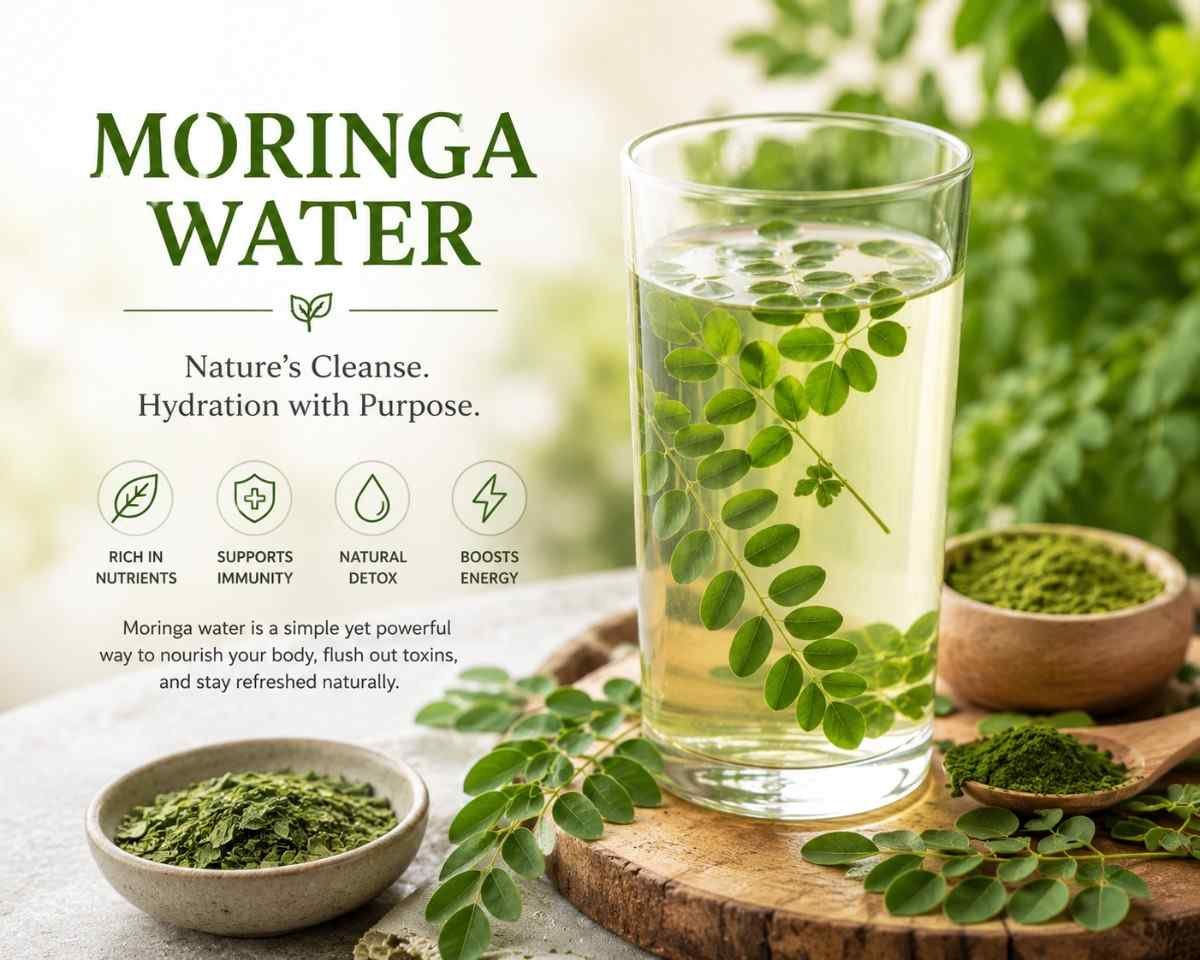
Moringa Water has become one of the most popular herbal wellness drinks among health-conscious individuals. Made by infusing moringa leaves, moringa powder, or moringa extract into water, this refreshing beverage combines hydration with the nutritional benefits of one of the world’s most celebrated superfoods.
Known scientifically as Moringa oleifera, moringa is often referred to as the “Miracle Tree” because nearly every part of the plant has been used traditionally for food and wellness purposes. Native to parts of India, Africa, and Asia, moringa has been valued for centuries due to its rich nutritional profile and versatility.
Today, Moringa Water is consumed worldwide by people seeking natural hydration, plant-based nutrients, and an easy way to incorporate moringa into their daily routines.
In this comprehensive guide, you’ll learn everything about Moringa Water, including its history, nutrition facts, benefits, recipes, side effects, and frequently asked questions.
What Is Moringa Water?
Moringa Water is a beverage prepared by mixing fresh moringa leaves, dried moringa leaves, moringa powder, or moringa extract with water.
The drink is known for its light earthy flavor and naturally occurring nutrients.
Moringa contains numerous beneficial compounds, including:
- Vitamin A
- Vitamin C
- Vitamin E
- Calcium
- Potassium
- Iron
- Magnesium
- Protein
- Antioxidants
- Polyphenols
- Plant compounds
Because of its impressive nutrient content, moringa is often considered one of the most nutrient-dense plants available.
History of Moringa
Moringa has been cultivated and used for thousands of years.
Ancient civilizations in India utilized moringa as both food and a traditional wellness ingredient. Historical records suggest that moringa was valued for its nutritional richness and versatility.
Over time, cultivation spread to:
- Africa
- Southeast Asia
- South America
- The Caribbean
- The Middle East
Today, moringa is grown globally and remains an important component of traditional diets and modern wellness practices.
Nutritional Profile of Moringa Water
The nutritional value of Moringa Water depends on preparation methods and concentration.
It may contain:
Vitamins
- Vitamin A
- Vitamin C
- Vitamin E
- B Vitamins
Minerals
- Calcium
- Potassium
- Iron
- Magnesium
- Phosphorus
- Zinc
Plant Compounds
- Polyphenols
- Flavonoids
- Antioxidants
- Chlorophyll
Other Nutrients
- Amino acids
- Plant protein traces
- Fiber traces
Top 25 Benefits of Moringa Water
1. Supports Hydration
Moringa Leaf Water contributes to daily fluid intake and hydration.
2. Rich in Antioxidants
Moringa contains antioxidant compounds that help protect cells from oxidative stress.
3. Provides Vitamin C
Vitamin C supports normal immune function and collagen production.
4. Contains Vitamin A
Vitamin A contributes to healthy vision and immune health.
5. Source of Essential Minerals
Moringa naturally contains important minerals such as calcium, potassium, and magnesium.
6. Supports Healthy Lifestyle Habits
Can be incorporated into balanced wellness routines.
7. Naturally Low in Calories
Most Moringa Leaf Water preparations contain very few calories.
8. Plant-Based Beverage
Suitable for vegan and vegetarian lifestyles.
9. Caffeine-Free Hydration
Provides hydration without stimulants.
10. May Support Energy Levels
Nutrients found in moringa contribute to normal energy metabolism.
11. Supports Daily Nutrient Intake
Adds beneficial nutrients to the diet.
12. Alternative to Sugary Drinks
Offers flavor and nutrition without excessive sugar.
13. May Support Healthy Skin
Hydration and antioxidants contribute to skin wellness.
14. Supports Active Lifestyles
Hydration is important for physical activity and recovery.
15. Rich in Plant Compounds
Contains naturally occurring bioactive compounds.
16. Easy to Prepare
Can be made in just a few minutes.
17. Versatile Beverage
Can be combined with lemon, ginger, mint, and fruits.
18. Naturally Fat-Free
Contains little to no fat.
19. Traditional Herbal Drink
Used for generations in traditional cultures.
20. Supports Wellness Goals
Can complement a balanced diet and healthy habits.
21. Refreshing During Hot Weather
Can be enjoyed chilled for hydration.
22. May Support Digestive Wellness
Traditionally consumed as part of digestive wellness routines.
23. Contains Chlorophyll
Fresh moringa leaves naturally contain chlorophyll.
24. Convenient Daily Drink
Easy to include in morning wellness routines.
25. Sustainable Plant-Based Option
Moringa trees are known for their resilience and environmental sustainability.
Moringa Water vs Green Tea
| Feature | Moringa Water | Green Tea |
|---|---|---|
| Caffeine | No | Yes |
| Antioxidants | High | High |
| Plant-Based | Yes | Yes |
| Calories | Very Low | Very Low |
| Traditional Use | Ancient | Ancient |
Both beverages can fit into healthy lifestyles.
How to Make Moringa Water
Basic Moringa Water Recipe
Ingredients
- 1 teaspoon moringa powder
- 1 glass water
Directions
- Add moringa powder to water.
- Stir thoroughly.
- Allow to dissolve.
- Serve immediately.
Fresh Moringa Leaf Water
Ingredients
- Fresh moringa leaves
- Water
Directions
- Wash leaves thoroughly.
- Add to warm water.
- Allow to steep for 10 minutes.
- Strain and drink.
Lemon Moringa Water
Ingredients
- Moringa Leaf Water
- Fresh lemon juice
This combination provides a refreshing citrus flavor.
Ginger Moringa Water
Ingredients
- Moringa Water
- Fresh ginger slices
A popular wellness beverage combination.
Best Time to Drink Moringa Water
Many people consume Moringa Leaf Water:
- Early morning
- Before breakfast
- After exercise
- During hot weather
- Mid-afternoon
- During wellness routines
Moringa Water for Weight Management
People seeking healthier beverage choices often include Moringa Leaf Water because:
- It is low in calories.
- It supports hydration.
- It may replace sugary drinks.
- It contributes nutrients to the diet.
Weight management depends on overall dietary patterns and physical activity.
Moringa Water and Immune Health
Moringa contains nutrients such as:
- Vitamin C
- Vitamin A
- Antioxidants
These nutrients contribute to normal immune system function as part of a balanced diet.
Moringa Water and Skin Health
Hydration and nutrient intake are important for skin wellness.
Moringa Leaf Water may support:
- Skin hydration
- Healthy appearance
- Antioxidant intake
- Overall wellness
Potential Side Effects of Moringa Water
Moringa Leaf Water is generally considered safe when consumed in moderation.
Possible side effects may include:
- Digestive discomfort
- Mild stomach upset
- Loose stools if consumed excessively
- Allergic reactions in sensitive individuals
People who are pregnant, nursing, taking medications, or managing health conditions should consult a healthcare professional before consuming large amounts of moringa products.
Storage Tips
For best quality:
- Refrigerate prepared Moringa Leaf Water.
- Use within 24–48 hours.
- Store moringa powder in a cool, dry place.
- Keep containers tightly sealed.
- Avoid excessive moisture.
Who Should Drink Moringa Water?
Moringa Leaf Water may be suitable for:
- Students
- Athletes
- Busy professionals
- Vegetarians
- Vegans
- Wellness enthusiasts
- Travelers
- Individuals seeking healthier beverage options
FAQs
What is Moringa Water?
Moringa Leaf Water is a beverage made by mixing moringa leaves, powder, or extract with water.
Is Moringa Water healthy?
It contains vitamins, minerals, antioxidants, and plant compounds that contribute to its popularity as a wellness drink.
Can I drink Moringa Water every day?
Many people include it in their daily wellness routines when consumed in moderation.
What does Moringa Water taste like?
It has a mild earthy, green flavor similar to some herbal beverages.
Does Moringa Water contain caffeine?
No, Moringa Leaf Water is naturally caffeine-free.
Can Moringa Water help with hydration?
Yes, it contributes to daily fluid intake.
Is Moringa Water vegan?
Yes, it is completely plant-based.
Can I mix Moringa Water with lemon?
Yes, lemon is one of the most popular additions.
Does Moringa Water contain antioxidants?
Yes, moringa is known for its antioxidant content.
Can athletes drink Moringa Leaf Water?
Yes, many active individuals include it as part of their hydration routines.
Conclusion
Moringa Water is a nutrient-rich herbal beverage that combines hydration with the impressive nutritional profile of the moringa plant. Rich in vitamins, minerals, antioxidants, and plant compounds, it has earned a reputation as one of the most popular superfood drinks in the wellness world.
Whether you’re looking for a healthy alternative to sugary beverages, a convenient way to consume moringa, or a refreshing hydration option, Moringa Leaf Water can be a valuable addition to your daily routine. Combined with balanced nutrition, regular exercise, and healthy lifestyle habits, this ancient herbal drink continues to find a place in modern wellness practices.
Also read:
Noni Water: 20 Benefits, Nutrition, Uses, Side Effects & Guide