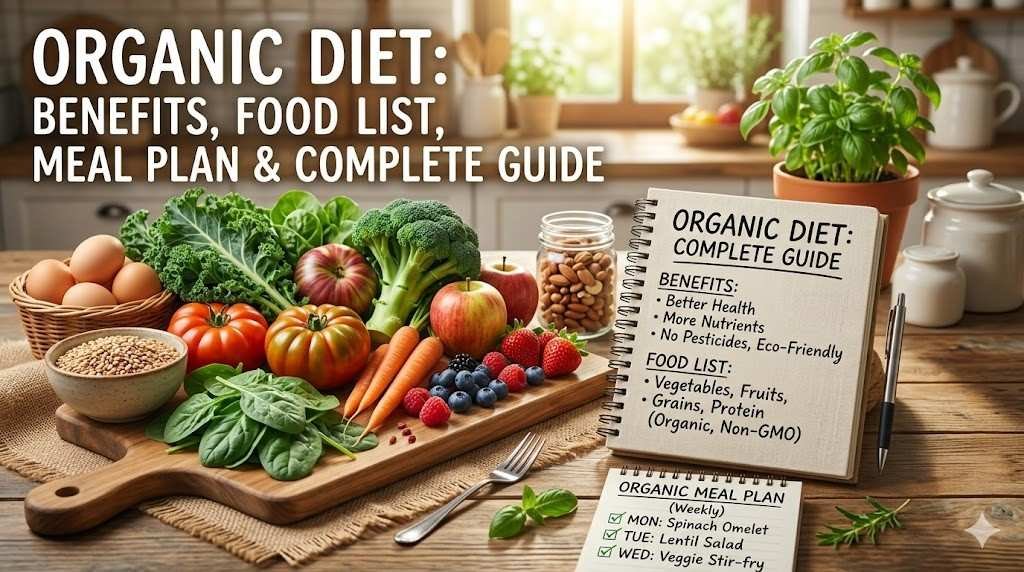
An organic diet is more than just a trend—it’s a lifestyle choice focused on eating natural, chemical-free, and minimally processed foods. As people become more health-conscious, the demand for organic food is rapidly growing due to concerns about pesticides, additives, and long-term health.
But what exactly is an organic diet? Is it really healthier? And how can you start one without overspending?
This complete guide covers everything you need to know about the organic diet, including benefits, food choices, meal plans, and practical tips.
What Is an Organic Diet?
An organic diet focuses on consuming foods that are grown and processed without:
- Synthetic pesticides
- Chemical fertilizers
- Genetically modified organisms (GMOs)
- Artificial preservatives or additives
Organic farming emphasizes natural processes, soil health, and sustainability.
Organic vs Conventional Food
Understanding the difference helps you make better choices.
Organic Food
- Grown naturally
- Free from harmful chemicals
- Environment-friendly
Conventional Food
- May contain pesticide residues
- Often highly processed
- Uses synthetic fertilizers
Organic foods are generally considered safer and more nutritious, though they can be more expensive.
Benefits of an Organic Diet
1. Reduced Exposure to Chemicals
Organic foods are grown without synthetic pesticides, lowering your intake of potentially harmful substances.
2. Higher Nutritional Value
Some studies suggest organic foods may contain:
- More antioxidants
- Higher vitamin levels
3. Better Taste and Freshness
Many people find organic fruits and vegetables more flavorful due to natural farming methods.
4. Supports Digestive Health
Organic foods often contain fewer additives, which may benefit gut health.
5. Environment-Friendly
Organic farming:
- Improves soil health
- Reduces pollution
- Conserves water
Foods to Eat on an Organic Diet
Organic Fruits & Vegetables
- Apples
- Bananas
- Spinach
- Tomatoes
- Carrots
Organic Grains
- Brown rice
- Quinoa
- Oats
- Whole wheat
Organic Protein Sources
- Eggs
- Chicken
- Fish
- Lentils
- Beans
Organic Dairy & Alternatives
- Milk
- Yogurt
- Cheese
- Plant-based milk
Healthy Fats
- Olive oil
- Nuts
- Seeds
- Avocados
Foods to Avoid
Even on an organic diet, try to limit:
- Highly processed foods
- Artificial sweeteners
- Packaged junk food
- Refined sugar
Is Organic Food Really Healthier?
The answer is partly yes.
Organic foods:
- Reduce chemical exposure
- May offer better nutrient profiles
- Encourage healthier eating habits
However, organic junk food is still junk food. The key is choosing whole, natural foods.
Sample 1-Day Organic Meal Plan
Breakfast
Organic oatmeal with fruits and nuts
Snack
Organic apple with almonds
Lunch
Brown rice + dal + organic vegetable curry
Snack
Organic yogurt with seeds
Dinner
Grilled organic chicken or tofu with vegetables
How to Start an Organic Diet
1. Start Small
Switch gradually—begin with fruits and vegetables.
2. Prioritize “Dirty Dozen”
Choose organic for foods with high pesticide exposure (like apples, spinach, strawberries).
3. Shop Smart
- Buy local produce
- Visit farmers’ markets
- Look for seasonal items
4. Grow Your Own Food
Even small home gardens can provide fresh organic produce.
5. Read Labels
Look for certified organic labels when buying packaged food.
Budget Tips for Organic Eating
Organic food can be expensive, but these tips help:
- Buy in bulk
- Choose seasonal produce
- Avoid processed organic products
- Focus on essentials
Common Myths About Organic Diet
Myth 1: Organic Means 100% Chemical-Free
Truth: Natural pesticides may still be used.
Myth 2: Organic Food Has No Calories
Truth: Calories depend on the food, not how it’s grown.
Myth 3: Organic Is Always Expensive
Truth: Smart shopping can make it affordable.
Challenges of an Organic Diet
- Higher cost
- Limited availability in some areas
- Shorter shelf life
Despite this, many people find the benefits worth it.
Who Should Follow an Organic Diet?
- Health-conscious individuals
- Families with children
- People concerned about chemical exposure
- Environmentally conscious consumers
Organic Diet vs Clean Eating
- Organic diet: Focuses on how food is grown
- Clean eating: Focuses on how food is processed
Both can complement each other.
Is an Organic Diet Good for Weight Loss?
Yes, indirectly.
Organic diets:
- Encourage whole foods
- Reduce processed food intake
- Improve overall eating habits
Weight loss still depends on calorie balance.
Final Thoughts
An organic diet is a powerful way to improve your health while supporting sustainable farming and the environment. While it may require some planning and budgeting, the long-term benefits can be significant.
The best approach is to focus on whole, nutrient-dense organic foods, rather than just replacing processed foods with organic versions.
Start small, stay consistent, and gradually build a healthier lifestyle that works for you.
FAQs About the Organic Diet
1. What is an organic diet?
An organic diet focuses on eating foods grown without synthetic pesticides, chemical fertilizers, GMOs, or artificial additives, emphasizing natural and sustainable farming methods.
2. Is organic food really healthier?
Organic food can reduce exposure to chemicals and may contain more antioxidants, but overall health depends on your total diet quality, not just organic labels.
3. Does organic food help with weight loss?
Not directly. Weight loss depends on calorie balance, but organic diets often promote whole foods, which can support healthier eating habits.
4. Are organic fruits and vegetables pesticide-free?
Not completely. Organic farming may use natural pesticides, but they are generally considered safer than synthetic ones.
5. Is organic food worth the extra cost?
It depends on your priorities. Many people choose organic to:
- Reduce chemical exposure
- Support the environment
- Improve food quality
6. What foods should I buy organic first?
Focus on high-residue items like:
- Apples
- Spinach
- Strawberries
- Tomatoes
These are often called the “Dirty Dozen.”
7. Is organic meat better than regular meat?
Organic meat comes from animals raised without antibiotics or synthetic hormones and often fed organic feed, which many consider a healthier option.
8. Can I eat processed food on an organic diet?
Yes, but it’s best to limit it. Even organic processed foods can be high in sugar, salt, or unhealthy fats.
9. How do I know if food is truly organic?
Look for certified organic labels on packaging and buy from trusted sources or local farmers.
10. Is organic food chemical-free?
No. All food contains natural chemicals, but organic food avoids synthetic chemicals and harmful additives.
11. Can I follow an organic diet on a budget?
Yes. Tips include:
- Buying seasonal produce
- Shopping local
- Avoiding packaged organic foods
- Prioritizing key items
12. Are organic eggs healthier?
Organic eggs may contain better nutrient profiles and come from hens raised in more natural conditions.
13. Does organic food taste better?
Many people believe organic food tastes fresher and more natural, but taste can vary depending on quality and freshness.
14. Is organic food better for the environment?
Yes. Organic farming:
- Improves soil health
- Reduces pollution
- Conserves biodiversity
15. Can children follow an organic diet?
Yes. An organic diet can be a healthy choice for children, especially when balanced with all essential nutrients.
16. Is organic the same as natural?
No. “Natural” is not strictly regulated, while “organic” follows certified farming standards.
17. Does organic food last longer?
Usually not. Organic food often has no preservatives, so it may spoil faster.
18. Can I grow my own organic food?
Yes. Home gardening is a great way to ensure fresh, chemical-free produce.
19. Is organic milk better than regular milk?
Organic milk comes from cows not treated with synthetic hormones or antibiotics, which some people prefer.
20. Do I need to eat 100% organic?
No. Even partial adoption of organic foods can provide benefits. Focus on balance and overall diet quality.
Also read :